
One morning you go to the market and find no papayas. You think it's temporary. A week later, there are still none. A month later, trees start dying one after another. It isn't a drought or just any pest: a new pathogen found a population of commercial papayas that were almost genetically identical and unable to defend themselves. In a few years, a fruit that accompanies the breakfast of millions of people disappears from the fields. What seemed like a small loss begins to be felt everywhere: farmers lose one of their most profitable crops, industry stops producing natural enzymes like papain, and a vitamin-rich fruit is no longer available.
This apocalyptic scenario reminds us of a fundamental lesson in biology: genetic uniformity is the enemy of survival. How can we avoid this fate? A recent study in population genomics by Heredia-Pech and collaborators, published in Biotropica, addresses this issue.
In evolutionary genetics, an inter-reproductive complex or hybrid zone is an area where no impassable reproductive barriers exist between two different populations or species, allowing gene flow and the formation of fertile offspring. In the Yucatan Peninsula (Mexico), part of the centre of origin and domestication of papaya (Carica papaya L.), a fascinating phenomenon occurs: commercial varieties cultivated in backyard gardens grow just meters away from wild populations. This close distance allows pollinators and dispersers to transport pollen and seeds between populations, creating hybrid plants with intermediate characteristics. This gene exchange has two sides: it can introduce diversity and wild resistance traits into cultivated plants, but it carries a risk, as it can genetically contaminate or displace wild populations, threatening the conservation of the species' original ancestors.
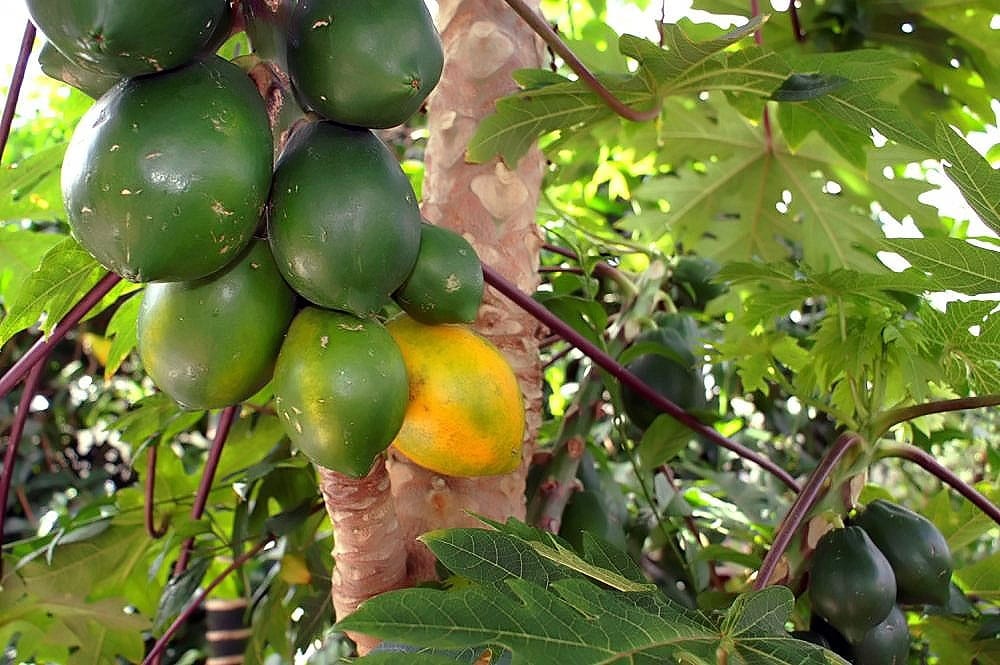
To study these plants, researchers collected leaf samples from 180 papayas across four communities in the Yucatan Peninsula, initially classifying them by fruit size and shape into wild, domesticated, and hybrid. Next, they extracted their DNA and analysed thousands of genetic markers across their genome to compare the similarities and differences among the three groups. Finally, using computational tools, they evaluated how diverse each population is, how they group genetically, and how much gene flow or interbreeding exists between cultivated papayas, wild ones, and their hybrid offspring.
The results of the DNA analysis revealed that "pure" papayas virtually do not exist in backyard gardens, confirming that hybridisation in these spaces occurs massively and constantly. The study showed that wild papayas possess the highest genetic diversity, followed closely by hybrid plants, while domesticated ones are the least varied; even so, backyard papayas proved to be more diverse than those from large industrial plantations. Ultimately, genetics confirmed that hybrid plants act as a true "genetic bridge," serving as the primary conduits moving genes toward both wild and cultivated papayas.
These findings demonstrate that backyard gardens function as true centres of active evolution, where the practices of Mayan communities allow different papaya varieties to coexist without barriers. By tolerating the presence of wild and hybrid plants, these hybrids are able to act as "genetic bridges," adding variability to food papayas and making backyard fruits much more resilient and diverse than those from large monocultures.
In conclusion, the apocalyptic scenario of a market without papayas due to the fragility of monoculture is not an inevitable fate if we learn from these traditional agroecosystems. Mayan gardens hold the key to preventing this fruit from disappearing from our breakfasts, proving that genetic diversity is the best evolutionary shield against future threats. However, this research also leaves us with a warning: we must protect these spaces and monitor gene flow to prevent ancestral wild populations from losing their identity, thus ensuring both the conservation of native biodiversity and our own food security.
READ THE ARTICLE
Heredia‐Pech M, Martínez‐Castillo J, Ortiz García MM, Dzib GR, Chávez‐Pesqueira M. 2026. Genetic Diversity and Structure in Papaya: Insights From Tropical Inter‐Reproductive Complexes in Its Center of Origin and Domestication. Biotropica 58. https://doi.org/10.1111/btp.70239
Spanish and Portuguese translation by Erika Alejandra Chaves-Diaz.
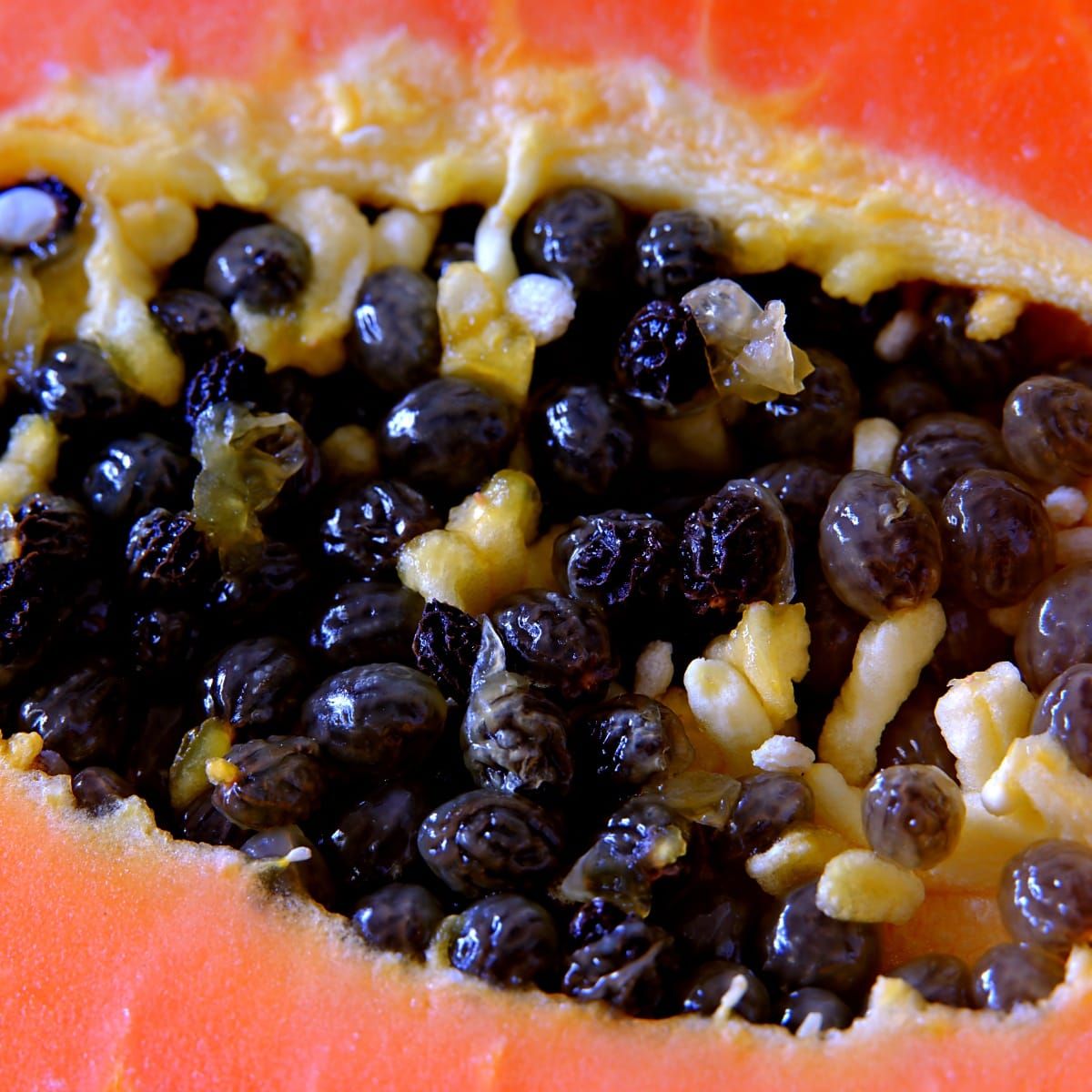
Cover picture by ignartonosbg (Pixabay).