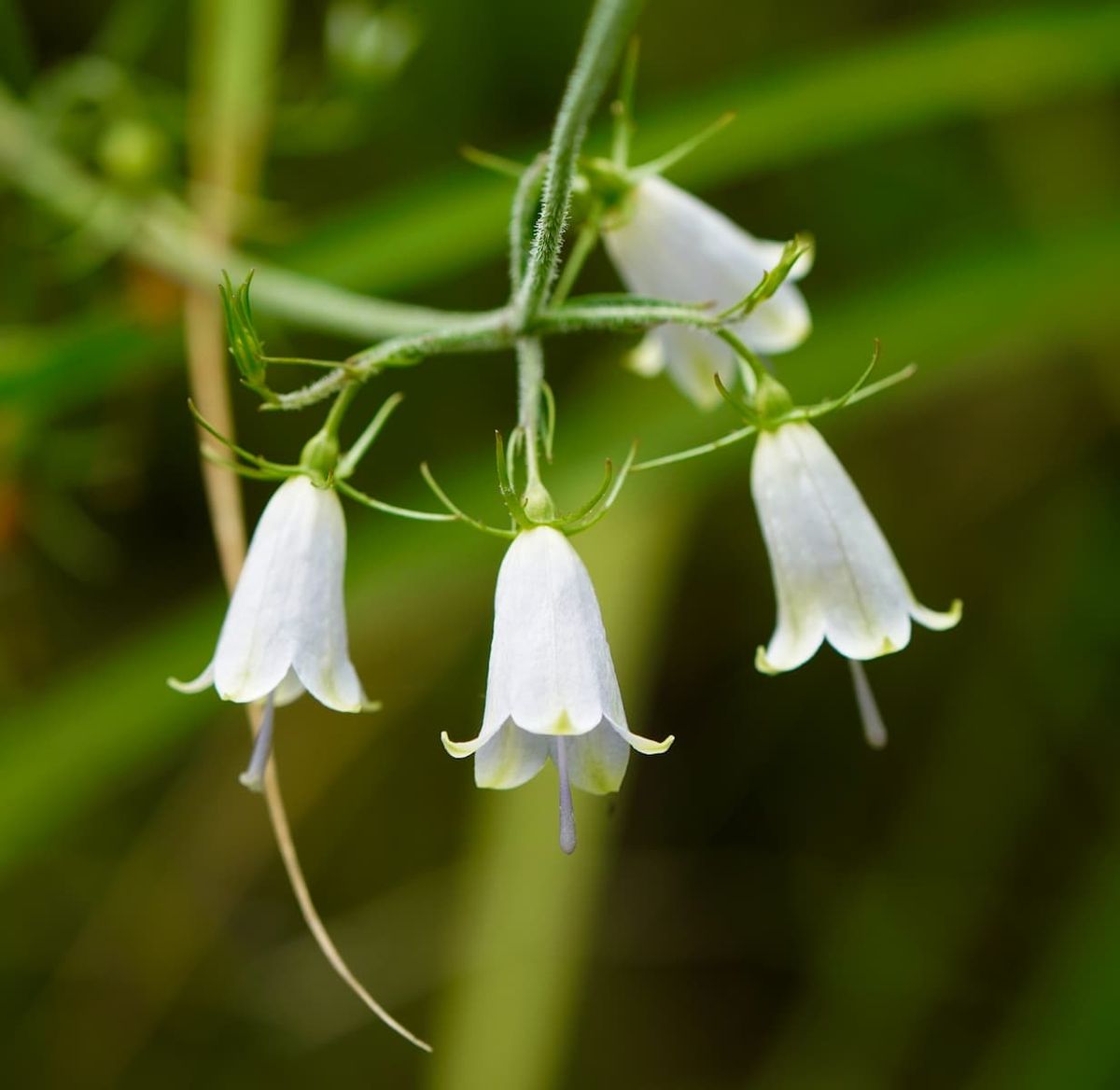

This plant caught my eye as it reminded me a little of a bluebell. If you’re near a professional botanist you might be hearing a stream of foul language, as Adenophora triphylla is not at all closely related to bluebells (Hyacinthoides non-scripta). Unless you’re next to a Scottish botanist, because in Scotland bluebell can refer to harebell. Adenophora triphylla is a much closer relative to the harebell than the bluebell, as it’s in the Campanulaceae, sometimes called the bellflower family. It’s the family which includes Campanula and Lobelia.
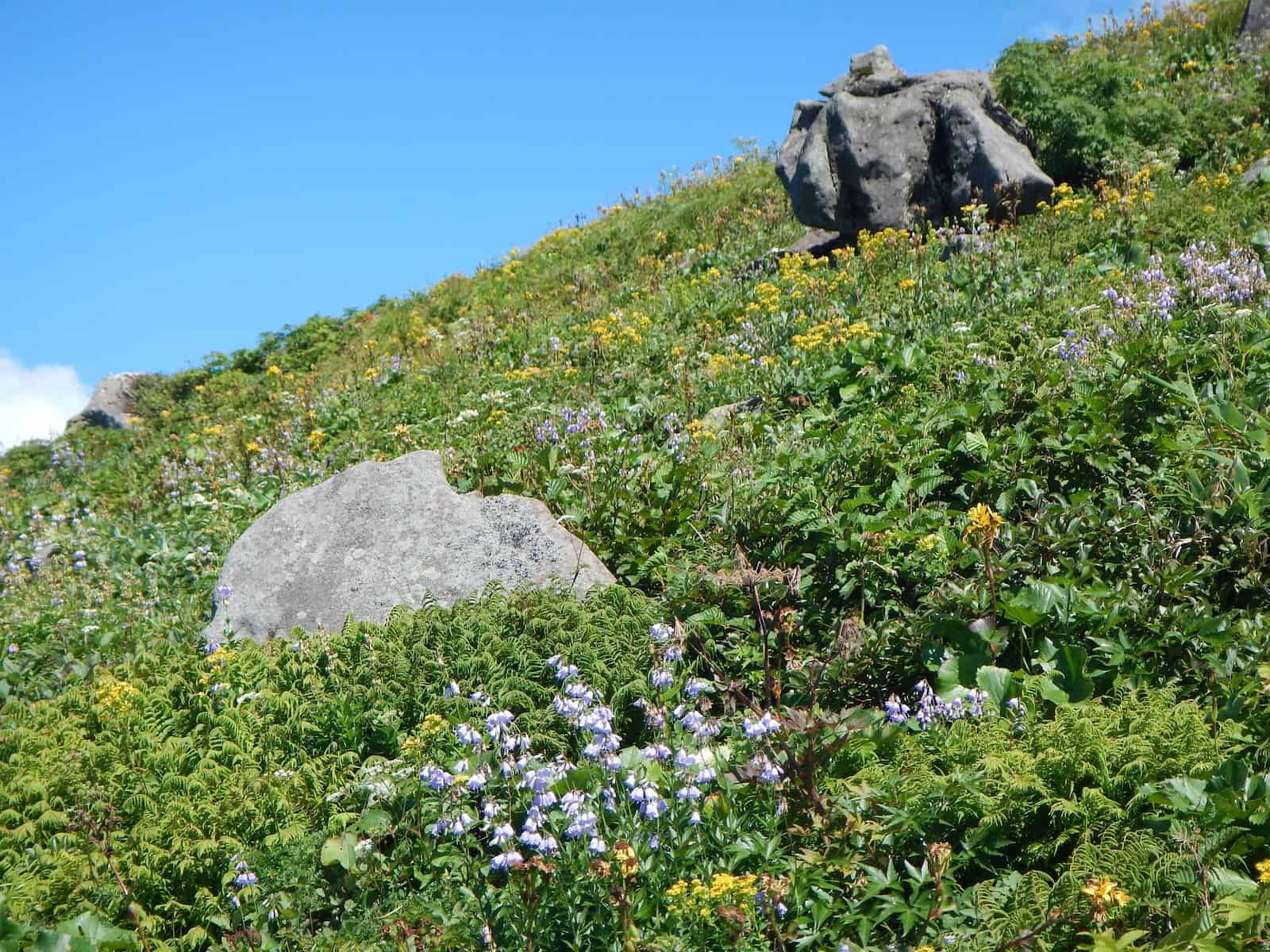
You can find the Campanulaceae around the world, but Adenophora triphylla is an East Asian plant, ranging from Southern Siberia in the north to Laos and Vietnam in the south. GBIF records show a concentration in Japan, Korea and China. Curtis’s Botanical Magazine has it in broad-leafed forests, scrub, coastal sand and meadows, up to 1770 m, and you’ll find it in grasslands, mountainsides and along rivers.
One way Adenophora triphylla differs from a bluebell is in its pollinators. They look a similar shape, so you’d expect similar pollinators, which would be bees. In fact Funamoto and Ohashi have found that they court nocturnal moths. How do they know, seeing as bees visit the flowers? Well, they experimented to find out which visitors were pollinating the plants. They also point out that the flowers open after sunset, they produce nectar only at night and they time flower changes to be ready in the evenings. They might look bee pollinated, but their actions are all for moths.
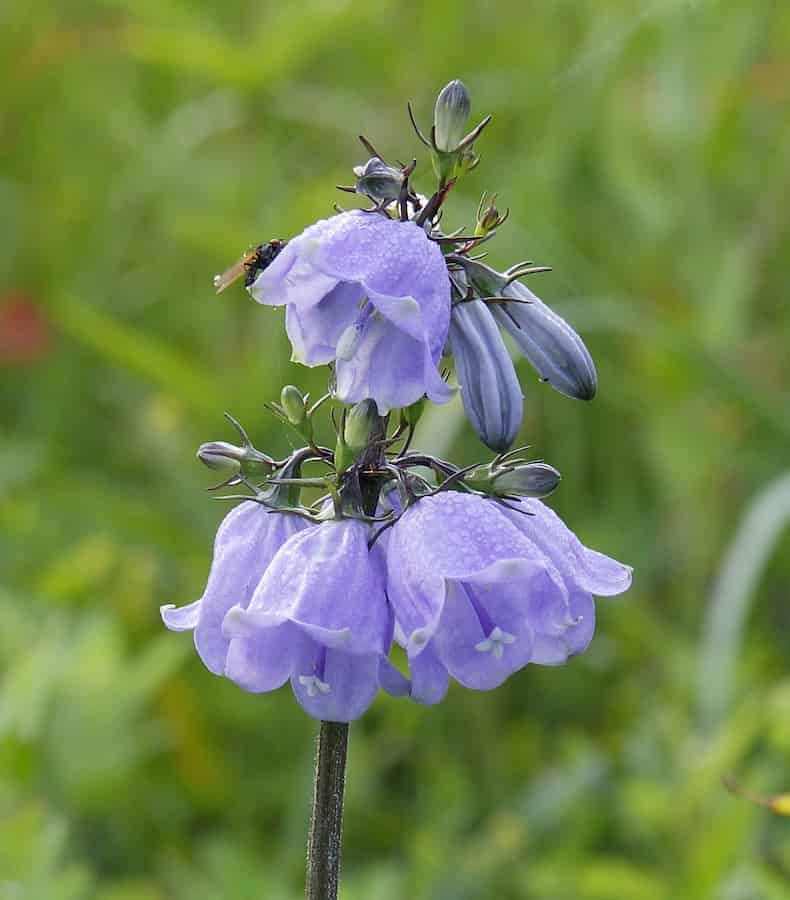
Once pollinated it grows small light seeds, but these aren’t very well adapted for spreading, relying on gravity, wind and possibly getting shuffled along the ground by running water. This lack of mobility makes it an indicator of traditional field margins, where it grows in undisturbed soils. It can also indicate ancient grasslands, meaning that it can act as a signal to find sites of high biodiversity that may need protection.
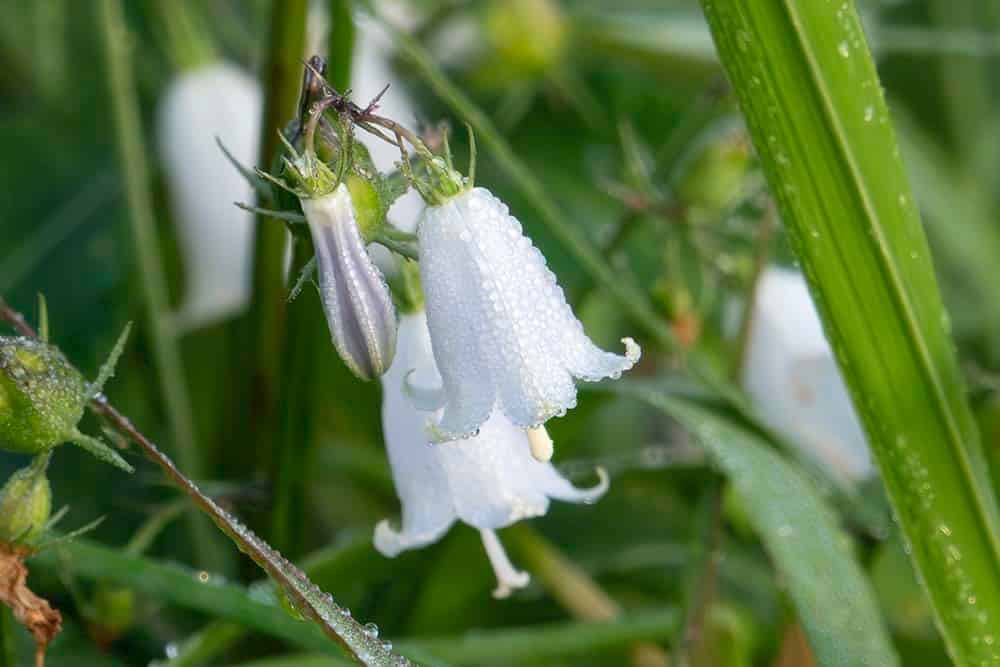
It’s eaten by generalist herbivores, like slugs, but a few new creatures have also developed a taste for it. The bug Strongylocoris leucocephalus has been spotted on Adenophora triphylla. This is a little puzzling as it hasn’t fed on some other plants in the Campanulaceae, so it’s not so clear what makes Adenophora triphylla palatable. Also, the ranges of the bug and the plant don’t exactly overlap each other, and that means that it’s possible Strongylocoris leucocephalus could use Adenophora triphylla to expand its range in the future. Another report out last month is “First Report of Northern Root-Knot Nematode Meloidogyne hapla on Adenophora triphylla in the Republic of Korea”. That’s bad news for humans because the roots are what we eat.

Via Wikipedia I found that the roots are eaten roasted, cooked in pickles or seasoning, or stir-fried as “sa-sam”. The roots are a popular ingredient in traditional medicine, with Koreans using them for respiratory diseases, and the Japanese making ‘shajin’ as an anti-inflammatory treatment. I’m relying on Sharma & Lee for that, as it seems most of the information is in Korean and Japanese, which is a bit beyond me. Needless to say you shouldn’t take this as an endorsement of using Adenophora triphylla roots. Taking medical advice from someone who doesn’t understand the language the instructions are written in would be a spectacularly bad idea.
Adenophora triphylla — observations by month
Worldwide · n = 929
Data: iNaturalist verifiable observations.
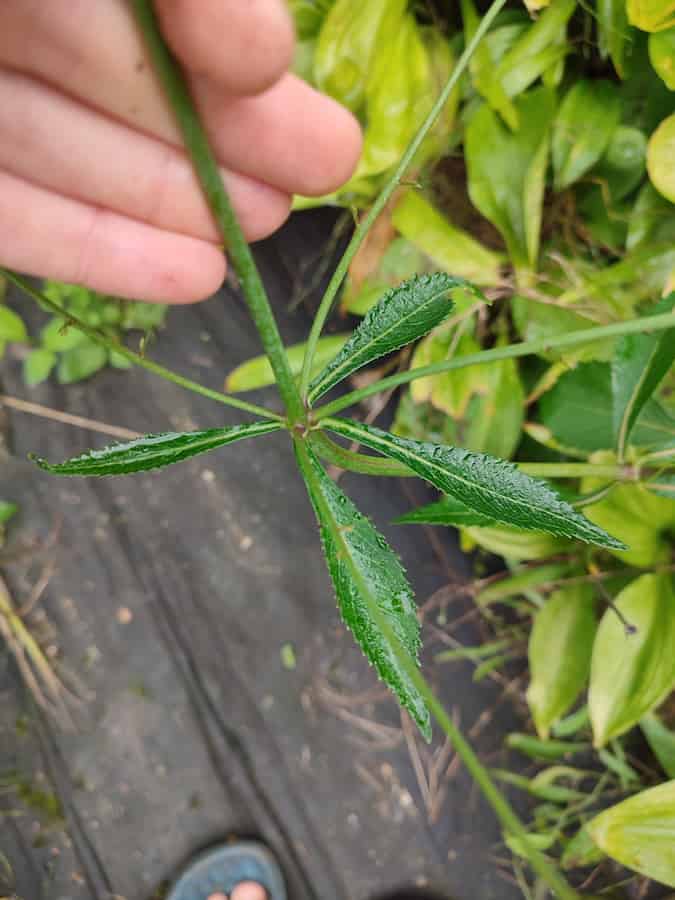
If you want to see Adenophora triphylla in the wild, now is the time. It’s currently at its peak of iNaturalist observations, though this is to some extent biased by the strong Japanese and Korean userbase. What you’re looking for is a slender erect plant, between 20cm (8 inches) and a metre (40 inches) in height. Up the stem are whorls of leaves, usually three or four, hence the epithet triphylla, three-leaved. Hall & Harvey in Curtis’s Botanical Magazine refer to it being easily confused with a Campanula. If you want to be sure that you’re looking at an Adenophora you want to get into the flower to see if you can find a nectary disc around the style.
If, like me, you’re not so good at examining flowers closely without damaging them, you might want to visit a botanic garden to see one. Unfortunately, it seems there’s not so many places in the world that conserve it. One reason for difficulty finding it might be the labelling. I’ve been using Adenophora triphylla, because that’s the accepted name. Mostly. A recent Flora of China has listed it as Adenophora tetraphylla. Also, the original description was published in an obscure journal, so it has been described again, and again, and again. Add on the usual accumulation of names as proposed species are combined into one, and you get 95 synonyms for the plant listed on POWO, including Adenophora hakusanensis, Adenophora verticillata and Campanula tetraphylla. It looks like a bluebell, advertises to bees while working nights for moths, and answers to ninety-five names.
Cover image: Adenophora triphylla in Japan by gg_copen / iNaturalist CC BY-NC