
Dearest TWiB Readers,
We hope you're enjoying our featured articles on Digital Botany. Week 2 has just been published and Week 3 starts today, when we'll be showcasing the relationship between specimens, art and culture.
Today, read an in-depth interview with Dr. Barnabas Daru on the exciting research opportunities herbarium collections offer. Tomorrow, learn about Faith Fyles, who worked from 1911-1931 for the Canadian Department of Agriculture as a botanist and artist. And on Friday, unravel the connections between plant and humans with a look at the ethnobotanical collection of the Rio de Janeiro Botanical Garden in Brazil. Plus, we will have our regular posts on topics of interest such as "The Plants Closest to Extinction Are the Ones Science Often Knows Least" and "Scaled Gardeners: How Fish Dictate the Future of the Amazonian Flooded Forest", which will publish throughout the week.
This past Saturday brought the return of Sudoku Garden. In it, we pay tribute to the immense contributions of Peter Raven to the Missouri Botanical Garden and the global plant science community. He sadly passed away earlier this year. The Sudoku marks what would have been his 90th birthday on 13th June. We also jump on the World Cup bandwagon with Plant Hunt, looking at the World coming to North America.
Below, we share the latest Botany One stories, botanical news, conversations from Mastodon and Bluesky and career postings.
Until next time,
Sarah (webmaster@botany.one)
On Botany One
Digital Botany Focus Issue Week 2:
 Magda Upton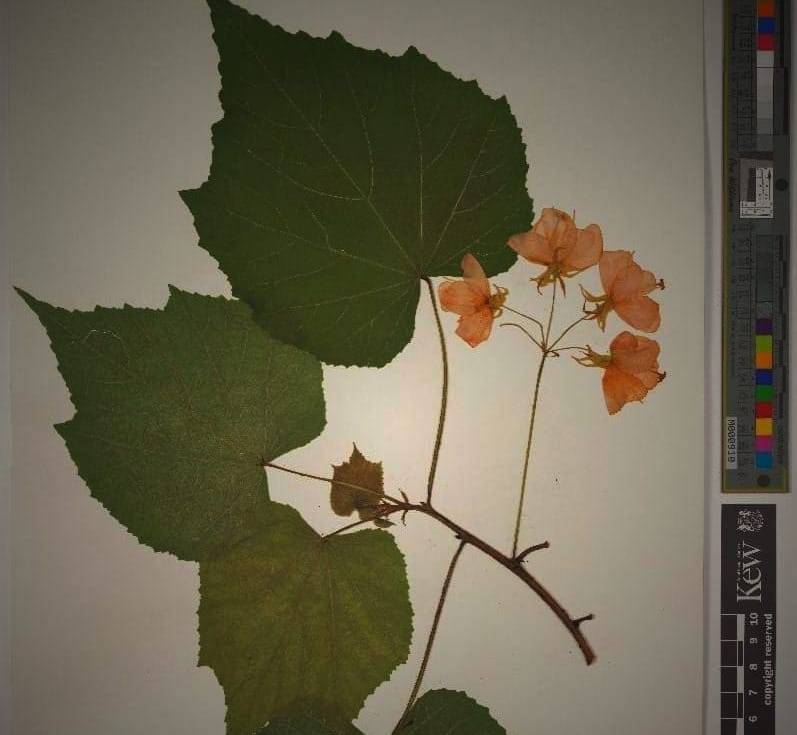
 Magda Upton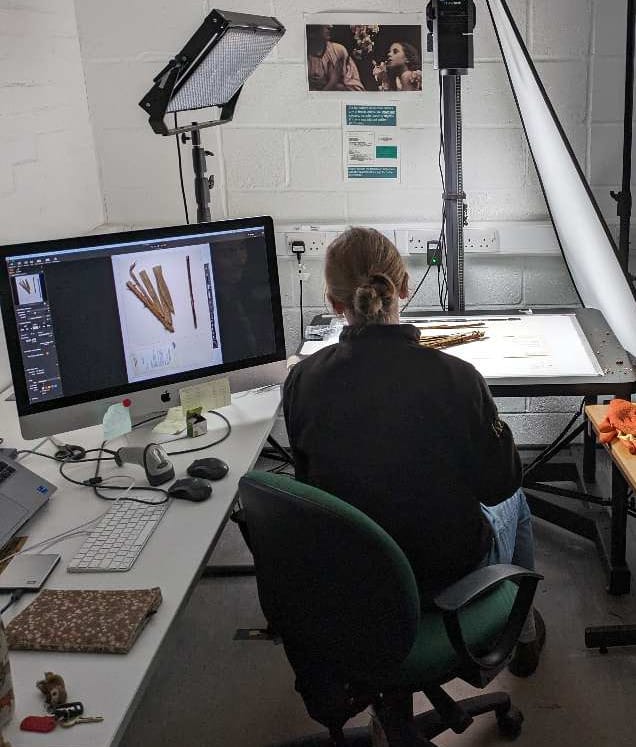
 Carlos A. Ordóñez-Parra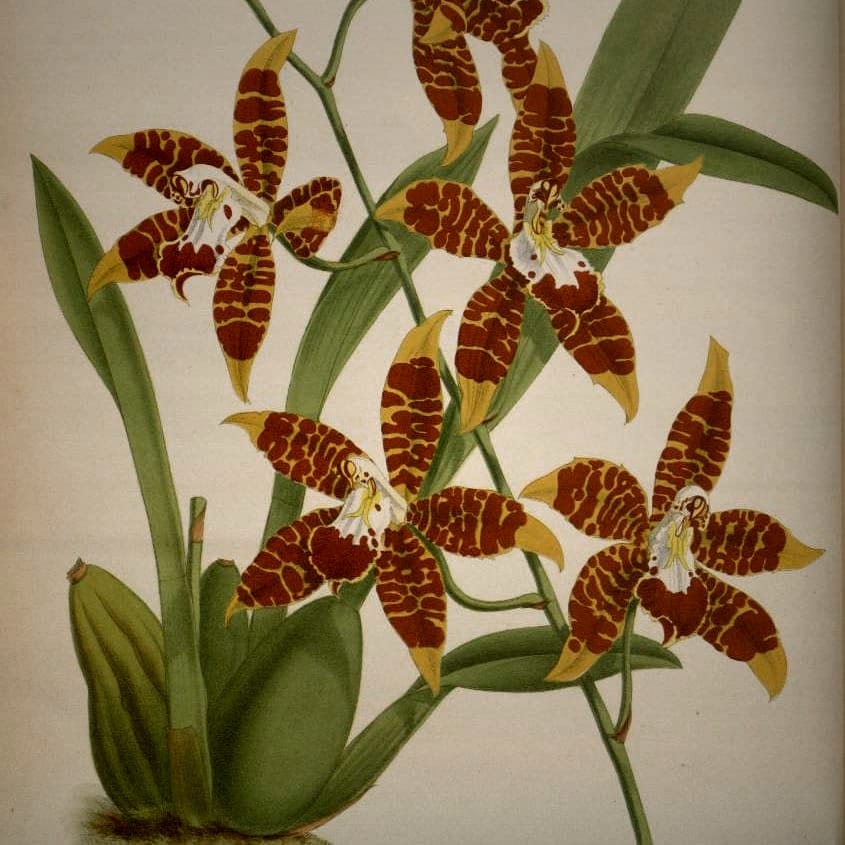
Regular Featured Articles:
Plant of the Week:
 Sarah Covshoff
There was also last week's Week in Botany, with Week 1 of Digital Botany, fragrant libraries and the effect of urban heat on lichens and bryophytes.
Sudoku Garden is back, with a tribute to the legacy of Peter Raven.
In AoBC Publications
- The EU Nature Restoration Regulation as an opportunity for kelp forest conservation and restoration in Europe 🆓
- Effects of contrasting herbivore cues on seedlings of a long-lived woody tree: Growth, chemistry and resistance to herbivores 🆓
- Site-specific variation in flowering phenology of a spring ephemeral plant and its implications for phenological mismatch with pollinators under climate change 💰
News & Views
 Dynamic Ecology
 UF/IFAS Extension Polk County
 The Guardian
Science Shared
Three botany papers widely shared on Bluesky this past week were:
- Conserved TIR-only proteins drive transcriptional defense and basal immunity in dicot and monocot plantshe controls that got out of control 🆓
Laessle, H. et al. · bioRxiv - Chromosome gigantism and auxin deconjugation underpin gall induction in a horned gall aphid 🆓
Qin Lu et al. · bioRxiv - Rational design of T-DNA vectors enables predictable, single-copy integration in Arabidopsis thaliananticipate, acclimate, recuperate and remember: How spatiotemporal signal integration controls flooding stress resilience in plants 🆓
Shaw, W. M. et al. · bioRxiv
You can see the top 20 with more details at Science Shared: June 13.
Careers on Bluesky
Please note these are not jobs I am offering. Nor can I help you with any visa requirements. At time of writing there are around 100 other jobs posted at Botany One.
 rbge.org.uk
 Cornell University
 Agristok
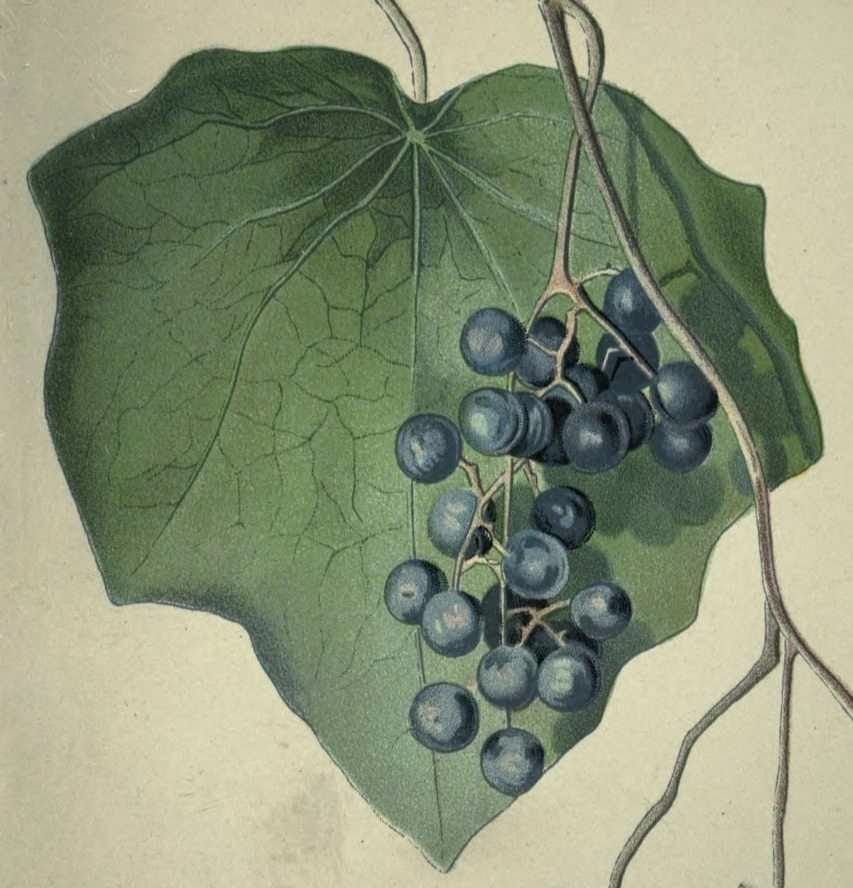
Cover Image: Faith Fyles’s illustration of Canada moonseed, a toxic climbing plant often mistaken for wild grape as seen in her book Principal Poisonous Plants of Canada published in 1920. Source: BHL via Flickr (Public Domain). – Alisa Abramovich, from her upcoming article "Hidden Stories in Collections: How Art and Science Come Together after Digitisation".