Dearest Gentle TWiB Readers,
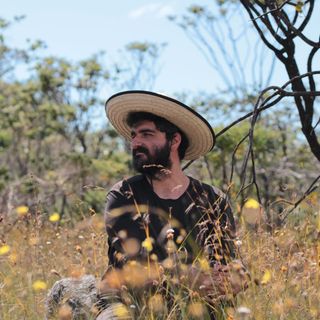
Today, the Botany One newsletter is brought to you by me, Carlos. You may not know me yet, but I hope you have come across some of the stories and interviews I write and edit for Botany One.
You may remember that, about a month ago, Sarah mentioned a small experiment we were running at Botany One: could someone other than Alun send out the weekly newsletter? Sarah passed that test with flying colours, and if you are reading this, it means I have not embarrassed myself too badly either.
It feels like a particularly good week for me to take the lead on TWiB. Here in Brazil, where I currently live, April 17 marked National Botany Day. The date commemorates the birth of the German naturalist Carl Friedrich Philipp von Martius, author of Flora Brasiliensis, a landmark work in the history of Brazilian botany.
To mark the occasion, Brazilian and international media celebrated the country’s botanists and the remarkable work they do in one of the world’s most biodiverse nations. For example, Mongabay revisited this exciting piece on Brazilian campos rupestres, a type of grassland found on rocky outcrops at the tops of the most ancient mountain ranges.
Next week, Alun should be back assembling the latest news in botany being shared on Mastodon and Bluesky.
Until next time,
Carlos (webmaster@botany.one)
On Botany One
Jason Cantley: "Plants Changed How I See the World"
Botany One interviews Dr Jason Cantley, an evolutionary botanist linking fieldwork, phylogenetics, and conservation, with a strong commitment to mentoring students in plant science.
Kelp Quest! Take the Plunge
The Seattle Aquarium needs your help for a seafloor survey
This week's Sudoku Garden takes you to Tomatomania, a worldwide celebration of this beloved fruit, with events popping up in the US. This week's Plant Hunt takes you on a journey through the flora of my country, Colombia —a really nice surprise, thanks Alun! Finally, this week's Plant of the Week is Fritillaria meleagris, better known in the UK as the snake’s head fritillary.
News and Views
Mauricio Contreras has been recognised as an exceptional Early Career Researcher by the Biochemical Society. Currently based at the University of Tübingen, Germany, Mauricio previously spent several years at The Sainsbury Laboratory (TSL), where he did his PhD and later advanced to the role of postdoctoral researcher.
 The Sainsbury Laboratory
Cambridge researchers have identified a minimal toolkit of genes that controls how plants grow, revealing a biological system that has remained virtually unchanged for over 450 million years.
 University of Cambridge - Department of Plant Sciences
The American Society of Plant Biologists (ASPB) is pleased to announce the recipients of its 2026 awards, which honor distinction in service, outreach, education, and research.
 Plant Science Today
In March, the Australian Government announced that the Alpine Ash forests of mainland Australia have been listed as an Endangered Ecological Community under national environmental law. The Australian Government made the decision based on the recommendations of the independent Threatened Species Scientific Committee, although it has been opposed by logging lobby interests such as the […].
 Mongabay
The remarkable catalog of dates is one of the longest-running records of climate change. Its creator died, setting off a search for a successor.
 The New York Times
The post discusses a study by Nisha Rokaya et al. exploring a synthetic lichen system to address concrete cracking. This approach combines fungi and algae/cyanobacteria to create a self-healing sol….
 Plant Cuttings
Amid growing evidence of fungi’s key role in ecosystems and storing carbon, African scientists are championing the need to preserve ‘funga’ as much as flora and fauna.
 The Guardian
This Week in Botany
5 Years Ago: A more realistic model of sucrose accumulation in sugarcane
10 Years Ago: Life, death and what sphagnum does afterwards
15 Years Ago: Seed persistence and germination traits
Scientific Papers
“This review highlights recent advances that underscore the importance of bryophytes as plant synthetic biology systems. Progress across mosses, hornworts, and liverworts is discussed, with particular emphasis on Marchantia polymorpha as a leading model.”
 ACS Synthetic Biology (April 2026)
Xiushun Wang, Zhao Zhang, Ting Cao, Wenjing An, Jiarui Zhang, Jing Feng et al.
“Light orchestrates cotyledon greening and growth by coordinating chloroplast development with cell division and expansion, yet the molecular integrator of these processes remains unknown. Here we identify RDE (REGULATOR OF DG1 EXPRESSION), a conserved DNA architectural factor that synchronizes thylakoid protein complex biogenesis during chloroplast development with the G1–S transition of cell cycle progression in Arabidopsis thaliana.”
 Nature Plants (April 2026)
“This study investigated the molecular basis of nonhost resistance (NHR) to potexviruses in the Brassicaceae, focusing on the non-nucleotide-binding leucine-rich repeat (NLR) resistance gene JACALIN-TYPE LECTIN REQUIRED FOR POTEXVIRUS RESISTANCE1 (JAX1). We found that JAX1 is a Brassicaceae-specific conserved gene that has been lost or pseudogenized in some species, and duplicated in others. Most JAX1 orthologs from diverse Brassicaceae species effectively inhibit plantago asiatica mosaic virus (PlAMV) accumulation, indicating that antiviral activity is conserved among the Brassicaceae.”
 New Phytologist (April 2026)
Mathias Brands, Vicente Ramírez, Laura Armbruster, Ruben Eichfeld, Asmamaw Bidru Endeshaw, Taim Nassr et al.
“Intracellular accommodation of beneficial fungi requires host cell wall remodeling that avoids excessive immune activation. The root endophyte Serendipita indica, a generalist mutualist capable of colonizing both monocot and dicot plants, employs a monocot-specific enzymatic module to deconstruct acetyl-xylan, the dominant hemicellulose of grasses. Central to this module are the glycoside hydrolase SiGH11, which releases acetylated xylooligosaccharides, and SiAXE, a previously uncharacterized SGNH-like acetyl-xylan esterase that sequentially removes acetyl groups from soluble XOS.”
 Molecular Plant (April 2026)
“Here we established a genome–host association approach to infer statistical associations between pathogen allele frequencies and host of origin for 832 fungal strains isolated from 12 different host cultivars during a natural field epidemic. We identified 2 to 20 genes associated with specialization to the different wheat cultivars, including one known effector gene, Avr3D1, as well as ten pathogenicity-related genes that provided a proof of concept for our genome–host association approach.”
Nature Plants (April 2026)
“Puzzle-shaped epidermal cells can reduce mechanical stress during organ growth and, as shown here, can also record tissue expansion history in their outlines. By combining mechanical simulations with time-lapse imaging, we find that transitions from directional to isotropic expansion induce new lobes along the previous growth axis, and that reversing the sequence of anisotropic and isotropic phases yields hybrid shapes that preserve the sequence of growth phases.”
 EMBO Reports (April 2026)
“Here, we combine live-imaging, genetics, pharmacological treatments, and modeling to investigate the cellular and molecular basis of phyllid development in the model moss Physcomitrium patens. By tracking phyllid morphogenesis from a single initial cell to full maturity, we uncover the cellular growth dynamics underlying organ development.”
 Science Advances (April 2026)
“Tree crown damage from disturbance events strongly influences forest demography, yet its effect on stem growth remains poorly quantified, with both positive and negative impacts reported. Hurricanes provide a powerful natural experiment to examine these dynamics, generating a broad range of structural damage across individuals and forest stands. Here we assess how crown damage from Hurricane María (2017) affected poststorm stem growth in a wet subtropical forest in Puerto Rico by combining airborne LiDAR with field measurements for 1,082 trees.”
 Proceedings of the National Academy of Sciences (April 2026)
“Eukaryotic cell division is controlled by cyclins and cyclin-dependent kinases (CDKs). The high number of cyclin-CDK pairs in flowering plants hinders functional analysis due to redundancy and how this system might have worked in early land plant ancestors remains unresolved. Our phylogenetic analysis showed that non-seed plants have a simple system of cell cycle genes, suggesting that the complexity in seed plants is a derived feature. To explore simpler systems, we studied the liverwort Marchantia polymorpha, which possesses a reduced, non-redundant set of core cell-cycle genes.”
 The Plant Cell (April 2026)
“This review synthesizes plant-microbe coevolution within a deep-time, three-pillar framework: organellogenesis, root evolution, and immune gatekeeping, linking ancient endosymbiotic events (mitochondria, chloroplasts, and nitroplasts) to contemporary holobiont-level phenotypes and biotechnological applications.”
Molecular Plant (April 2026)
In AoBC Publications
Careers
We are recruiting for a Project Manager to deliver two complementary projects in the Republic of Ireland: the Targeted Aquatic Plant Project and the Irish Grassland Project. If you are keen to help support botanical skills development in Ireland, this part-time post could be for you.

Botanical Society of Britain & Ireland
The Postdoctoral Research Scientist project consists of engineering root architecture via cell fate-specific integrase switches. This post requires plant biology expertise and/or engineering biology expertise. The post holder will receive training in engineering biology, microscopy, and data analysis as required. The post holder will have the possibility to bring their expertise and ideas to the project and to mentor undergraduate and graduate students.
Earlham Institute
‘Just acquisitions? Law and ethics over time in Kew’s overseas plant collecting history’ with Royal Botanic Gardens, Kew and Royal Holloway, University of London. This project, undertaken in RHUL’s Department of Law and Kew Gardens, explores the history and trajectory of Kew’s plant collecting and plant export activities since Kew’s colonial
beginnings, including contemporaneous developments in international environmental law,
through to global justice and human rights issues.
Royal Holloway University of London
The Department of Agroecology at Aarhus University, Denmark, invites applications for a position as Professor in Epidemiology/Pathology for agricultural crop plants. The position is anchored at the section of Plant Pathology and Microbiology, where we combine fundamental and applied research within plant disease epidemiology, including evolutionary and molecular interactions between plants and microorganisms of relevance for crop resilience towards biotic and abiotic stresses. The professorship is a full-time and permanent position starting on 01-01-2027 or as soon as possible thereafter.

Aarhus Universitet
Passionate about plant stress responses, molecular biology, and bioinformatics? Join our lab as PhD candidate and investigate why unique plant cells respond so differently to the same environmental stimuli. You’ll gain hands-on experience with cutting-edge single-cell genomics and functional genomics to uncover the drivers of plant transcriptional responses to the environment. If you're eager to drive discovery in plants, we want to hear from you.

Utrecht University
Kauri dieback disease is a significant conservation threat to iconic kauri (Agathis australis) trees. Infection with the soil-borne pathogen, Phytopthora agathidicida, causes root degradation, basal trunk lesions, canopy dieback and eventual tree death. While there is no current cure for kauri dieback, there have been promising results with phosphite treatment improving tree health and longevity. However, more research is needed to determine how best to use phosphite to manage tree health. Relevant questions include: How often should trees be treated with phosphite? What is the long-term physiological impact of phosphite treatment? How can phosphite be used at the landscape-scale to protect forest health?

University of Auckland
We are seeking a Postdoctoral Scholar to join our research program focused on immune receptor engineering and spatial analyses of plant pathogens interactions using computational and imaging approaches. The position will involve integration of molecular, imaging, and computational approaches.

University of California, Davis
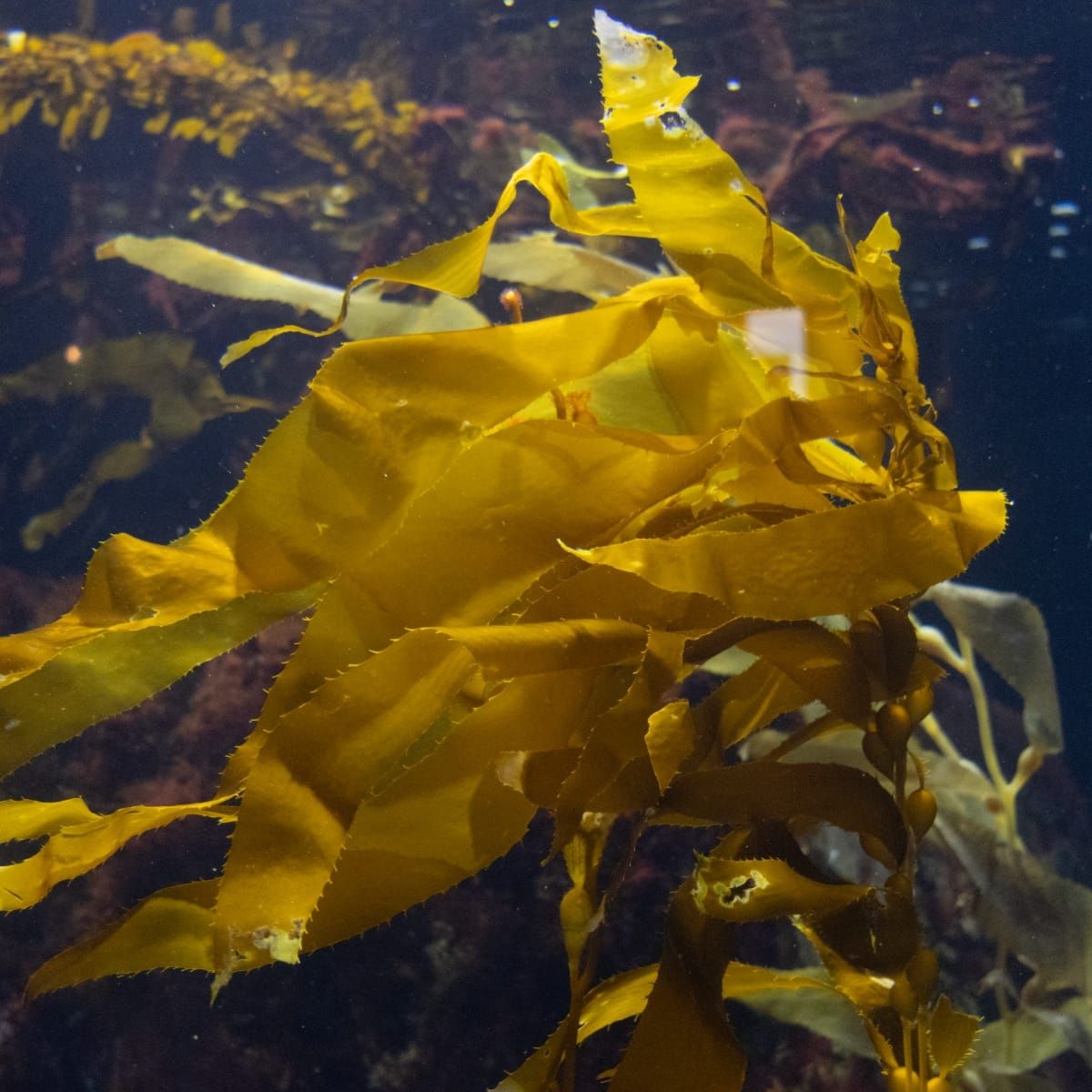
Cover picture: Giant kelp (Macrocystis pyrifera) at the Aquarium of the Pacific in Long Beach, California, United States. Photo by Coughdrop12 (Wikimedia Commons).