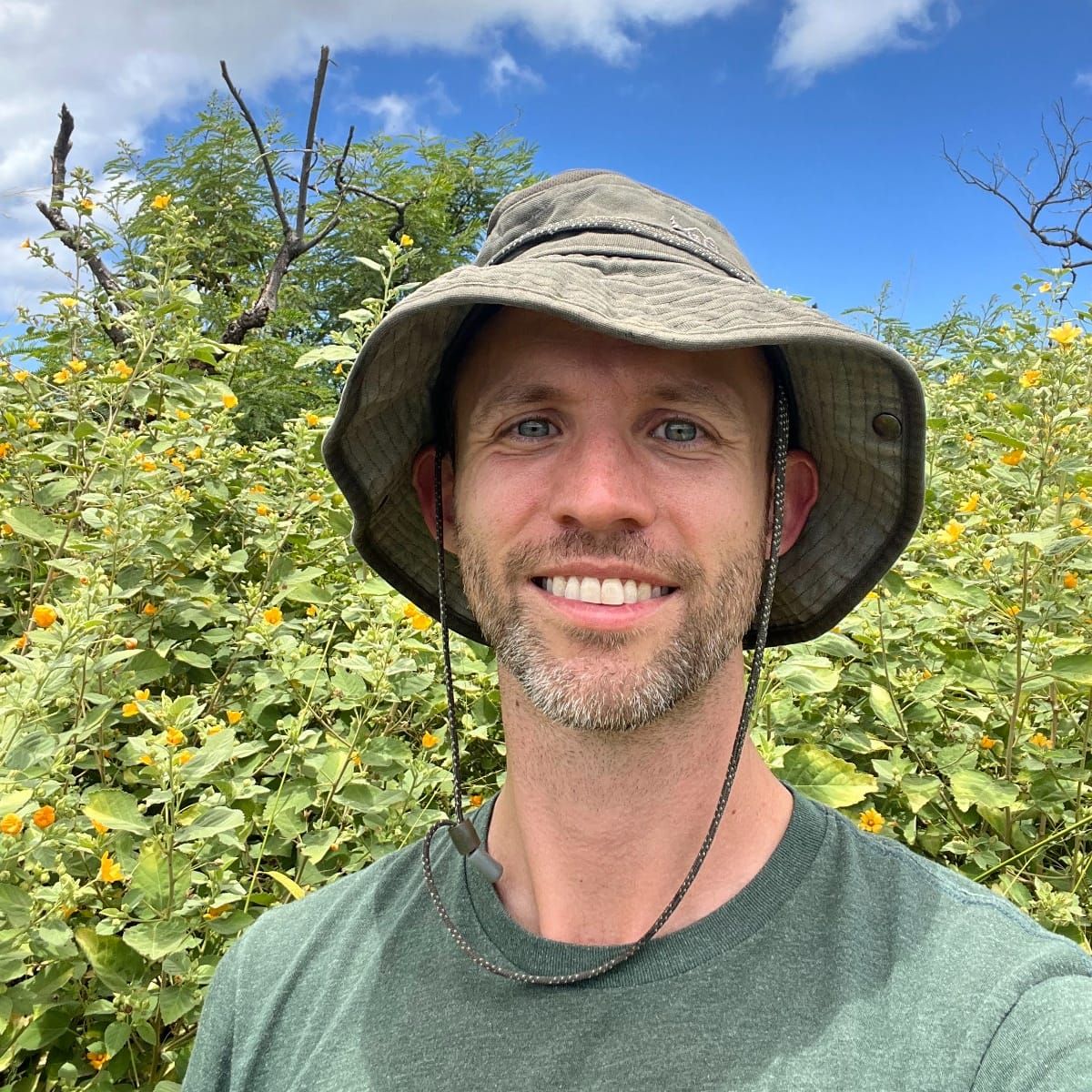

Plants are incredibly diverse, and so are botanists! In its mission to spread fascinating stories about the plant world, Botany One also introduces you to the scientists behind these great stories.
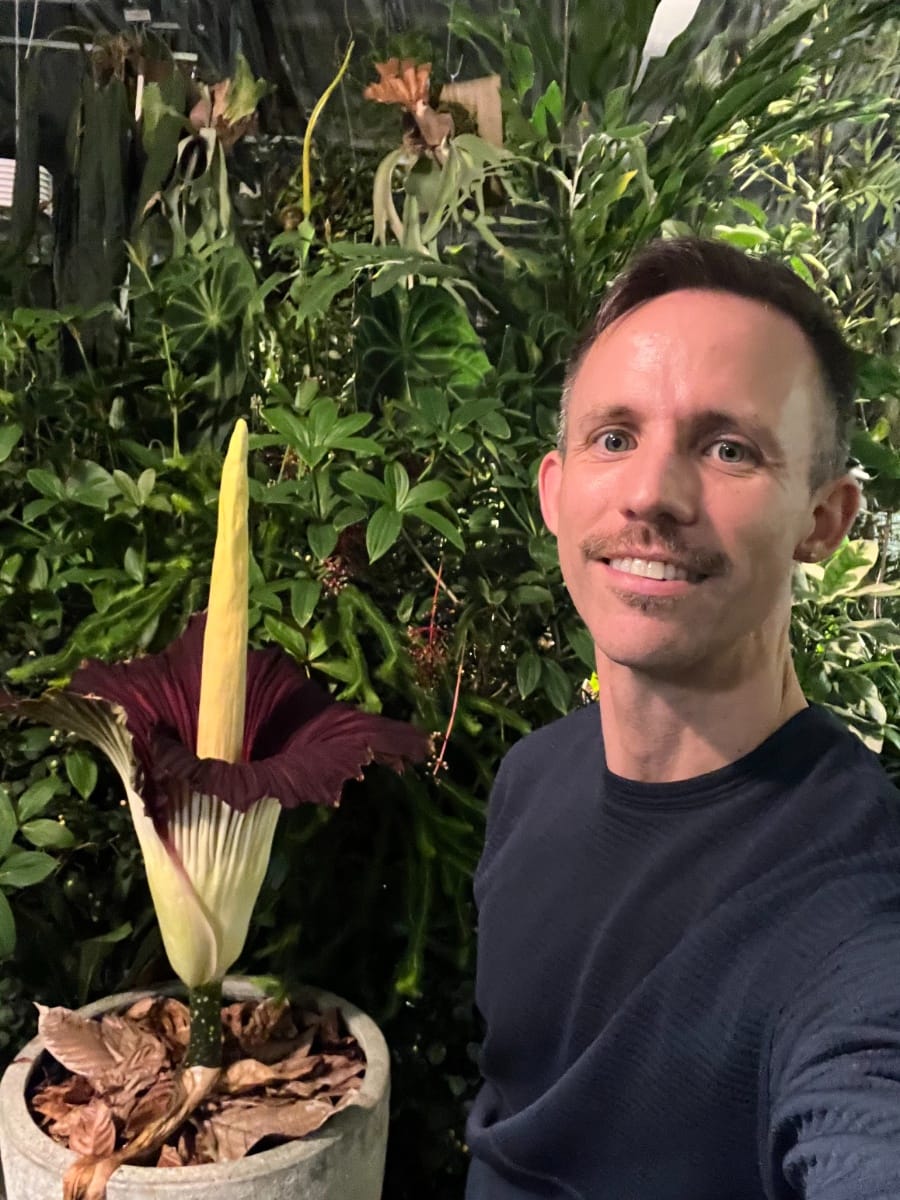
Today, we have Dr Jason Cantley, an evolutionary botanist and teacher-scholar at San Francisco State University in the United States. His research explores how plant diversity is generated and maintained, particularly in island and semi-arid ecosystems, using phylogenetics and conservation genetics. At its core, Cantley’s work asks how evolutionary history shapes the present, and how that knowledge can help conserve rare and threatened species.
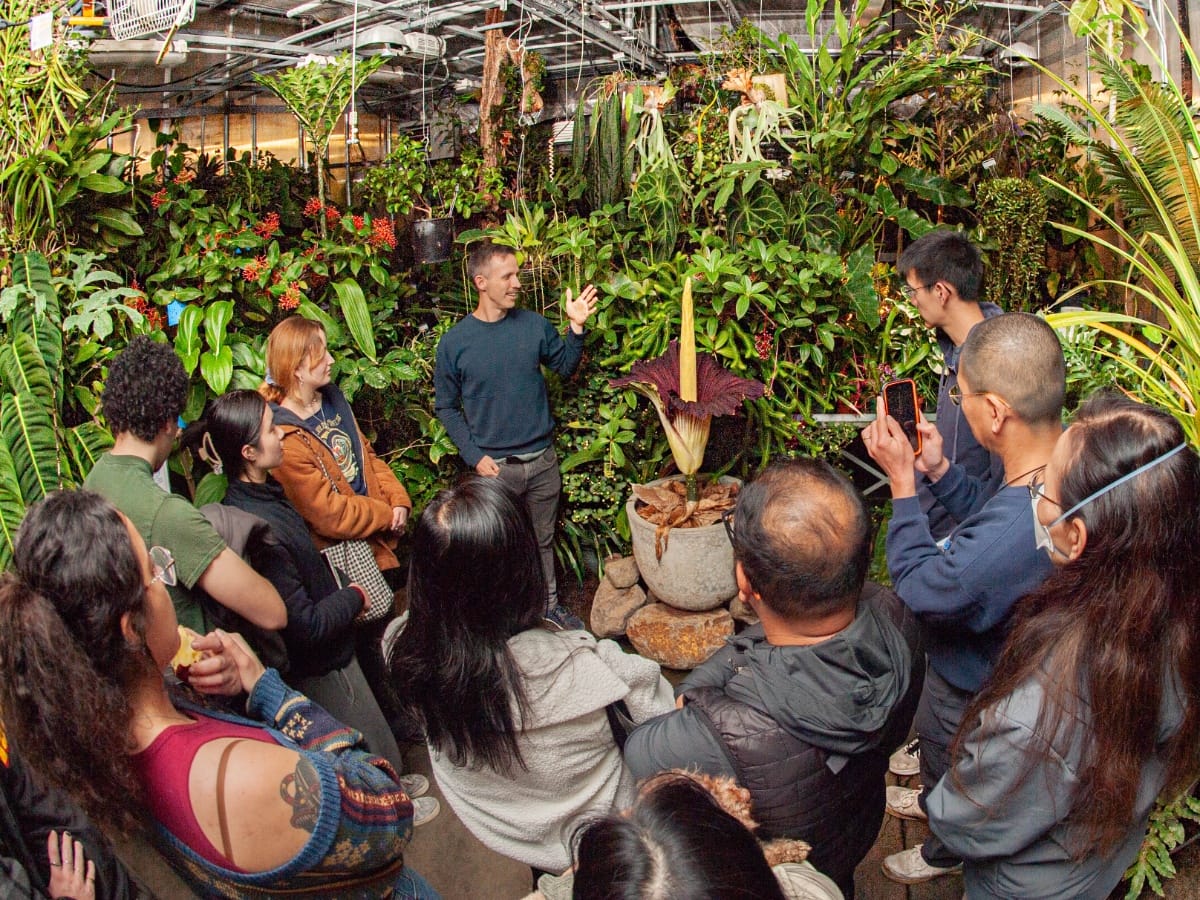
Working at a primarily undergraduate, minority-serving institution shapes how he does science. Cantley’s lab is collaborative and student-centred, creating access to fieldwork, herbarium research, and collections-based science for students who might not otherwise have those opportunities. Many of his students go on to professional roles in conservation agencies, environmental consulting, and graduate programmes. Training the next generation of biodiversity and conservation leaders, as he puts it, is one of the most meaningful parts of his career. Cantley’s research continues to be shaped by work in California, Hawaiʻi, and Australia, and he enjoys helping students connect big evolutionary stories to real conservation decisions. You can find more information about Cantley’s lab on its website.
What made you become interested in plants?
My interest in plants deepened as I began encountering new floras. Moving from Ohio to Kentucky as an undergraduate, I learned to recognise how Midwestern floristic elements intersect with the Southern Appalachian mixed mesophytic and Eastern Deciduous forests. Species composition shifted across short distances, and I began to see floras as reflections of geology, climate, and history rather than lists of plants.
That curiosity took me to tropical north Queensland, Australia, where I immersed myself in studying the language of plant systematics in an entirely new flora. This is where I trained my plant vision through lived experiences. Total immersion in eucalypt woodlands and relic rainforest patches reshaped how I thought about biodiversity and evolutionary relationships.
Graduate school in Hawaiʻi transformed that foundation into a passionate love for plants. Island biogeography and adaptive radiation were visible across lava flows, alpine cinder cones, rainforests, and bogs. Finding members of the silversword alliance felt like a treasure hunt through shifting habitats. Encountering coastal and inland mountain forms of ʻilima, Sida fallax, revealed how subtle changes in elevation and precipitation shape variation. The alignment of honeycreeper bills and tubular lobeliad flowers made co-evolution tangible. Plants changed how I see the world.
What motivated you to pursue your current area of research?
My early research was rooted in Hawaiʻi, where I immersed myself in the evolutionary detail of island systems. I studied a wind-pollinated group of Rubiaceae, the genus Coprosma, and became fascinated by how these endemic lineages diversified across isolated landscapes. That work drew me into field research in New Zealand and pushed me to think about biogeography across the Pacific Ocean. I began to see species not as isolated units, but as pieces of a much larger evolutionary and geographic story.
Returning to Australia for my postdoctoral work felt like a full-circle moment. It was where I had first learned to love plants, and now I was studying the evolution of sexual systems and biogeography in spiny solanums. That experience broadened my comparative lens and gave me my first sustained opportunity to involve undergraduates in meaningful research and fieldwork. Watching students engage directly with evolutionary questions in real landscapes changed how I thought about my role as a scientist.
Over time, curiosity deepened into responsibility. As I witnessed vulnerable endemic species and shifting ecosystems, conservation became central to my work. At San Francisco State, I now pair evolutionary research with mentorship, motivated to train students who will become the next generation of conservation leaders shaping how biodiversity is protected in a changing world. Watching them step into roles where their decisions shape real landscapes feels like the most meaningful extension of my work.
What is your favourite part of your work related to plants?
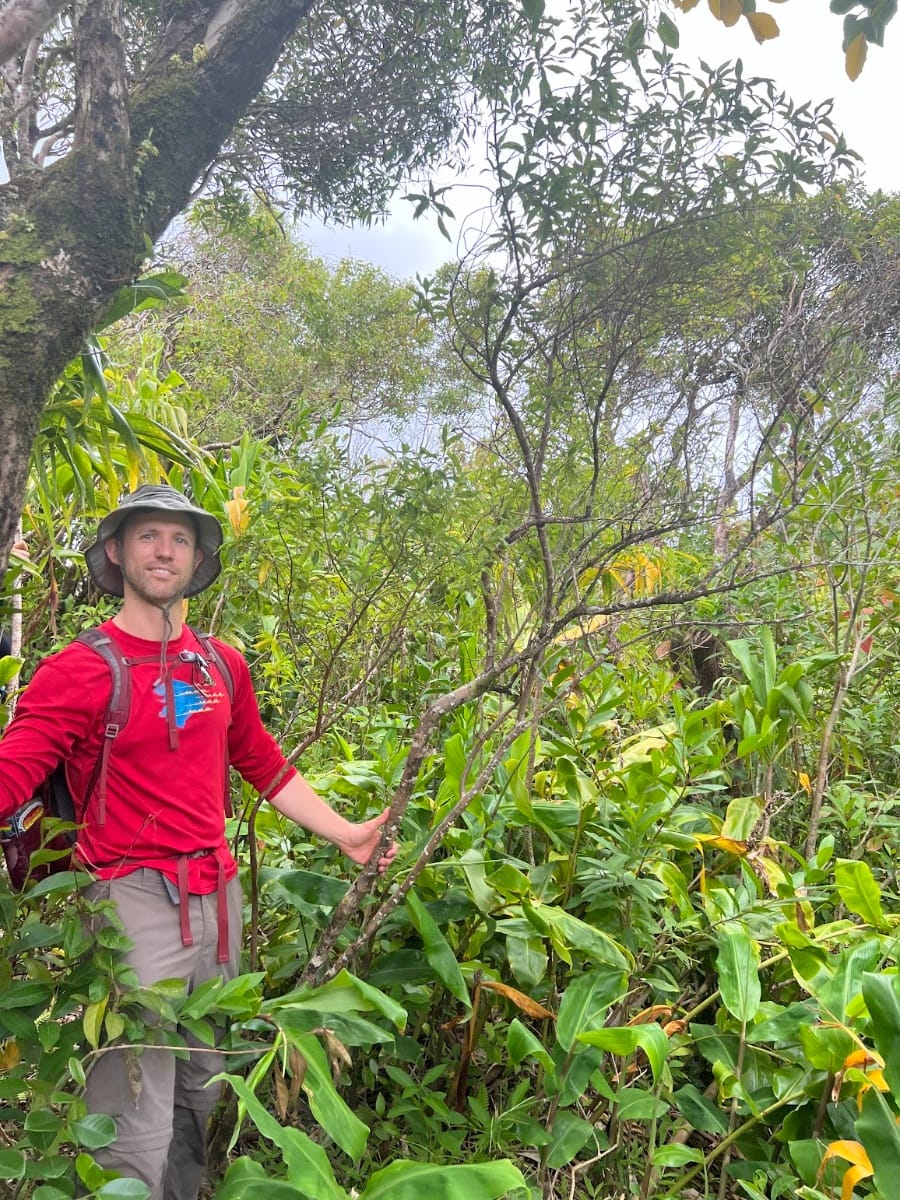
Being in the field is what I love most. After spending hours doing bioinformatic analyses, writing, and measuring morphological traits from herbarium specimens, nothing replaces seeing plants where they live. The field brings the work to life in a way no dataset can.
Encountering a species in its own habitat carries a particular kind of excitement. You see it anchored in soil, shaped by wind, surrounded by neighbours. Sometimes they appear exactly where you expected. Sometimes they surprise you. Years later, finding them again in a different valley or at a different elevation can feel like rediscovering an old friend under new circumstances. Each encounter adds depth, complexity, and intimacy.
When I take the time to slow down and let plants reveal themselves, I learn more than any at any other time in the research process. In the field, I am open to receiving new information. My mind quiets and my attention sharpens. There is deep satisfaction in noticing more, in letting patterns emerge through lived experience. A resulting mix of curiosity, surprise, and clarity is grounding. It brings me back to the sense of discovery that first drew me to plants.
Are there specific plants that have intrigued or inspired your research?
The Hawaiian silversword alliance was my first great inspiration. Seeing Argyroxiphium sandwicense on Maui, their silver rosette of leaves rising from red and black cinders in Haleakalā crater, felt almost unreal. That contrast of color and form against a volcanic landscape is something I still carry with me. Later, encountering Wilkesia on Kauaʻi in Waimea Canyon and Dubautia in wet forests of O‘ahu made the radiation feel even more astonishing. A single lineage expressing itself so differently across islands and habitats reshaped how I understood adaptive radiation.
Australia offered a different kind of revelation. I could not stop thinking about the unsung diversity of eucalypts within the Myrtaceae, or the incredible range of forms in Proteaceae, especially Banksia and Grevillea. The gummy bear–colored red, orange, and yellow flowers of Grevillea refracta against silvery foliage are burned into my memory.
During my postdoctoral work, I became captivated by the spiny solanums, especially Solanum asymmetriphyllum. I still think about one enormous individual growing protected from fire in a fissure of an ancient boulder in Kakadu National Park in the Northern Territory, her branches heavy with hundreds of golf ball sized fruits. I imagine her as a matriarch who has seeded countless offspring and is perfectly adapted to persist for time immemorial.
Could you share an experience that has marked your career?
On the Big Island of Hawaiʻi, I returned to a vista I had visited many times before. I expected the same sweeping expanse of ʻōhiʻa forest. Instead, the forest was deeply wounded. Hillsides that had once been textured with green and red flowers were now filled with the skeletons of dead. Their absence was as striking as the trees themselves. Rapid ʻŌhiʻa Death had moved through the forest with devastating speed. ʻŌhiʻa is a keystone species, foundational to Hawaiian ecosystems and culture. Seeing so many mature trees lost at once was disorienting. It was not gradual decline. It was sudden and I was moved to tears.
A second experience unfolded more slowly on the cliffs of Mānoa Valley on Oʻahu. For the better part of a decade, I watched volunteers passionate about conservation restore an invaded forest along a trail I returned to year after year. What had once been nearly 100 percent non-native cover gradually became a thriving native habitat within a decade.
Holding those two experiences in mind has changed how I approach this work. I carry both that knowledge of fragility and possibility with me into every landscape I visit.
What advice would you give young scientists considering a career in plant biology?
Careers in plant biology rarely follow a straight path. Mine certainly did not. What made the difference for me was finding mentors and community at moments when I was unsure whether I belonged.
Early on, I assumed that if I worked hard enough, the science would speak for itself. Over time, I learned that science is built through relationships as much as through data and analysis. Introductions at meetings, conversations after talks, small gatherings of people who share parts of your identity or interests; Those are moments that matter.
In 2016, I came out publicly as queer in Science magazine after years of quietly wondering whether there was room for my full self-identity in academia. That decision did not hinder my career as I feared it would. Rather, it revealed to me who really mattered and bolstered connections with people I had already been working with. I realised how much easier it is to do good science collaboratively when you live your authentic self.
Follow the questions that genuinely move you. Be intentional about the community you build around you. The community you build will shape your career as much as your research does.
What do people usually get wrong about plants?
What many people get wrong about plants is the assumption that landscapes are stable. Forests can feel permanent. Habitats can seem as though they have always been there and always will be. In reality, plant communities are dynamic and sometimes ephemeral. I have watched forests transform within a single decade. I have seen a keystone tree species collapse across entire hillsides, and I have seen degraded habitats recover through sustained restoration. I have stood beside individuals of critically endangered species and watched them die, knowing fewer than fifty remained. I have also watched their last seeds collected and stored, an attempt to carry a lineage forward.
Plants are not fixed features of a landscape. They are living systems responding constantly to disturbance, climate, disease, and human decisions. What we often underestimate is how contingent their persistence is and how much our actions shape what remains.