
Plants are incredibly diverse, and so are botanists! In its mission to spread fascinating stories about the plant world, Botany One also introduces you to the scientists behind these great stories.
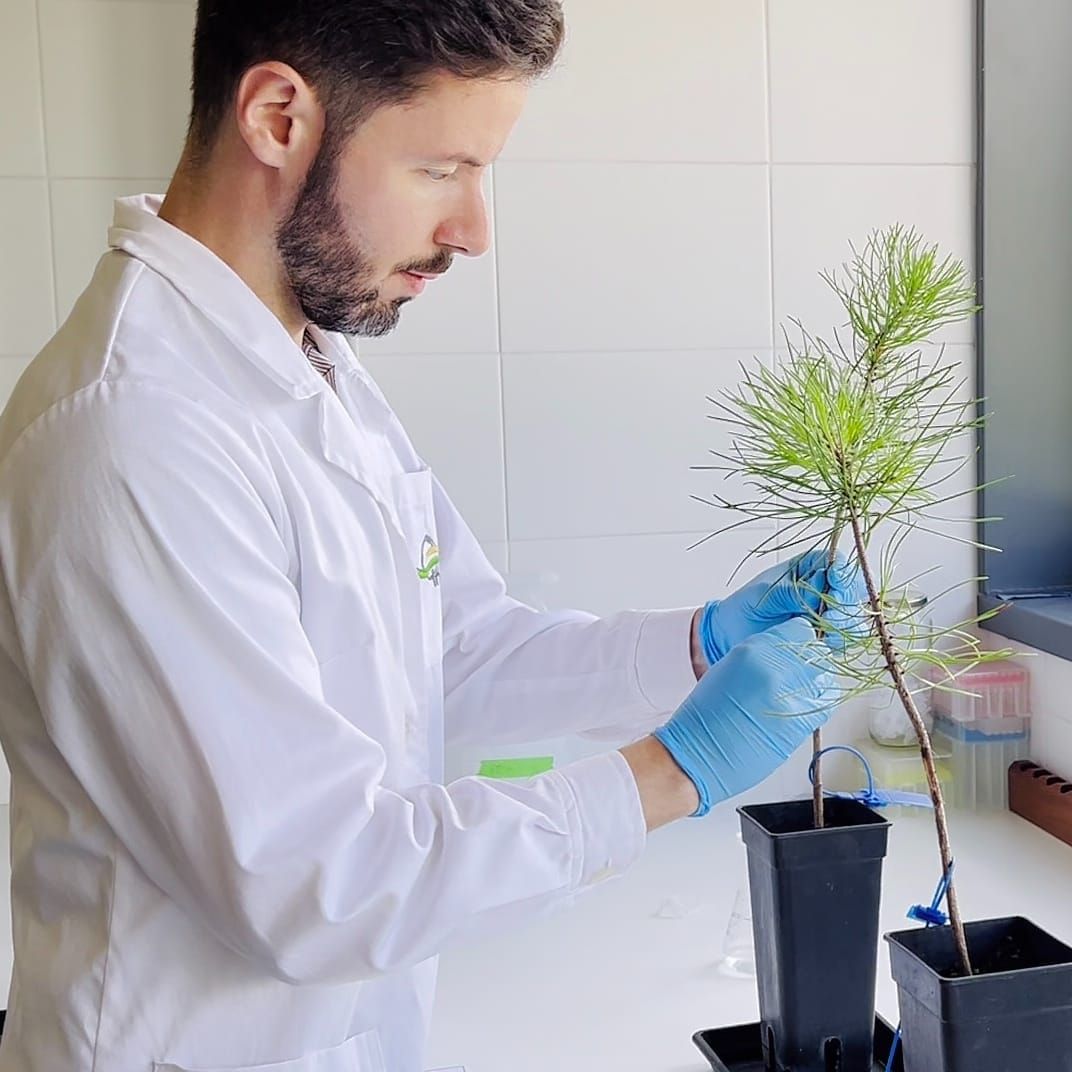
Today, we have David Pires, a nematologist working at the intersection of plant health and sustainable pest management. His research focuses on plant-parasitic nematodes, microscopic worms that infect plants and can cause major losses in agriculture and forestry. Pires is especially interested in nature-based solutions to control these pests, including biological control using natural enemies such as fungi. He is currently exploring these approaches against the pinewood nematode, a quarantine organism in many countries.
Pires holds a BSc in Biology-Geology and an MSc in Ecology from the University of Minho, where he first specialised in plant nematology. He is now a PhD candidate at the University of Évora, Portugal. His work across Portuguese research institutions and national and European projects combines molecular biology, ecology, and applied plant protection to understand how beneficial microbes can suppress nematode populations in agricultural and forestry systems.
Beyond research, Pires enjoys communicating science and contributing to the scientific community through editorial activities. Readers interested in following his work can visit his website, which includes links to his work and social media profiles.
What made you become interested in plants?
Actually, I wasn’t particularly drawn to plants during my undergraduate studies in Biology and Geology. My interest developed during my Master’s thesis, which involved screening common bean cultivars for resistance to root-knot nematodes. Working with plants revealed a world belowground that I had never considered before: roots are hubs where countless microbes, fungi, and soil organisms interact, shaping plant health in complex ways. Of course, I had learned about this during my degree, but fully realising that microscopic organisms could determine whether a plant thrives or fails changed my perspective. Since then, understanding ecological networks, microbiology, and applied plant science has fascinated me, and continues to guide my research today.
What motivated you to pursue your current area of research?
To be completely honest, my path into this field was not something I had originally planned. When I was choosing a topic for my Master’s thesis in Ecology, I was strongly inclined toward wildlife conservation, particularly the conservation of the Iberian wolf in Portugal. At the time, I imagined fieldwork that looked somewhat like what we see in nature documentaries (the perks of being young and hopeful, or completely delusional). One of my professors gave me very pragmatic advice: research on large mammals is often logistically difficult and far less glamorous than it appears. That conversation made me reconsider my options. One of the remaining thesis topics involved screening common bean cultivars for resistance to root-knot nematodes. I decided to take the opportunity, and I have never regretted that decision. Plant-parasitic nematodes cause billions of euros in crop losses worldwide, yet they often go unnoticed because they are microscopic. Over time, studying sustainable ways to manage these pests, particularly through beneficial microorganisms, felt like the perfect combination, since I always had a strong interest in microbiology as well.
What is your favourite part of your work related to plants?
One of my favourite aspects of plant-related research is uncovering the interactions that shape plant health. Much of what determines whether a plant grows well or becomes diseased happens through complex biological interactions. In my current research, I am particularly interested in the tripartite interactions between maritime pine, the pinewood nematode (Bursaphelenchus xylophilus), and nematophagous fungi (fungi that prey upon and feed on nematodes). Understanding how these organisms interact is a major motivation for me, particularly in exploring how these beneficial fungi can be effectively exploited and deployed as biocontrol agents under field conditions.
Another aspect I value greatly is the inherently interdisciplinary nature of plant science. Addressing plant health challenges requires integrating molecular biology, ecology, microbiology, and applied agricultural or forestry practices. This complexity means that meaningful progress often depends on collaboration. Working with colleagues from different disciplines, institutions, and countries brings new perspectives to the research and ultimately leads to more robust and innovative solutions.
Are any specific plants or species that have intrigued or inspired your research? If so, what are they and why?
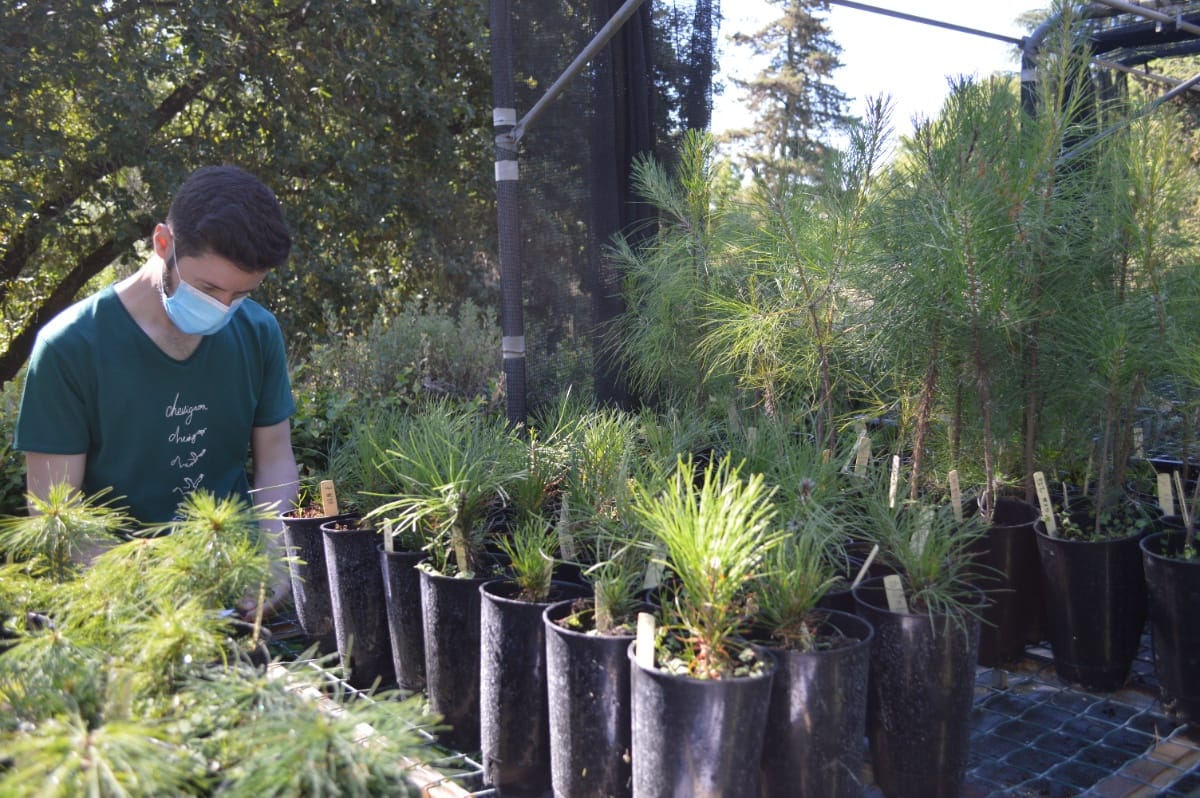
Pine trees are major carbon sinks globally, and in Portugal, they play a crucial role in both ecology and the economy. Pinus pinaster, the country’s dominant pine species, is particularly vulnerable to the pinewood nematode. My PhD research investigates Esteya spp. as potential fungal biocontrol agents against this pest in Portugal and Europe. While these fungi have shown promising results in Asian pines, applying that success to European ecosystems requires careful ecological consideration. I’ve been working on this for the past four years and am really excited about the results. Manuscripts are still in preparation, so I can’t reveal too much yet, but stay tuned!
Could you share an experience or anecdote from your work that has marked your career and reaffirmed your fascination with plants?
The fungal genus Esteya has been central to my PhD research. When I first started in 2021, I was surprised to realise that since its initial report in 1999, no ecological interactions had been studied beyond those with its host, the pine tree. Overlooking these interactions can severely limit the success of biocontrol strategies, especially when a fungal suspension is inoculated directly into the trunk.
Plants naturally interact with complex microbiomes inhabiting the phyllosphere, rhizosphere, or endosphere. Even closely related species can respond very differently to the same microbial inoculant. Realising that I was the first to systematically study the interactions of Esteya spp. with other fungi under controlled conditions, and to begin translating that knowledge to living pine hosts, has been a defining moment in my career and continues to fuel my fascination with plant-microbe interactions.
What advice would you give young scientists considering a career in plant biology?
Curiosity about the natural world is the spark that drives every scientist. If you have that curiosity and persistence to follow it, you are cut out to be a scientist! Don’t compare yourself to others: every career path is unique, so focus on paving your own way, guided by your interests and curiosity.
Plant biology is vast and wonderfully interconnected, so stay open to interdisciplinary approaches. Early in your career, seek diverse experiences: work in different labs, collaborate domestically and internationally, and learn new techniques. Science rarely follows a straight line, so adaptability and resilience are essential.
Finally, cultivate strong communication skills. Explaining your research clearly, to both peers and the public, is critical, especially as plant science addresses global challenges like food security, biodiversity, and climate change. Take every opportunity to give talks, seminars, or conference presentations. I say that as an introvert, but it will benefit you enormously down the line. Trust your instincts, stay curious, and good luck!
What do people usually get wrong about plants?
A common misconception is that plants are passive or simple. Because they don’t move in ways we notice and operate on timescales very different from ours, they’re often seen as static parts of the environment. In reality, plants are highly dynamic and responsive, forming intricate networks belowground and interacting continuously with other organisms.
Another misconception is that plant problems are easy to solve. In agriculture and forestry, plant health depends on complex interactions among pests, pathogens, beneficial organisms, soil properties, and climate. Understanding these networks is key to developing sustainable, long-term solutions.
Recognising the sophistication of plants and the ecosystems they support is one of the most rewarding aspects of studying them.
Cover picture by David Pires.