
On a hot summer day in Kew, one of the nicer places to cool off is, oddly, a greenhouse. The Davies Alpine House at Kew is designed to give alpine plants the dry, cool and breezy conditions that they thrive in. But this greenhouse wasn’t built as a pleasant refuge for tourists, it’s a critical conservation facility. Now, a paper by Marco Canella and colleagues, looking at Alpine Botanical Gardens in Europe in Plants People Planet shows how important this work is.
Canella and colleagues examined the work of 14 Alpine Botanical Gardens in France, Germany, Italy, Slovenia, and Switzerland. These gardens collectively grow 32% of the Alps' entire flora, nearly 1,900 species. What makes these collections important is that many of the species living in these gardens are missing from global seed banks. They have the supply of seeds and skills in propagating them to help fill these gaps.
Moreover, they’re skills that are needed because some alpine plants can't be conventionally seed-banked. For example, orchids need specific fungal partners, willow seeds are short-lived no matter what you do, and wildflowers like the glacier buttercup or the critically endangered Callianthemum kernerianum have complex dormancy requirements that mean they have to be kept as living seedbanks. Of the 81 endemic species that cultivated in the gardens, 30 are not found in any seed bank on the planet.
These plants are part of a complicated network of interactions in an ecosystem that is perhaps immeasurably valuable, though people are giving it a try. Botanical gardens are part of a conservation effort to help protect and reinforce these habitats. The authors note that the Giardino Botanico Alpino Viote is already linking their propagation work to real-world reintroductions.
These alpine plants aren’t isolated curiosities. Take something out of the ecosystem and this affects one or more pollinators, which can have unpredictable consequences further afield. However, work like this can aid conservation, helping plants survive in regions where warming is coming faster.
READ THE ARTICLE
Canella, M., Beltran‐Sanz, N., Gröger, A., Pungaršek, Š., Rome, M., Natale, S., Bonomi, C., Wiesinger, H., Mainetti, A., Scapin, A., Valecic, M., Sensato, S., Sommacal, M., Piutti, E., Bottelli, F., Pizzato, M., Senn, J., Monod, A., La Rocca, N., and Dal Grande, F. (2025) The role of Alpine botanical gardens in integrating germplasm bank collections and mission. PLANTS, PEOPLE, PLANET, 8(2), pp. 680-692. Available at: https://doi.org/10.1002/ppp3.70120.
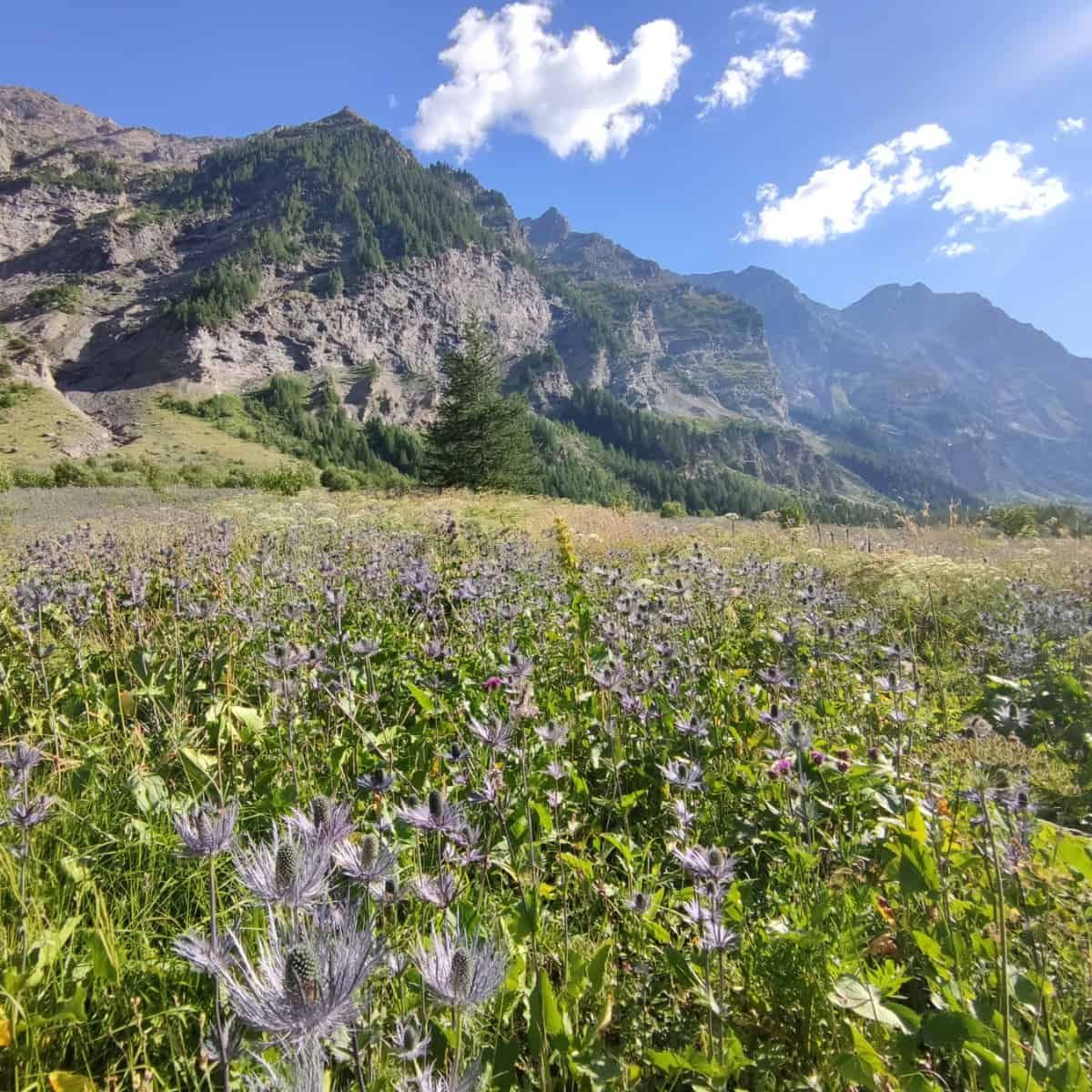
Cover image: Eryngium alpinum by fmunoz / iNaturalist CC BY-NC