
Today’s Plant of the Week has given me a bit of a race to get this online. Most of it will be written in advance, but today is a special day for Fritillaria meleagris in part of the UK. In the village of Ducklington it’s Fritillary Sunday, the one day of the year one of the local fields is opened to the public, allowing people to walk among the flowers.
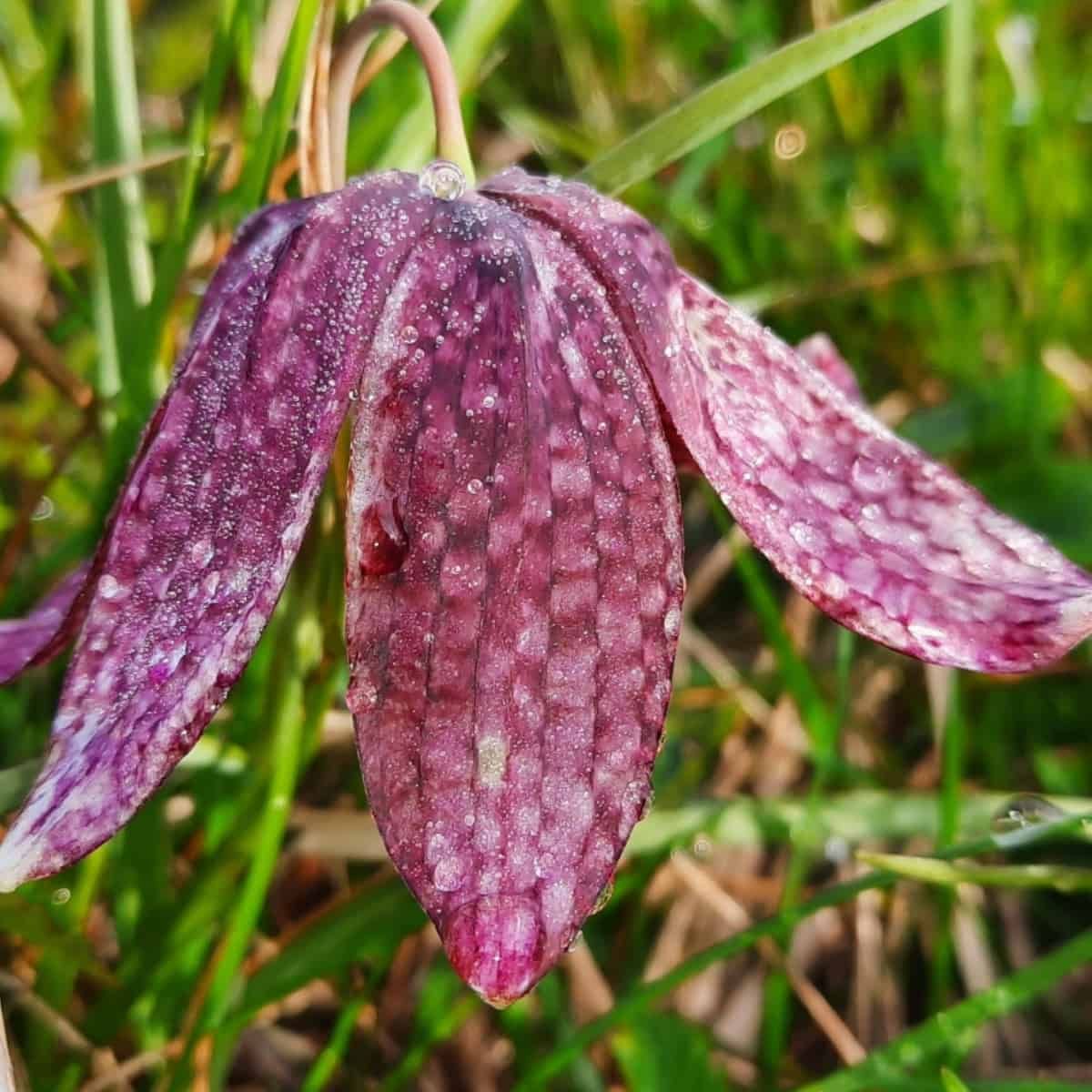
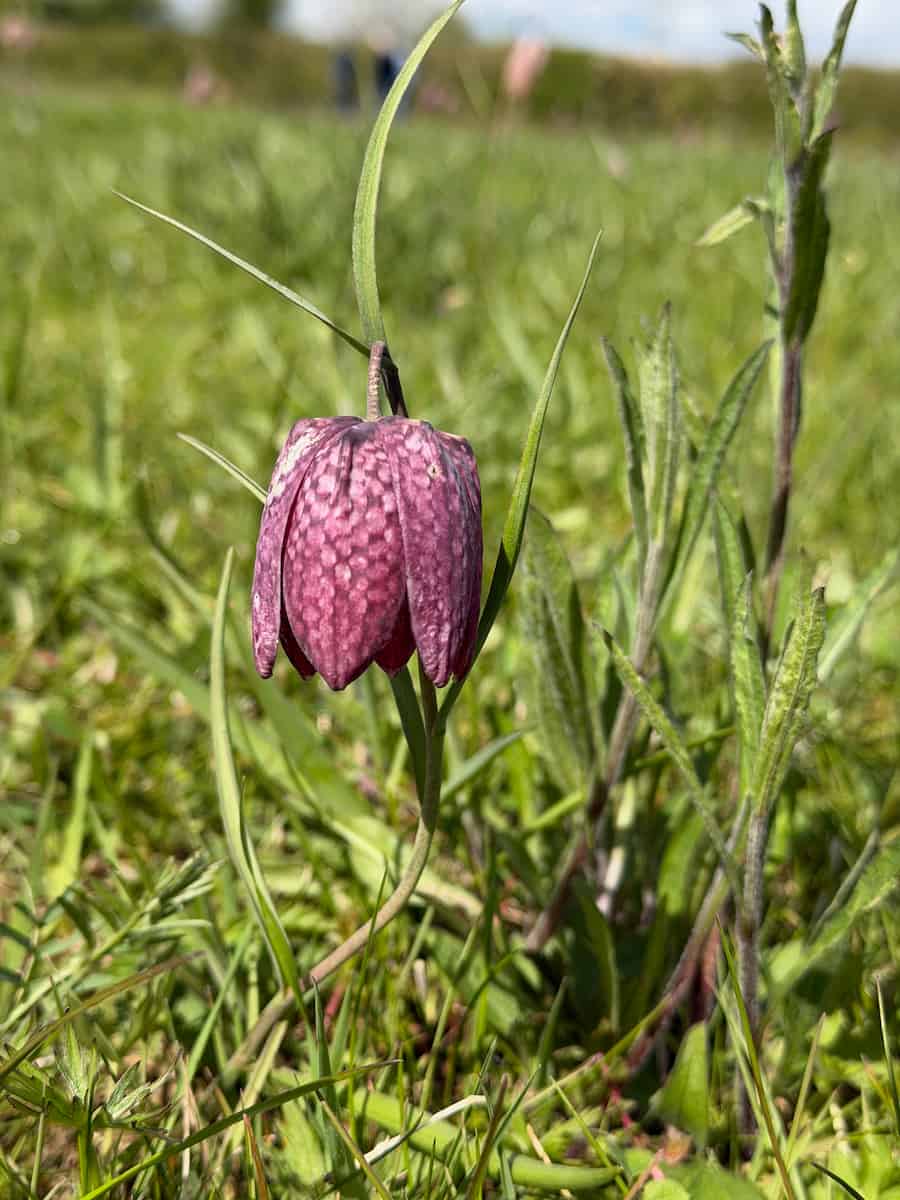
The common name for the plant in the UK is the Snake’s Head Fritillary, but the chequered pattern shows why it can be known by other names, like Chequered Daffodil or Chess Flower. The epithet, meleagris, means “spotted like a guineafowl”.
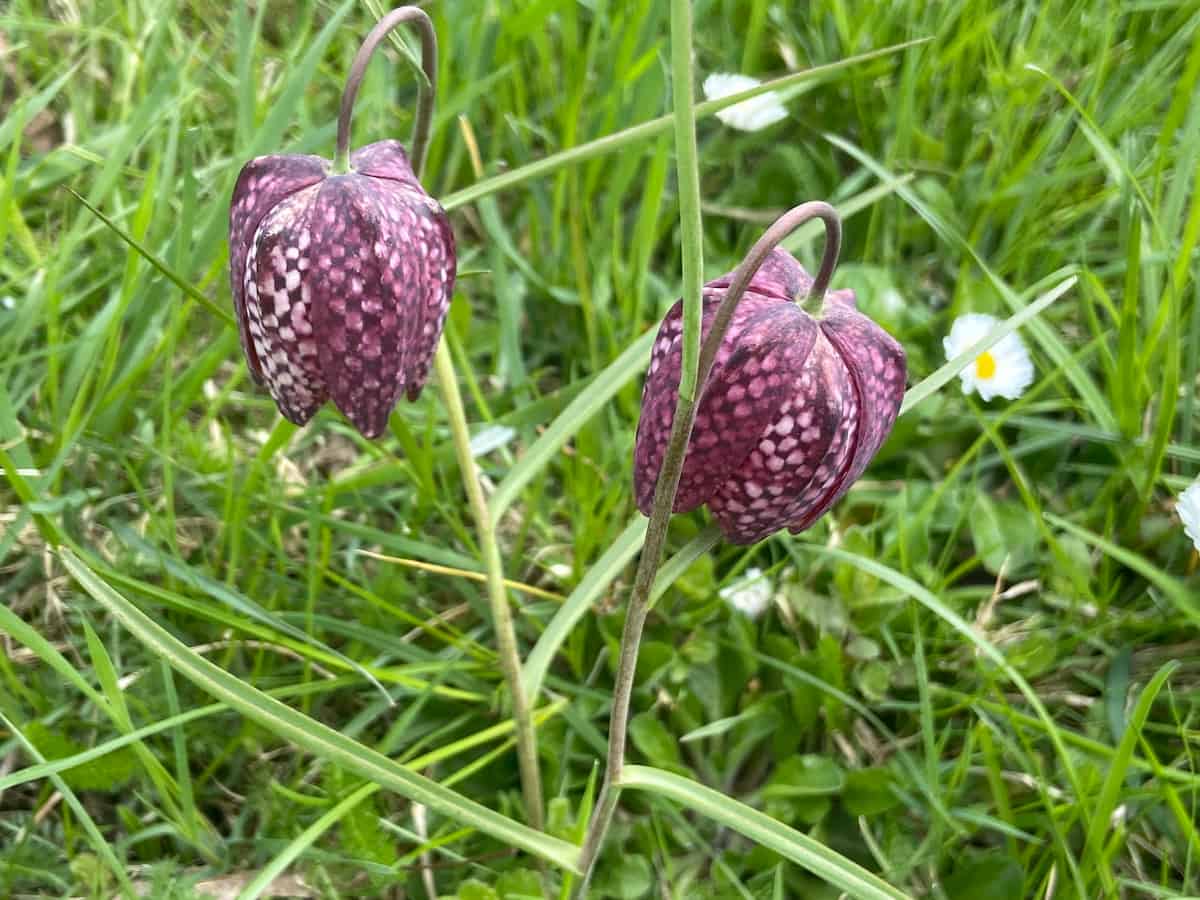
Fritillaria meleagris is a relative of the Lily; they’re in the same family the Liliaceae. If you’re a gardener it’s possible to grow if you have a combination of sun and damp soil. But if you’re also a pet owner you might want to be careful as they are extremely toxic to cats. What I didn’t realise, till I looked up a link for that, is that it is toxic to humans too.
Soil can be moist to waterlogged over the winter. Unlike many plants it’ll tolerate some flooding in winter, which clears out the competition. It’s capable of lying dormant for over a year if circumstances aren’t to its liking. It’ll also use micro-topography, the small undulations and wrinkles in the landscape you barely notice when you walk over, so that plants in the same locality can still experience different conditions. This, along with the dormancy, allows some bulbs to pop up each year, though probably not all bulbs in a given year. It means that counts of the plants can vary wildly from one year to the next.
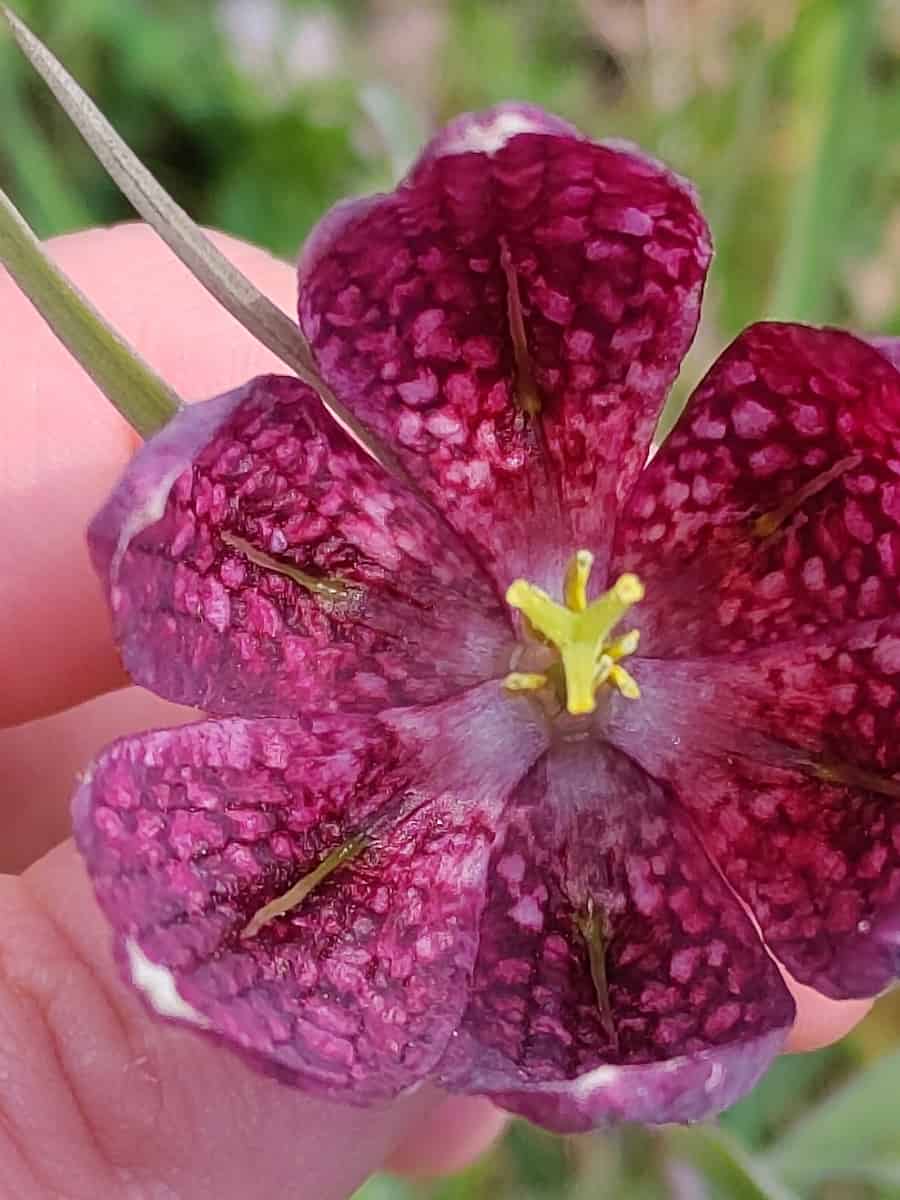
It’s found in Scandinavia and Europe from France across as far as western Russia. It has been protected in the past as an endangered species. However, it seems that it’s an introduced species rather than a native. There’s no record of it in the UK before the 16th century, and that would be suspicious for a native plant like this. In another post, I use a quote from Kevin Walker: “It seems inconceivable that such an attractive plant would have been overlooked in the wild by herbalists in the fifteenth and sixteenth centuries.” If it is accepted as an introduced species then it will lose protection as a plant in the UK, but the sites where it lives are still likely to stay protected, and that's because there’s a reason why it’s rare in the UK.
Fritillaria meleagris does not like being disturbed once it’s settled down. That means the land cannot be ploughed. The liking for floodplains in the UK means the land cannot be drained. That puts in it opposition to intensive agriculture and agriculture has definitely intensified. The UK has lost 97% or 98% of its meadows since the Second World War, though there’s some nuance in that. The field at Ducklington, and some other sites, are protected from modern agriculture, allowing them to hang on.
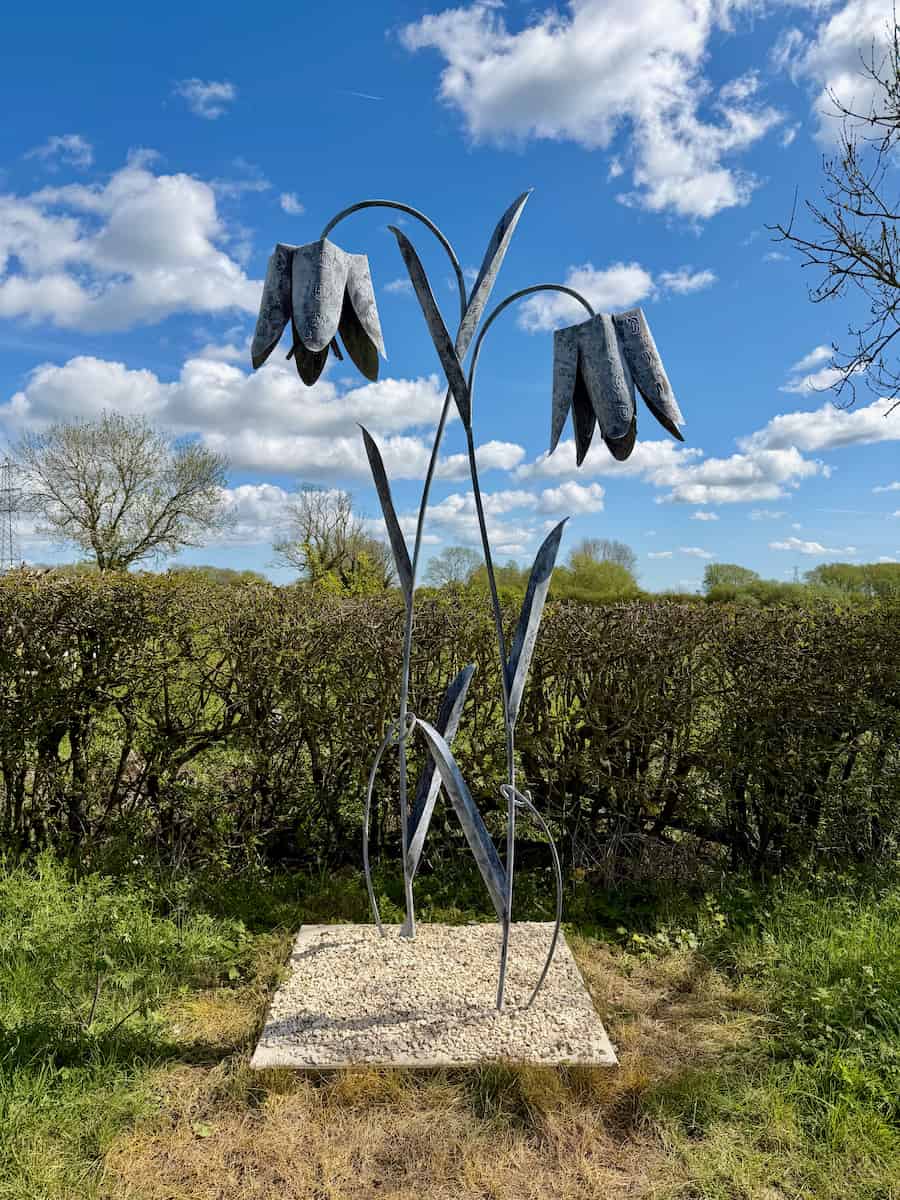
If you want to see them in the wild, then there are a few places, but these are usually protected reserves or private property. That rarity has created a fund-raising-opportunity for Saint Bartholomew's Church in Ducklington. They have an arrangement with the local farmer that, once a year, a field that may or may not have a display of fritillaries is opened for the public to walk through. It's become an event on the calendar that many in the village look forward to. The flowers add something extra to the church fund-raising that cake sales, art displays and morris-dancing that everywhere else has for their events.
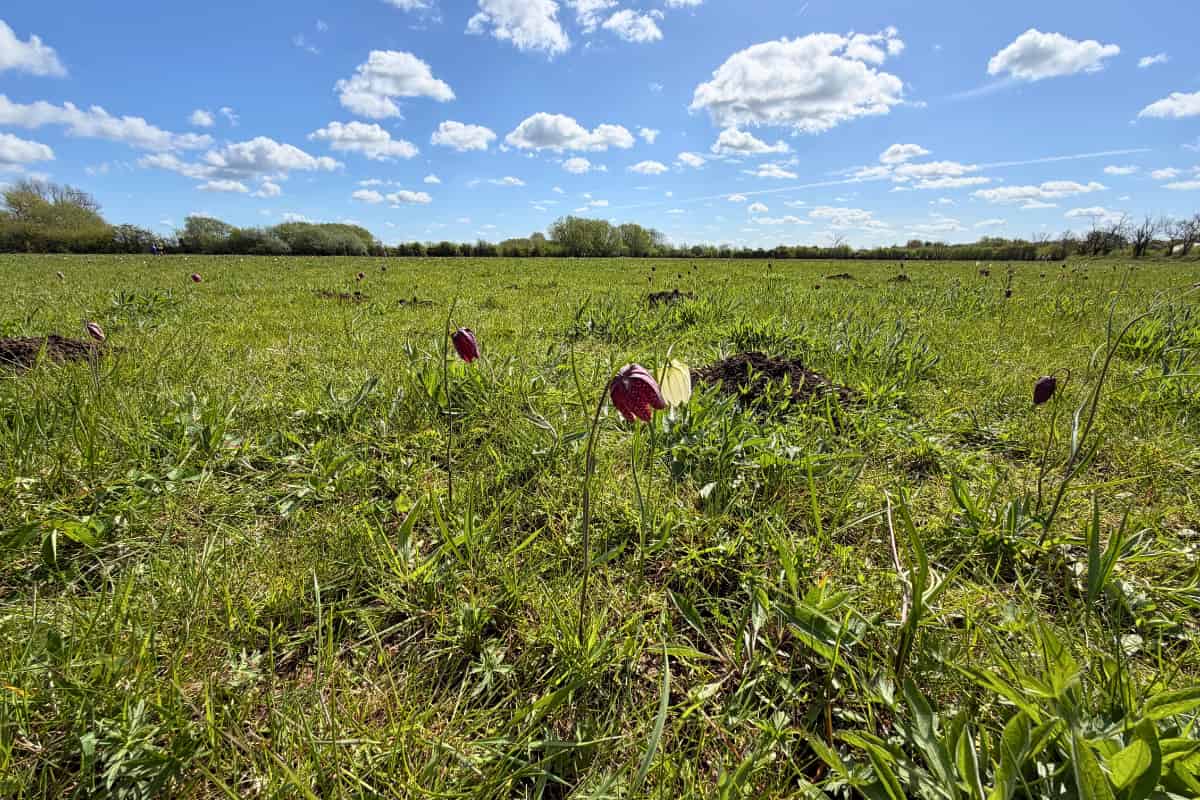
The field this year was full of many people wandering through, leisurely enjoying the flowers, and one person swearing at the flowers for blowing in the wind just at the moment that he tried taking a photo. It was a breezy day, but only once you'd got the camera to focus on the flowers.
There were no obvious clumps of flowers in the field, but rather a general scatter. To my eyes it's a flat field, though as you walk through it, it's clear that it has its hard and soft patches, so this would indicate there's some microtopographical variation that the plants can respond to. As usual, when I left the field I wondered if they were having the same timing issues for the event as Thriplow's Daffodil festival. As usual, by the time I'd reached the church I'd forgotten to ask.
What I like about events like this, is they bring people together with plants in their environment. We talk about what’s most interesting about plants, but what I find most boring about plants is that so often they’re treated like furnishing or ornaments. I think connecting plants to their environment, and reminding people how important these connections are is more valuable than just saying, “look at this pretty plant”. That it is pretty is a bonus.
Cover image: Fritillaria meleagris by Boris Belchev / iNaturalist CC BY-NC