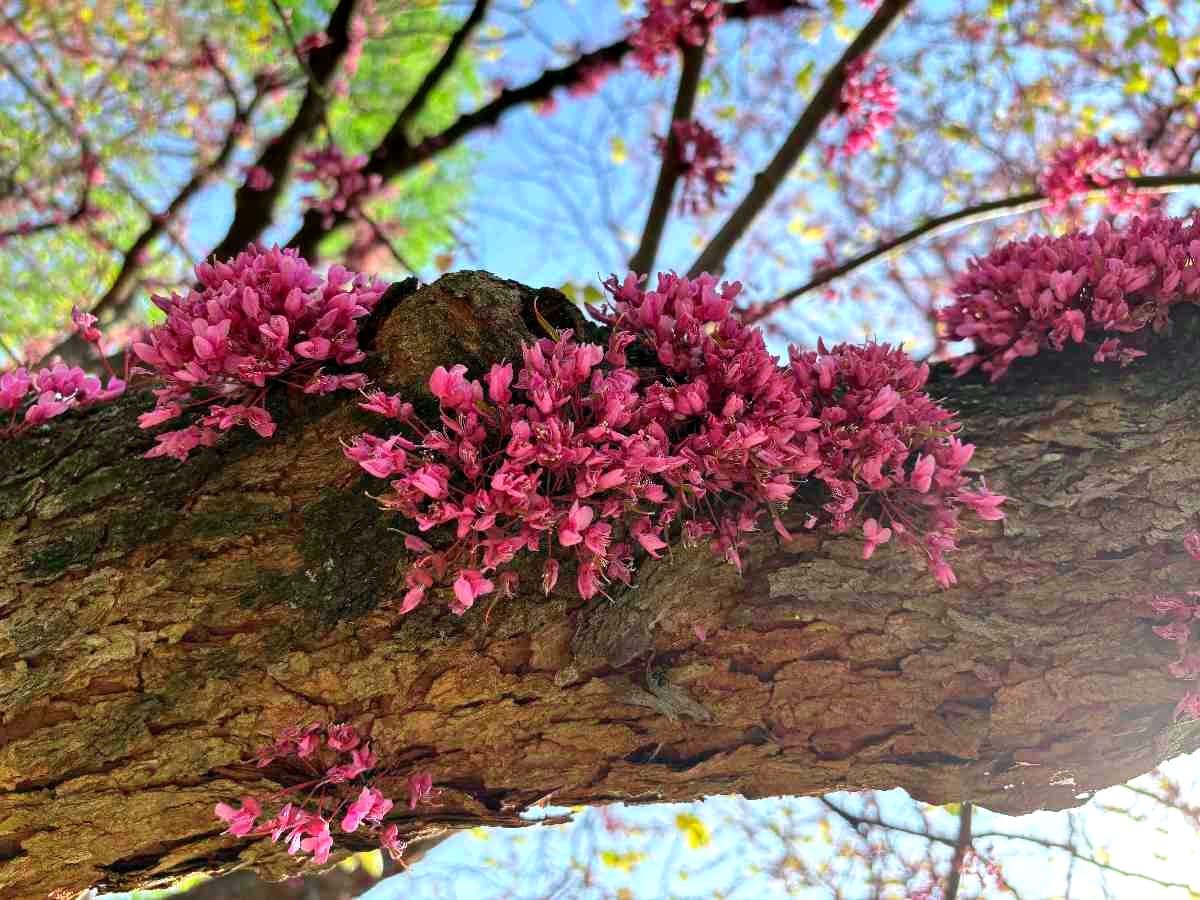

Most woody plants grow flowers from new growth or shoots, but some species perform cauliflory – flowering from their main stems and mature branches. More commonly seen in tropical forests, cauliflory is rare in temperate species.
Eastern Redbud (Cercis canadensis) is one of those rare examples. With beautiful pink flowers, this deciduous tree or shrub is native to North America. Its range includes southern Ontario in Canada down to central Mexico. But the tree can thrive as far west as California.
Due to its beauty and prevalence, Eastern Redbud has cultural importance to cities and states across the United States. For example, it is the state tree of Oklahoma and the official city tree of Huntington Beach, California. The city of Columbus, Wisconsin has a whole festival dedicated to the species and calls itself "Redbud City".
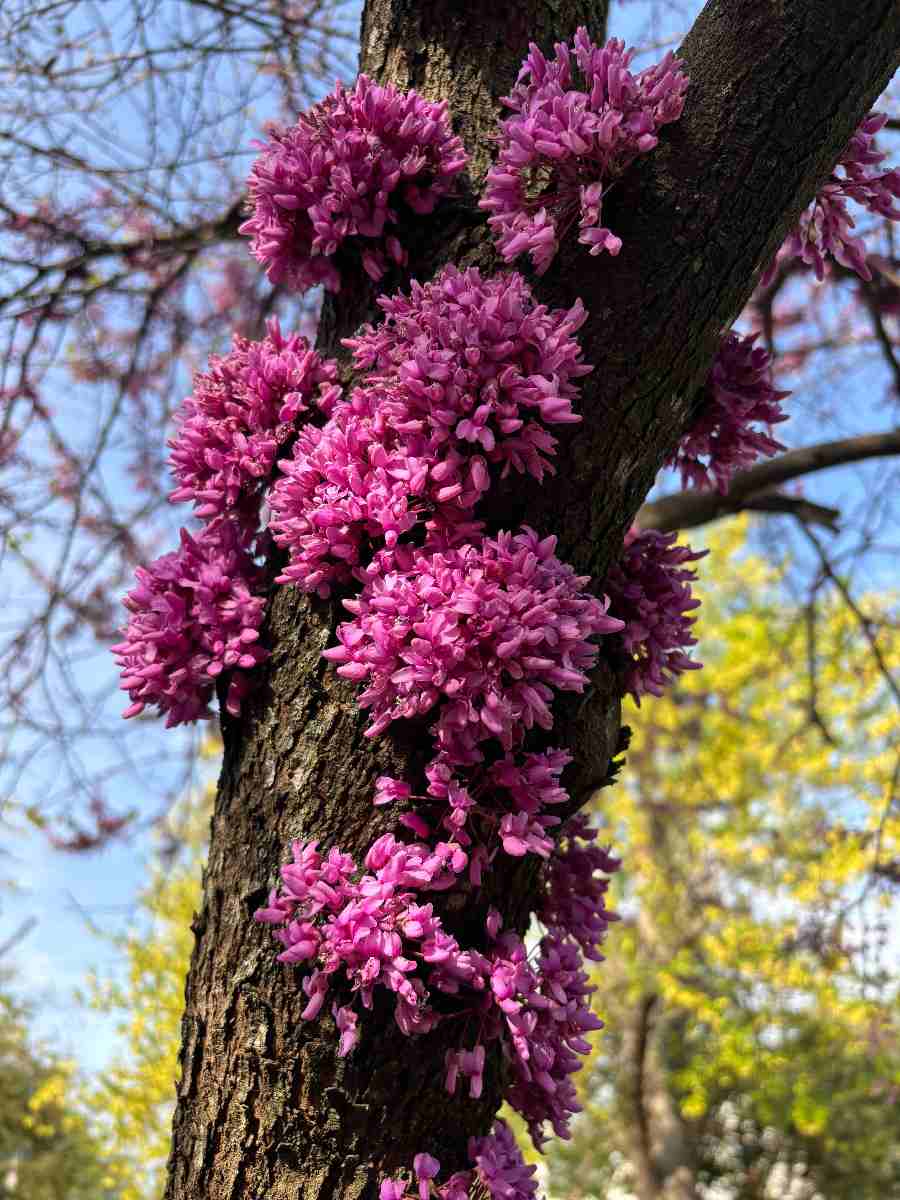
Its 'cauliflowered blooms' are typically a vivid pink, but there is a rare variety with white flowers called the 'white redbud'. The blooms grow in showy displays directly from mature branches, making the tree an excellent ornamental plant. The flowers are on display in March to May, depending on the tree's location. And then in autumn, the tree's leaves turn golden yellow and drop.
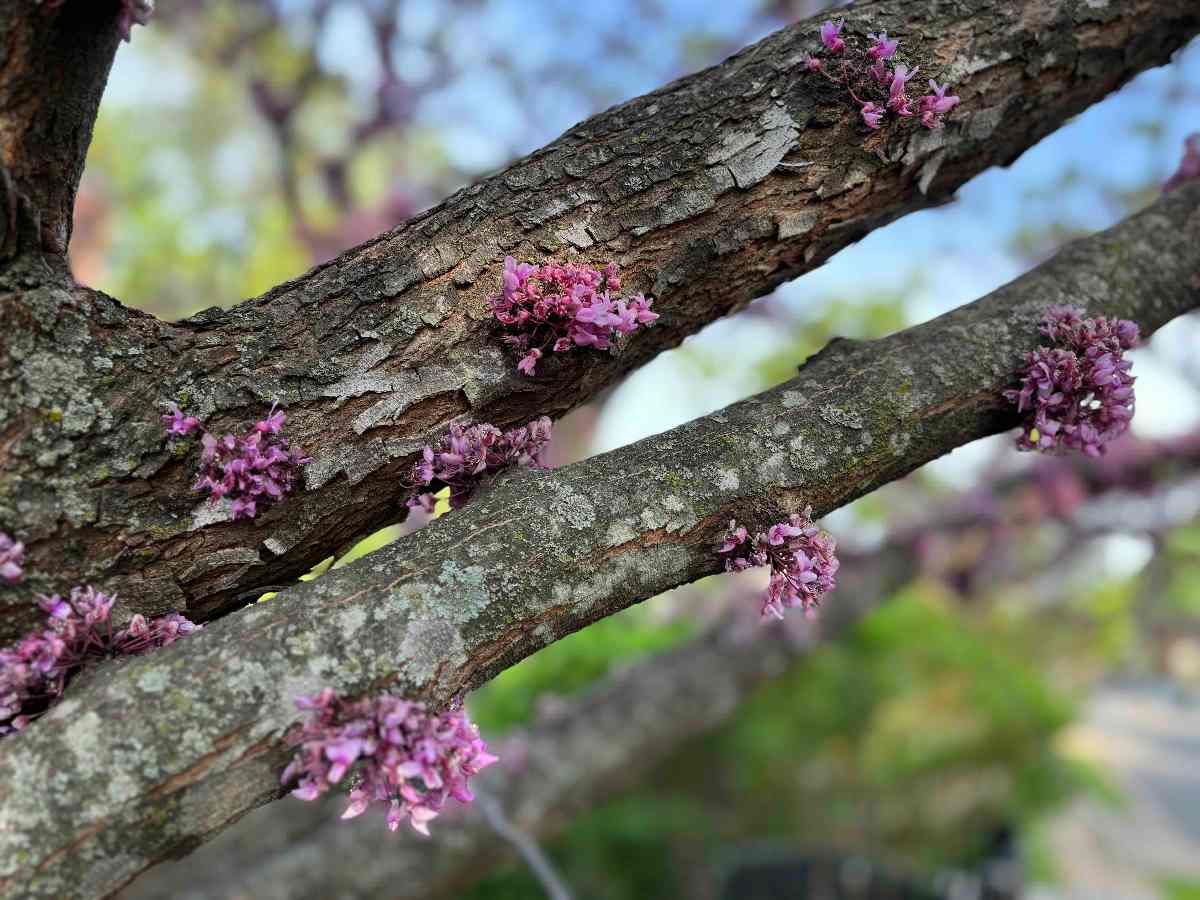
Cercis canadensis is a member of the Fabaceae family, which includes legumes, peas and beans, but it does not host nitrogen-fixing microbes because it lacks the genes for nodulation. Other Fabaceae species that perform cauliflory include Cercis siliquastrum (Judas tree), which grows in Southern Europe and Western Asia, Castanospermum australe (Moreton Bay chestnut/ Blackbean tree), which is native to rainforests on the coasts of Queensland and northeastern New South Wales Australia, and Cynometra cauliflora (Nam-Nam tree), which is native to Malaysia.
The Eastern Redbud grows as a forest understory tree in partial shade, typically in open woodlands, thickets or along streams. It is a self-incompatible species that relies on cross-pollination by long-tongued bees and butterflies to fertilize its flowers. The tree also hosts several species of moths (Io, Marked Tussock Moth), and songbirds such as the Northern Cardinal eat the seeds produced in its pea-like pods.
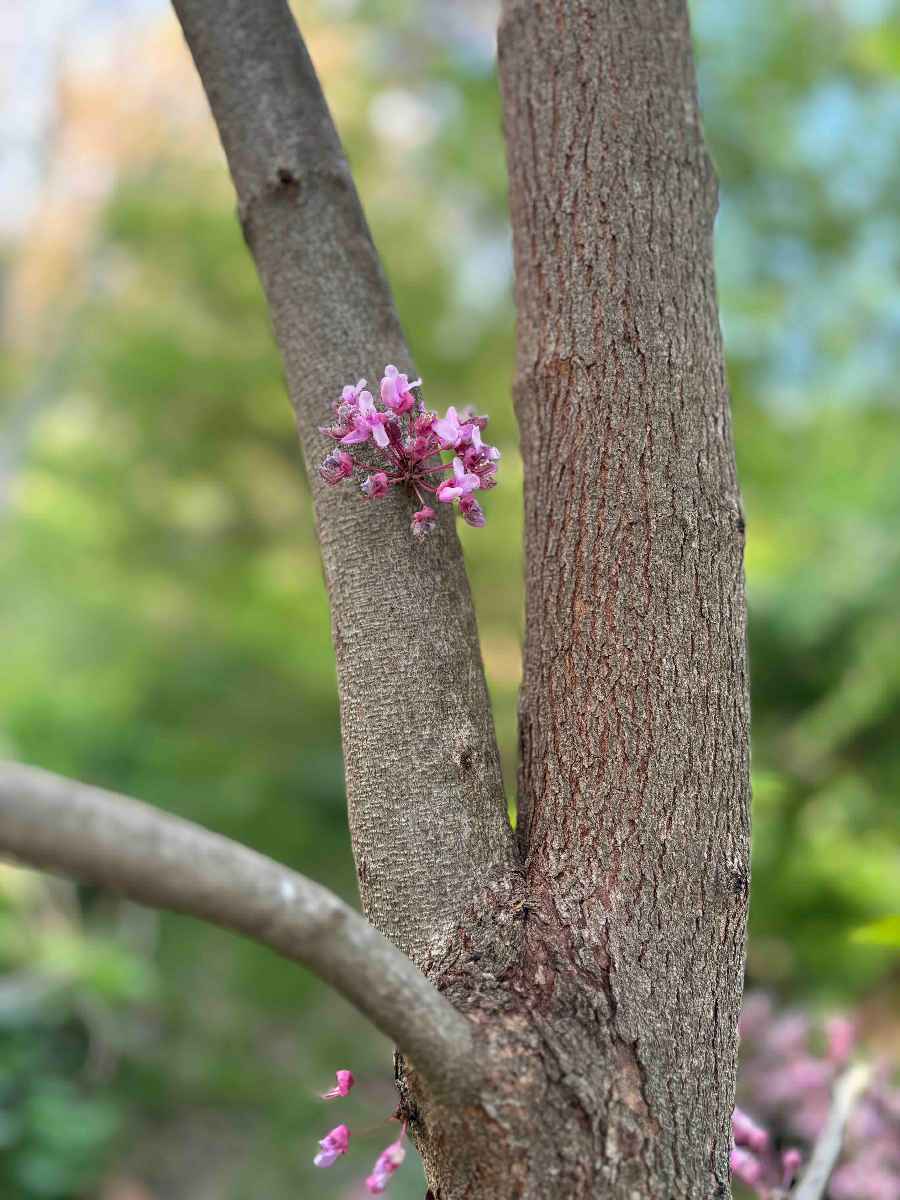
The Eastern Redbud is often used as an ornamental in parks and gardens and grows well in US hardy zones 4 through 9. It is especially recommended for use in pollinator gardens because the showy flowers provide early spring nectar to its pollinating insects. As an added bonus, the flowers are edible, making the tree a multisensory treat.
Cover image: Eastern Redbud (Cercis canadensis). All images are courtesy of Sarah Covshoff.