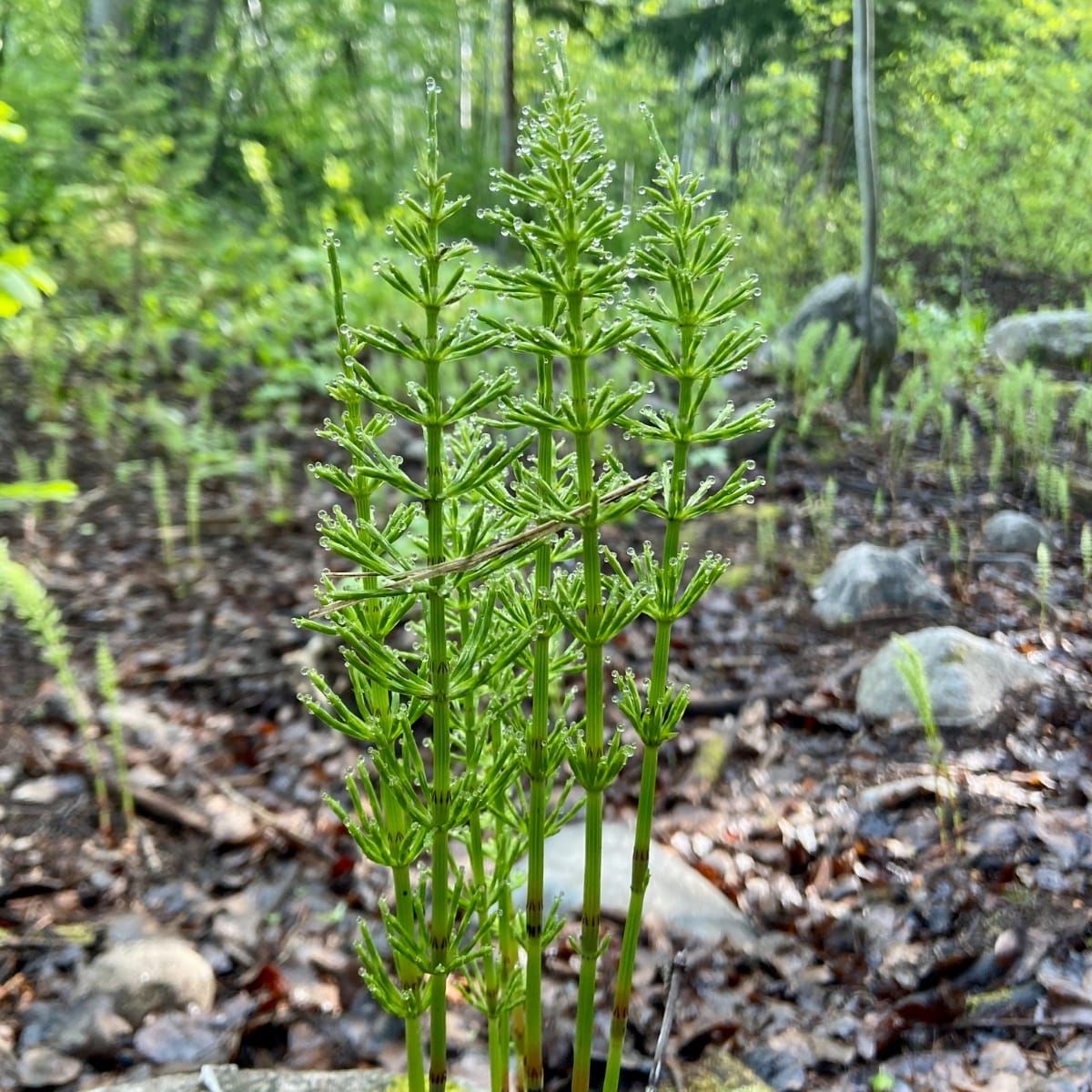

This week’s Plant of the Week introduces a special series beginning tomorrow: Paleo Week. Sarah Covshoff, one of Botany One’s editors, has prepared a series of posts showcasing papers from the latest Annals of Botany Special Issue on the “Role of Fossils in Reconstructing Plant Evolution”. With that in mind, it seemed only natural to feature a group of plants often described as living fossils, modern organisms that closely resemble those of their ancient relatives in the fossil record. Today, we are talking about Equisetum arvense, commonly known as the field or common horsetail.
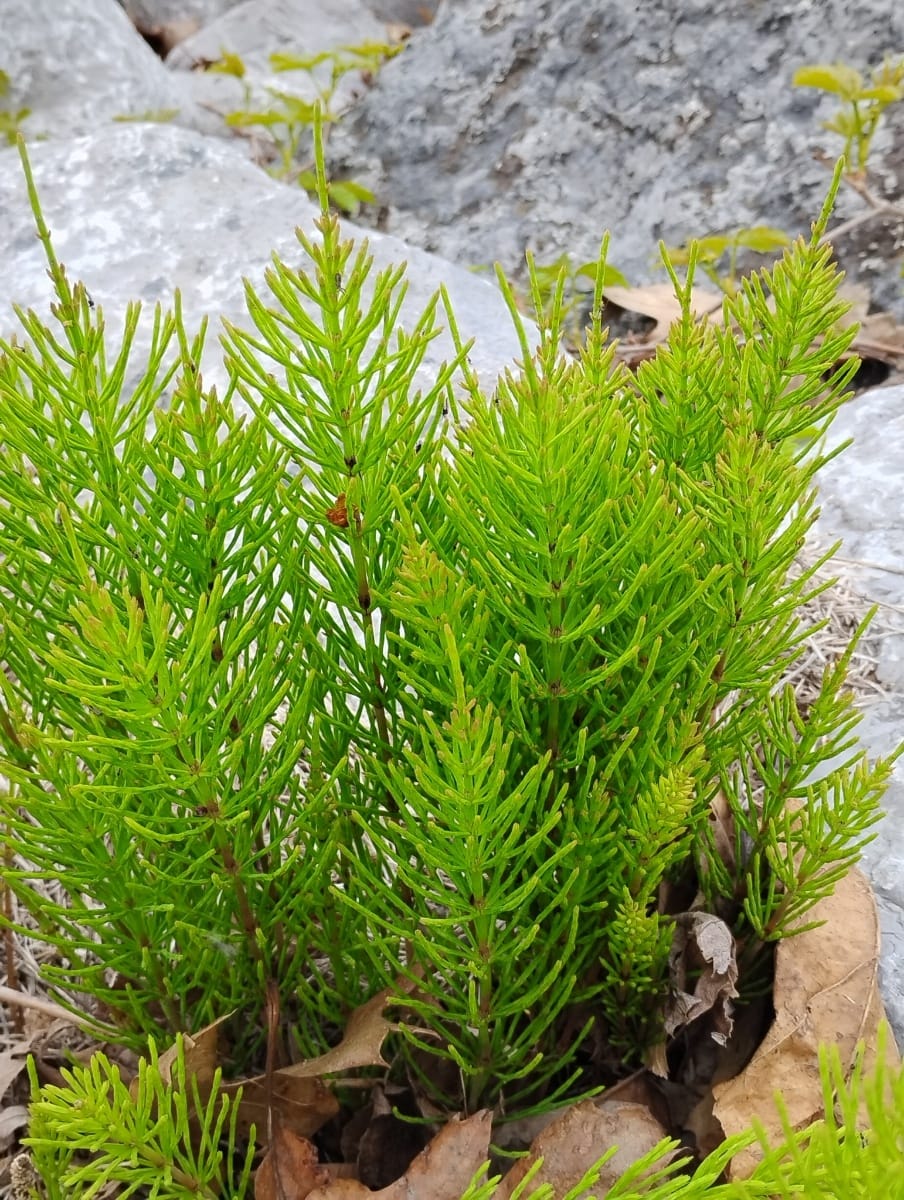
The name Equisetum comes from the Latin words equus, meaning horse, and saeta, meaning bristle, a reference to their highly branched shoots that resemble a horse's tail. Together with ferns and lycophytes, horsetails are part of the of the seedless vascular plants. Nowadays, there are around 18 Equisetum species, but horsetails were once far more diverse, with a history that dates back to the Late Devonian, around 380 million years ago.
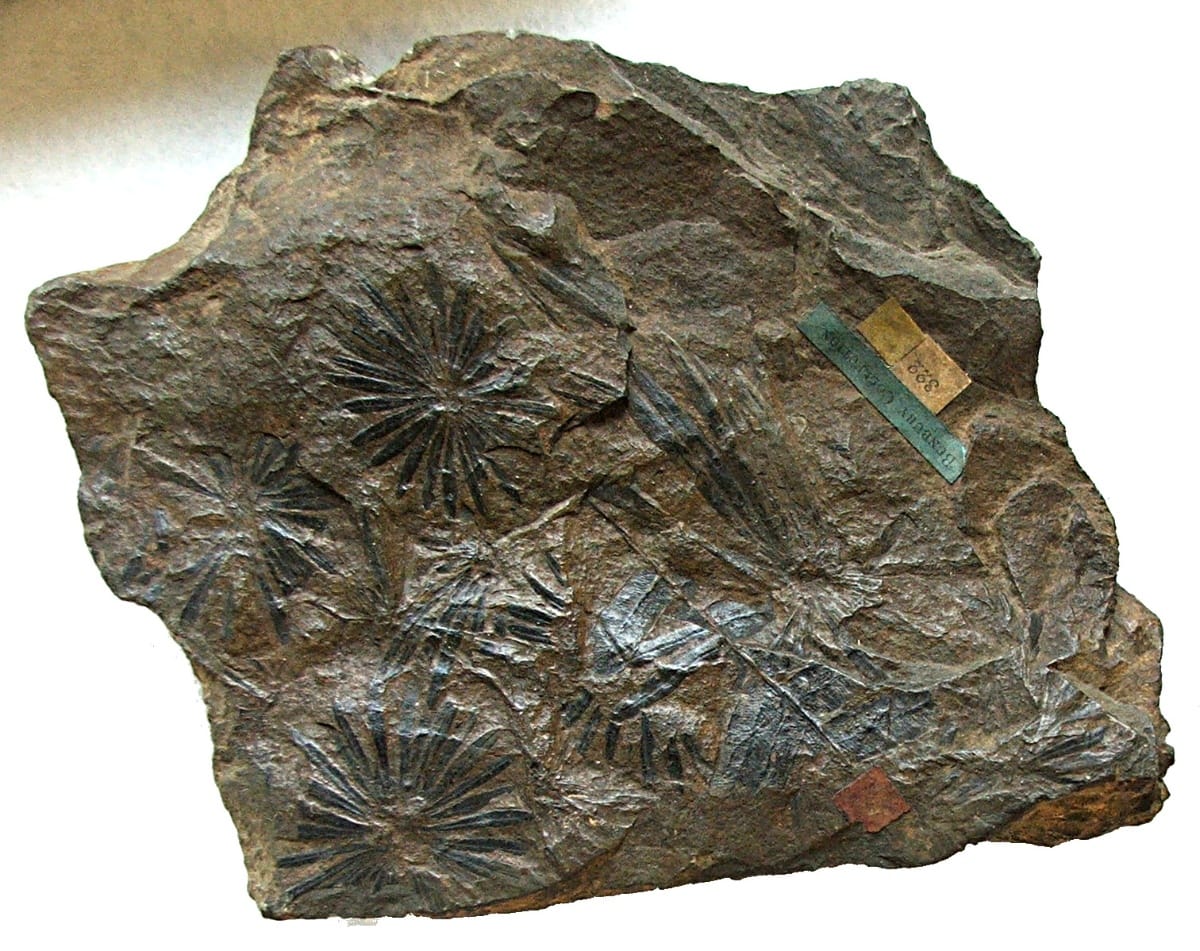
Their fossil relatives were especially prominent in the forests of the Palaeozoic. Some, such as members of the extinct genus Calamites, had a tree-like architecture and could reach around 30 metres in height. These arborescent horsetails seem to have disappeared by the Permian–Triassic mass extinction, around 252 million years ago. Yet they were not the direct ancestors of modern Equisetum. Fossil evidence suggests that the calamitacean lineage and the lineage leading to living horsetails had already gone their separate ways during the Carboniferous. The common ancestor of living Equisetum species appeared much later, probably in the Jurassic or Early Cretaceous, around 190–140 million years ago.
Nowadays, horsetails are perennial herbs found across much of the globe, although they are especially diverse and familiar in temperate regions of the Northern Hemisphere. Equisetum arvense is one of the most widespread species in the genus. It occurs across much of the Northern Hemisphere, from northern Europe to parts of Asia and North America, and can even be found in drier regions where suitable moist soils, disturbed ground or seasonal water are available.
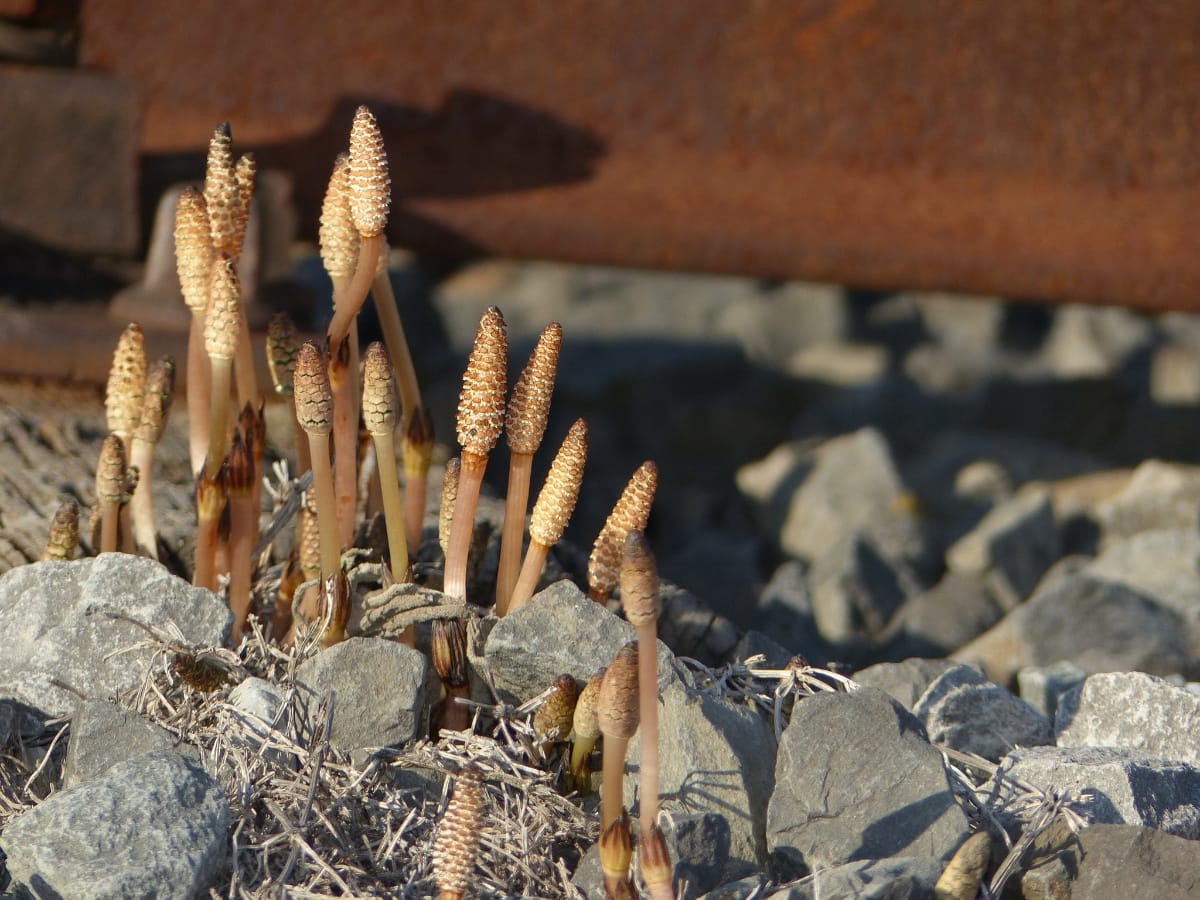
Like other horsetail species from temperate ecosystems, Equisetum arvense dies back during winter, but its underground rhizomes allow it to return year after year. In spring, it produces pale fertile shoots topped with cone-like structures, called strobili, that release spores. Later, green sterile shoots appear, with whorls of fine branches that give the plant its familiar horsetail shape.
Living horsetails might no longer form ancient forests, but they remain instantly recognisable and fascinating. This combination of persistence and ancient-looking form is what makes Equisetum arvense such a fitting plant for the beginning of Paleo Week. It is not a relic frozen in time, but it carries echoes of a much older plant world in its architecture. Sometimes, the fossil record does not feel so distant: it can be found growing at the edge of a path, in a damp field or between cracks in disturbed ground. Hopefully, this idea will make you excited for the tour through deep time that Sarah has prepared for us!
Cover picture by elizabeththompson (iNaturalist, CC BY-NC 4.0).