
Sometimes all we want is to inhale the scents of nature. Maybe we go outdoors on a hike to soak in the perfumes of the fresh grass and pine trees. Maybe we curl up on the couch with a book and some scented candles. Maybe we add aromatic herbs or pungent spices to our food. But have you ever wondered how plants produce these delicious scents?
The answer lies in tiny natural molecules called volatile organic compounds, or VOCs. These VOCs serve as a plant's way of "talking”. They can attract pollinators, repel hungry insects or warn neighboring plants about environmental stress. In other words, what we perceive as a pleasant fragrance is part of a sophisticated plant communication system.
Roses are perhaps the best-known example. When someone gives us a bouquet, our first instinct is usually to lean in and smell the flowers. Yet modern roses often disappoint; they simply don't smell the way we expect them to, and sometimes they don’t smell at all.
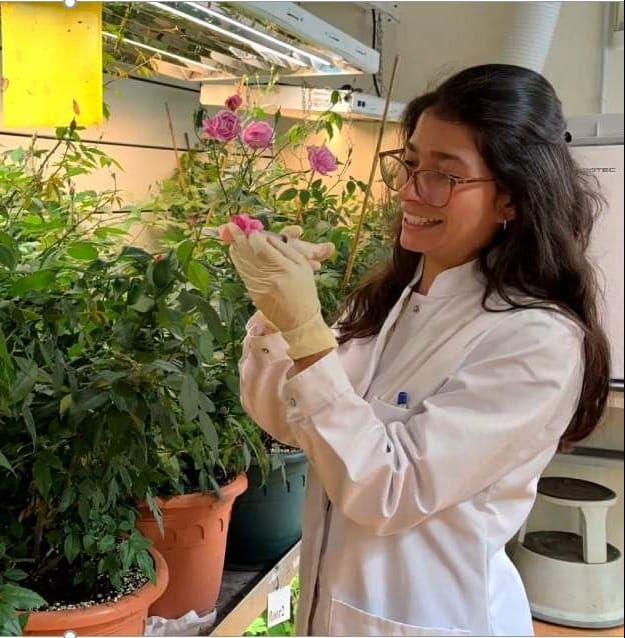
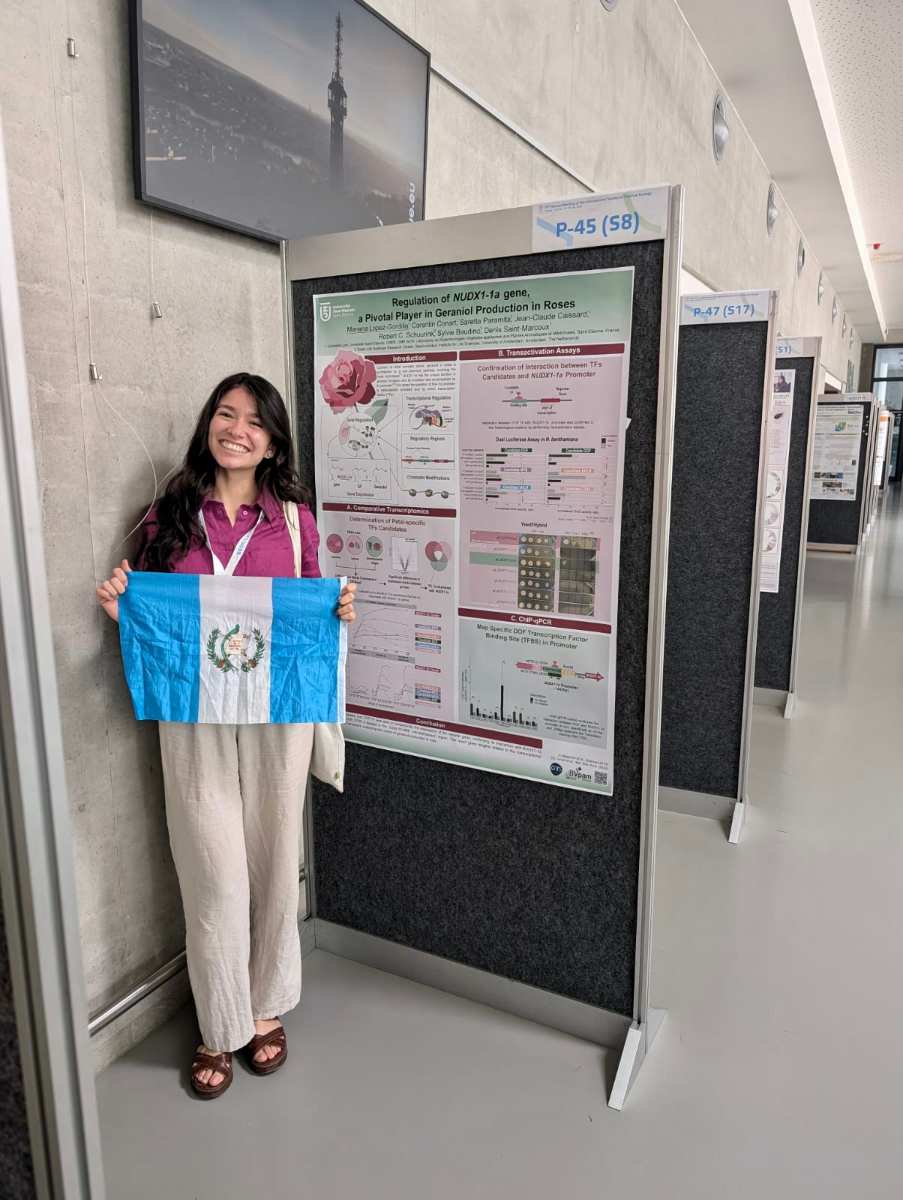
But why have roses lost their fragrance and, more importantly, how do we regain their delicious scent? These are the questions asked by Dr. Mariana López-Gordillo in her latest review paper, where she explores the different genetic and molecular mechanisms behind VOC biosynthesis using the rose as her model.
Since plant scent is a vast and complex field, we sat down with López-Gordillo to help us decode the exciting world of floral scent chemistry.

This interview has been edited for length and clarity.
What made you become interested in floral scent?
"I was fascinated by the fact that studying floral scent sits in the intersection of many biological disciplines: genetics, metabolism, ecology, evolution, and plant physiology. Fragrance is not only an aesthetic characteristic. It is a trait that has been selected by evolutionary pressure and environment. We know roses don't produce their fragrance only for human pleasure. It probably has a biological function [for roses] and discovering the genetic network behind this caught my attention."
Why did roses lose their scent and can we get it back?
According to López-Gordillo, the disappearance of fragrance from many modern roses is largely an unintended consequence of breeding. Plant breeders understandably focused on characteristics such as larger blooms, longer vase life and disease resistance. As breeders selected for these desirable traits, many of the genes involved in scent production became less active or were turned off completely.
The aim of López-Gordillo’s research is to restore fragrance to roses by better understanding how scent genes are switched on and off. If scientists can discover what controls floral scent, then breeders may eventually be able to restore fragrance without sacrificing the qualities that consumers and producers value today.
"A deeper understanding of how VOC biosynthesis is regulated could therefore contribute to the development of flowers that are not only more attractive and aromatic but also more resilient and better adapted to changing environmental conditions," says López-Gordillo.
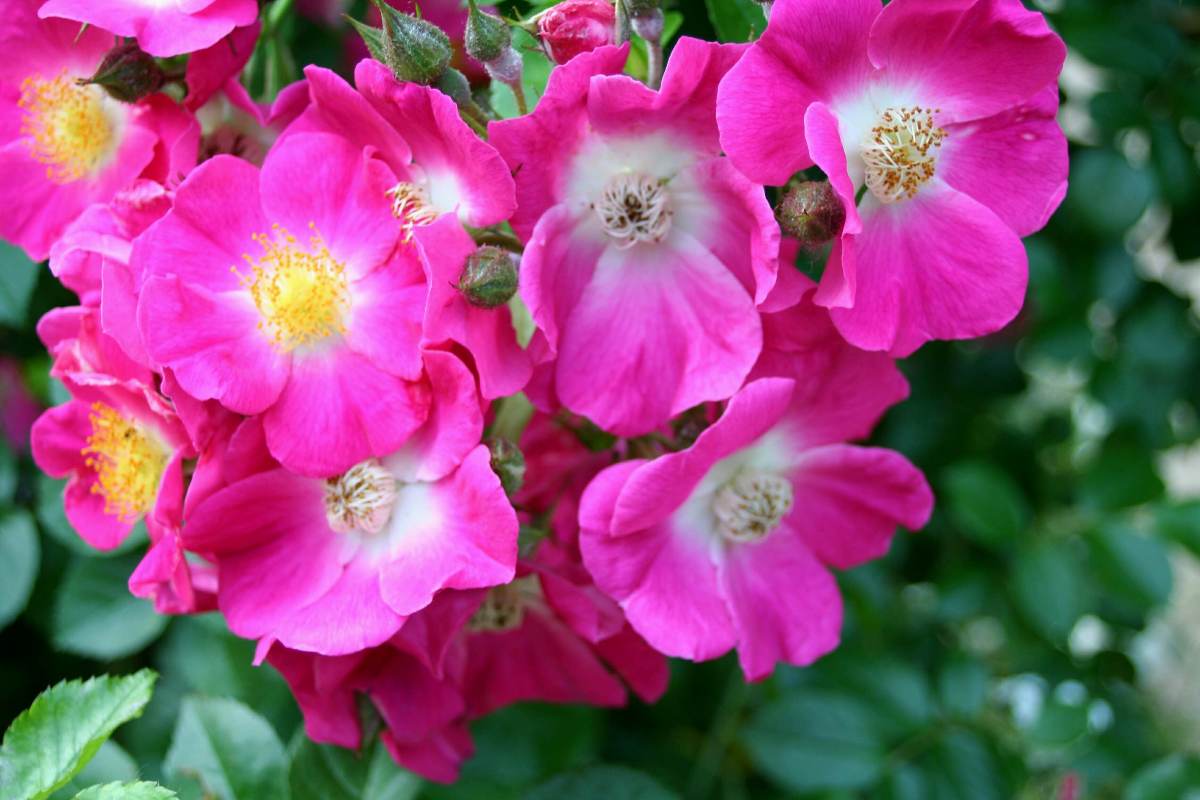
So how do roses control fragrance production?
López-Gordillo explains that multiple regulatory mechanisms, such as post-transcriptional regulation and epigenetics, a form of cellular regulation that controls gene activity without changing the DNA sequence itself, simultaneously coordinate the synthesis of floral scent. In the specific case of roses, floral VOCs are produced mainly in the petals, but not continuously. Instead, scent production is carefully timed throughout flower development and often peaks at specific times of day. In many roses, the strongest fragrance is released early in the morning, precisely when their pollinators are most active.
“Roses have this strict spatial and temporal expression of genes that produce fragrance. Understanding the exact timing of this synthesis links the molecular mechanisms to their physiological significance, such as circadian rhythms, stress responses, defense, and pollinator co-evolution,” says López-Gordillo.
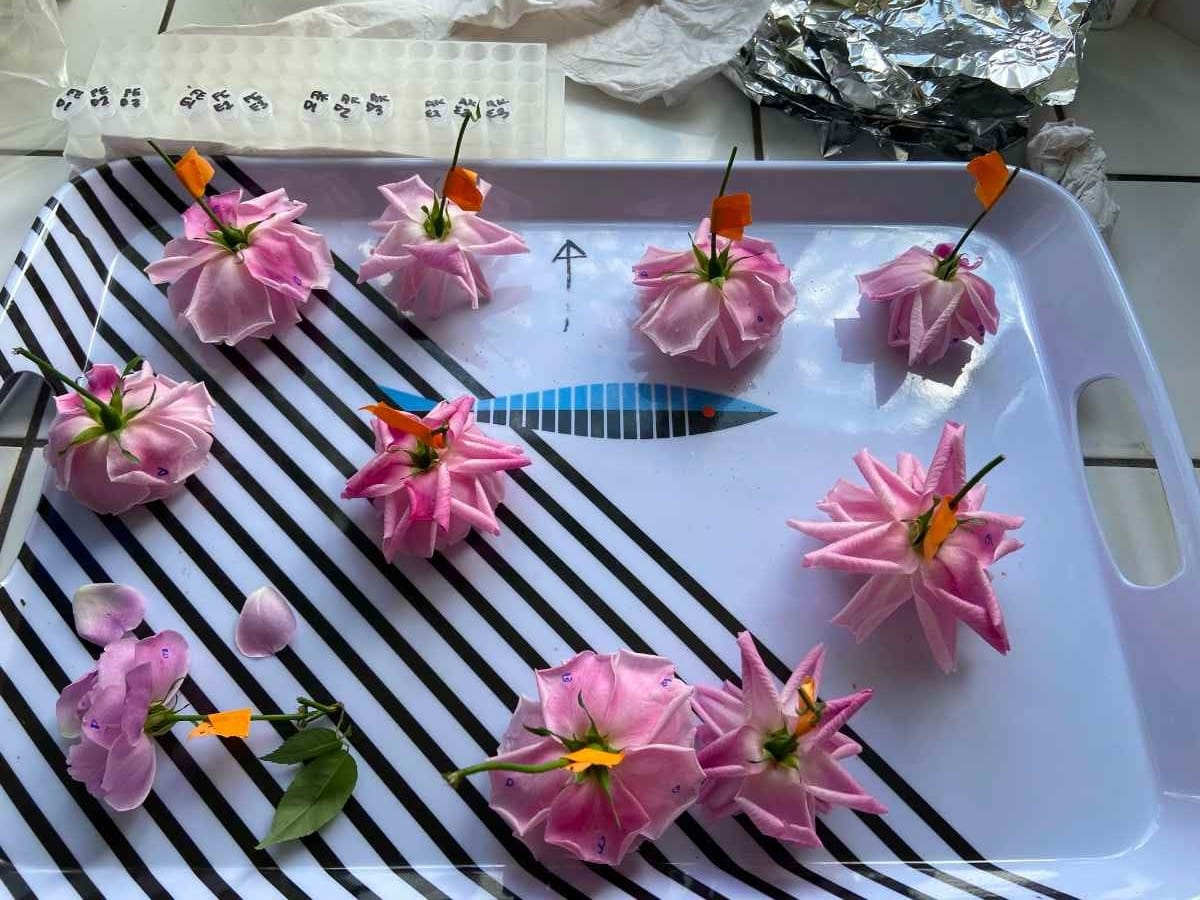
What is your favourite part of your work?
“My favourite part of research is the process of discovery. I see it as detective work: starting with scattered clues, collecting evidence, and gradually reconstructing the mechanisms that explain a biological phenomenon. I am motivated by uncovering the story behind the data through pattern analysis, hypothesis formulation, and experimental design. Although research presents unexpected results, overcoming these challenges forces us to rethink our assumptions and develop creative approaches.”
“For me, the most rewarding aspect of science is not simply obtaining an answer, but understanding the mechanisms that connect all the pieces together.”
Where do you hope this research will lead?
"Ultimately, understanding how plants control fragrance isn't just about making roses smell better. It could help breeders develop crops that are more resilient, improve interactions with pollinators, and even create more sustainable agricultural systems.”
“I hope that the work described in my paper helps bridge fundamental discoveries in plant molecular biology with practical applications that benefit both agriculture and the horticultural industry.”
According to López-Gordillo, it could also create interesting ornamental varieties with new scent profiles. When comparing roses with other aromatic plants, López-Gordillo realized that species such as mint and basil produce their characteristic scents mainly in their leaves, whereas in roses, the genes responsible for VOC production are active almost exclusively in the petals. This contrast led her to wonder: if scientists could understand what limits fragrance production to rose petals, then could those same genetic pathways one day be reprogrammed to produce fragrant leaves? Although still a hypothetical idea, it perfectly illustrates how fundamental research leads to new and exciting scientific questions to explore in the future.
So, the next time you stop to smell the roses, you'll remember that behind their perfume lies a remarkably sophisticated molecular orchestra that we don’t yet understand but researchers like López-Gordillo are actively studying. And of course Shakespeare had it right: That which we call a rose, by any other name would smell as sweet.
READ THE ARTICLE:
Lopez-Gordillo, M., Schuurink, R., Baudino, S., and Saint-Marcoux, D.(2026) Regulation of volatile biosynthesis in plants. Plant Physiology and Biochemistry, 236, pp. 111423. Available at: https://doi.org/10.1016/j.plaphy.2026.111423.
READ MORE:
Fang, J., Zhuang, Y., Wang, J., Lin, Y., Lan, T., and Huang, X. (2026) Beyond the single reference: pangenomic perspective on WRKY structural diversity and its role in trait adaptation across Oleaceae. Annals of Botany, 137(7), pp. 2041-2054. Available at: https://doi.org/10.1093/aob/mcag044.
Zhang, C., Jiang, Z., Yang, S., Li, S., Liang, Z., and Gao, X.(2025) Molecular investigation of the progenitors, origin and domestication patterns of diploid Chinese old garden roses. Annals of Botany, 137(3), pp. 655-672. Available at: https://doi.org/10.1093/aob/mcaf208.
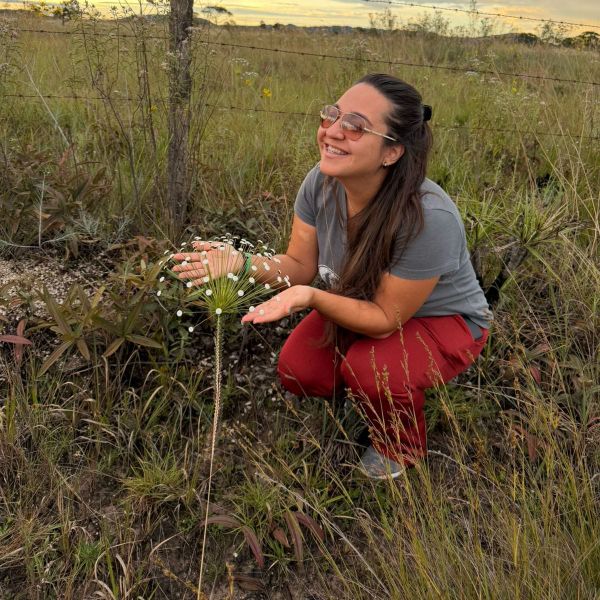
Cover Image: Dr. Mariana López-Gordillo is a young Guatemalan researcher in plant molecular biology. Photo credit: Dr. López-Gordillo.