
Let’s try a quick experiment. Think of a tropical ecosystem, pretending you didn’t read the title of this article. I bet the picture that first comes to your mind is that of a lush evergreen rainforest packed with giant trees and hanging lianas, playful monkeys and exotic birds. But spread across multiple continents, the tropics are far from homogeneous. They span an astonishing range of elevations, climates, and soils, giving rise to a great diversity of tropical biomes: from deserts and montane grasslands to dry forests and savannas.
Ever heard of lions, zebras, or giraffes? Tropical savannas are home to some of the most renowned living creatures in the world. These grassy landscapes with scattered trees are also where we humans are thought to have come from. No small detail. However, there are those who think that many tropical savannas are nothing more than former forests transformed by human populations over centuries.
For instance, savannas in tropical Africa and Madagascar have been presumed to be the outcome of somewhat recent, human-set fires and deforestation. In India, savannas are often perceived as an unfortunate consequence of historical agricultural expansion and broadscale timber extraction under British colonial rule. This misconception that all tropical savannas have an ideal forested past remains widespread across many public, academic, and policy settings. Yet the truth is, we know little about the actual history of these and many other tropical ecosystems.
The devaluation of Indian savannas as human-degraded forests has led to their indiscriminate conversion to intensive agriculture, as well as to flawed carbon capture programmes that push large-scale tree plantations to ‘restore’ these naturally open ecosystems as closed-canopy forests. Such a lack of appreciation of tropical savannas threatens the unique flora they harbour and the traditional livelihoods of local people.
So how are we supposed to reconstruct the history of these tropical ecosystems during the human era? Seeking to complement the existing evidence from fossil records and evolutionary studies, Indian researchers Ashish Nerlekar and Digvijay Patil set out to investigate if the rich, centuries-old literary traditions from the state of Maharashtra could hold some valuable clues to the ecological history of local savannas. After all, cultural expressions generally draw inspiration from the surrounding nature of the places where they emerge.
“The excerpts we review acknowledge the presence of the surrounding savanna flora in myriad ways—as allegories, imageries, omens and even personified as companions. Most of these excerpts come from stories that allude to a mythical past, yet they offer a glimpse into how the people of western Maharashtra have internalized the surrounding savanna landscape and flora within their literary imaginations”
Poems, folk songs, myths, biographies… The researchers went through all sorts of written and oral literature in the local Marathi language, most of them of a religious nature, searching for plant references and landscape descriptions. Through a meticulous botanical survey, each mentioned plant was assigned a modern scientific name and linked to the kind of ecosystem where it typically grows: whether forests, savannas, or both.
What they found clearly advocates for the antiquity and conservation value of tropical savannas in western Maharashtra. The majority of wild plants featured in the inspected literature were tied to grassy savannas, whereas only 7% of the species were exclusive to forests. According to the authors, such a recurring reference to savanna plants suggests the early existence of open habitats, since these species usually have a hard time germinating and growing under the closed, shady canopies you’d expect in forests.
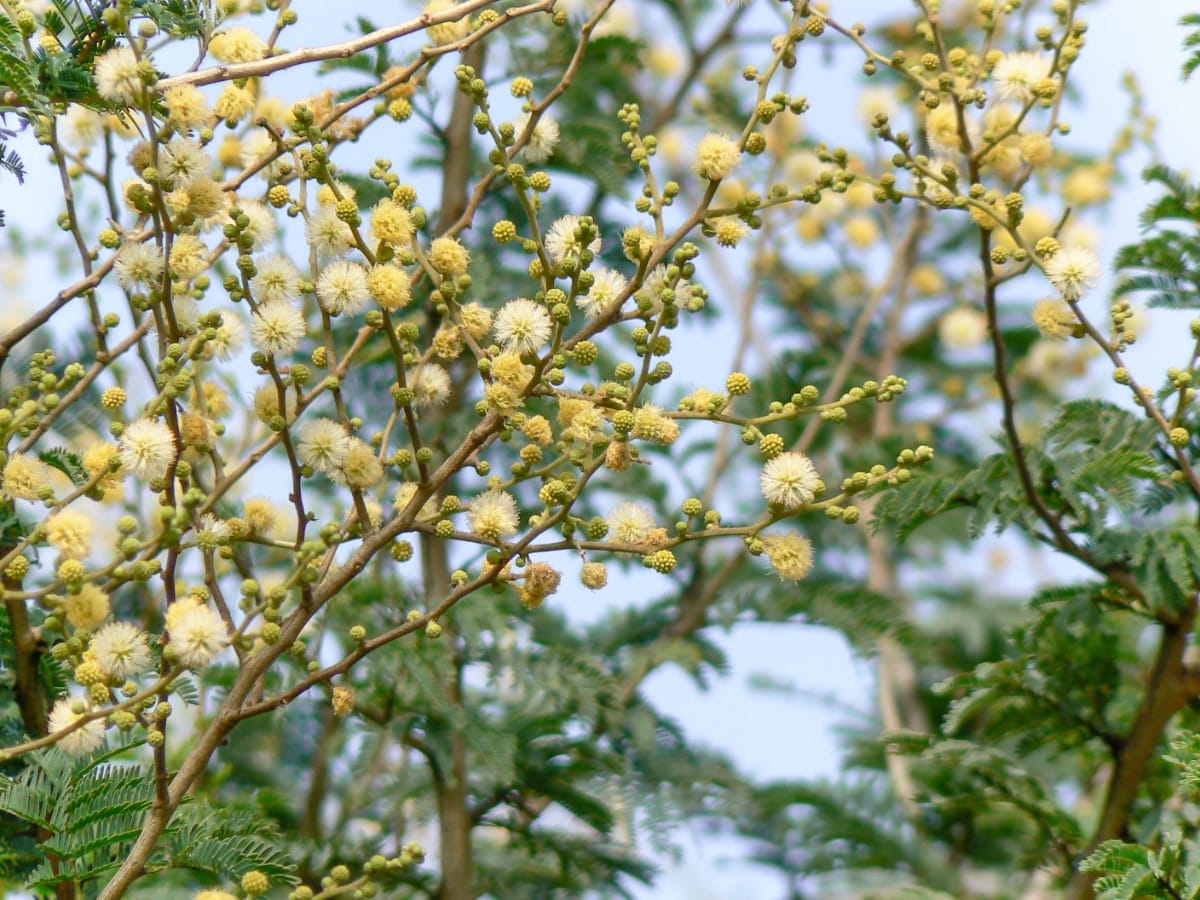
Composed back in the 13th century, for example, the first known Marathi text recounts the life of the Hindu saint and philosopher Cakradhara and provides invaluable glimpses of medieval Maharashtra. At some point, Cakradhara instructs his disciple on the suffering all living creatures are subject to in the perpetual cycle of birth, death, and rebirth of worldly existence―a concept related to karma and central to Hindu cosmology. To exemplify his teaching, he points to a hivara tree (Vachellia leucophloea) with its trunk full of tumours. Also appearing in plenty of other written and oral narratives, this sacred tree species can only be found in South Asian savannas and nowhere else in the world, and botanists have long considered its thick bark to be an adaptation to withstand these ecosystems’ natural fires.
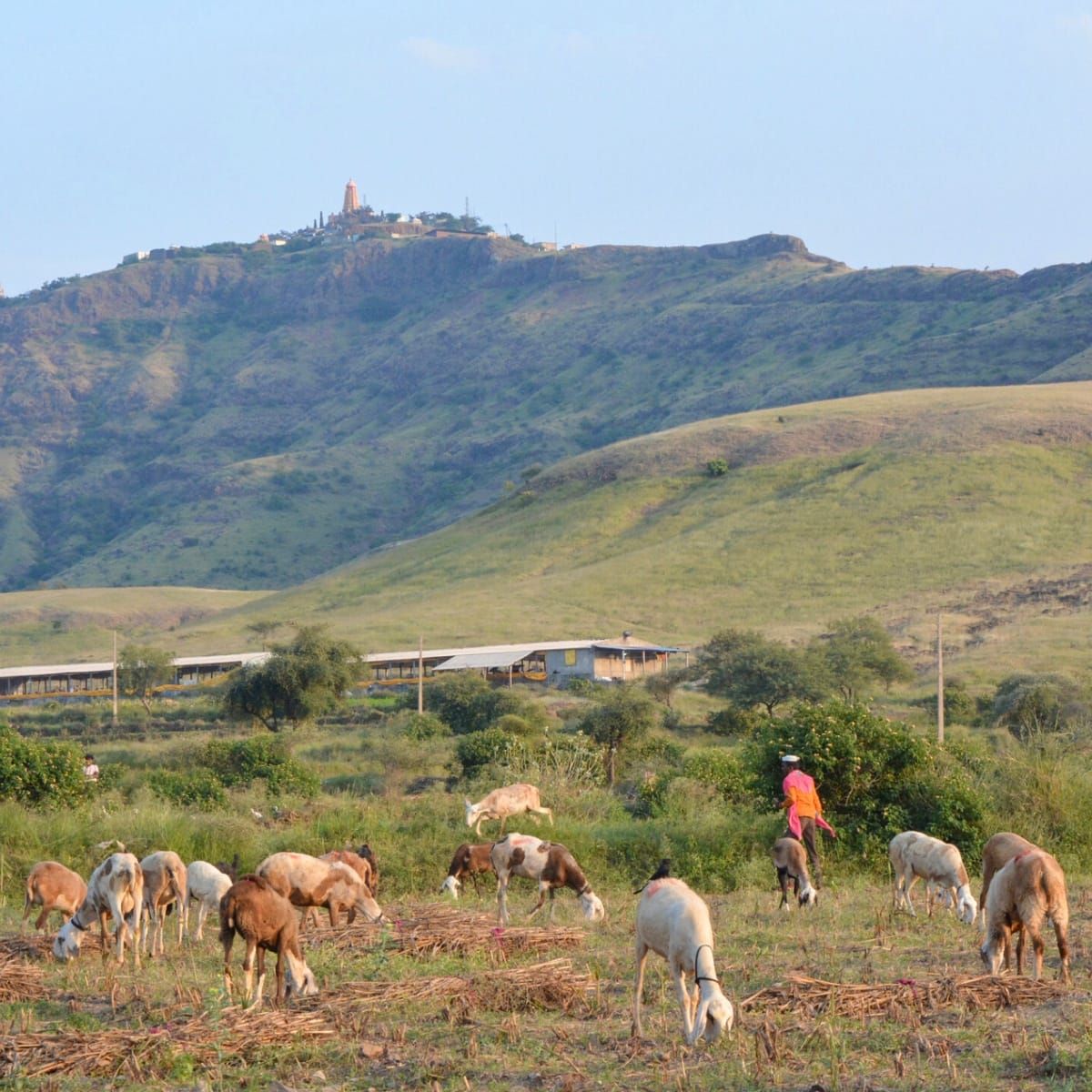
Furthermore, Nerlekar and Patil found recurrent descriptions of wild, open landscapes across all literary genres, where thickets of shrubs and thorny trees grew amid a vast carpet of grasses. In other words: savannas. For instance, some ancient folk tales narrated how pastoralists arrived at certain natural grassy areas in Maharashtra after long journeys in search of better pastures for their cattle. Some evoked the foundation of prominent temples and villages, like the sacred site of Shinganapur and the principal temple of Birobā in Arewadi, revealing insightful accounts of the open vegetation that once covered the place before construction and human settlement.
Woven into such landscape descriptions, many signature savanna trees featured in those narratives too, like khaira (Senegalia catechu), hiṅgaṇa (Balanites aegyptiaca), taraṭī (Capparis divaricata), and vehaṅkaḷī (Gymnosporia senegalensis), among several others.

These pioneering ecological reconstructions rooted in traditional literature add to a growing body of evidence suggesting that tropical savannas are far older than many might think. For instance, based on data from fossil pollen, previous studies in South Asian savannas have shown that the natural expansion of these open ecosystems probably set the stage for the local development of agriculture, not vice versa. So yes, these savannas may have been used by humans for a long while, but humans were most likely not the reason they came to be in the first place.
Just as importantly, ancient human presence doesn’t necessarily undermine the conservation value of Indian savannas. The authors of the study remind us of fairly recent discoveries that several regions of the Amazon rainforest may have been actively shaped by humans for centuries. Does that mean we should stop caring about this massive reservoir of planetary carbon and biodiversity? Not that simple.
“Reframing biodiversity conservation initiatives in tropical savannas—many of which are sacred natural sites—by explicitly valuing traditional literature as archives of biocultural histories could catalyse the conservation of both nature and culture”
All in all, the contribution of traditional literature to the understanding and protection of biodiversity doesn’t just lie in the ecological data scientists can draw from it. Those narratives are long-standing, living traditions, the researchers say, still an integral part of today’s social and religious practices and beliefs. As such, this culturally resonant knowledge has the potential to connect wider audiences with native savannas in India, fostering a sense of belonging and care, and thus strengthening conservation initiatives.
Indeed, many savannas and their woody inhabitants are sacred for local communities in Maharashtra, meaning they already occupy a central place within their worldviews and ways of life. In this context, as opposed to mainstream policy and decision-making approaches, Nerlekar and Patil argue that preserving both the biological and cultural diversity of the country’s tropical savannas should be an integrated goal, since they can reinforce each other and often face the same threats in an increasingly homogenized world.
READ THE ARTICLE
Nerlekar, A. N. & Patil, D. (2026). Utilizing traditional literature to triangulate the ecological history of a tropical savanna. People and Nature, 8: 81-98. https://doi.org/10.1002/pan3.70201
Spanish translation by Andrés Pereira-Guaquetá.
The sacred natural landscape at Shinganapur. Photo from the original article.

.jpg?ref=botany.one)

,_reserva_natural_Mas%C3%A1i_Mara,_Kenia,_2024-05-19,_DD_23.jpg?ref=botany.one)