
Between the sidewalk and the curb, in a crack in a wall or along the edge of the asphalt, you have probably come across it: chanana (Turnera subulata Sm.), also known in Brazil such as onze-horas, boa-noite, and flor-do-guarujá. Native to tropical South America, it has also established itself beyond the continent, having been introduced to Florida and parts of Asia, including India, Sri Lanka, Thailand, and Malaysia. Its ability to thrive in an urban environment would be reason enough to admire it, but that is not even the most remarkable thing about this plant.
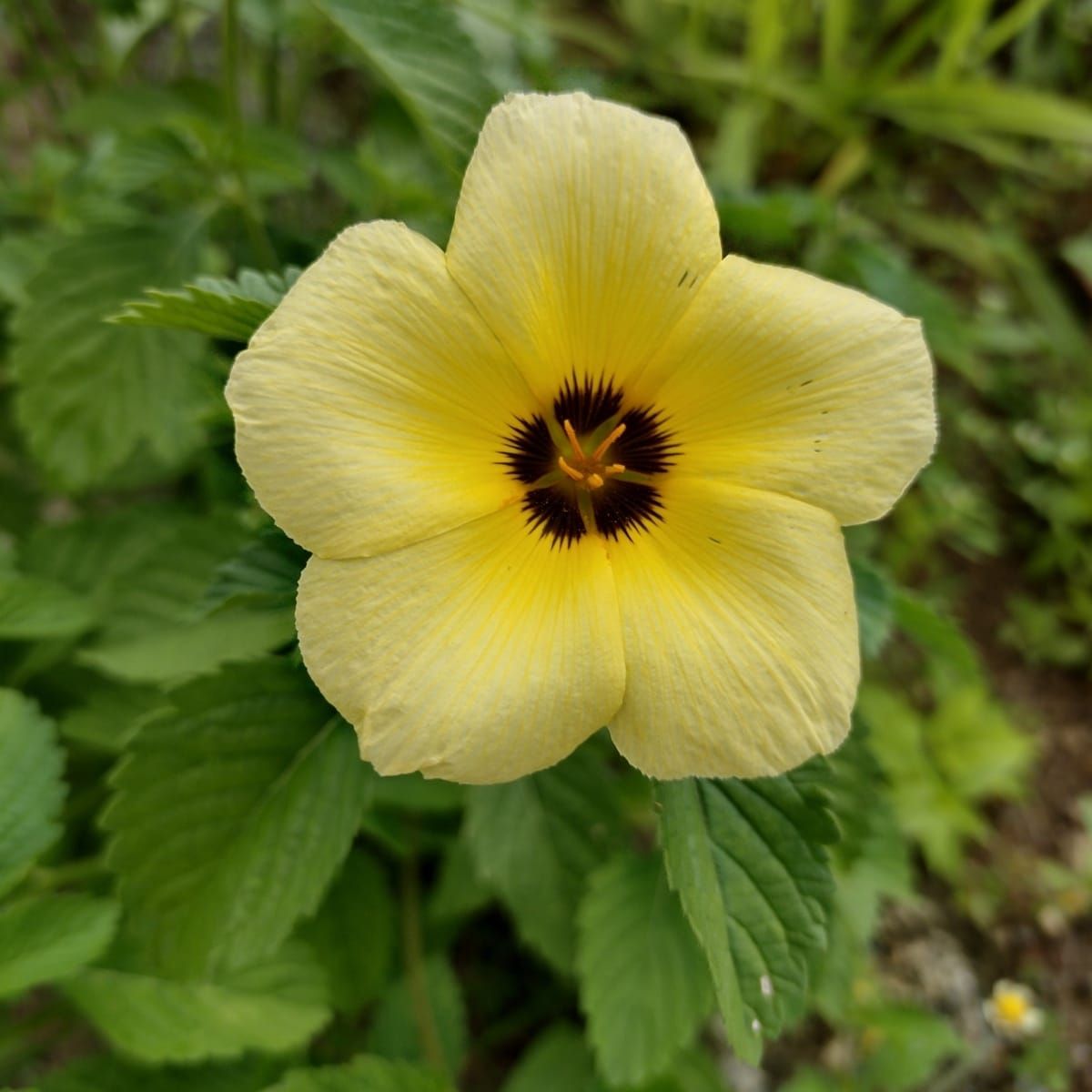
Chanana is a shrub that grows up to 1.5 m tall, with flowers 3–4 cm in size, light-yellow petals, and dark spots at their base that serve as nectar guides for visitors. Its Brazilian name onze-horas (“eleven o’clock”) makes sense: the flowers open in the early morning and wilt before noon, remaining in bloom for only about five to six hours. Its presence in urban environments is so striking that botanist Lamarck Rocha, from the State University of Feira de Santana, has coined a name for it: “the flower of resistance.”
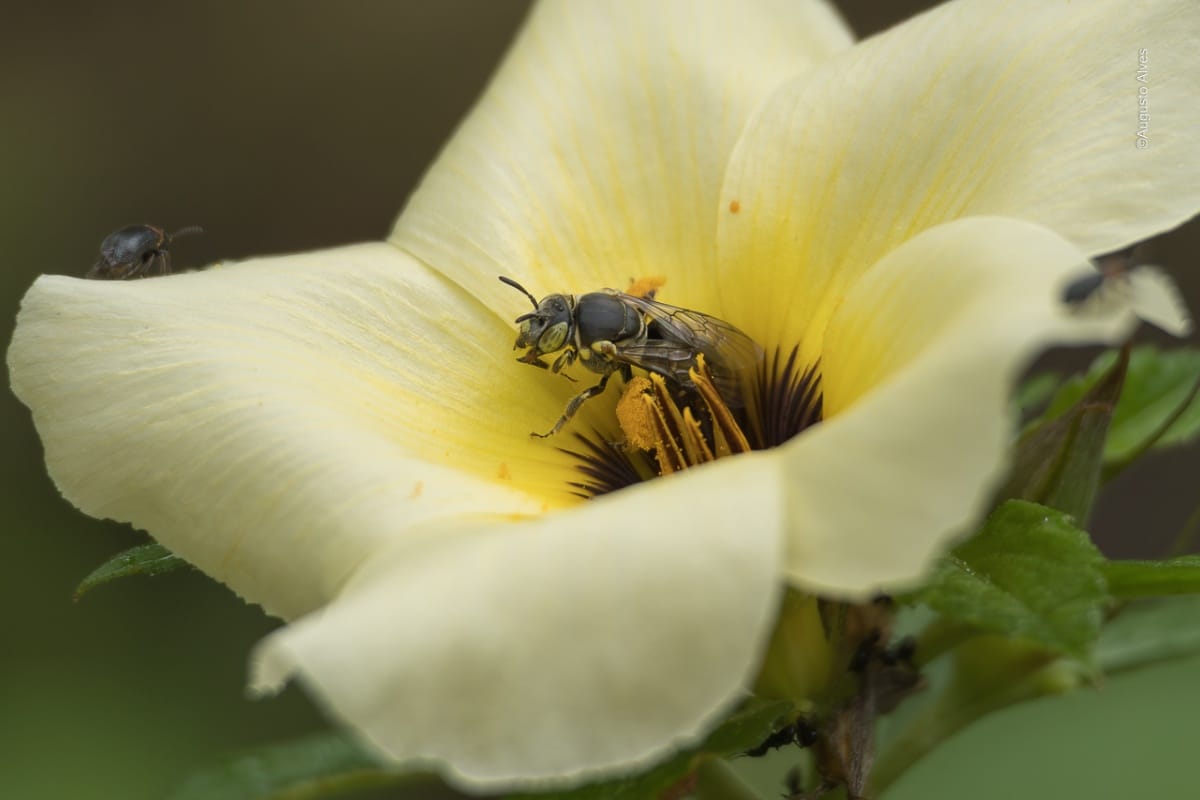
A strategy against self-fertilisation. Each chanana flower is hermaphroditic, with both male and female reproductive functions active simultaneously. To prevent self-fertilisation, the species employs distyly: some plants produce only long-styled flowers with short stamens, while others produce only short-styled flowers with long stamens. Because these structures are located at different heights, pollen adheres to different parts of the bee’s body. A study by Brazilian researchers Jéssica M. O. Passos and Miriam Gimenes showed this perfectly: on long-styled flowers, bees make contact with the stigma using their thorax and abdomen; on short-styled flowers, they do so with their head and back.
Exotic and native visitors. In the same study by Passos and Gimenes, the European honeybee (Apis mellifera) accounted for about two-thirds of flower visits, followed by the stingless bee Trigona. However, the situation changed with the arrival of rains: in June, small native bees became the dominant visitors, and chanana continued to produce fruit. The authors suggest that the two groups complement each other throughout the year. Among the native bees, one species stands out: Protomeliturga turnerae, whose scientific name incorporates the name of the plant. This bee collects pollen almost exclusively from Turnera, and the males defend territories on the plants and use the flowers as meeting points for mating.
Nectar outside the flower. Chanana also has extrafloral nectaries located on the leaf petiole, which often lead to an association between the plant and ants. It is not alone in this regard: a survey identified 249 species with this type of gland across Brazilian biomes, and chanana stood out as one of the species that connect different biomes and increase the integration of plant communities. In many of these plants, the partnership involves an exchange of nectar for protection against herbivores. In the case of chanana, there is evidence that the plant regulates this nectar supply: researchers at the Federal University of Sergipe observed that, during the day, the most active nectaries are located near the tips of the branches, precisely where flowers and buds occur. Whether ants truly protect the chanana, however, remains an open question.
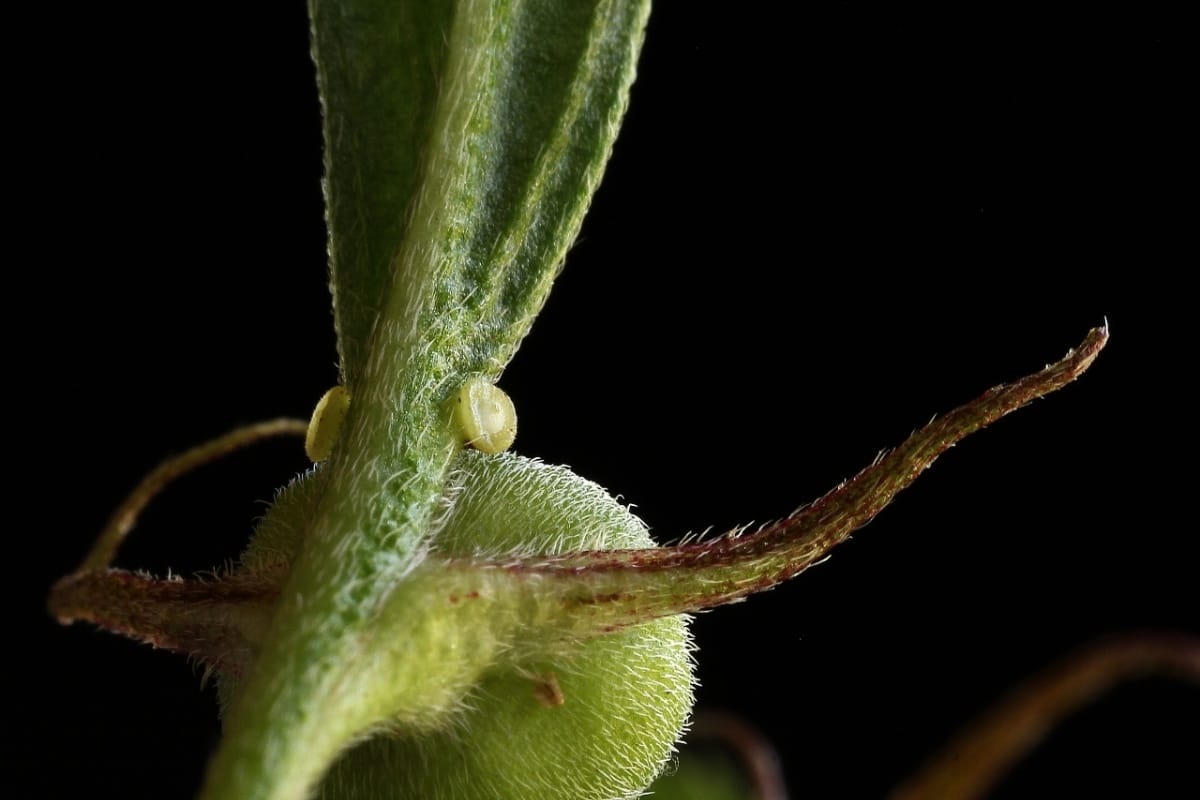
What changes in the city, and what does not. The urban resilience of chanana has caught the attention of researchers at the Plant Ecology Laboratory at the Federal University of Alagoas, who have been studying the plant across gradients of urbanisation. In an initial study, the team compared the biomass of leaves, stems, and reproductive structures in plants found in more and less urbanised areas. The vegetative components did not change with urbanisation, and the plants did not appear to sacrifice growth to reproduce: the larger the plant, the greater its reproductive investment.
One of the findings was that plants growing in urban areas reduced their investment in certain reproductive structures. Using the proportion of soil covered by asphalt, concrete, and buildings as a metric for urbanisation, the researchers measured the biomass of stamens and pistils, the size of petals, sepals, and nectar guides, and the number of flowers. The allocation of resources between male and female functions remained consistent, and the size of the structures that attract pollinators also remained unchanged. What did change was the quantity: in more heavily paved or built-up areas, chanana produces fewer flowers, which, according to the authors, may compromise its reproduction.
In 2023, the same team collected 140 plants from 14 locations in Penedo and examined approximately 7,000 leaves and 700 flowers. Signs of chewing insects were found on 86% of the flowers, compared to 38% of leaves. Urbanisation did not alter leaf consumption, but it increased the likelihood of a flower being attacked; however, the amount of tissue consumed remained small. One explanation proposed by the authors is that, when fewer flowers are available, attacks become concentrated on the few that remain: on plants with 10 flowers, the probability of each flower being attacked was nearly 90%, whereas it dropped to about 67% in plants with 50 flowers. Another study in the same system showed that the insects associated with chanana flowers become less diverse and less abundant as urbanisation increases. Chanana retains its basic structure even beneath the asphalt; its relationships with other organisms change.
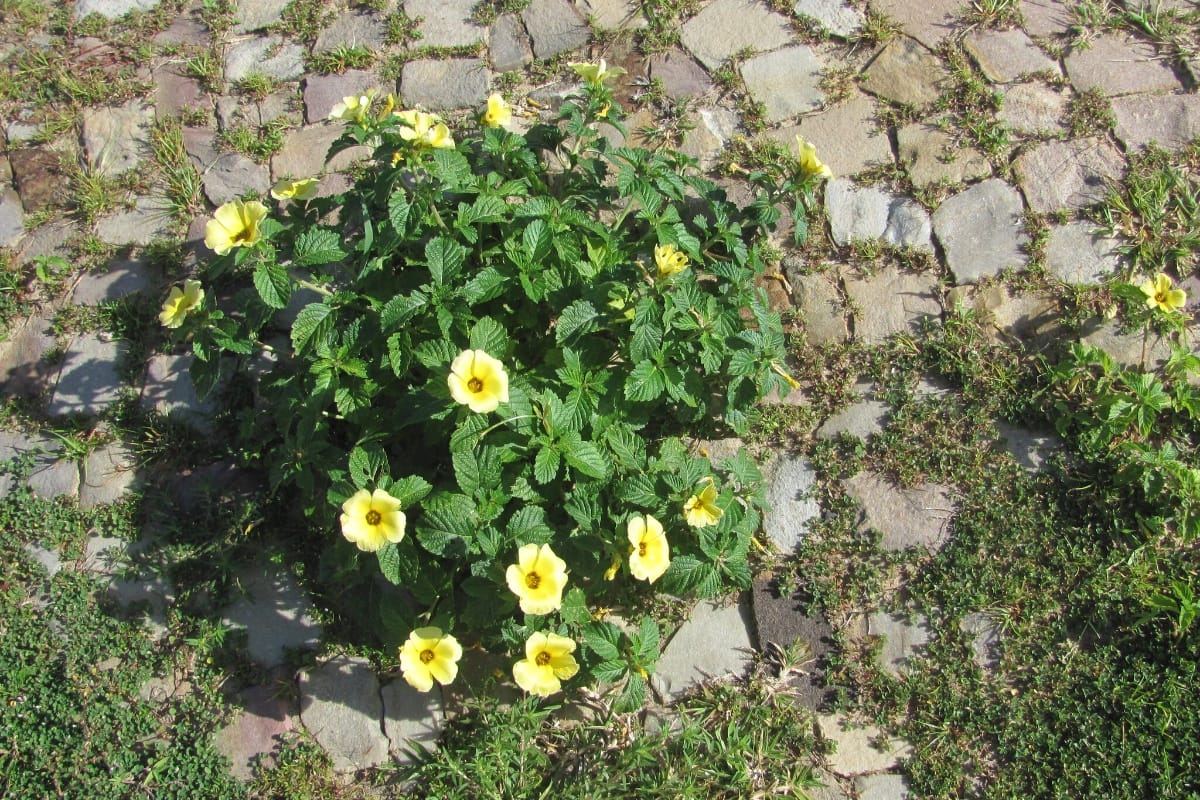
Chanana is also a PANC, a Brazilian category of unconventional edible plants: its leaves can be used to make tea, while its flowers can be turned into jelly or added to salads. It is also cultivated as an ornamental, although in many places it is treated as a weed and removed, especially in orchards and pastures.
Next time you see a chanana on the sidewalk, take a closer look. It harbours a sophisticated reproductive system, a bee that depends on it, and a small research community seeking to understand how such a delicate flower manages to endure the city. The chanana has already proven that this “flower of resilience” is also an open-air laboratory.
TO KNOW MORE ABOUT THE PLANT:
Barão KR, Seixas LS, Nobre B, Ferreira L, Lopes RVR, Demetrio GR. 2024. First multitaxon assessment of arthropod responses to urbanisation in a widely distributed native and ruderal plant of Brazil. Insect Conservation and Diversity 17: 196-202. https://doi.org/10.1111/icad.12720
Passos JMO, Gimenes M. 2022. Pollination of Turnera subulata: exotic or native bees?. Iheringia. Série Zoologia 112. https://doi.org/10.1590/1678-4766e2022006
Seixas L, Barão K, Lopes R, Serafim D, Demetrio GR. 2024. Is urbanization a driver of aboveground biomass allocation in a widespread tropical shrub, Turnera subulata (Turneroideae - Passifloraceae)? Journal of Plant Research 137: 879-892. https://doi.org/10.1007/s10265-024-01560-1
Serafim D, Seixas L, Silva JER, et al.. 2025. Urbanization decreases floral display without shifting sexual biomass allocation in Turnera subulata, a common tropical urban plant. Urban Ecosystems 28. https://doi.org/10.1007/s11252-025-01680-z
Portuguese translation by Grênivel M. da Costa.
Cover picture by Lucas Kaminski (iNaturalist, CC BY 4.0)