I try to follow what you're sharing on Mastodon and Bluesky each week, to pick the top botany links, but it's getting more difficult. Usually, when something dominates the news, the news links disappear but the scientific papers continue getting shared. The Epstein War is proving different. I can't tell yet if fewer papers are being shared, or if the distribution has broadened, making fewer obvious peaks. I've worked out a solution which seemed simple enough till I realised it would mean building a mini-Altmetric.
Something I made this week, which might stay around or get deleted is the Species Dashboard. If you want to know about a species, you can type a name into the search box, and you'll get results. These are an overview from Wikipedia, some taxonomy links from IPNI and others, something on the phyologeny, species records from professionals, observations from citizen scientists and the latest research on the species from OpenAlex. So this is how I got information about Tulipa cypria this week. Before I used it, all I knew about Tulipa cypria is that there was a nice photo that would look good for plant of the week.
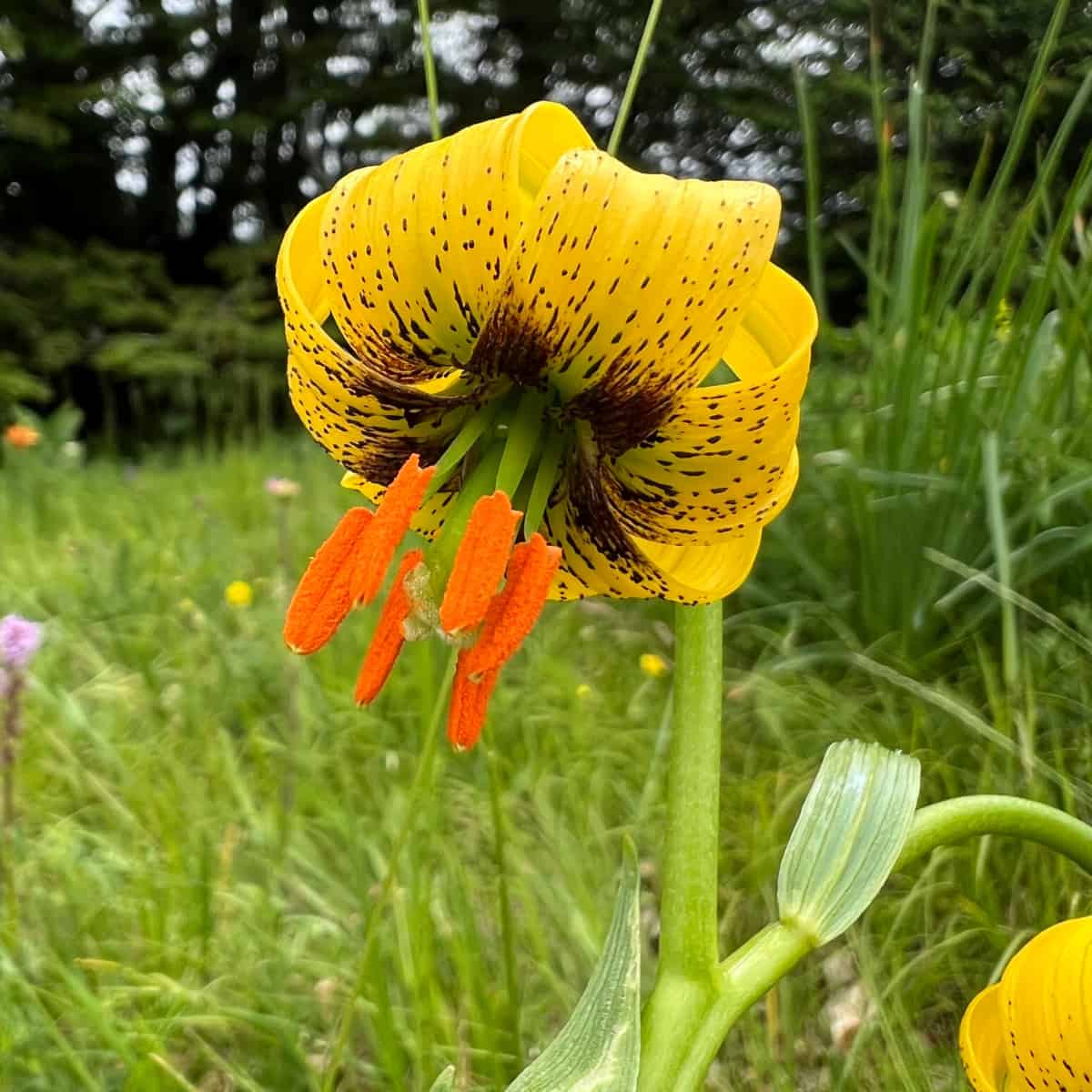
I notice that following the appearance of the Bosnian Lily on the site last week as the cover image, Bosnia & Herzegovina have gone on to knock Italy out of the World Cup and qualify for the finals. If anyone wants to give their team a boost in June, then I want to let you know that I am bribable, but only in gold bullion in these uncertain times.
If a large amount of gold doesn't arrive on my doorstep in the coming week, then there'll be another issue of The Week in Botany, at the usual time. Until then, take care.
Alun (webmaster@botany.one)
On Botany One
What Our Footsteps Leave Behind: the Silent Impact of Tourist Trails on Lichens and Bryophytes
Trails may seem small and harmless amid the vastness of national parks, but new evidence suggests that their ecological impact may be far greater than it appears.
Not All Seeds Survive the Vault: Rethinking Seed Banking for Chile’s Trees
The discovery that one in five Chilean tree species has desiccation-sensitive seeds challenges a cornerstone of conservation and calls for innovative solutions.
Alex Bowles: on the Ordinary yet Extraordinary Life of Plants
Botany One interviews Dr Alexander Bowles, an evolutionary botanist interested in the processes that have driven plant and algae diversity.
Fizz With a Conscience: Reintegrating Indigenous Knowledge Into Australia’s Native Food Industry
A vitamin-rich drink made with a native plant shows how science, law and Traditional Knowledge can combine to create healthier products while delivering real benefits to Indigenous communities.
This week the Sudoku Garden records Senegal's birthday. The Plant Hunt takes a trip through the flora of Crete. This week's Plant of the Week is Tulipa cypria, a plant that lives in a small part of time and space.
There was also last week's Week in Botany, with the strange love lives of flowers, how healing may cause harm, connecting plants and humans, and more.
News & Views
New research shows beaver dams in Switzerland and across Europe are creating carbon sinks that absorb greenhouse gases. The wetlands store up to 164 tons of carbon annually, potentially offsetting 2 percent of national emissions.
 weather.com
When I was a postdoc, one of the job interviews I did involved both a research seminar and a teaching lecture (given to members of the department, not an actual class). I prepared a lecture on community ecology and practiced it in front of lab folks. After it, my postdoc advisor, Tony Ives, gave me advice that I still think of often: the art of teaching is learning how to selectively lie.
 Dynamic Ecology
‘A middle-aged face stops me in the street. Mr Hill! Remember me? I know that I need to remember, and remember positively – I’ll try to explain why.’.
 The Spinoff
An attack on Upemba National Park that left seven dead reflects a broader pattern: rangers are increasingly exposed to violence across protected areas, often facing armed groups with limited support.
 Conservation news
NASA’s Artemis II mission – the first crewed lunar flight since Apollo 17 in 1972 – is carrying four astronauts including Canadian Space Agency astronaut Jeremy Hansen on a loop around the Moon. Tucked aboard the Orion capsule is a small package from Fredericton, New Brunswick: around 2,600 seeds from five Canadian tree species, sent by the National Tree Seed Centre.
 Space Botany
For more than 15 years, botanist Naomi Fraga has been trying to collect seeds from the rare Death Valley sage, for safekeeping in a vault of native California seeds.
 NPR
NPR
The headquarters is going to Utah. Every regional office is being shuttered. The research program is being destroyed.
 Hatch Magazine - Fly Fishing, etc.
The American Society of Plant Biologists (ASPB) is pleased to announce the appointment of Anna Amtmann, Professor of Molecular Plant Physiology at the University of Glasgow, as the next Editor-in-Chief of Plant Physiology. Dr. Amtmann will succeed Yunde Zhao, whose leadership has helped guide the journal through a period of significant growth and scientific impact.
 blog.aspb.org
The Trump administration’s cuts to biodiversity funding have imperiled species, habitats, and the people who defend both. Now the world seeks a new way forward.
 bioGraphic
University’s botanic garden will use study materials created by John Stevens Henslow, the naturalist’s mentor, 200 years ago.
 The Guardian
Three new plant species are discovered in Ecuador in a single day, revealing secrets hidden along previously explored trails.
 Earth.com
This Week in Botany
5 Years Ago: What causes fruit set failure in pink trumpet trees? Look at pistils to find out more
10 Years Ago: Proteome analysis of digestive fluids in Nepenthes pitchers
15 Years Ago: Missing my own talk, communities, networks and journal development
Scientific Papers
Emily Fairfax, Cherie Westbrook
“Beavers, Castor canadensis in North America and Castor fiber in Eurasia, are widely referred to as nature's engineers due to their ability to rapidly transform diverse landscapes into dynamic wetland ecosystems. As we follow an unprecedented trajectory of anthropogenic warming, we have the unique opportunity to describe how beaver ecosystem engineering ameliorates climate change today. Here, we review how beavers create and maintain local hydroclimatic stability and influence larger-scale biophysical ecosystem processes in the context of past, present, and future climate change.”
 Annual Review of Ecology, Evolution, and Systematics (November 2024)
“In this review, we outline the current body of knowledge on how the embryo, endosperm, and seed coat communicate with one another during the early stages of seed development. We also discuss the nature and variability of signalling mechanisms across these tissues and the impact of these interactions on seed development and associated agronomic traits, highlighting how understanding these communication pathways can contribute to agricultural biotechnology.”
 Journal of Experimental Botany (March 2026)
“In this work, we uncover temperature-regulated accumulation and solubility of members of the AUXIN RESPONSE FACTOR transcription factor family. We determine that ARF7 and ARF19 proteins rapidly hyperaccumulate in response to elevated temperature. Furthermore, we find that diffuse concentrations of ARF protein increase under elevated temperature, consistent with increased solubility.”
 Nature Communications (March 2026)
“Here we compile the chromatin toolkit of brown algae and show that canonical silencing systems involving DNA cytosine methylation and Polycomb repressive complex 2 (PRC2)-mediated histone H3 lysine 27 (H3K27) methylation were lost early in their evolution. By generating hPTM profiles from diverse brown algal clades, we resolve the nature and regulatory roles of chromatin states in this lineage and show how H3 lysine 79 (H3K79) methylation emerged and diversified as a repressive system.”
 Nature Ecology & Evolution (March 2026)
“Although color and scent are well-established pollination signals, some plants also produce heat. Valencia-Montoya et al. discovered that plant-produced heat is an early pollination signal and describe the molecular basis of both heat generation in cycads and heat sensing in beetle antennae.”
 Science (December 2025)
“Here, we discovered defense-related membrane contact sites (MCS) comprising a membrane tethering complex between chloroplasts and the extrahaustorial membrane (EHM) surrounding the haustorium of the pathogen Phytophthora infestans in Nicotiana benthamiana. The assembly of this complex involves association between the chloroplast outer envelope protein CHLOROPLAST UNUSUAL POSITIONING 1 (CHUP1) and its plasma membrane-associated partner KINESIN-LIKE PROTEIN FOR ACTIN-BASED CHLOROPLAST MOVEMENT 1 (KAC1). Our biochemical assays revealed that CHUP1 and KAC1 interact, and infection cell biology assays demonstrated their co-accumulation in foci where chloroplasts contact the EHM.”
The Plant Cell (September 2025)
“Here, we report our development of the Multi Targeted AmiRNA Cell type–specific Transportome-scale (mTACT) toolbox, which can be used to reveal phenotypic plasticity in plants. mTACT is based on a large set of artificial microRNAs (amiRNAs), each designed to optimally target multiple members of a particular gene family encoding transporter proteins. In total, the mTACT toolbox includes 5,565 amiRNAs, targeting 81.7% of the Arabidopsis (Arabidopsis thaliana) transportome.”
Plant Physiology (February 2026)
“Unlike Arabidopsis, Nicotiana benthamiana uses the SENESCENCE ASSOCIATED GENE 101– N REQUIREMENT GENE 1 branch of TIR signaling to activate salicylic acid biosynthesis, illustrating evolutionary divergence in how conserved immune signaling modules are deployed to control salicylic acid production across plant lineages.”
 Journal of Integrative Plant Biology (March 2026)
“Here we report that the β subunit of SnRK1, SnRK1β1A, confers broad-spectrum susceptibility to these fungal diseases. Our findings show that diverse rice fungal pathogens have convergently evolved an effector-like protein, Gas2, which interacts with SnRK1β1A to prevent its ubiquitination-mediated degradation and promotes its nuclear translocation.”
 Nature (March 2026)
“We show that warming produces compound- and species-specific changes in floral VOC emissions, affecting both the composition and emission rates of compounds that may influence pollinator attraction. We also identify key knowledge gaps and research priorities, including the need to integrate floral chemistry, plant flowering phenology, and pollinator sensory ecology to better understand the stability of plant–pollinator interactions under climate warming in the tropics.”
Annals of Botany (March 2026)
“Plants in ex situ conservation nurseries acquire diverse fungal associates that may be moved among nurseries or into the wild during outplanting, including fungal endophytes that contribute to a broad range of functions and occur in leaves, sometimes alongside pathogens. To improve understanding of fungal symbionts in a plant of high conservation concern, we characterized foliar fungal endophytes of Torreya taxifolia, one of the world's most threatened conifers, in an ex situ conservation nursery.”
American Journal of Botany (March 2026)
In AoBC Publications
Careers
The postholder will study signalling pathways that lead to the activation of adaptive physiological responses in the liverwort Marchantia polymorpha. The role of the individual will be as follows: (i) analyse gene and protein expression; (ii) express and purify proteins from heterologous hosts, (iii) generate transgenic plants and (iv) comapre protein and nucleotide sequences to study phylogenetic relations.

University of Oxford
In the project to which this role will contribute, we will characterise plant genetic mechanisms that coordinate the interaction of mycorrhizal fungi with plant P and water status, the development of the root system, and the broader community of soil microbes. With partners at Cambridge University, and in Germany and the US, we will work from the scale of the single gene to field evaluation to define a framework for rational optimisation of plant-mycorrhizal symbioses for more efficient P use in agriculture. The modelling component will involve combining existing models of root system growth, rhizosphere processes and P uptake developed by the project partners and developing new models of the effects and costs of mycorrhizal symbioses.
Cranfield University
We are looking for a postdoctoral level scientist with skills in phylogenetic and morphological analysis to work as part of a team investigating the evolution of the mega-diverse plant genus Solanum, a member of the nightshade family (Solanaceae). We expect the appointee to produce, collate and analyse DNA sequence and morphological data for clades of Solanum species, focusing on the diverse “spiny solanums”, in either Australia or the Americas.
The Natural History Museum
Your future position is at the Department of Botany and Biodiversity Research in the Plant Phylogenomics Group within the Division of Systematic and Evolutionary Botany. Research in our group focuses on how genome-level processes (e.g. gene duplication, horizontal gene transfer, introgression) and natural selection have shaped the morphological, molecular, and phylogenetic diversity of plants. Ongoing projects include the evolution of floral scent in Onagraceae, the evolution of sexual systems in Schiedea (Caryophyllaceae), and the origin and genomic basis of heterotrophy in liverworts.

University of Vienna
In Subproject B4, we will investigate gene expression of trees and their leaf microbiomes in the ECOSENSE Forest to identify stress-responsive plant genes and microbial shifts. Coupled with ECOSENSE’s high-resolution sensor network, expression patterns will be interpreted in the context of the microenvironment and linked to ecophysiology. In addition, we will investigate gene expression of trees in controlled climate chamber and Ecotrone experiments to address herbivore response and tree-to-tree signaling.

University of Freiburg
Applicants are expected to hold a Ph.D. in Biology or a related discipline with demonstrated connections to plant evolutionary ecology research. Experience with interdisciplinary research is welcomed. The successful candidate will have a commitment to innovative undergraduate teaching with expertise to teach undergraduate and graduate Biology courses, a strong research record, and an interest or experience in university service and governance.

University of Winnipeg
The successful candidate will participate in the Centre for Interdisciplinary Research (C-FIR) at The University of Winnipeg which is dedicated to the development of interdisciplinary research, education, and training in the areas of forestry, forest ecosystems, forest values and the human uses of forests. They will teach primarily within the Forest Ecology and the Forest Policy and Management streams of DESS which are nationally accredited by the Canadian Institute of Forestry (CIF), the Canadian Environmental Accreditation Commission (CEAC), and the Environmental Careers Organization (ECO) Canada professional environmental practitioner certification initiative. The program prepares our graduates for employment in forestry, natural resources management, and allied fields working across Canada.
University of Winnipeg
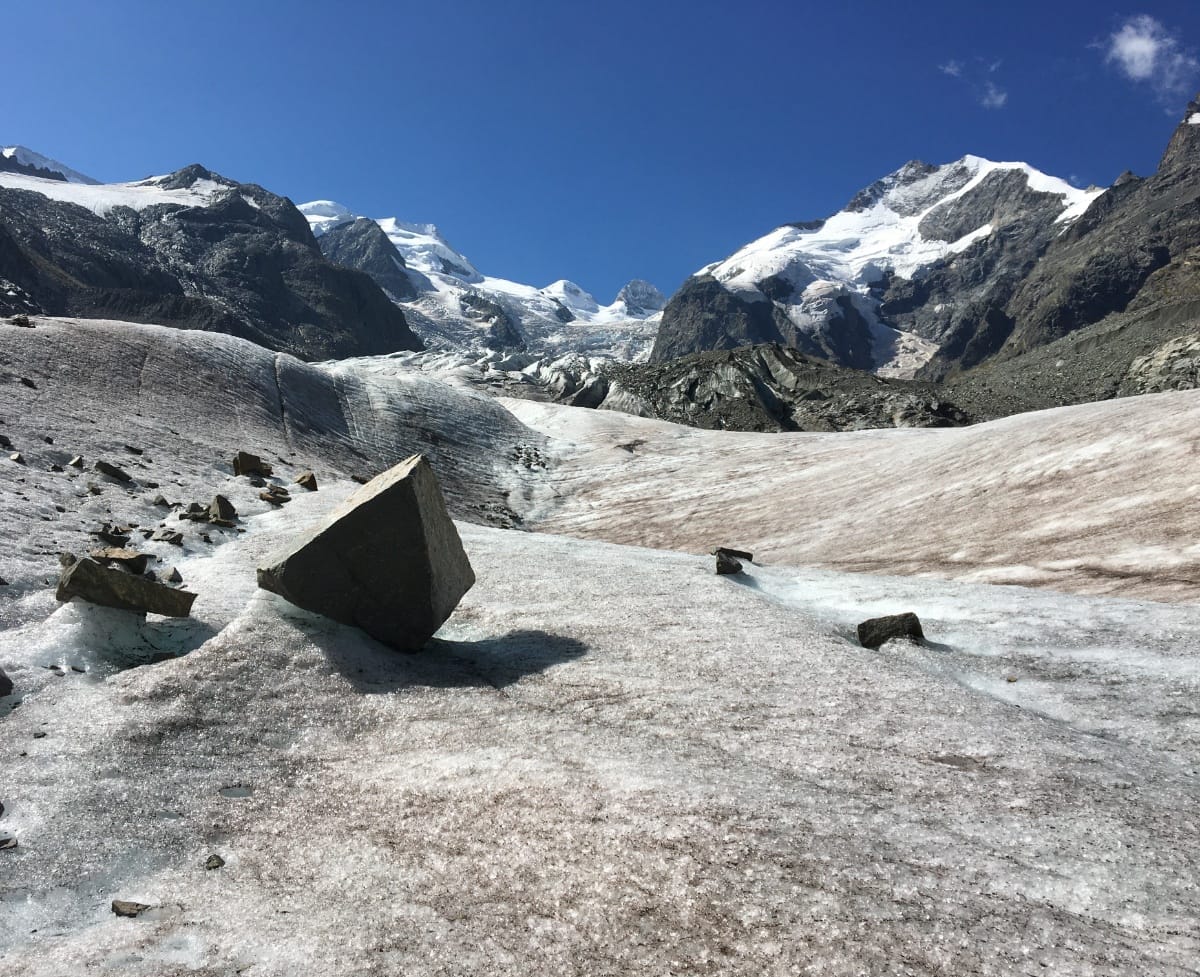
Cover image: Field trip looking for Arctic algae. Photo by Alexander Bowles.