
In some ecosystems, fire plays an important role in plant germination. The high heat of 60 - 150 °C breaks the seed coat, thereby allowing water in and germination to start. But the actual mechanics of how this 'dormancy break' happens is unclear.
A recent paper in Annals of Botany tested the possibility that fatty acid composition in the seed coat is key to breaking dormancy in fire-prone ecosystems. Fatty acids have different melting points depending on their degree of saturation and the researchers hypothesized that seeds in fire-prone areas would have a different fatty acid mix than those in fire-free areas.
“We characterized seed fatty acid compositions of 26 Fabaceae species from fire-prone and fire-free ecosystems,” write Sarah McInnes, a fire ecologist recently interviewed by Botany One, and her colleagues in their research paper.
But the researchers did not find a relationship between fatty acid composition and species-specific dormancy break when they tested the seed coats.
The researchers tested species of the Faboideae subfamily that grow in temperate fire-prone, arid and coastal dune ecosystems in Australia. The species either experience fire regularly or extremely rarely in their growth habitats. The researchers performed correlation analyses to test whether the fatty acid melting points of these species’ seeds related to their fire status.
“We found no significant relationship between seed coat fatty acid composition and dormancy-breaking temperature thresholds for our fire-prone study species,” write McInnes and colleagues.
Yet, 92% of fatty acids in the internal seed tissues of the fire-prone species were unsaturated, which may be advantageous. While these fire-prone habitats experience extreme heat during fire events, their general climate is relatively cool.
“Unsaturated fatty acids provide less overall energy than saturated fatty acids but are catabolized more rapidly and allow for quicker growth in cooler environments, a potentially beneficial trade-off at higher latitudes [where the fire-prone species grow],” write McInnes and colleagues.
Based on their data, McInnes and colleagues conclude that fatty acid composition in seeds is affected by environment, particularly climate and latitude, but is not correlated with dormancy-breaking by fire. They suggest sampling a greater number of species, especially those that grow in both fire-free and fire-prone areas, for a deeper understanding of the role of fatty acid composition in these populations.
Ultimately, McInnes and colleagues hope to better understand the relationship between fire and seed dormancy so that the population dynamics of fire-prone plant species can be better predicted in the face of climate change.
READ THE ARTICLE: McInnes, S., Tangney, R., and Ooi, M.(2025) Seed fatty acid composition and physical dormancy in fire-prone ecosystems. Annals of Botany, 137(1), pp. 209-222. Available at: https://doi.org/10.1093/aob/mcaf225.
READ MORE ON BOTANY ONE: Sarah J. McInnes: “When You Really Stop and Look, You’ll Be Amazed By What You Can See.” Botany One interviews Sarah McInness, an Australian chemist who found her way into how plants regenerate after fire. By Carlos A. Ordóñez-Parra.
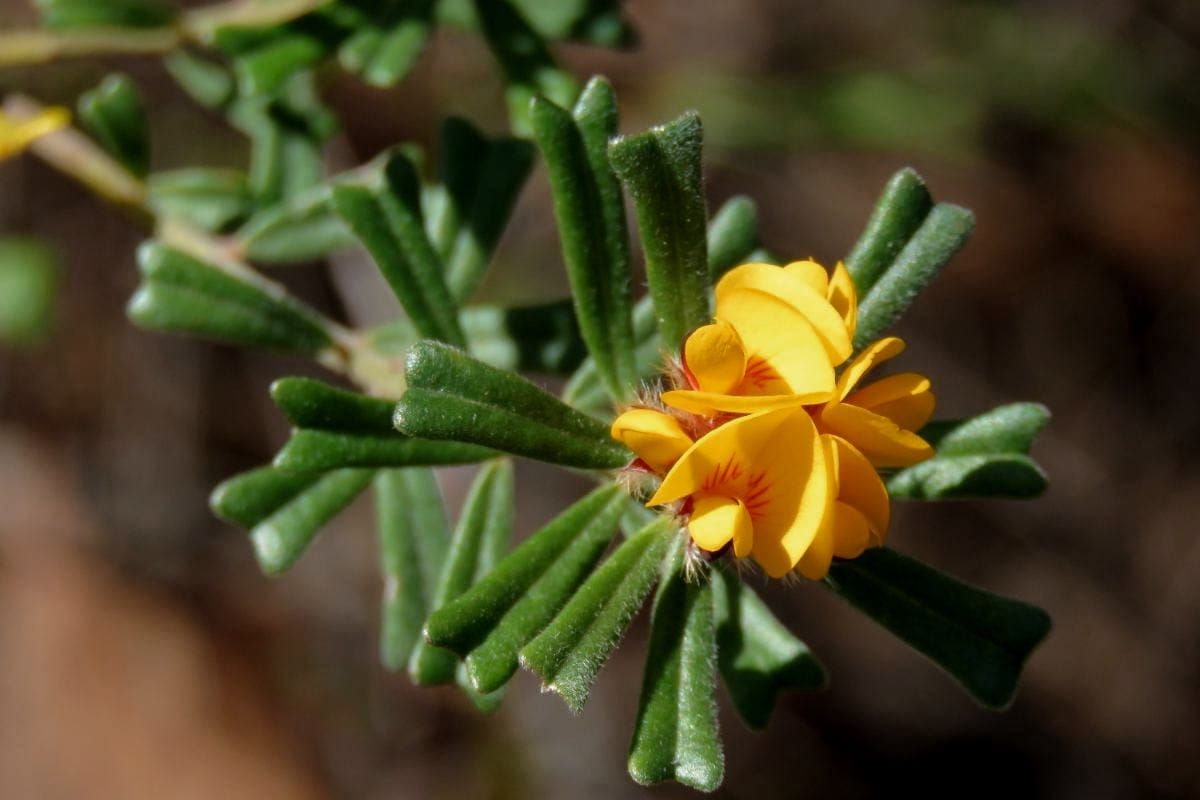
Cover image: One of the species studied, Pultenaea linophylla (Halo Bush Pea) by Philippa Gordon / iNaturalist CC BY-NC 4.0