
Around the world, scientists are working to produce crops with better tolerance to environmental stress. For example, breeders are trying to get maize to thrive in challenging soils. But this challenge has its own challenge: roots are underground and therefore hard to study. As a result, even though roots are critically important to plant health – providing nutrients, water and structural support – they are often left out of field research.
A new study, by Lopez-Valdivia and colleagues, is the first to address this knowledge gap using maize landraces from across the Americas. Their study combined real world maize root anatomy with soil characteristics and computer modelling to simulate ideal root growth in different soil environments. They were able to identify both narrow adaptations to specific soil stresses – and also broad adaptations suitable to many soil environments.
"Root anatomical phenotypes that reduce the metabolic cost of soil exploration are useful in many diverse soils. This makes them attractive breeding targets," says Prof. Jonathan Lynch, the paper's corresponding author. "This study adds to a growing body of evidence that root phenotypes under genetic control are attractive targets for the creation of the more resilient crops urgently needed in global agriculture."
According to Lynch, deployment of root phenotypes in crop breeding has been marginal to date, not just because of the difficulties in studying them, but also because breeders are concerned that "they might be selecting for phenotypes that are useful in specific soils or environments but would not be useful across many environments. This sort of broad adaptation is important in many cases."
They turned to landraces to find broad adaptation because they are adapted to 'low-input' environments, such as lower nitrogen or phosphorus availability, and are often more resilient to abiotic stresses than elite cultivars bred for 'high-input' production.
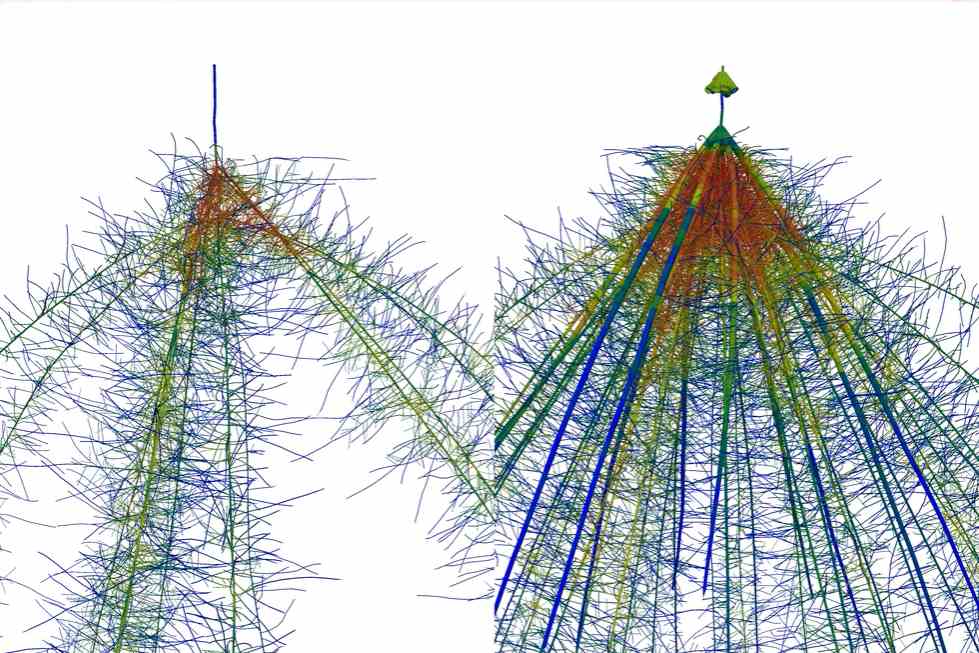
The researchers found that maize roots naturally configure themselves to avoid high metabolic costs during soil exploration, and they conclude that ‘intermediate root architectures’ should be targeted in breeding strategies to support growth across a diverse range of soils.
"Even high-input crop production systems are experiencing greater abiotic stress due to climate change, and would benefit from reduced input requirements, so this study is strategically relevant to global maize production," says Lynch.
The researchers based their conclusions on imaged roots from a diverse panel of maize landraces (Zea mays L. subsp. mays). Images were taken of ‘nodal roots’ (also known as ‘crown roots’), which in maize are the main root system of the plant. The nodal roots emerge from stem nodes located above the seed, but below the soil surface, in the collar tissues of the plant’s leaves. Additionally, an image of the ‘seminal roots’, which emerge from the seed embryo, was also taken for each plant.
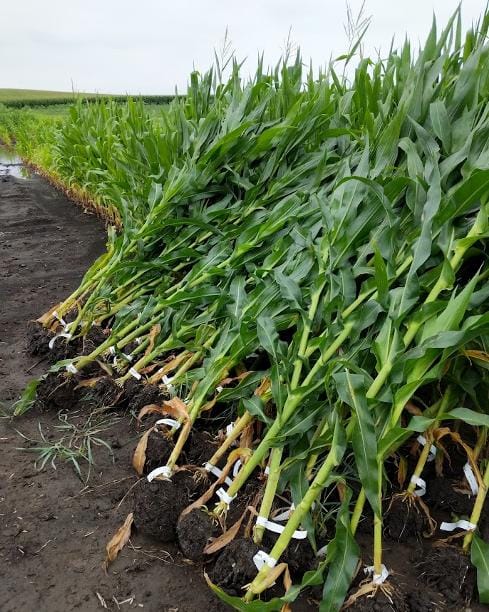
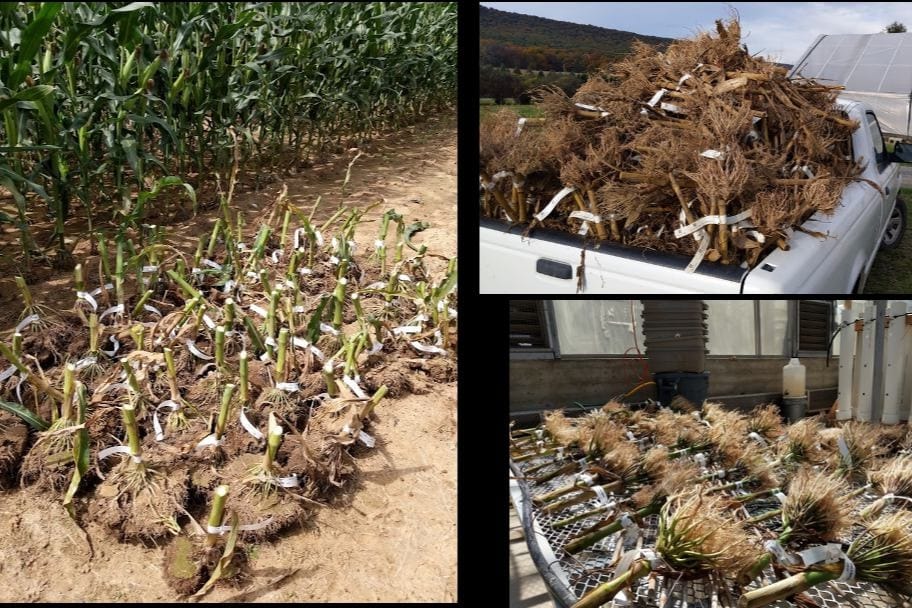
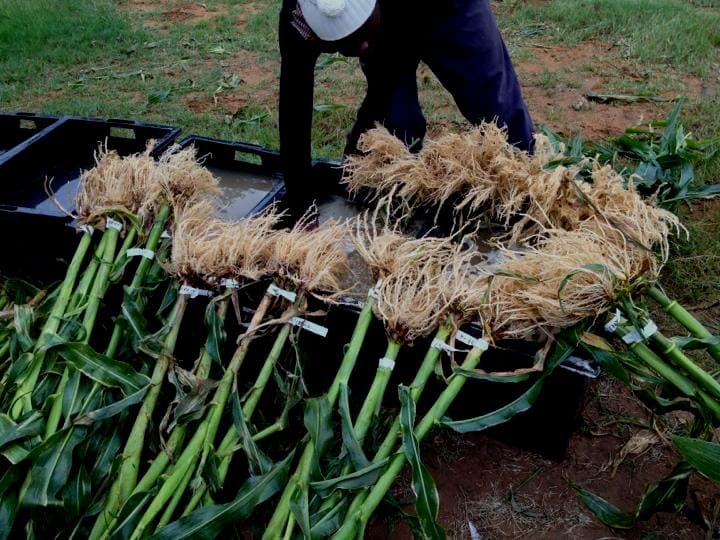
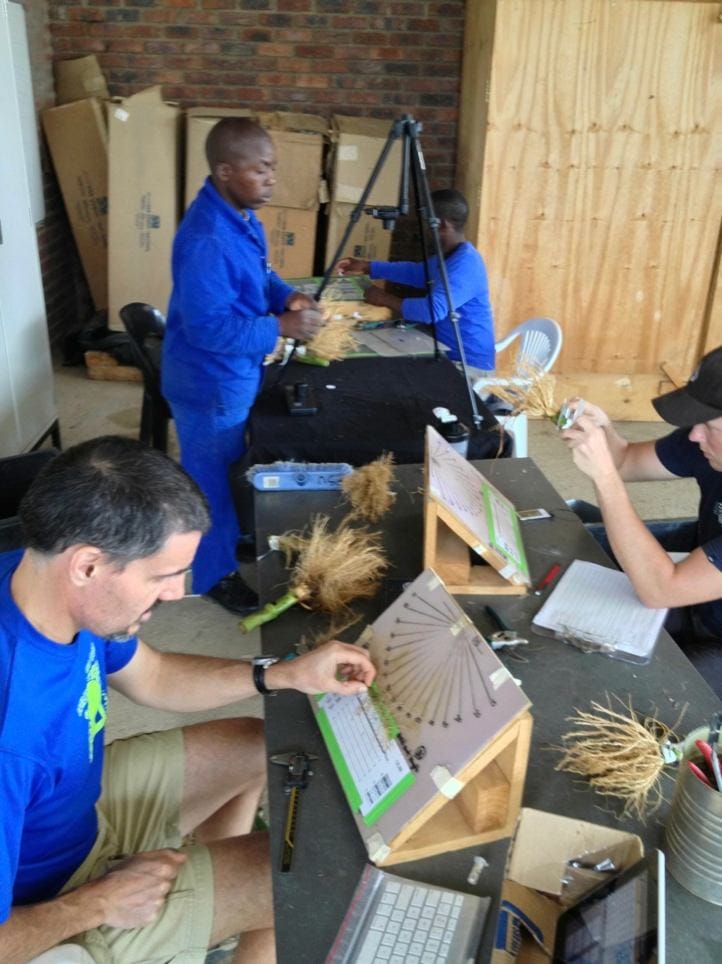
Maize landraces being prepared for root imaging and analysis. Images courtesy of Prof. Jonathan Lynch.
“For every node, we measured the angle, nodal root number, lateral branching frequency and root diameter,” write Lopez-Valdivia and colleagues. Additionally, the second nodal root was selected for more detailed anatomical studies.
The researchers found that maize plants with lower nodal root numbers, and a steep growth angle, grew better in regions where nitrogen is limited. Maize landraces with greater nodal root numbers, and shallow architecture, performed well in soils having limited phosphorus.
Four maize accessions from each of the most extreme arid and humid environments of the Americas were studied. The humid regions, which have good nitrogen but low phosphorus availability, included maize from Costa Rica and Peru. The arid regions, which have low nitrogen but high phosphorus availability, included Argentina, Peru and Colorado USA.
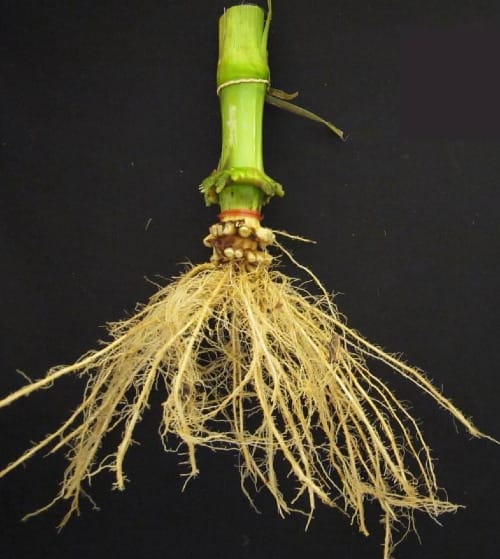
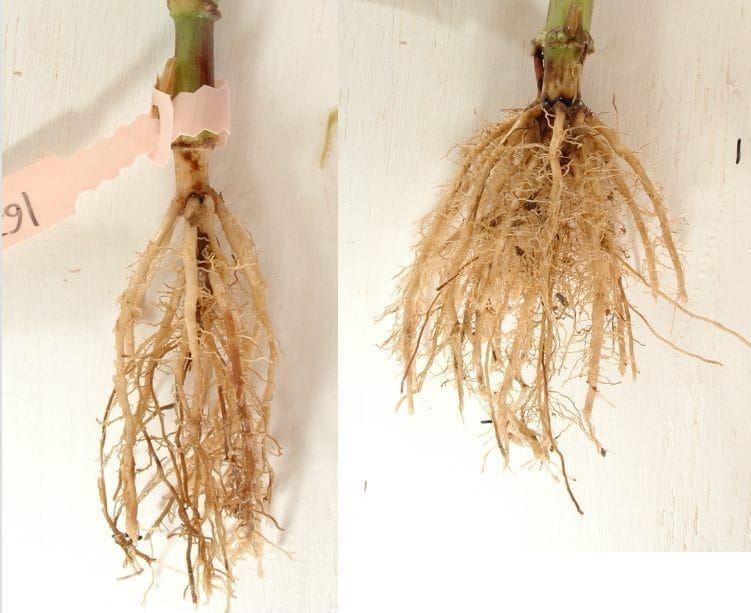
The root system of maize includes both 'nodal' and 'seminal' roots (L). Scientists made detailed root measurements on eight landraces from across the Americas (R). They found that maize root architecture naturally avoids high metabolic costs during soil exploration. This trait can now be targeted in breeding programmes to produce a more resilient crop. Images courtesy of Prof. Jonathan Lynch.
Lopez-Valdivia and colleagues broadened the applicability of their work by performing a structure-function analysis of 96 maize landraces, simulating the success of different root architectures in different environments throughout the Americas (i.e. precipitation levels, elevation, nitrogen and phosphorus availability). Clustering analysis of the landraces split the maize accessions into four groups that clearly associated different root phenotypes with different soil environments.
“This indicates that anatomical phenotypes that reduce root metabolic cost improve plant performance regardless of the environment, while root architectural phenotypes provide a more environmental-specific adaptation,” write Lopez-Valdivia and colleagues.
READ THE ARTICLE: Lopez-Valdivia, I., Rangarajan, H., Vallebueno-Estrada, M., and Lynch, J.(2025) Broad environmental adaptation is associated with root anatomical phenotypes in maize landraces: an in silico study. Annals of Botany. Available at: https://doi.org/10.1093/aob/mcaf179.
Cover image: Maize landraces being prepared for root analysis. Image courtesy of Prof. Jonathan Lynch of the Roots Lab at PennState.