
Plants actively manage the water flowing through their limbs – and leaves of all shapes and sizes play a central role. Indeed, plants are known to tailor their leaves to optimize water use in different environments. For example, conifers produce shorter leaves in dry soils, higher elevation and at the tops of trees.
Until now, most studies assumed that when pine trees grow shorter needles it's because the lack of water restricted leaf growth. But a new study published in Annals of Botany has turned this thinking on its head. Instead, Bicego and colleagues found that by altering needle length, conifers can control ‘hydraulic resistance’, the physics behind water movement in plants.
“Bicego et al. (2025) discovered that shorter pine needles significantly reduce hydraulic resistance, especially in drought-prone or high-canopy environments,” writes Roman Gebauer in a commentary on the article. “This insight reframes needle length not as a developmental constraint but as an adaptive trait, with implications for understanding conifer resilience under drought and climate change.”
Hydraulic resistance is the mechanical force by which a plant controls the flow of water from soil to leaf. The more resistance offered – the slower the water moves, and vice versa. Critical to this resistance is the width and placement of water conduits called xylem, a type of transport tissue used by plants for water movement.
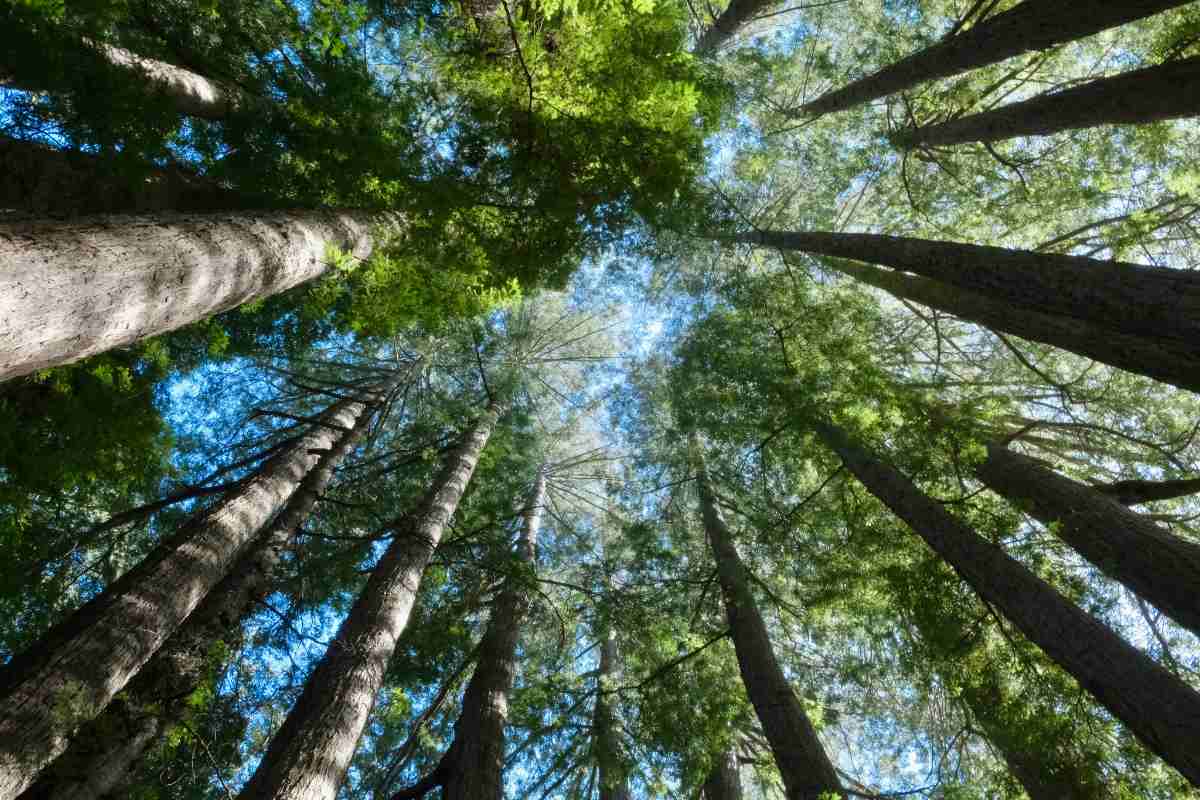
Based on their findings, conifers use shorter needles to maintain higher hydraulic efficiency, which is known to improve photosynthetic rates, growth and survival, especially in drought prone areas. The shorter leaves also help overcome the great heights of the sequoia, where gravitational constraints can affect the ability of water to reach the top.
To reach their conclusion, the scientists studied pine needles from living trees and herbarium specimens stored at the National Herbarium of Mexico at Universidad Nacional Autónoma de México (UNAM). They measured the widths of tracheids – specialized cells that form long, lignified tubes for water transport in vascular plants – along the length of needles, from base to tip, in four pine species (Pinus devoniana, P. montezumae, P. hartwegii, P. pseudostrobus) and a sequoia (Sequoia sempervirens). These same species were also included in a broader comparison of 22 species’ tracheid diameters measured at the base of the leaf. Measurements were mathematically correlated against the length of the needle to study the effect on hydraulic resistance.
"This study offers a novel perspective on the significance of shorter needle length observed in conifers in dry environments and in the tallest trees (i.e. redwoods)," write Bicego and colleagues.
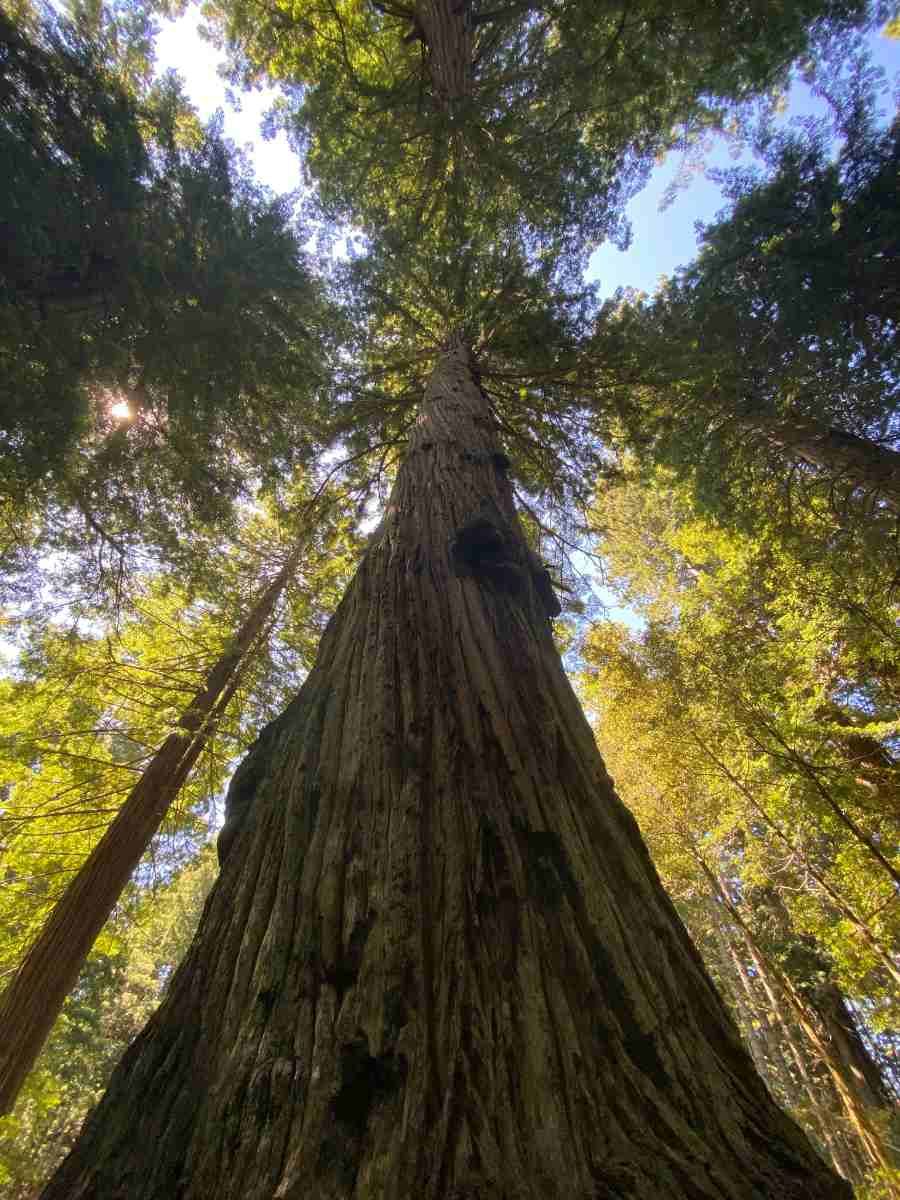
Well-known for its height, the awe-inspiring sequoia has increasingly shorter needles at greater crown heights. Now we know why.
READ THE ARTICLE: Bicego, G., Olson, M., Gernandt, D., and Anfodillo, T.(2025) Needle length in pines as a key trait regulating hydraulic resistance. Annals of Botany, 137(2), pp. 393-404. Available at: https://doi.org/10.1093/aob/mcaf174.
READ THE COMMENTARY: Gebauer, R. (2025) Needle length matters. A commentary on ‘Needle length in pines as a key trait regulating hydraulic resistance’. Annals of Botany, 137(2), pp. vii-viii. Available at: https://doi.org/10.1093/aob/mcaf274.
Cover image: One of the species studied, the Coast Redwood tree Sequoia sempervirens by danielkennedy/ iNaturalist CC BY 4.0