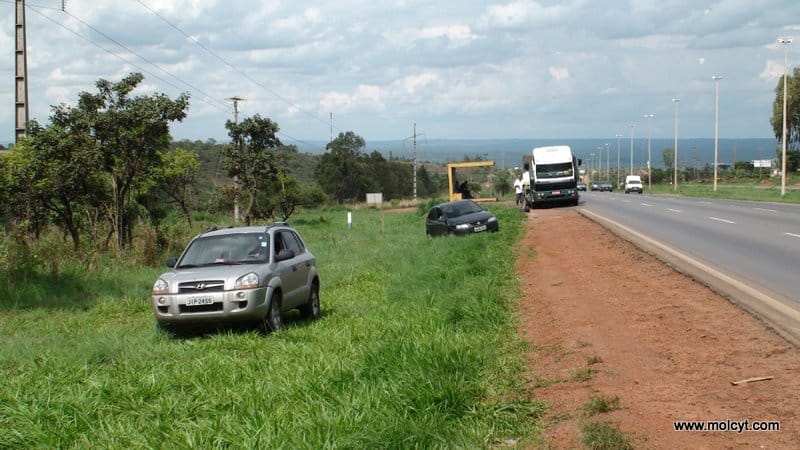



This week’s roadside botany in the Brazilian Cerrado: eleven wild species of cassava, Manihot, extensive bananas and exceptional biodiversity. The morning showed the remarkable cassava plant breeding project in the context of EMBRAPA Cerrados, and their evaluation programme for Musa genotypes, while the afternoon looked at wild species.
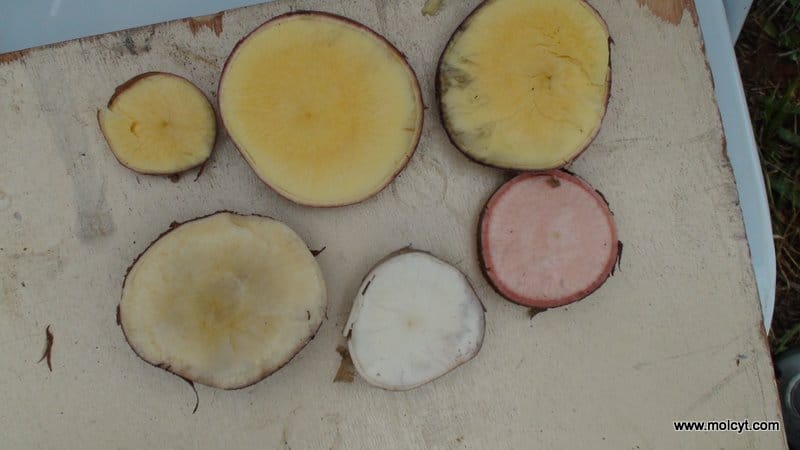
In a tour led by Luiz Carvalho (part of the FAO/IAEA programme – see blog), Eduardo Alano Vieira introduced us to the large cassava (manihot, manioc or tapioca) crossing programme, involving 30000 seedlings per year and some novel characteristics: not just yield, biotic and abiotic stress resistance, but including sugary as well as starchy forms, those with altered post-harvest physiological deterioration (PPD) and
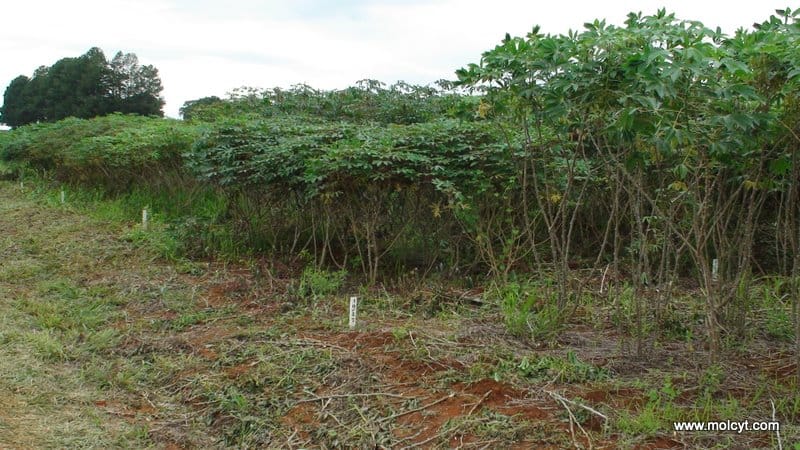
with a range of colours from important micronutrients or provitamins – illustrations here show root sections.
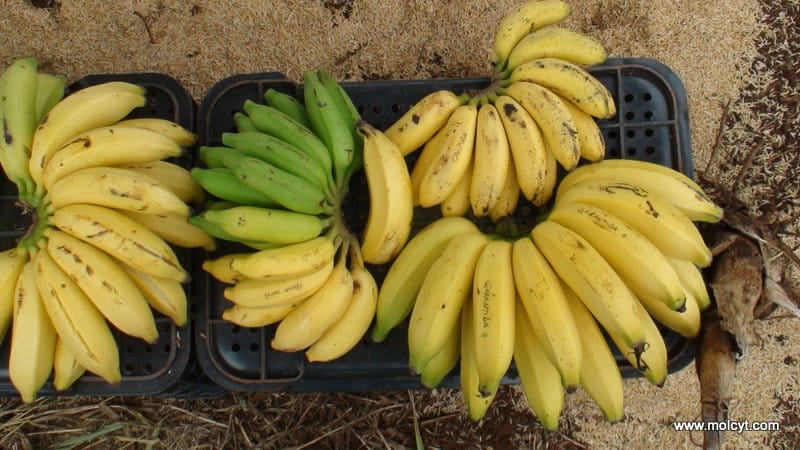
We went on to see the banana genotype evaluation collection, with Tadeu Graciolli Guimaraes. We had the chance to eat the various genotypes the researchers have been working with. One banana genotype was rather flavourless and starchy (Prata Ana), but two others emphasized what we in the temperate countries miss: Garantida II with citrus flavours overlaying a sweet smooth texture, while Caipira had a more savoury and vanilla custard taste. But the research project (presented in Portugal earlier this year – Tadeu Graciolli Guimaraes et al. Yield and agronomical behaviou of banana (Musa spp.) genotypes in Brazil’s Central plateau. In: INTERNATIONAL HORTICULTURAL CONGRESS, 28., 2010, p. 749, (see http://bit.ly/hmMF0q [PDF]) was a model of its type: 22 Musa genotypes are being grown at more than 20 locations without any inputs and being evaluated for a substantial number of agronomic, disease, yield and other traits. This type of experiment needs careful management. In fact, the plants were remarkably healthy (not least because this is not a banana-growing area and largely disease free), although there were gaps where the six replicates of genotype Maca had died from Fusarium (Panama disease) within a few months of planting.
Of the remaining genotypes, only one showed serious yellow sigatoka (there is no black sigatoka [seen in this field – text addition made May 2011] in Brazil – “yet” as Andrew James from CICY in Mexico reminded us several times!).
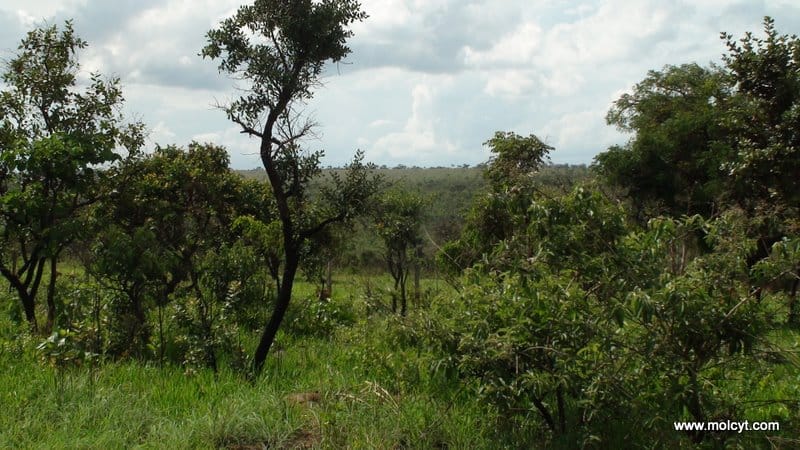
I can remember several unfortunate cases (as no doubt can the others involved) where I have stopped a bus full of molecular biologists and rushed off into the field margins, or declined the coffee on offer after a long drive to have the chance to botanize in the area around a motorway service station (on at least two occasions, on different continents, picking up armed guards in the process). So then off to some real roadside botany – the first part along 4×4 tracks, but the second part involving the verges of a 6-lane highway (see opening illustration). The highway margins gave an excellent view of the purpose of the storage root of cassava. Unlike many other vegetatively propagated crops, root segments do not grow to new plants, but provide storage for rapid regrowth of the plant after the spring rains, or after fire damage.
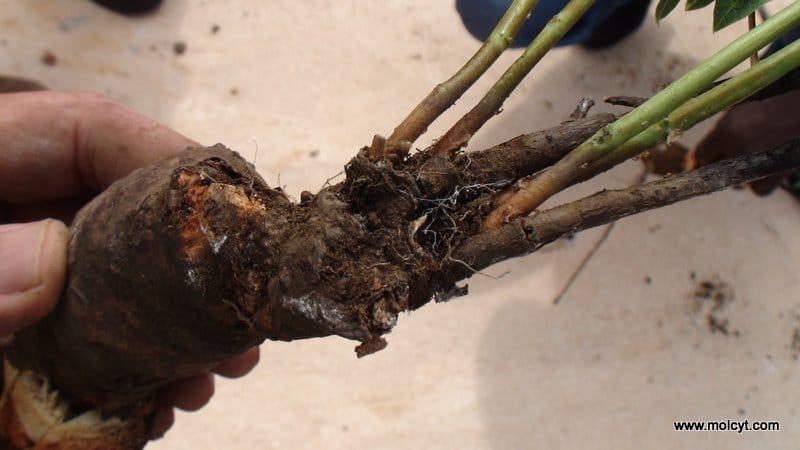
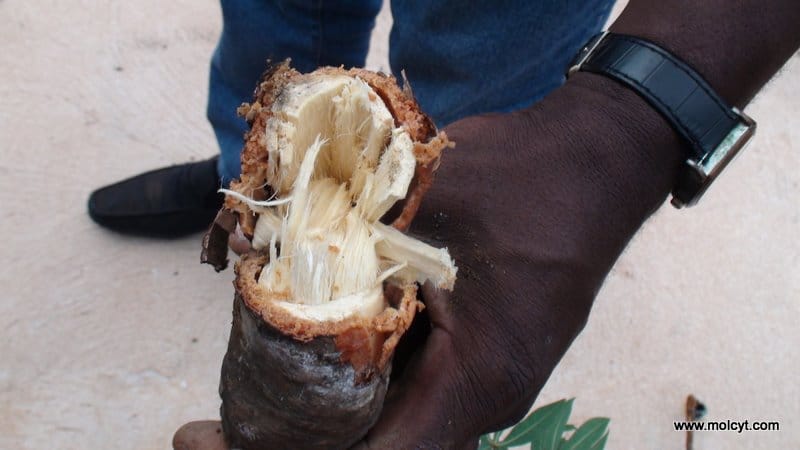
The area we walked through had been burned less than a month ago, but was completely green. While my swiss-army knife was more than up to cutting the cultivated roots, the Manihot vericosa and M. gracilis of the afternoon involved cutting through wood. Why did the root change from woody to starchy? Surely the function of a starch store is different from a woody root store.
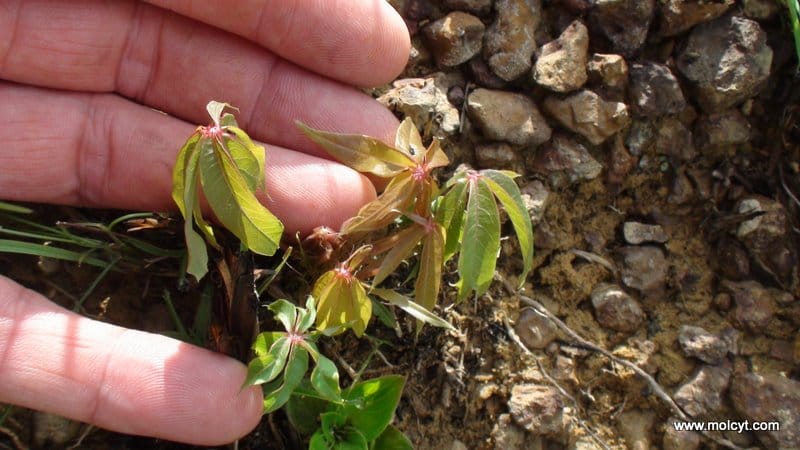
Later, we got to see the miniature Manihot stipularis – a plant flowering when smaller than a finger, contrasting with the morning’s cultivars reaching up to 3m.
Interestingly, the road verge had been burnt about three weeks before our visit, so we could see the high level of regeneration – allowing classic pictures of the cerrado vegetation. What fantastic diversity, and I hope threats can be mitigated (see Ratter et al., 1987; and more recently Collevatti et al. 2009 Phylogeography and disjunct distribution in Lychnophora ericoides (Asteraceae), an endangered cerrado shrub).