
The plants most at risk of disappearing are not always the ones scientists know best. In fact, a new study of Brazil’s native flora suggests the opposite: many of the country’s most threatened plants are barely visible in the scientific literature, while safer or more economically useful species receive far more attention.
This bias matters for conservation, as species recovery and protection cannot be guided by concern alone. To protect a species, people first need to know that it exists, where it lives, how threatened it is, and what measures might contribute to its conservation. Without that information, even plants officially recognised as threatened may struggle to make it into conservation plans, funding priorities or public awareness.
In a paper published in Plants, People, Planet, a team led by PhD student Renon S. Andrade examined how scientific attention is distributed across Brazilian plants. Their question was simple but revealing: when scientists study plants, what decides which species make it into the literature?
The team of researchers from the Rio de Janeiro Botanical Garden and the Royal Botanic Gardens, Kew, focused on 7524 native Brazilian plant species that had already been formally assessed for extinction risk. These included species listed as Critically Endangered, Endangered, Vulnerable, Near Threatened, Least Concern and Data Deficient, the latter being those for which too little is known to judge their extinction risk properly.
For each species, the researchers searched the Web of Science, one of the largest databases of academic papers. Then they asked two questions: has this species appeared in at least one scientific paper, and how many papers mention it? This gave the team a way to estimate “scientific attention”.
The authors compared this visibility across extinction-risk categories. They also tested which traits best predicted the number of papers a plant received. These included whether a species was threatened, whether it was found only in Brazil, how widely it occurred across Brazilian states and whether it had a documented economic use. With this approach, the study could move beyond anecdotes and measure where botanical research is actually going and, more importantly, where it is not.
Their results revealed a striking mismatch. Out of the 7524 Brazilian plant species assessed for extinction risk, only 2227 — less than a third — had at least one mention in the Web of Science. Even among the species that did appear in the literature, the number of publications was extremely uneven. More than a thousand species were mentioned only once, while a few familiar or useful plants dominated the record.
When the researchers compared species by extinction-risk category, the imbalance became clearer. Plants listed as Data Deficient, Critically Endangered or Endangered were underrepresented in scientific publications. Least Concern species, which are not currently considered threatened, were strongly overrepresented. In other words, plants thought to be safer often receive more scientific visibility than those at greater risk.
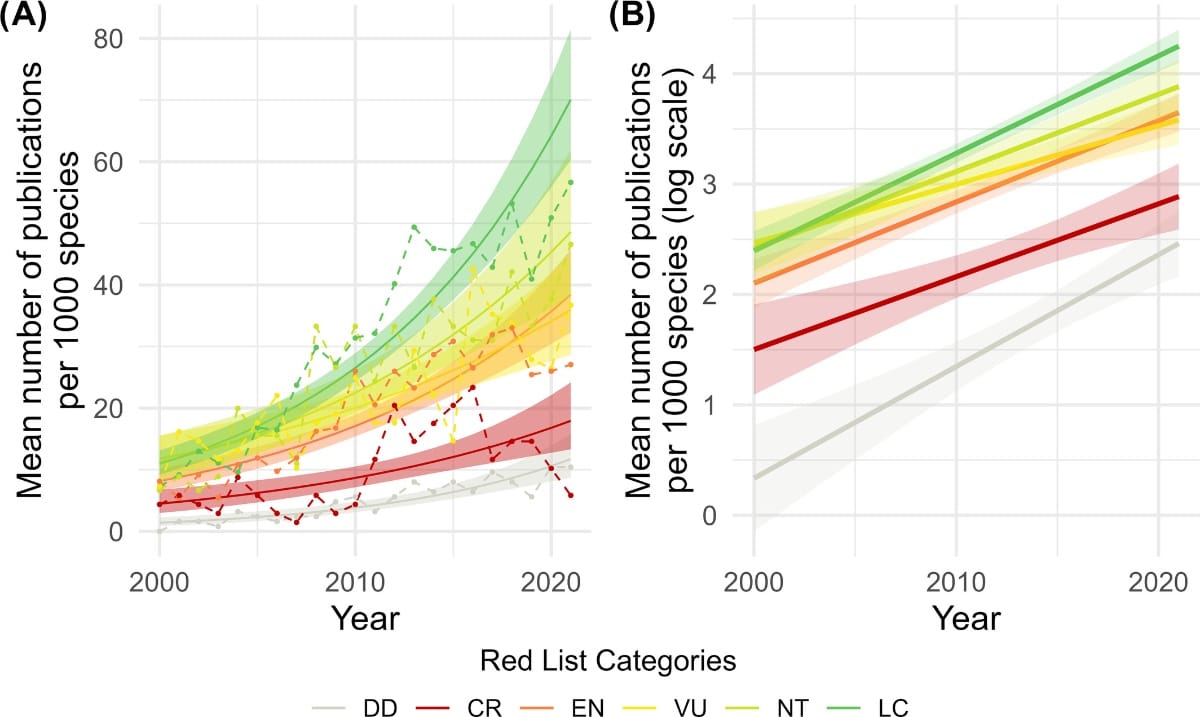
Publication numbers have risen since 2000, but this has not closed the gap. Least Concern species went from 19 publications in 2000 to 148 in 2021. Critically Endangered species, by contrast, went from only three publications in 2000 to four in 2021. Data Deficient species also remained especially neglected, despite being the very plants for which more information is urgently needed.
The strongest driver of publication volume was not extinction risk, but economic use. Plants with known human uses — for food, timber, medicine or other purposes — received far more publications than those without. This suggests that scientific attention often follows practical value, funding opportunities and publication incentives, rather than conservation urgency alone.
Other patterns reinforced the same message. Being threatened, or being found only in Brazil, was associated with fewer publications. Species spread across more Brazilian states received slightly more attention, probably because they are easier for researchers to find and study. Trees also attracted more research than other growth forms, such as herbs and shrubs.
The blind spots were not random. Most plant families with threatened species were underrepresented in the literature. Even in Brazilian states rich in threatened plants, many species remained proportionally understudied. This means that research can be concentrated in biodiverse regions while still missing many of the threatened species within them.
The clearest message from the study is that scientific interest does not automatically follow conservation need. This is a problem because the plants missing from the literature may also be the hardest to protect. If little is known about where a threatened plant grows, what threatens it or how it reproduces, conservationists have fewer tools to act before it is too late.
Andrade and colleagues do not argue that every threatened plant should receive equal attention. Instead, they show that the current pattern of scientific publication is not neutral. Research institutions, funders, journals and scientists all help shape which species become visible, valued and protected. If science is one of the tools we use to prevent plant loss, then it needs to look more carefully at the species still waiting in the shadows.
READ THE ARTICLE:
Andrade RS, Brown MJM, Freitas L, Nic Lughadha EM. 2026. The most threatened plants receive the least scientific attention. Plants, People, Planet. https://doi.org/10.1002/ppp3.70216
Spanish and Portuguese translation by Erika Alejandra Chaves-Diaz.
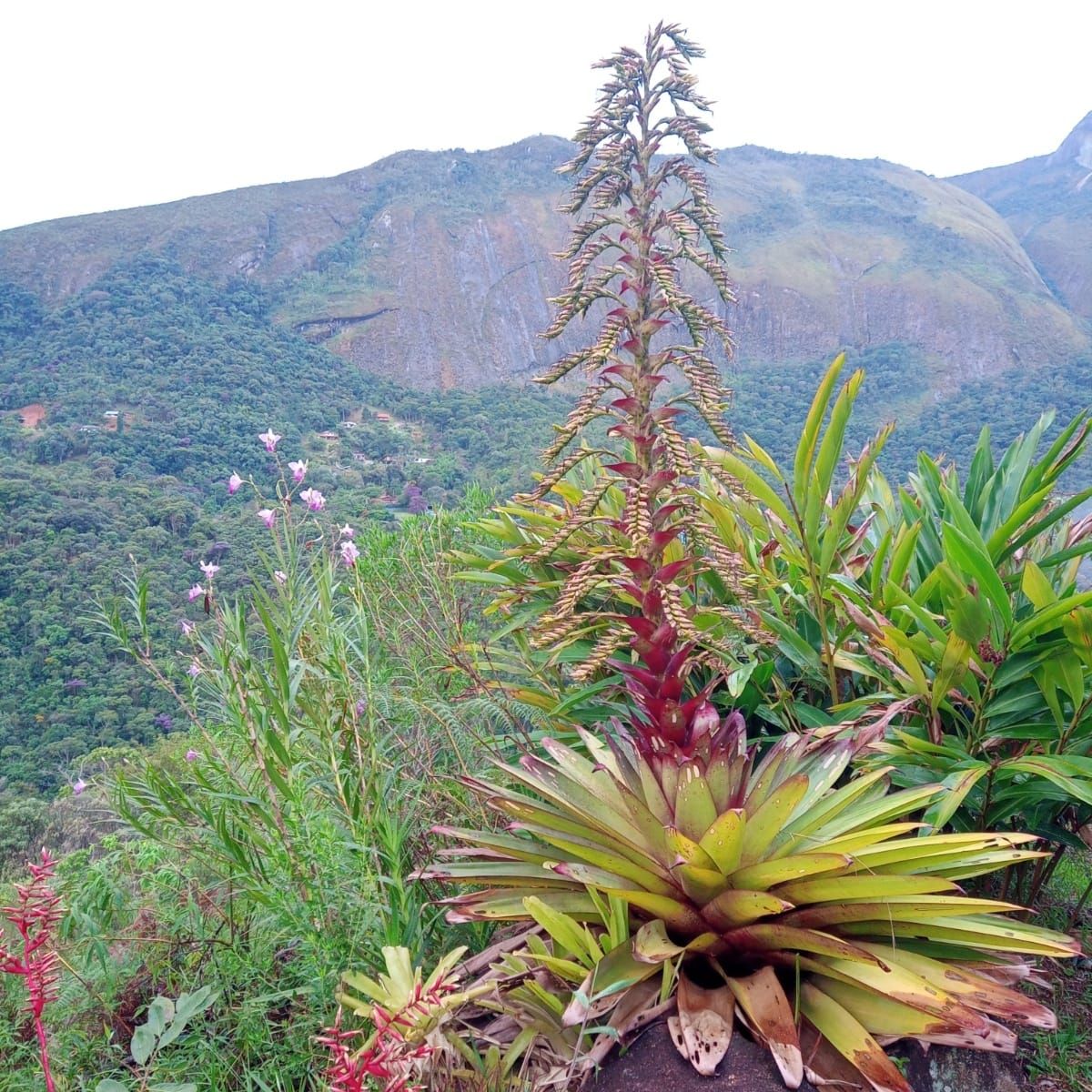
Cover picture: Alcantarea imperialis, a Vulnerable bromeliad species. Photo by Barbara Weneck (iNaturalist, CC BY-NC 4.0).