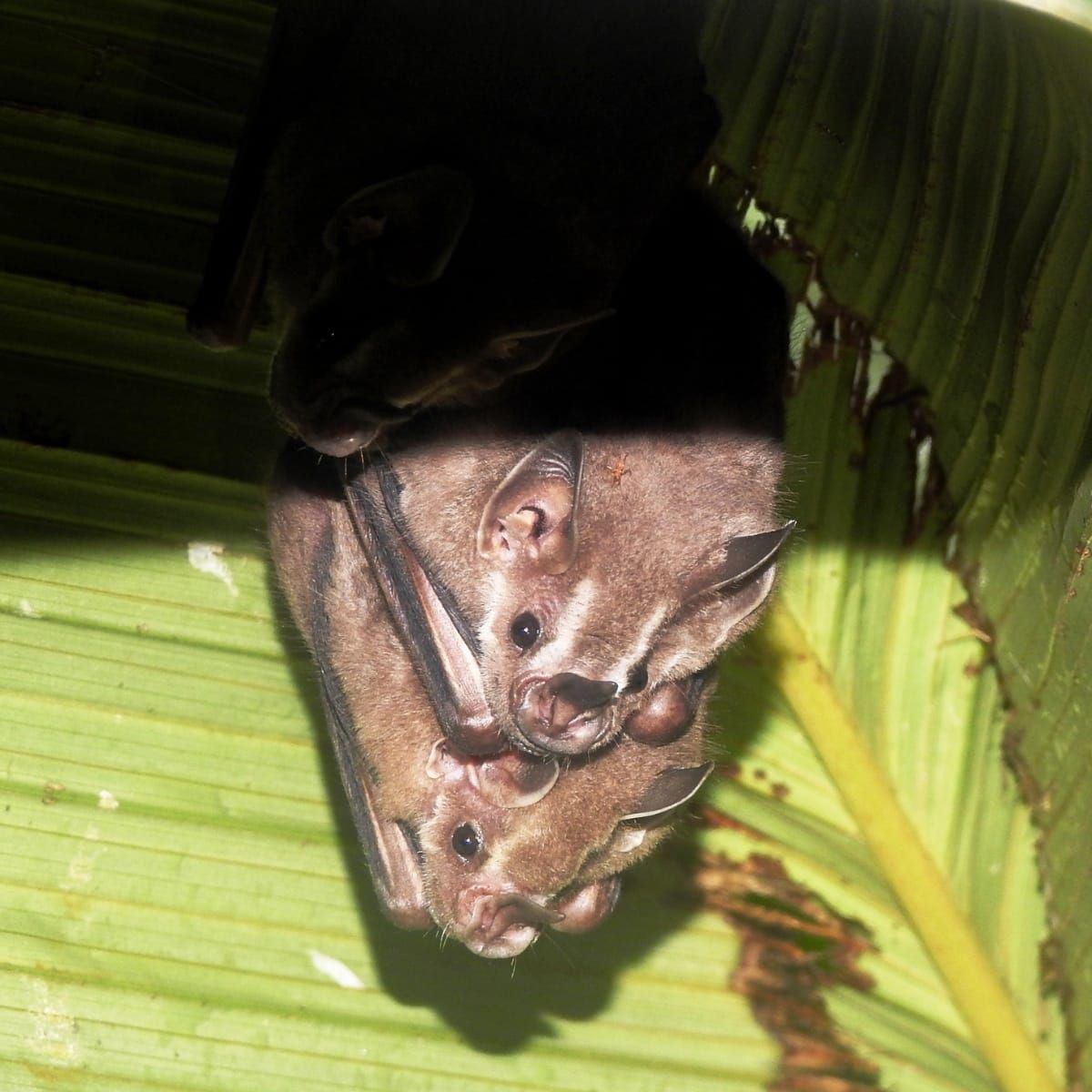

In the world of tropical botany, it is often assumed that big jobs require big workers. If a seed is large and heavy, we usually look to spider monkeys or tapirs as the primary agents responsible for moving it through the jungle. However, recent research in Mexico’s Lacandon Rainforest has just demonstrated that we have been underestimating the forest’s smallest messengers.
For a long time, the role of Neotropical bats in the dispersal of large seeds (>5 mm) was thought to be negligible due to their small physical size. But the physics of these winged mammals tells a different story: frugivorous bats are capable of carrying fruits weighing between 25% and 250% of their own body weight.
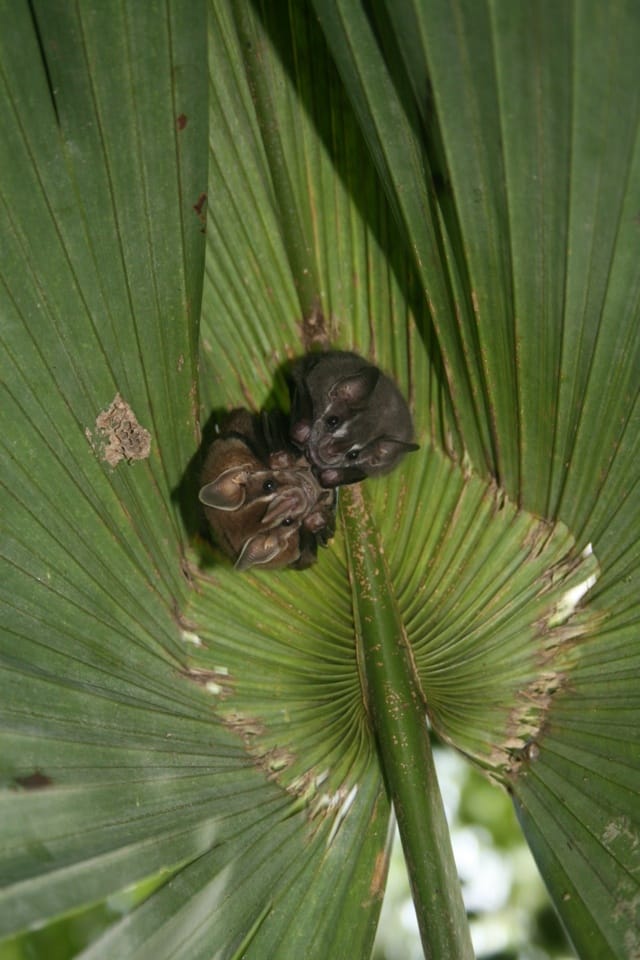
Unlike birds, many bats do not consume fruit where they find it; they capture it in flight and transport it to a safe refuge to eat in peace. In the case of tent-roosting bats, these shelters are plant leaves that the bats themselves modify to form a kind of tent or canopy.
To understand just how vital these private "dining rooms" are, Francisco Perera Rieder and his team investigated two key sites in Chiapas: the Montes Azules Biosphere Reserve and the Yaxchilán Natural Monument. There, they identified 21 feeding tents used by bats, primarily the species Dermanura watsoni. They installed 1m x 1m seed traps directly beneath these tents to collect everything the bats dropped. To ensure the results were not merely coincidental, they placed "control traps" one meter away from each tent to compare the natural seed rain of the forest.
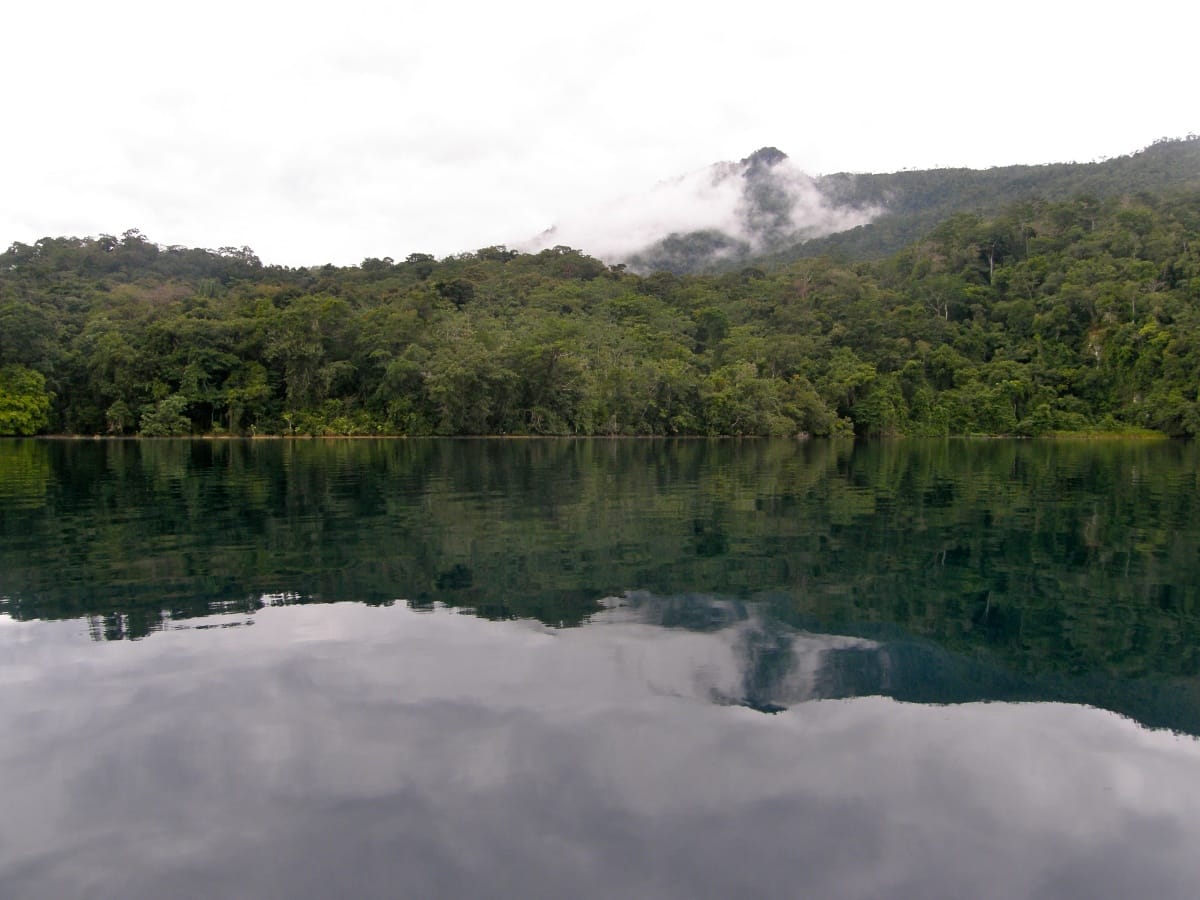
The results found beneath these green canopies were massive, with researchers collecting 2,137 seeds from 54 different species across 21 botanical families. However, for the health of the Lacandon ecosystem, the most relevant factor was not just the quantity of the seeds, but their high ecological quality. Notably, 56.4% of the dispersed seeds belonged to species exclusive to complex, mature forests, highlighting the bats' role in regenerating primary environments. This collection displayed significant botanical diversity, ranging from ten different species of palm to nine species of timber trees within the Sapotaceae family. Furthermore, this biological service extends into a socio-economic one; 68.5% of the species dispersed by these tent-roosting bats have documented human uses, primarily providing timber for construction (70.3%), food sources (57.4%), and medicinal applications (42.6%).
Finally, the seed deposition rate was significantly higher under the tents than in the control areas, confirming that these spots are true "hotspots" for forest regeneration.
This study is more than a biological curiosity; it has practical implications for conservation. It is estimated that within the region's protected areas, these bats disperse between 21.5 and 79.8 million large seeds every year.
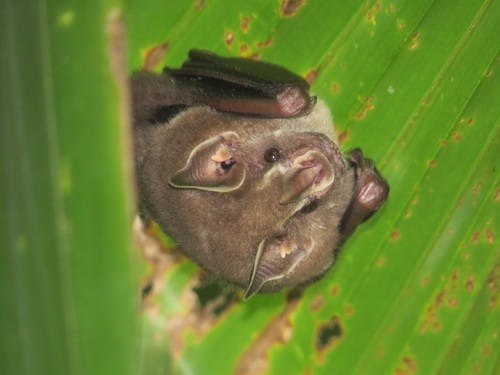
The authors propose that the bats could help with conservation efforts in sourcing seeds. Instead of relying on costly manual collection processes, forest technicians could utilize these tents as supply centers. The bats have already performed the difficult labor: they selected the highest quality fruits, moved them away from the parent tree (helping them escape predators), and cleaned the pulp, which significantly facilitates germination.
Ultimately, the Lacandon Rainforest reminds us that the future of massive timber trees might literally be hanging from a leaf, thanks to a small nocturnal messenger that refuses to accept that its cargo is too heavy.
READ THE ARTICLE:
Rieder, F. P., M.Rivero, and R. A.Medellín. 2026. “Nocturnal Gardeners: Dispersal of Large Seeds by Tent-Roosting Bats in the Lacandon Rainforest, Mexico.” Biotropica 58, no. 2: e70179. https://doi.org/10.1111/btp.70179.
Spanish and Portuguese translation by Erika Alejandra Chaves-Diaz.
Cover picture: Thomas's fruit-eating bat (Dermanura watsoni). Photo by Pablo Bedrossian (iNaturalist).