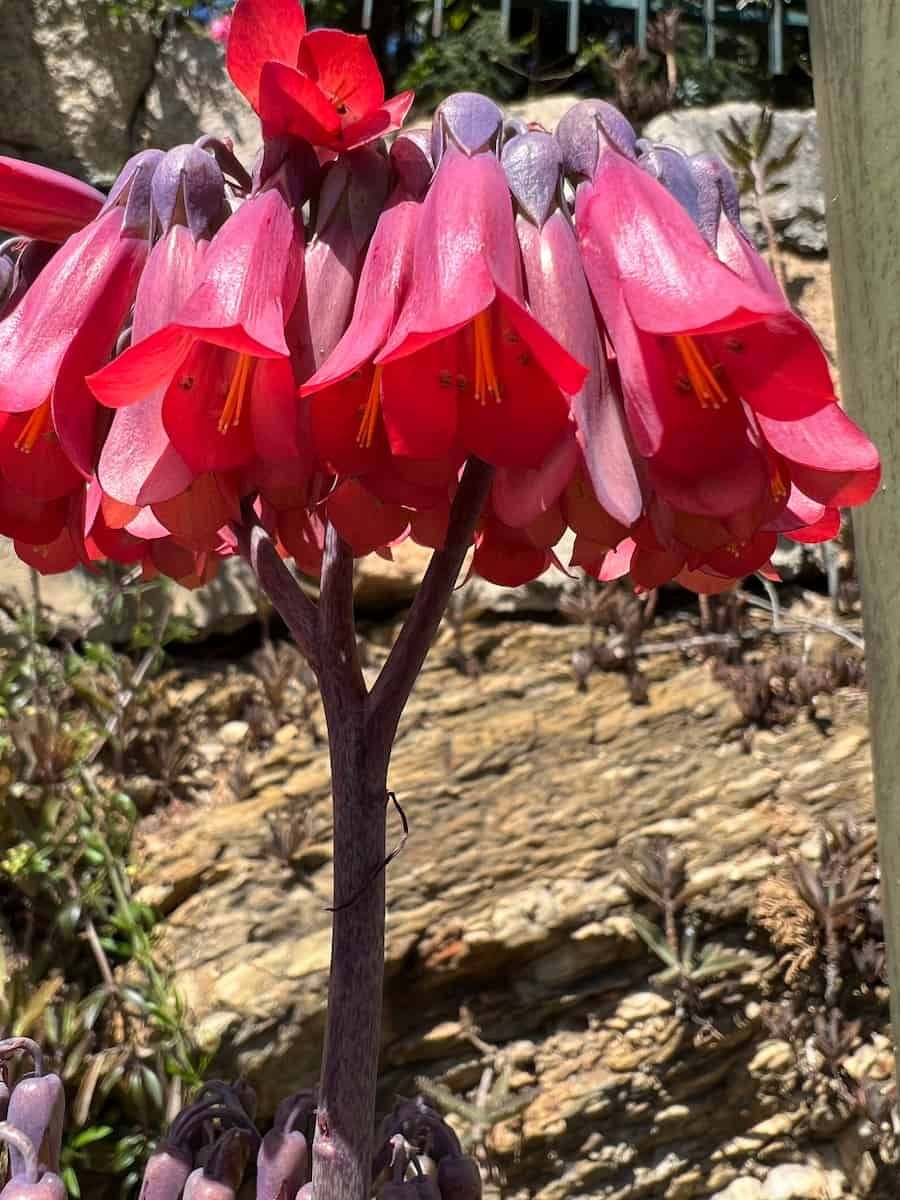

Mediterranean coastal cliffs are tough places to grow. Plants living there have to cope with salty air, strong winds, and almost no soil. Many of these species, including several Limonium (sea lavender), are endemic and found only in these environments. A recent study published in AoB PLANTS highlights the spread of Kalanchoe × houghtonii, a hybrid succulent probably originating from cultivation, into these habitats, where it may represent a risk to native plants such as Limonium species.
Kalanchoe × houghtonii is a popular garden plant but has traits that help it establish in the wild. It spreads by producing tiny plantlets along the edges of its leaves, which detach and root easily. This allows it to colonise new areas quickly, especially in environments where growing from seeds is difficult.
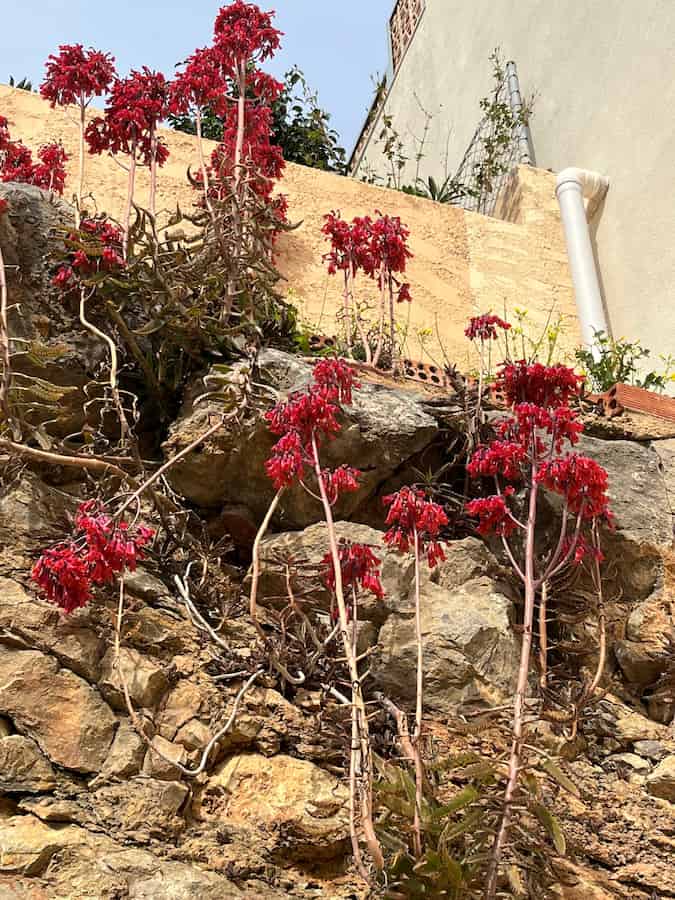
Fieldwork at two sites located on the southern coast of Catalonia (NE Iberian Peninsula) showed that the species forms dense monospecific patches that often overlap with those of native Limonium species, suggesting that it may compete with them for space in these already limited environments.
To understand its distribution, Joan Pere Pascual-Díaz and colleagues collected 723 records from iNaturalist. These data show that Kalanchoe × houghtonii is already present in several Mediterranean countries.
The species has been recorded in 107 Natura 2000 sites, areas designated for biodiversity conservation in Europe. Of these, 58 are within a protected coastal habitat known as “vegetated sea cliffs of the Mediterranean coasts with endemic Limonium species,” indicating that the spread is not limited to a single location.

Models predicting where the species could grow suggest that large areas of Mediterranean coasts have suitable conditions for Kalanchoe × houghtonii. These areas also overlap with where Limonium species grow, increasing the chances of interaction between them.
While the study does not directly measure long-term impacts, the observed patterns (dense growth, overlap with native species and presence in protected areas) suggest that the plant could have important ecological effects, especially by competing for space and resources.
“In this context, the formation of dense juvenile carpets by K. × houghtonii in areas occupied by Limonium individuals supports competition for space as a plausible mechanism potentially contributing to the threat to the native species”.
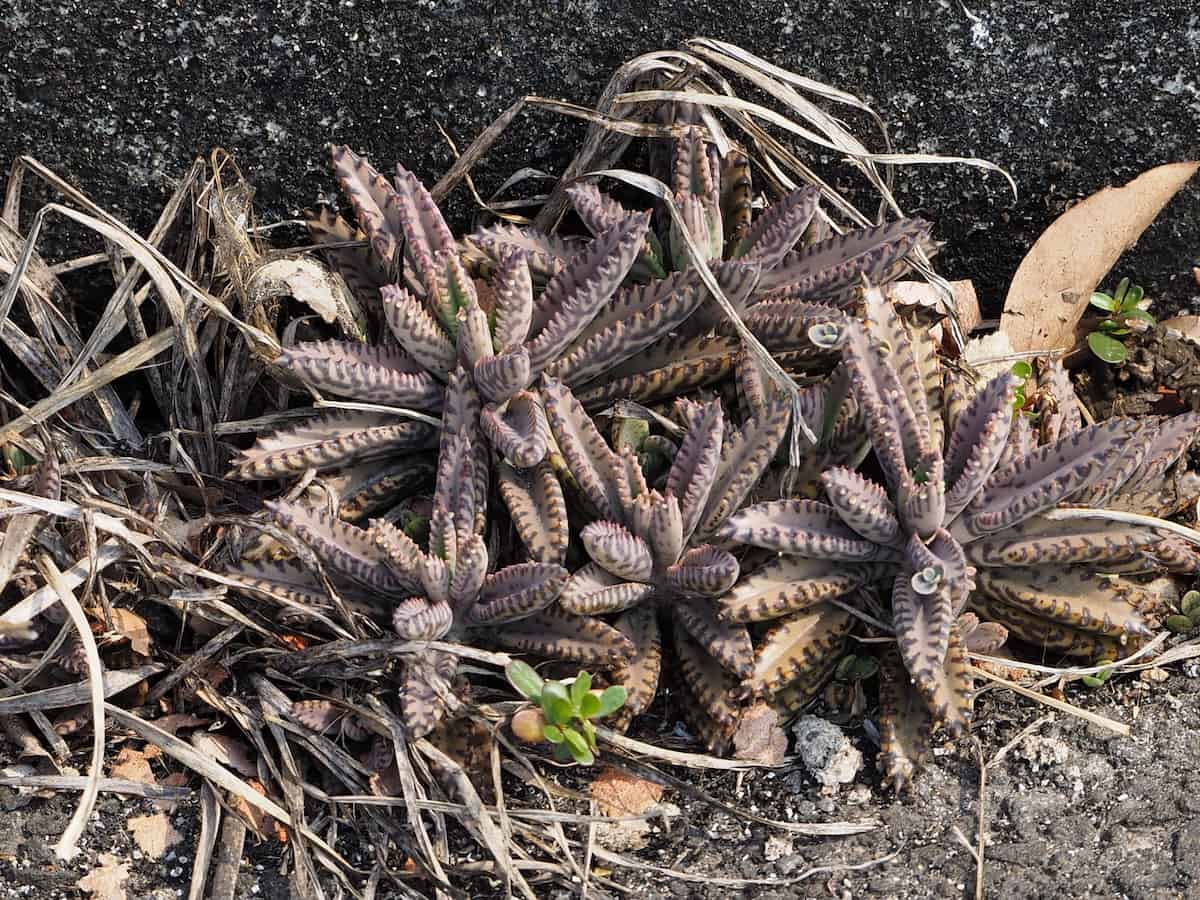
Despite of its spread and invasive characteristics, Kalanchoe × houghtonii is still missing from many national invasive species lists in Mediterranean countries. This limits coordinated monitoring and management efforts.
The authors recommend including it in these lists, together with systematic monitoring of its spread and impacts. Early detection may help manage the species more effectively, particularly in sensitive habitats.
READ THE ARTICLE
Pascual-Díaz J. P. López-Pujol J. Nualart N., Garcia S. and Vitales D. (2026) “The impact of the invasive Kalanchoe × houghtonii on vegetated sea cliffs of the Mediterranean coasts with endemic Limonium species” AoB PLANTS. Available at: https://doi.org/10.1093/aobpla/plag016
Cover image: Kalanchoe × houghtonii by Jonathan / iNaturalist CC BY