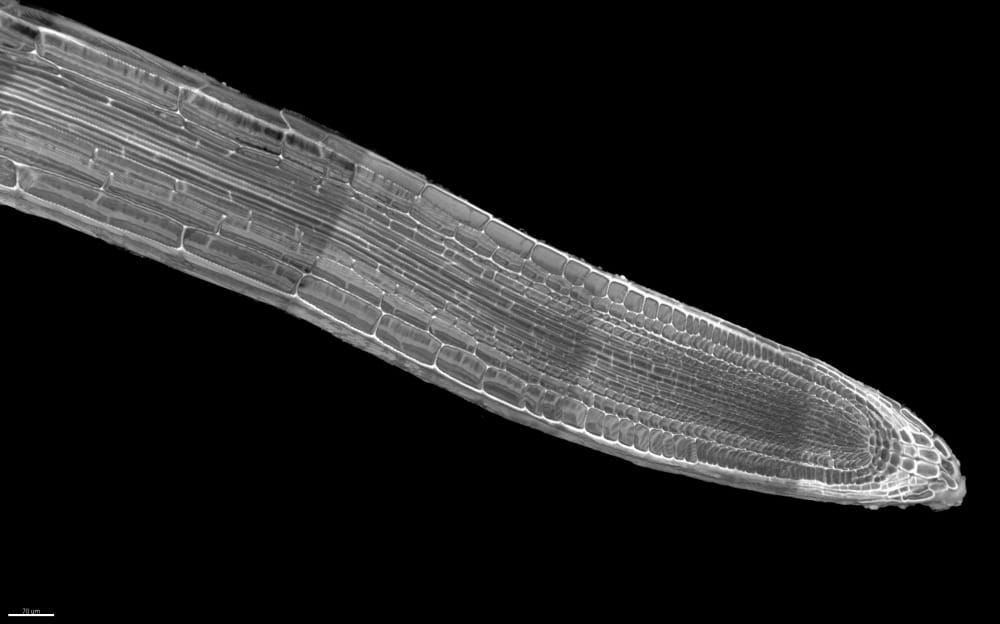

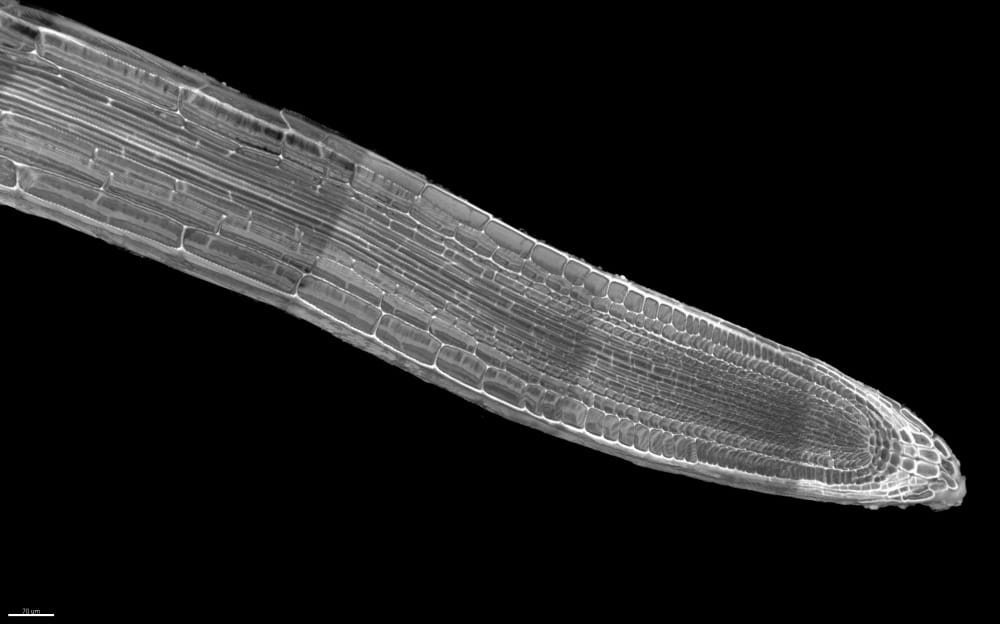
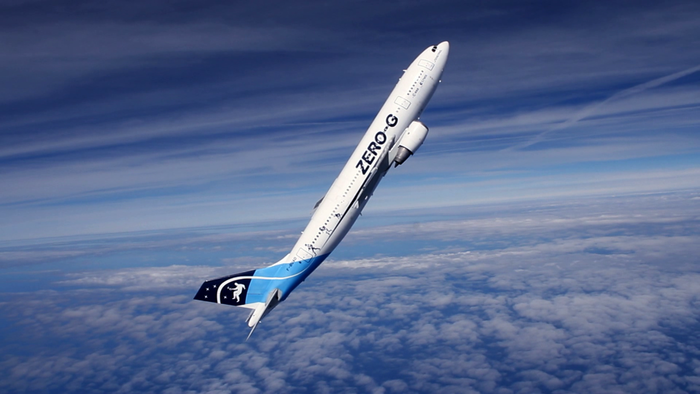
The roots are Arabidopsis roots. They’ll be flying, along with the rest of the plant, on a parabolic flight to see how they react to zero gravity and hypergravity. Franck Ditengou of the University of Freiburg in Germany is conducting the experiments.
Gravitropism is key to a plant’s ability to create roots, as it needs to be able to send them down. There have been experiments on plants in microgravity before. Annals of Botany had a whole supplement publishing results from the STS-2 and STS-3 Space Shuttle flights. However, these experiments has to be packaged carefully and investigated immediately on landing. What Ditengou’s experiments will do is film the roots as they grow, so changes are visible in-situ.
“You might think that plants move slowly, but in fact they grow very fast,” says Franck. “We had to develop special software that finds the root tip as it quickly grows past the viewfinder.” Young Arabidopsis seedlings grow about 1 cm a day which means that during their time in altered gravity they will grow roughly half as much again at this image’s scale.
The research continues ESA’s extensive interest in plant sciences.