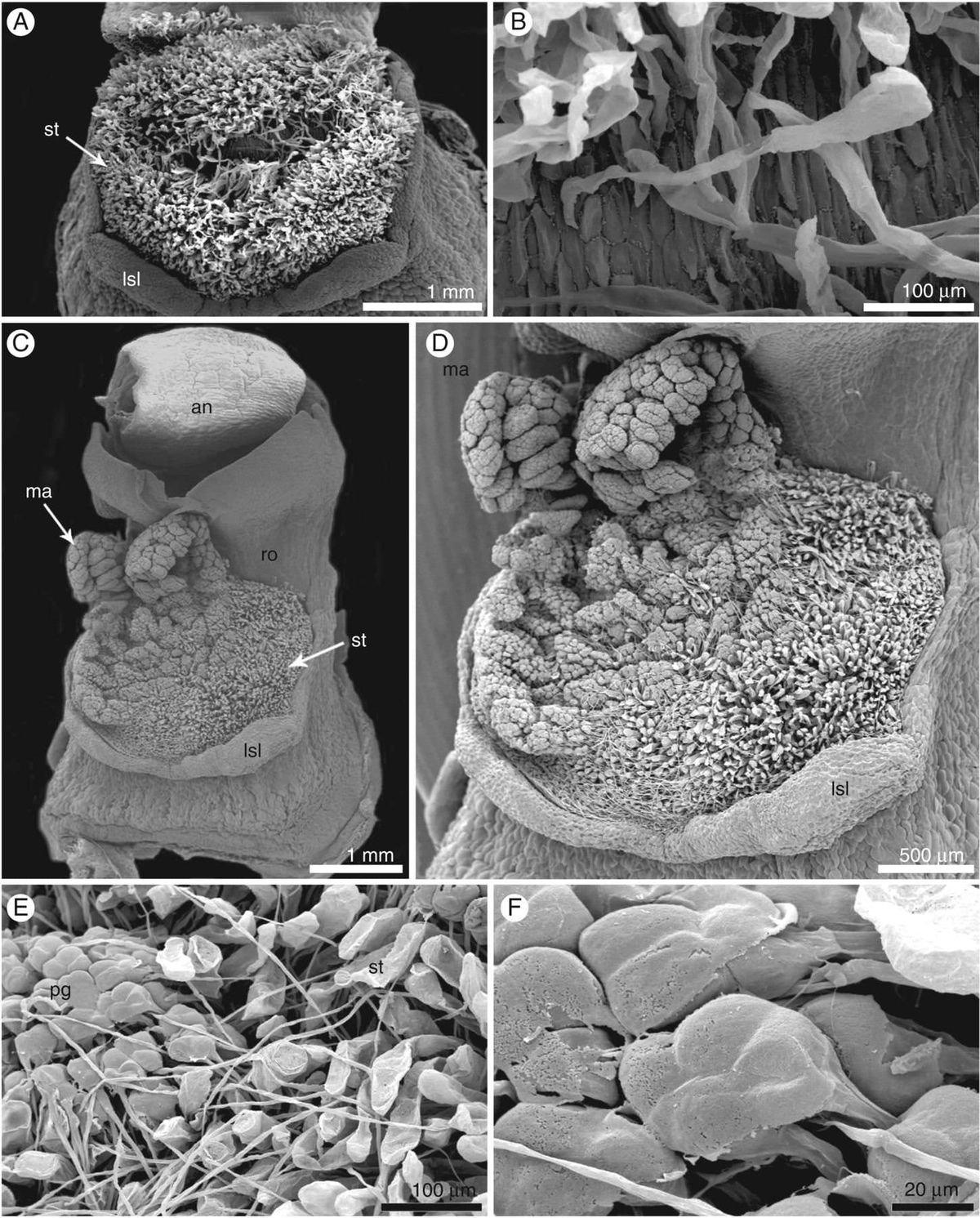
Micromorphology of a hand-pollinated flower of Epipogium aphyllum (SEM).
annals-of-botany

Sexual and asexual reproduction in a mycoheterotrophic orchid

https://www.botany.one/sexual-asexual-reproduction-mycoheterotrophic-orchid/

Know someone who'd like this?

Sexual reproduction is common within Orchidaceae, though apomixis does occur in some genera allowing them to produce seeds that are clones of the mother. The reproductive embryology of mycoheterotrophic plants remains under-studied. Krawczyk et al. provide evidence for the co-occurrence of sexual and apomictic reproduction in a population of mycoheterotrophic plants: Epipogium aphyllum.
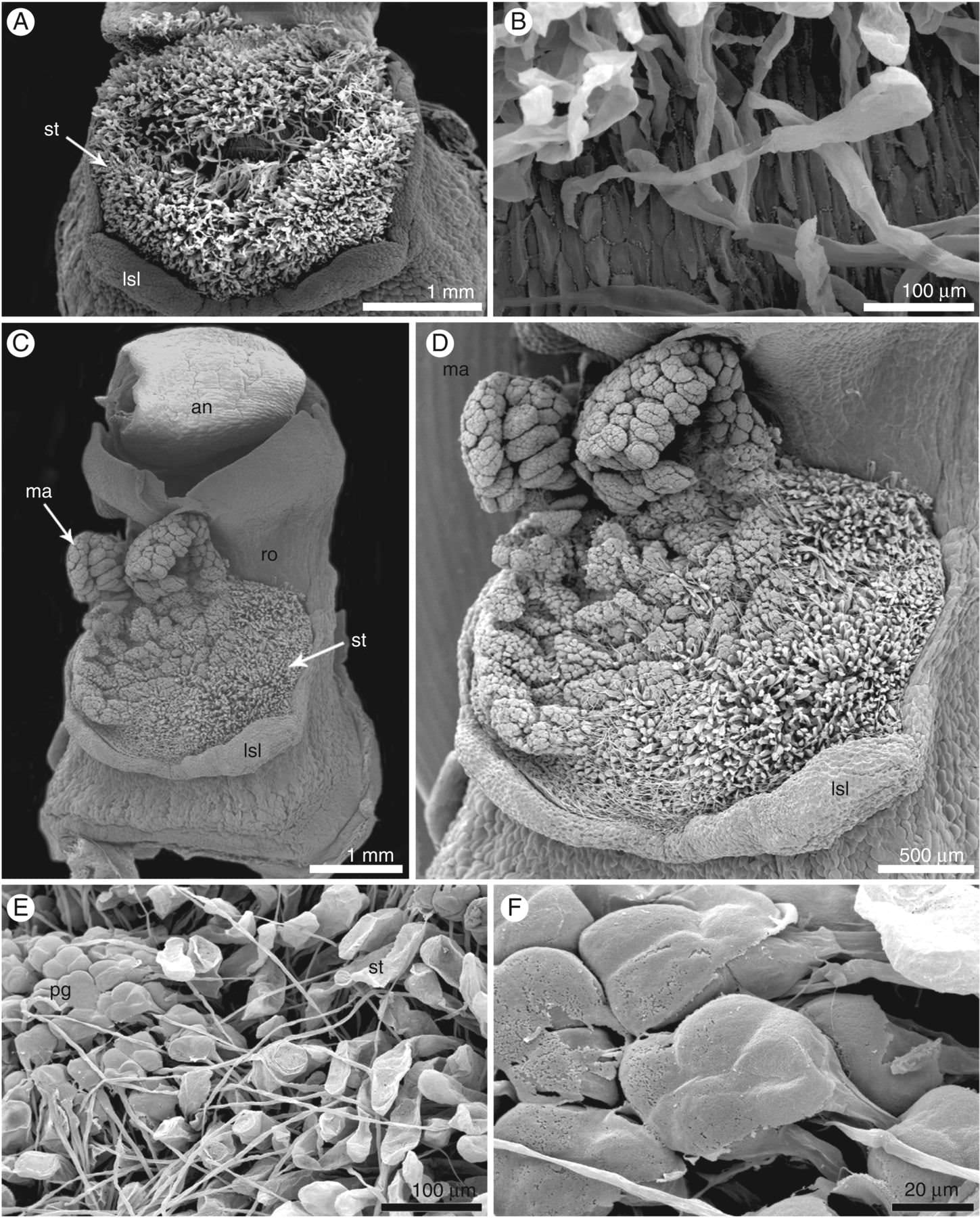
Micromorphology of a hand-pollinated flower of Epipogium aphyllum (SEM).
Micromorphology of a hand-pollinated flower of Epipogium aphyllum (SEM). (A,B) Stigma built by papillae. (C,D) Gynostemium with the massulae on the 2nd day after hand-pollination. (E,F) Germinated pollen grains grouped in tetrads on the stigma. Abbreviations: an – anther, lsl – lobe of stigma, ma – massulae, pg – pollen grains, ro – rostellum, st – stigma cells. Image: Krawczyk et al. (2016).

The authors investigated reproduction capability via open pollination, induced autogamy, autogamy sensu stricto, and autonomous apomixis. They report that although sexual reproduction dominates, incidental parthenogenesis is much more likely than natural self-fertilization, which is rare or unlikely. These findings suggest that E. aphyllum has the potential to produce seeds via both sexual and asexual means.

Liked this article?

Written by

botanyone

The Annals of Botany Office is based at the University of Oxford.

More from this writer

The nonprofit plant magazine

Lab science. Citizen science. Your source for plant science.