

When you close your eyes and think of Canada, what comes to mind? Palm trees and beaches? Probably not. Visions of tundra, snow and ice, maybe with an outdoor hockey game? That sounds more like it. But, scientists have recently discovered that during the Eocene, 48 million years ago, Canadian palms were waving in the warmth of the Arctic sun.
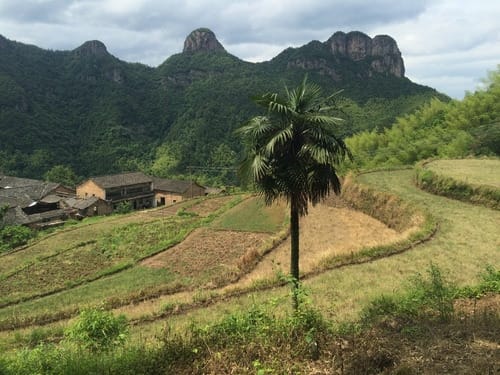
Palms are an ancient group of monocotyledonous flowering plants (Arecaceae) known to thrive in warm conditions. Today, palm species are primarily found in tropical and subtropical regions of the world, often in rainforests, such as in Central and South America. But they are notably absent from colder northern latitudes. Even rare species that are cool-tolerant cannot withstand perennial ice or sustained freezing conditions, like those experienced in much of Canada during winter.
“Because palms remain physiologically active throughout the year, do not undergo dormancy and have a high water content, they are incapable of occupying areas that experience prolonged freezing conditions or severe frost events,” explain Siver and colleagues in their paper published in a special issue of Annals of Botany on the "Role of Fossils in Reconstructing Plant Evolution".
These growth limitations therefore provide a perfect opportunity to better understand past ecological landscapes because if palm fossils can be found in an area, even one that is very cold in modern times, this is a good indication of warmer climate conditions in the past.
“This strong environmental preference has been exploited for reconstructing substantially warmer-than-present past climates in regions that are presently characterized by mean annual temperatures <10 °C and coldest month mean temperatures around −10 °C, e.g. north-east Russia, south-central Alaska, central Alberta, Canada, and Wyoming, Utah and Colorado,” write Siver and colleagues.
To hunt for palms, Siver and colleagues looked for special fossils of phytoliths. Also known as “plant stones”, phytoliths are microscopic structures produced when plants take up silica from the soil with their roots and then deposit this silica within their cells or in special extracellular locations. Biologically, phytoliths are thought to function in strengthening the plant and possibly deter herbivores or pathogenic fungi. These phytoliths remain in the soil or aquatic sediments after plant death.
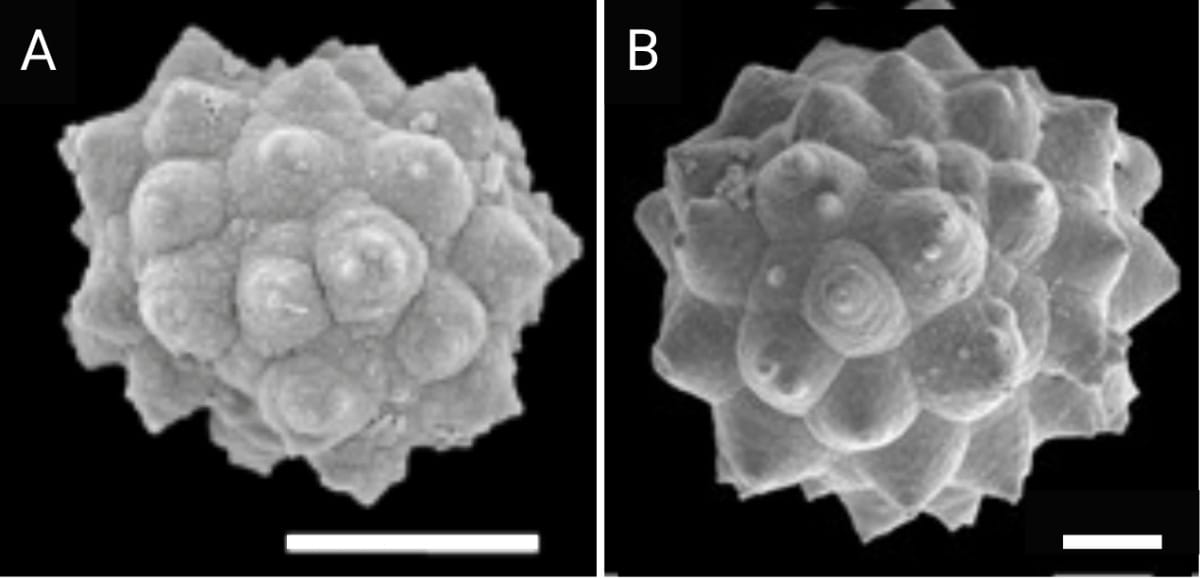
Helpfully, phytoliths shape varies by species and can be diagnostic for specific groups of plants, like palms. This means they can be used by fossil hunters today to understand previous climates and ecologies around the world.
“Palms often produce large numbers of phytoliths, especially within foliar [leaf] tissues, that can be diagnostic at the tribe or even genus level,” write Siver and colleagues, who add that “perhaps more importantly, the presence of palm phytoliths in a fossil deposit can be effectively used to infer mean winter temperatures above freezing.”
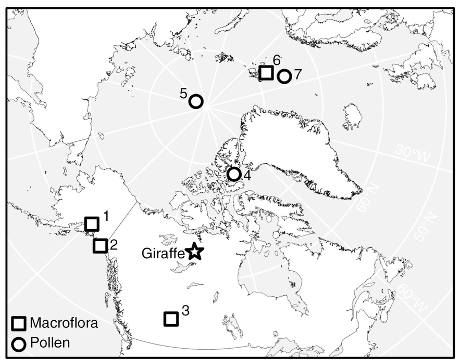
Siver and colleagues carried out their work in the Giraffe locality (64.73°N, 109.75°W), near the Arctic circle in Canada. Sediment in that region was formed by volcanic eruptions and subsequent sedimentary processes. A diamond drill core from the area, 163 m long, provided the subject material for fossil hunting. The age of the sediment layers was radiometrically dated, with the sediment of interest dated to 48 million years old, or the late early Eocene. Microfossils were extracted from the rock matrix by chemical means and analysed by light microscopy and scanning electron microscopy.
The phytolith fossils were compared to a living palm’s phytoliths (Trachycarpus fortunei) and found to be highly similar, confirming that they came from ancient palm species.
“Palm phytoliths were recorded in mudstones from 45 strata spanning 37 m of the core,” write Siver and colleagues.
In addition, various warm-water organisms, including a sponge currently found exclusively in Neotropical and Afrotropical regions (Potamophloios canadensis), an alga endemic to the tropics (Mallomonas bangladeshica), a related alga found only in coastal North Carolina in ponds that lack winter ice (Mallomonas multiunca var. pocosinensis) and five new diatom species (Actinella) with morphology similar to those exclusively found in the tropics and subtropics today, were found in the diamond core sample along with the palm phytoliths.
Based on these findings, Siver and colleagues were able to confirm the presence of a warm subtropical climate during the late early Eocene at latitudes of ~65°N and extended the known distribution of ancient palms to the subarctic regions of Canada.
“The presence of palm phytoliths allows inference of a warm regional climate during the late early Eocene, with mean cold-month temperatures above freezing despite prolonged winter darkness,” they conclude.
And so, while you might not be booking a beach holiday to today’s Northern Canada, a hint of the tropics is still buried in the sand.
READ THE ARTICLE: Siver, P., Reyes, A., Pisera, A., Buryak, S., and Wolfe, A. (2025) Palm phytoliths in subarctic Canada imply ice-free winters 48 million years ago during the late early Eocene. Annals of Botany. Available at: https://doi.org/10.1093/aob/mcaf021.
Cover Image: The modern tropical paradise of Koh Mak, Thailand. Source: Wikimedia Commons / Vyacheslav Argenberg

,_Thailand,_Palms_on_the_beach.jpg?ref=botany.one)