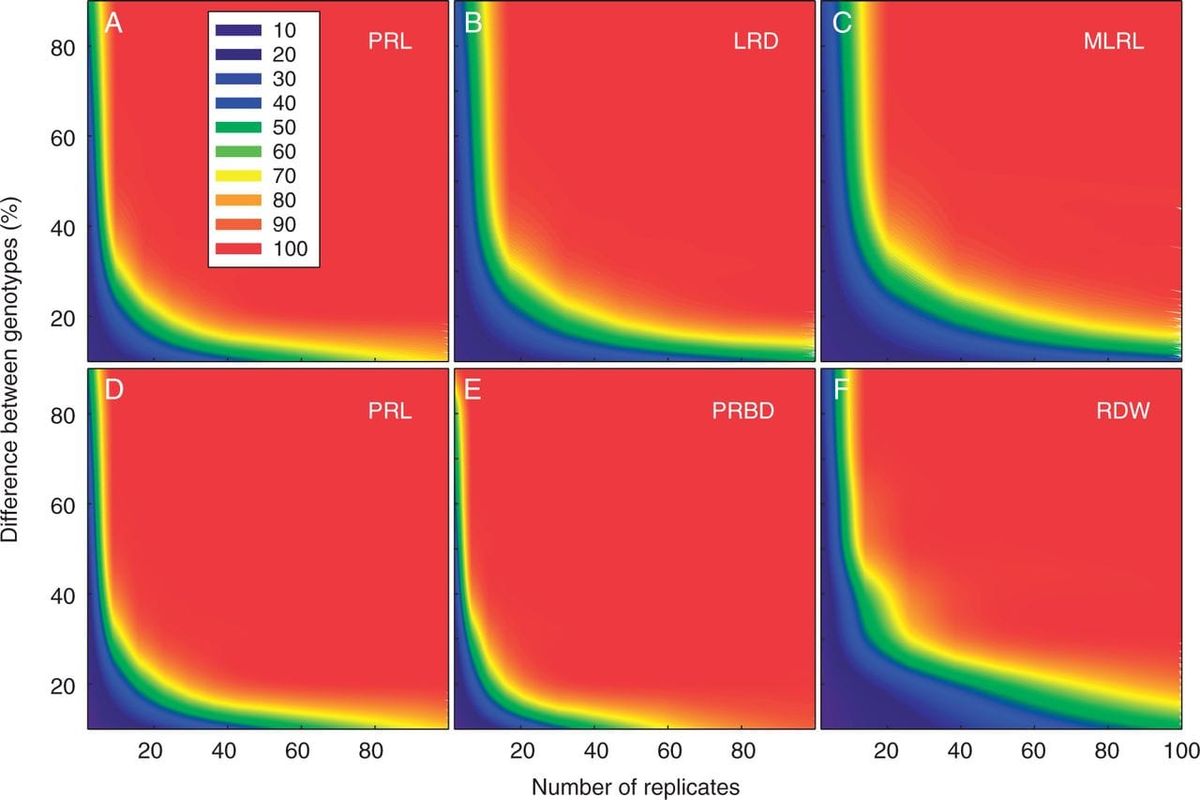
The experimental power (z-axis, legend inset in percentage units) to detect percentage differences in trait means between var
annals-of-botany

Seedling root traits correlate with yield in Brassica napus

https://www.botany.one/seedling-root-traits-correlate-yield-brassica-napus/

Know someone who'd like this?

Aiming to discover an optimum, cost-effective technique which can be applied to the selection of root traits for crop improvement, Thomas et al. screen seedling root traits of elite oilseed rape (OSR; Brassica napus) varieties in a low-cost, high-throughput root phenotyping (HTP) system. The same canola varieties were grown to maturity according to conventional practices, at two UK field sites each year for three years.
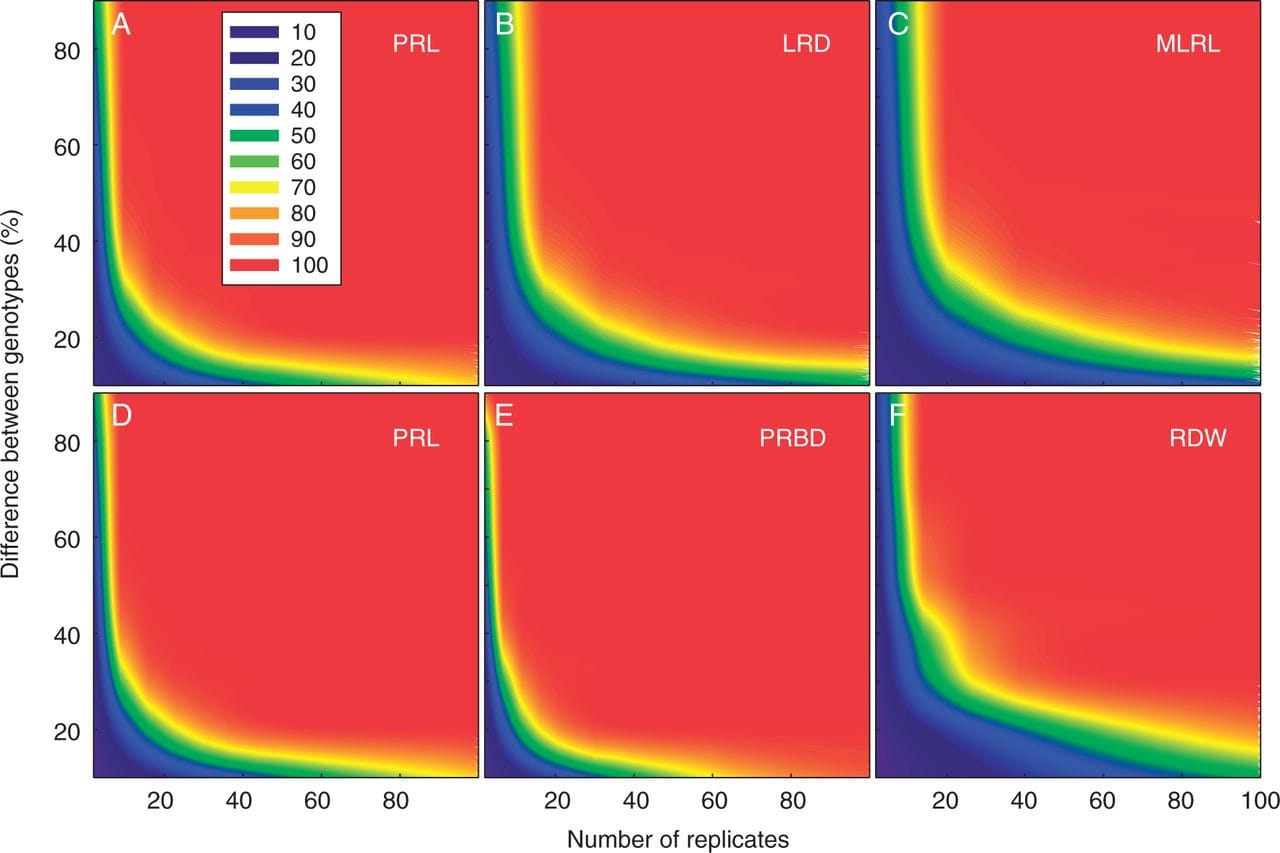
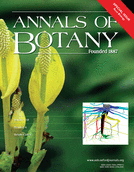
The experimental power (z-axis, legend inset in percentage units) to detect percentage differences in trait means between varieties (y-axis) as a function of the number of replicates (x-axis).
The experimental power (z-axis, legend inset in percentage units) to detect percentage differences in trait means between varieties (y-axis) as a function of the number of replicates (x-axis). (A, B, C) HTP system. (D, E, F) Field data from Bingham 2012–13.

Seedling primary root length (PRL) in the HTP system is shown to correlate with seed yield, early shoot vigour and emergence in most of the field experiments. Some associations between lateral root density (LRD) and nutrient uptake relating to calcium and zinc concentrations in the leaves can be observed and the authors conclude that it may be possible to use HTP systems to screen for beneficial root traits in more genetically diverse, non-field-adapted OSR.
Root Biology Issue

This paper is part of the Root Biology Special Issue.

Liked this article?

Written by

botanyone

The Annals of Botany Office is based at the University of Oxford.

More from this writer

The nonprofit plant magazine

Lab science. Citizen science. Your source for plant science.