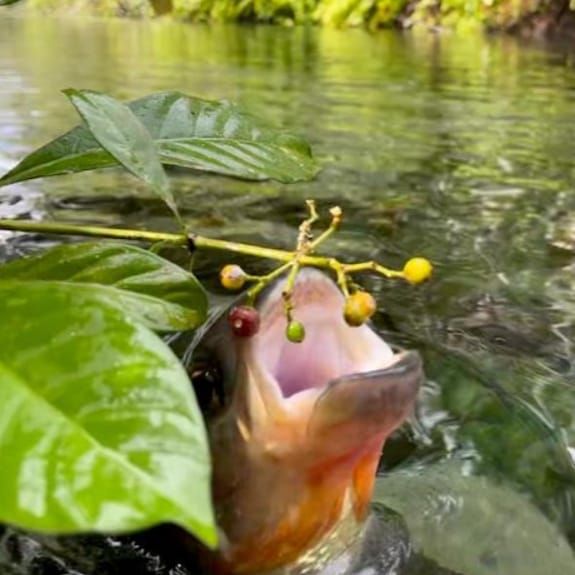

Imagine walking through a tropical forest where the air is thick and the trees are majestic, only to look up and see a massive fish swimming among the highest branches, devouring fruits. This is not a scene from magical realism: it is the daily reality of the Amazonian várzea, one of the richest floodplain forests on Earth. In these ecosystems, around 50% to 90% of plant species depend on animals to disperse their seeds. However, when rivers overflow, and water covers the jungle for months, birds and monkeys hand over their jobs to an unusual group of aquatic dispersers: fruit-eating fish. This phenomenon, known as ichthyochory, plays a key role in the natural structure of these environments.
A recent study led by Gilvan Costa and published in Biotropica has decoded the largest seed dispersal network by fish published to date, revealing an astonishing secret: the subtle topography of the forest dictates which plants end up in the stomachs of which fish.
Not all flooded zones of the Amazon are created equal because the hydrological regime creates a broad environmental gradient that divides the forest into two main habitats based on topographical variations. The low várzea consists of low-lying areas that remain flooded between 50 and 230 days a year under massive columns of water. On the other hand, the high várzea comprises higher elevations where the flood duration is 50 days or fewer per year.
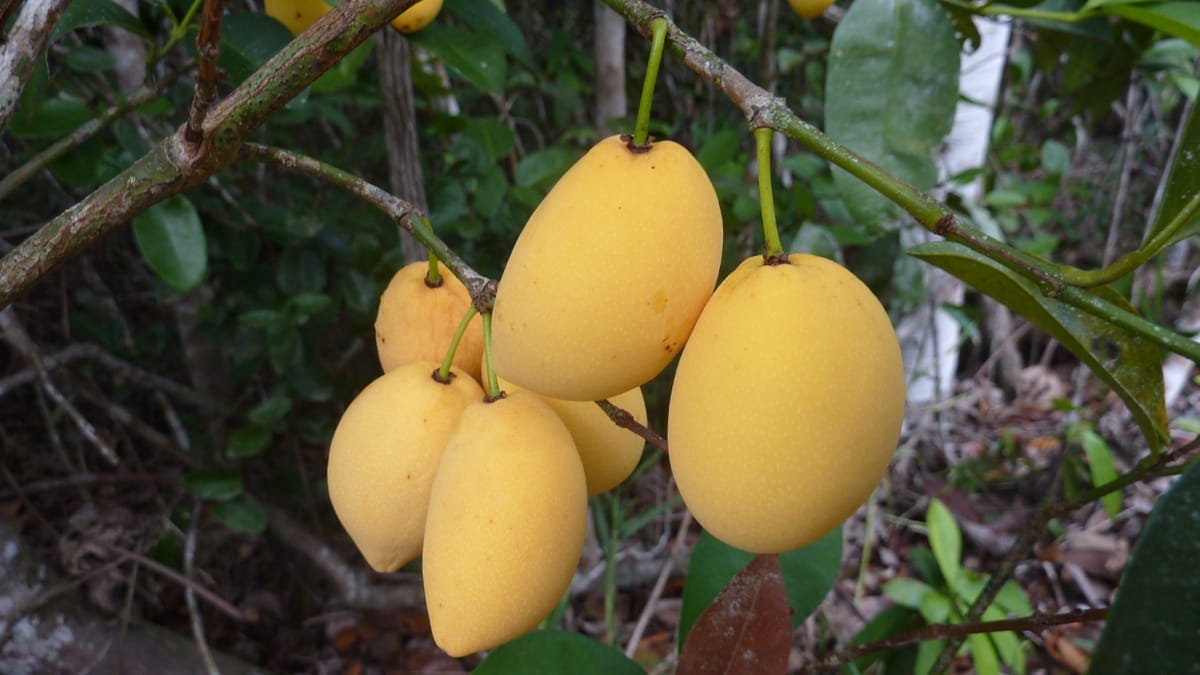
A traditional botanist might wager that the high várzea, experiencing less prolonged flooding stress, would harbour a greater diversity of trees. Indeed, most floristic inventories confirm that the high várzea has an average of 100.8 tree species per hectare, which is nearly double the 56.9 species found in the low várzea. However, Costa's team discovered a fascinating paradox because fish show a clear preference for plants from the low várzea. When considering only tree species with a restricted distribution to each forest type, the species richness of fruits and seeds consumed by fish was significantly higher in the low-lying zones. The explanation comes down to a matter of time since a longer flooding period gives low-várzea trees a wider window of opportunity for fruits to fall into the water and interact with hungry fish.
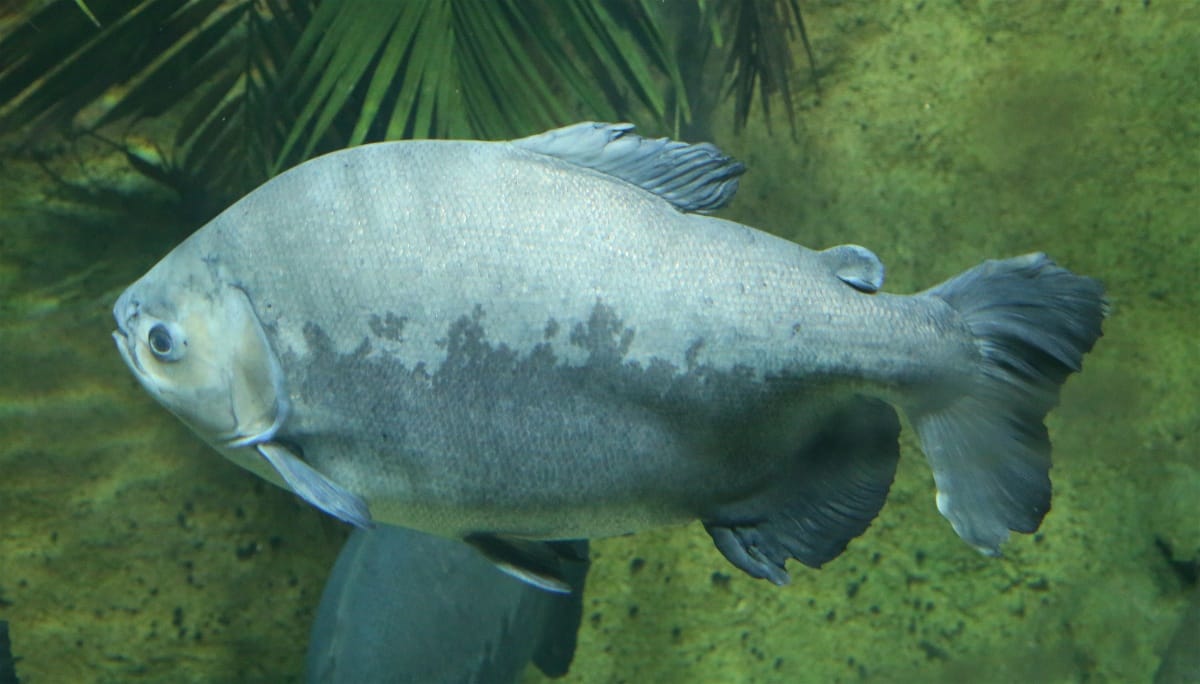
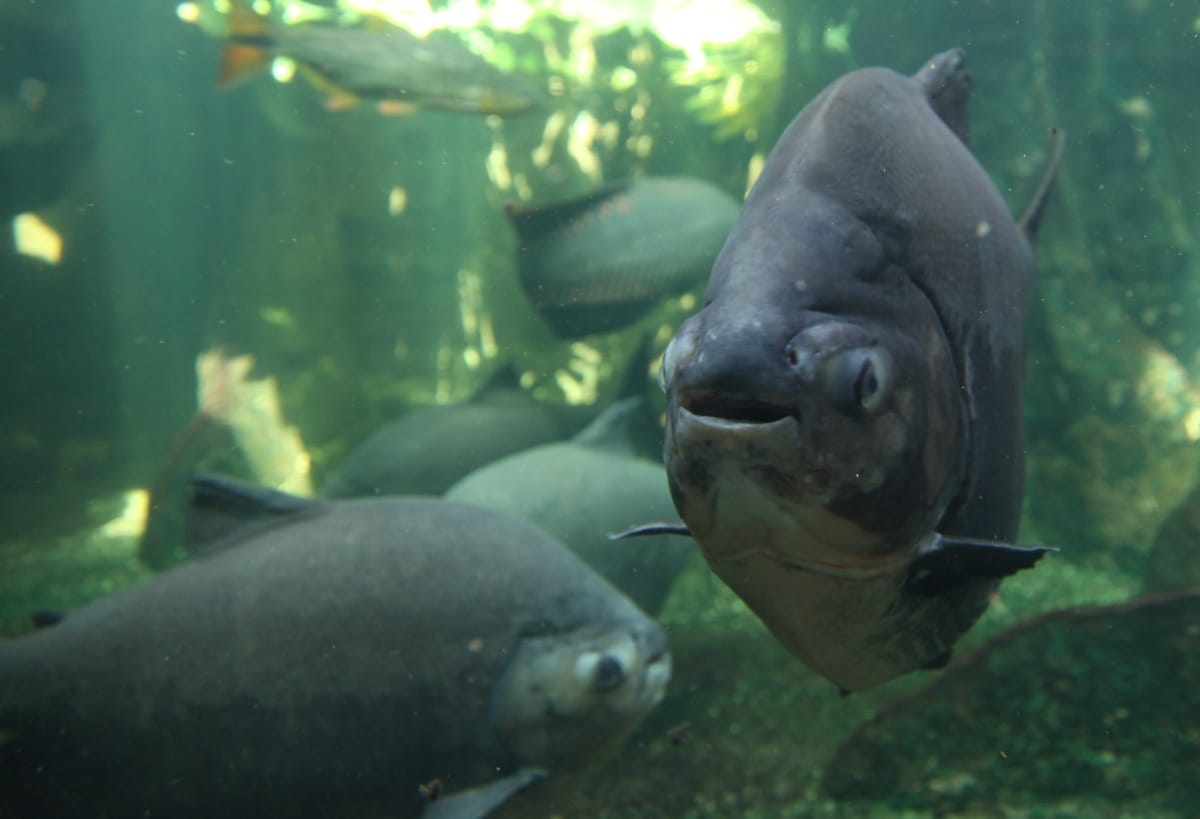
The study analysed thousands of intact seeds recovered directly from fish digestive tracts during field collections on Paciência Island in the Brazilian Amazon alongside extensive literature reviews covering decades of research. Although the diversity of diners in the Amazon is high, this mutualistic network is heavily sustained by just a few heavyweight species belonging to the Serrasalmidae fish family. The undisputed champion of seed dispersal is the tambaqui (Colossoma macropomum), a fish capable of consuming 38% of all plant species in the network on its own. It is closely followed by the pirapitinga (Piaractus brachypomus), which is responsible for 18%, and Mylossoma albiscopum, which accounts for 10%. These specialist frugivores possess astonishing dentition patterns that are evolutionarily adapted to crack hard-shelled seeds. Amazingly, many seeds travel through their digestive tracts and emerge completely intact, remaining perfectly viable to germinate far away from the parent plant. Because some propagules can float for months without losing viability, the combination of river currents and fish movement allows plants to colonise new islands and distant downstream areas they might otherwise never reach.
One of the most powerful ecological findings of the study lies in the architecture of these interactions. The authors determined that the ichthyochory network displays a highly nested structure but is not significantly modular. In simple terms, a nested structure means that specialist fish species, those that eat very few types of fruit, interact almost exclusively with a subset of plants that are also heavily devoured by generalist fish like the tambaqui. This pattern is incredibly important because nested networks are structurally stable and remarkably robust against random species extinctions. If a specialised fish species experiences a population drop, then the target plant is not immediately left without a disperser because the generalist giants are still around to do the ecological heavy lifting. The lack of modularity occurs precisely because the top three frugivorous fish species distribute themselves widely across both low and high várzea habitats, binding the entire ecosystem together into a cohesive web.
Regrettably, this masterpiece of coevolution, which has been shaping South American ecosystems for tens of millions of years, now faces unprecedented human threats. Climate change, which intensifies extreme droughts and floods, alongside the aggressive expansion of hydroelectric dams, is drastically altering natural river flows. Hydroelectric dams alter the frequency and intensity of water pulses, creating severe downstream effects like massive tree mortality in lower topographies due to consecutive years of unnatural flooding. Simultaneously, flow regulations can reduce maximum water levels, keeping high várzea zones dry and cutting off fish from accessing higher-elevation fruits and seeds.
The study by Costa and his colleagues reminds us that conserving tropical rainforests requires looking far beyond the soil and the canopy. Sometimes, the long-term survival of the world's largest flooded trees depends entirely on the scaled guardians swimming quietly beneath their roots.
READ THE ARTICLE
Costa G, Correa SB, Wittmann F, et al.. 2026. The Flooding Gradient Affects Seed Dispersal by Fruit‐Eating Fishes in Amazonian Whitewater Floodplain Forests. Biotropica 58. https://doi.org/10.1111/btp.70212
Spanish and Portuguese translation by Erika Alejandra Chaves-Diaz.
Cover picture by José Sabino (Wikimedia Commons, CC BY 4.0).


_Zappi_-_Flickr_-_Alex_Popovkin,_Bahia,_Brazil_(6).jpg?ref=botany.one)
