
Scientists have designed what could be Serbia’s first specialised orchidarium, at the University of Novi Sad. The site, discussed by Ostojić & colleagues, is proposed to aid orchid conservation. Serbia has 72 orchid species but many species down to just a few individuals.
The design is based around 8 zones, including 3 habitat recreations (meadow, wetland, forest), along with a central research hub with a seed bank and laboratory. The university already has a tissue culture laboratory, which has developed propagation protocols for multiple species.
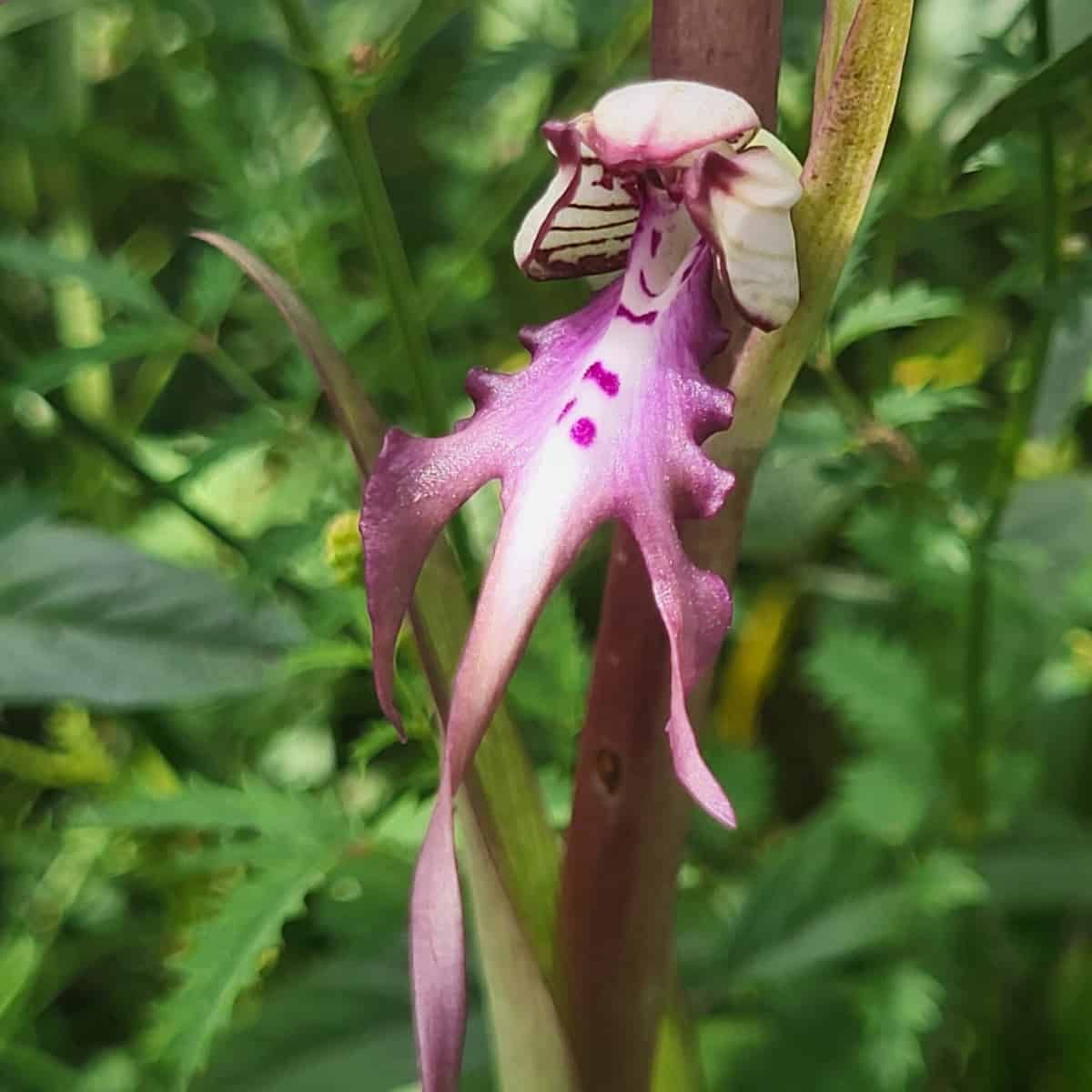
The Orchidarium is expected to work on conserving plants like Himantoglossum jankae, the Lizard Orchid. It looks spectacular, growing up to a metre tall, but the populations are extremely small. Researchers at the university have developed in vitro propagation protocols to help cultivate new plants.
Other planned research includes studying orchid-fungus partnerships that are crucial for orchid survival in controlled habitat recreations. This will help restoration efforts, with testing grounds put aside for that purpose. More surprising is their plan is for hybrid breeding.
Creating hybrids might seem an odd way of preserving species, but there is a reason. The goal is to create a sustainable orchid trade. Hybrids could create outdoor-hardy varieties suitable for Serbian gardens and landscaping. The hope is that commercial success will save the wild flowers.
If the Orchidarium comes to fruition, then it will achieve scientific goals, preserving genetic diversity, enabling species reintroduction and social goals, acting as an education hub that makes conservation financially sustainable through native orchid sales and eco-tourism.
Research Source: Journal of Zoological and Botanical Gardens, https://doi.org/pzvv Published July 22, 2025
Cover image: Himantoglossum calcaratum ssp. Rumelicum, which may be Himantoglossum jankae, in Greece by Jacek Pietruszewski / iNaturalist CC-BY