
Once upon a midnight dreary, while I pondered, weak and weary,
Over many a quaint and curious volume of forgotten lore—
While I nodded, nearly napping, suddenly there came a tapping,
As of some one gently rapping, rapping at my chamber door.
“’Tis some visitor,” I muttered, “tapping at my chamber door—
Only this and nothing more.” – The Raven, Edgar Allen Poe
And for Edgar Allen Poe – the visitor was the Raven saying "nevermore". But in a contemporaneous historic house in Pennsylvania, a rat tap-tapping on the floor, has led to buried secrets and a tale of botanical lore.
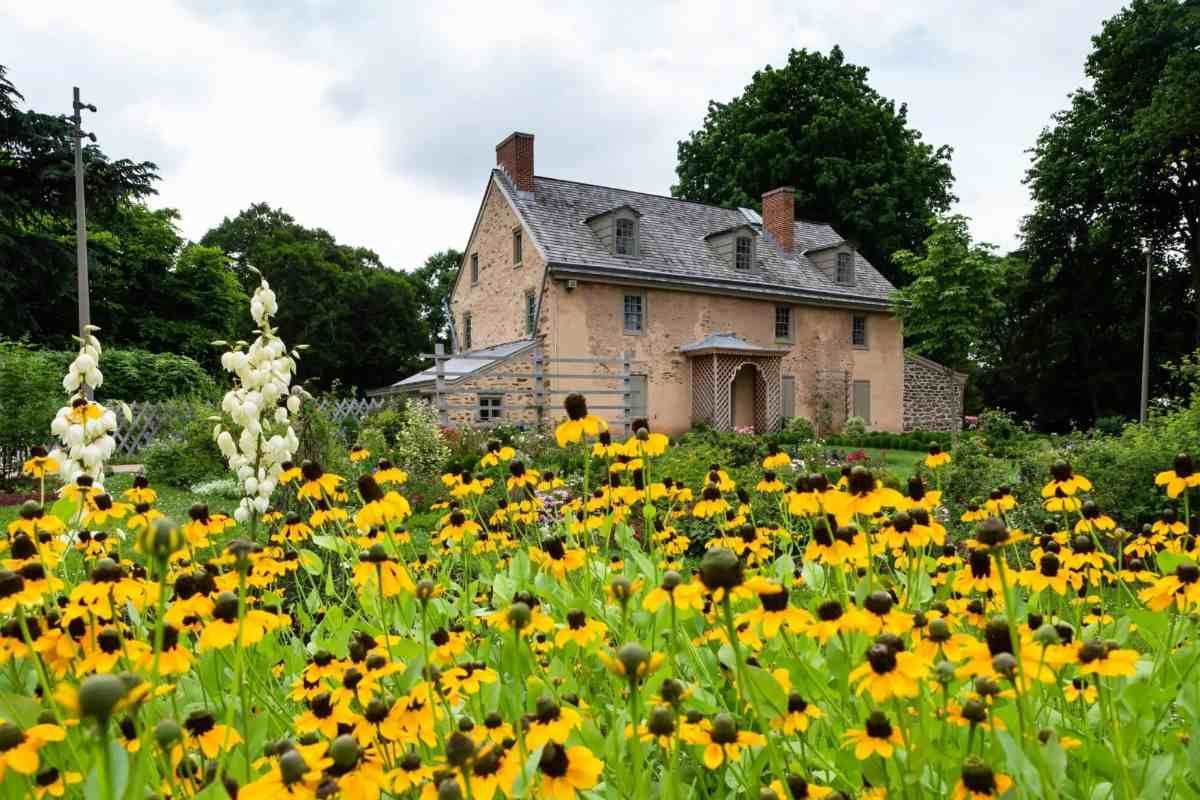
Bartram’s Garden, established in 1728 outside Philadelphia by local farmer and botanist John Bartram (1699–1777), is North America's oldest surviving botanic garden. The estate consists of a 46-acre property and the well-preserved Bartram family home. The Garden was started as a plant nursery and seed business, where the Bartram family, along with at least one possibly enslaved laborer and a free Black family, worked to cultivate thousands of North American and European trees, shrubs, flowers and crops for both American and European customers.
Historical records of the species grown on the estate provide an important snapshot of the botanical diversity in trade before and after the American Revolution. But historical documents are “always limited by the amount of information provided by the author, and even the Bartram family members did not write about every plant species they cultivated on their property” despite being prolific chroniclers, write Mitchem and colleagues in a paper published on Bartram’s Garden in Historical Archaeology.
Therefore, to learn more about the botanical diversity of this historic nursery, Mitchem and colleagues looked to the biological record left by a special visitor –the Rat. During renovation work in the 1970s, architects found a rat nest full of botanic material under the attic floorboards of the Bartram family home. The architects recognized the potential long term importance of the desiccated rat-cache they'd found and preserved it.
It is good that they did. The cache is currently the only biological record of botanic remains from the early period of the estate.
“In 1977 the John M. Dickey architectural firm of Media, Pennsylvania, was hired to undertake repair work on the historic structure. In a northeastern room of the third-floor attic, architects uncovered over 5 kg of rodent-accumulated material hidden under the floorboards that included seeds and nutshells,” write Mitchem and colleagues in Historical Archaeology.
The architects were very thorough in their handling of the rodents’ assemblage. They meticulously preserved nine bags worth of material from small seeds to corn cobs. This material also included rodent bones and droppings, insect parts, plus human debris such as textiles and paper fragments. From this, Mitchem and colleagues were able to determine that it was likely the black rat (Rattus rattus) that collected the material, from the 1770s through the early 1800s.
"The presence of past rodents in historical structures may seem off-putting at first, but it was often a fact of daily life, both then and now," Mitchem and colleagues write. "In the case of Bartram’s Garden, where garden excavations took place several decades ago and did not include botanical sampling, the attic assemblage provides the first material evidence for preserved plant remains.”
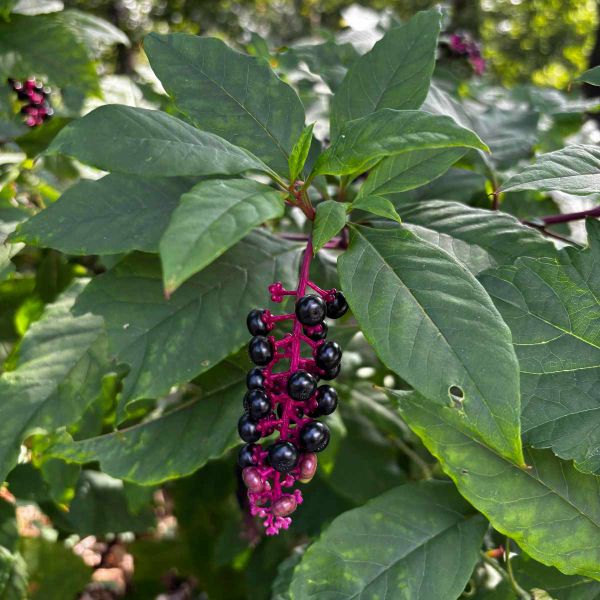
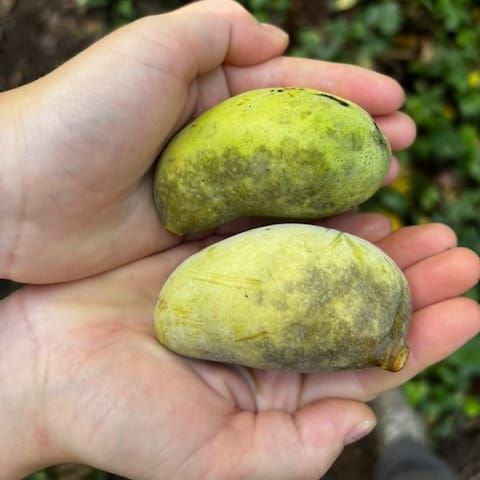
Mitchem and her colleagues have now sorted the bags and sifted the contents with nested geological sieves (8 mm to 0.5mm). They ultimately identified 30,000 botanical specimens including seeds, pods and capsules, nutshell fragments, fruit pits as well as grass chaff and culms. Many species were identified: wild oat, bread wheat, broomcorn millet, buckwheat, corn, parsnip, persimmon, wild fox grape, beans, melon, strawberry, mint, cucumber, peanut as well as evidence of various nut and fruit trees such as oak, walnut, hickory, Kentucky coffee tree, larch, peach, pear and plum.
Many of the species matched those advertised by the Bartram nursery and family historical documents, particularly the tree species, all of which were listed in advertisements dating to 1751 through 1836. At that time, North American arboreal species were prized by wealthy Europeans, and so, according to Mitchem and colleagues, these trees were likely grown for commercial use by the Bartrams.
But, species not listed in the nursery catalogue were also found. These include the American crops of winter and butternut squash as well as numerous weeds. According to Mitchem and colleagues, the archaeological presence of these indigenous crops in the attic floorboard is evidence that European-descendant Philadelphians’, such as the Bartrams, had adopted these foods for their own diet. Meanwhile the weedy species, which include dock (Rumex spp.), amaranth (Amaranthus spp.), blackberry/raspberry (Rubus spp.), needle grass (Stipa spp.), brome grass (Bromus spp.), and clover (Trifolium sp.), are physical evidence of the weeds John Bartram complained of to business partners in correspondence and provide insight into the weed ecology of this region in the early 19th century.
These insights are possible because "rats are opportunistic foragers with relatively small foraging ranges (up to 150 ft. [46 m])” write Mitchem and colleagues. And so any material found in the attic gives a hyper-local picture of plant life around the Bartrams' house.
“At Bartram’s Garden, the protected space beneath the attic floorboards would have been a secure location for rodents to live close to human foods stored within the home, meals prepared in the first-floor kitchen, and additional food sources from greenhouses and garden beds within 150 ft. [46 m] of the house," write Mitchem and colleagues.
And so, when it comes to natural history, never say nevermore. There may be a rat under the floor to shine a light on botanic lore.
And the Raven, never flitting, still is sitting, still is sitting
On the pallid bust of Pallas just above my chamber door;
And his eyes have all the seeming of a demon’s that is dreaming,
And the lamp-light o’er him streaming throws his shadow on the floor;
And my soul from out that shadow that lies floating on the floor
Shall be lifted—nevermore!
READ THE ARTICLE: Mitchem, A., White, C., and Miller, N. (2025) Historical Homes as Botanical Repositories: Insights from the Attic at Bartram’s Garden, Philadelphia, Pennsylvania. Historical Archaeology, 59(2), pp. 576-596. Available at: https://doi.org/10.1007/s41636-025-00584-1.
Image: Bartram House. Courtesy of Bartram's Garden.