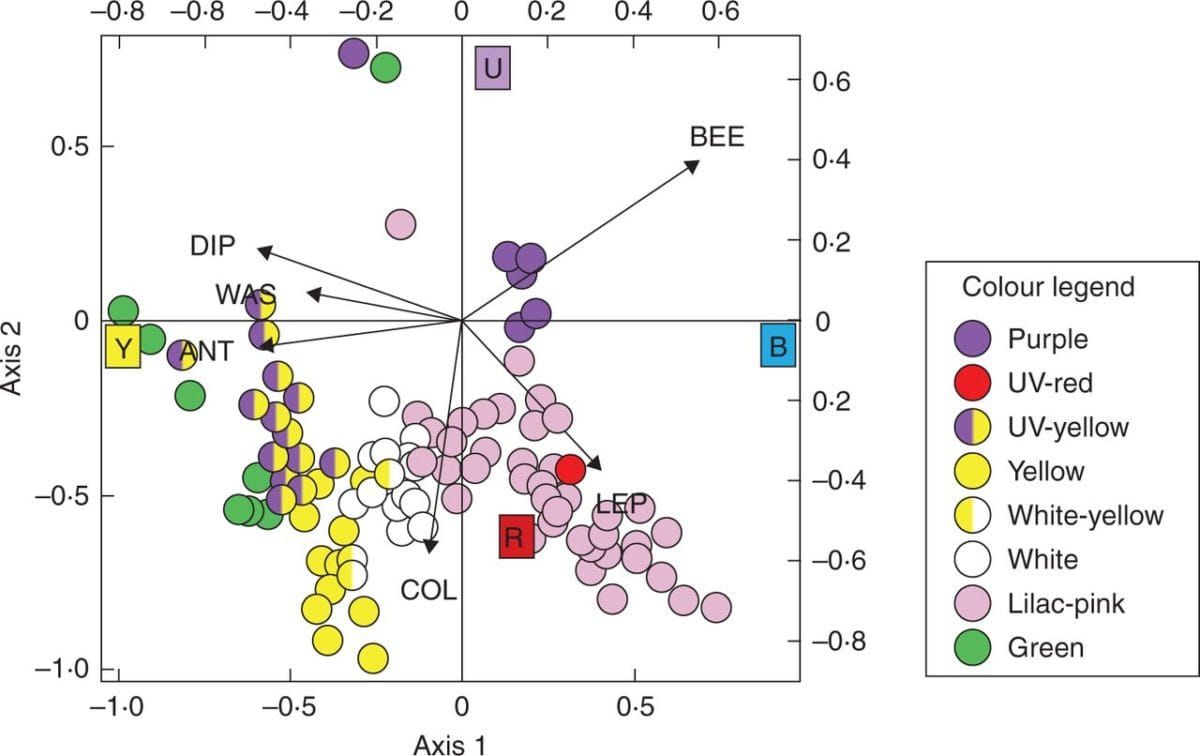
CCA biplot of pollinator groups and bands of the colour spectrum (coloured squares) corresponding to UV, blue, yellow and red
annals-of-botany

Plants with similar colours attract different pollinators

https://www.botany.one/plants-similar-colours-attract-different-pollinators/

Know someone who'd like this?

Different pollinator groups (bees, ants, wasps, flies, beetles and butterflies) preferentially visit flowers of certain colours. Interestingly, these colour preferences match the predictions of the pollination syndrome theory. However, flowers with similar colours do not attract similar pollinator assemblages. This is due to the fact that most flower species are pollinator generalist.
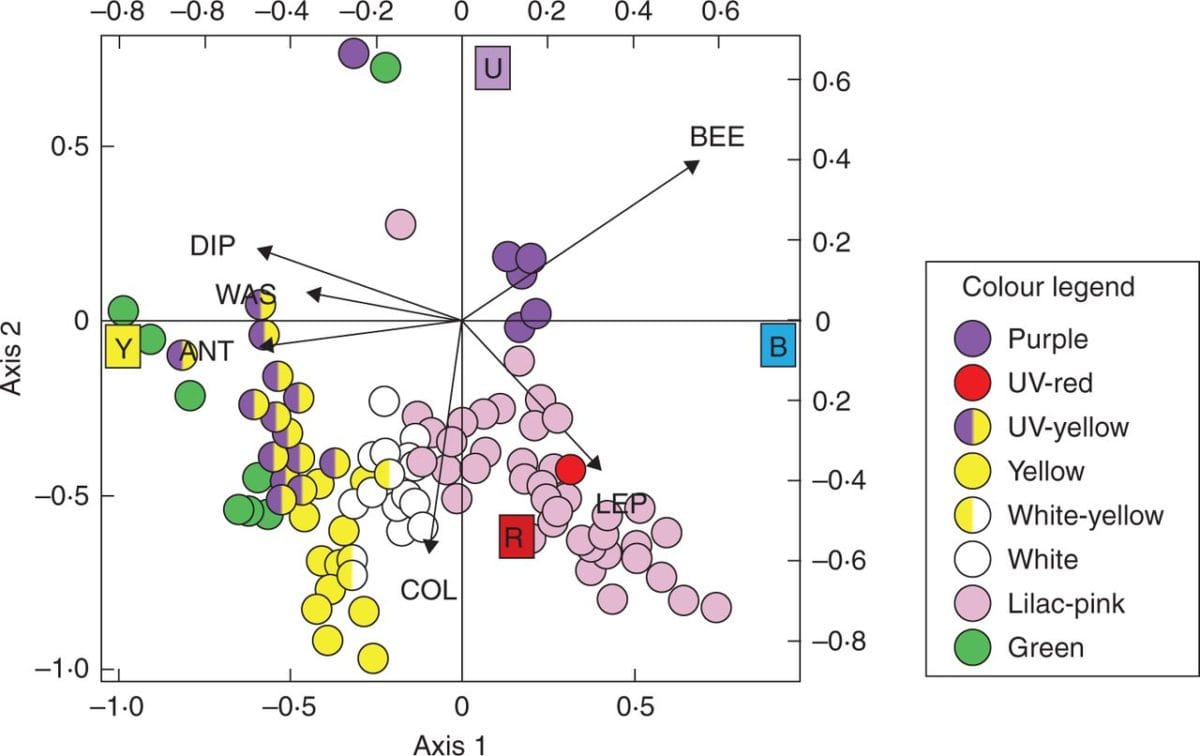
CCA biplot of pollinator groups and bands of the colour spectrum (coloured squares) corresponding to UV, blue, yellow and red (data from the four communities lumped together).
CCA biplot of pollinator groups and bands of the colour spectrum (coloured squares) corresponding to UV, blue, yellow and red (data from the four communities lumped together). Each dot represents a plant population and dot colours correspond to the flower colour categories shown in the legend. BEE, bees; ANT, ants; WAS, wasps; DIP, dipterans; COL, coleopterans; LEP, lepidopterans. See Reverté et al.(2016) for details.

Reverté et al. conclude that although pollinator colour preferences seem to condition plant-pollinator interactions, the selective force behind these preferences has not been strong enough to mediate the appearance and maintenance of tight colour-based plant-pollinator associations.

Liked this article?

Written by

botanyone

The Annals of Botany Office is based at the University of Oxford.

More from this writer

The nonprofit plant magazine

Lab science. Citizen science. Your source for plant science.