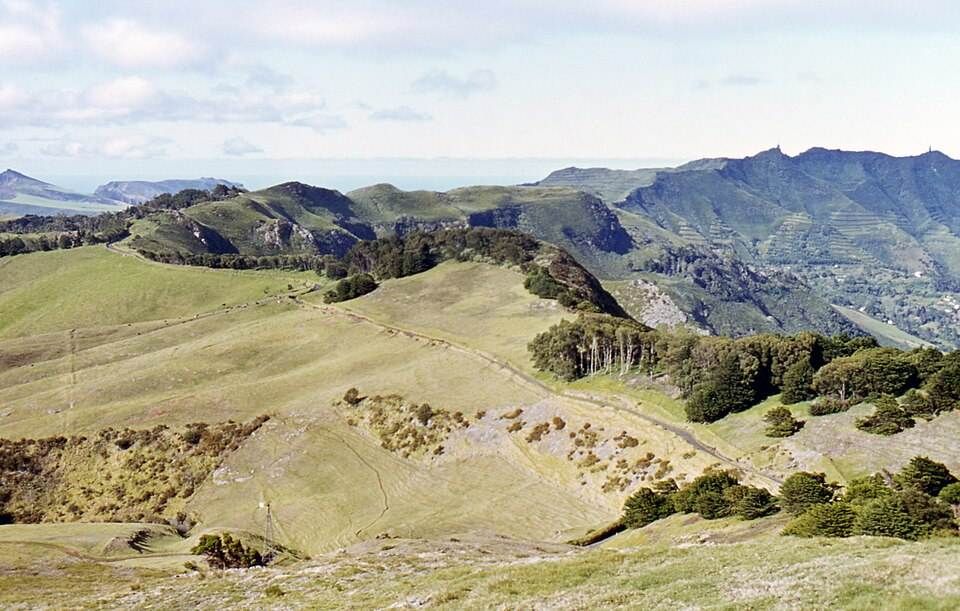

This week’s Plant of the Week ends a special series of themed posts for Paleo Week. With that in mind, it seemed only natural to feature a plant that is extinct. But which plant? There are many ancient species, such as those studied in the latest Annals of Botany Special Issue on the “Role of Fossils in Reconstructing Plant Evolution”. But, as we are currently living through the Earth's sixth mass extinction event, I have chosen instead a very recent floral loss – the Saint Helena olive, of which the last known plant died in 2003.
The Saint Helena olive has a story deep-seated in recent human history. Native to its namesake's island in the South Atlantic Ocean, it lived in the cloud forests of upland areas, favouring locales above 750 m. The species died in the wild in 1994. Conservationists were able to maintain the species in captivity until 2003 when a fungal disease struck, along with termites.
As one might expect, the loss of this species was precipitated by human activity.
In 1502, the remote island of Saint Helena was discovered by Portuguese explorers circumnavigating Africa. It quickly became an important stopover for ships sailing around the African continent, with its use well-documented between 1502 and 1613. During this time, livestock, fruit trees and vegetables were imported for cultivation so that ships' supplies could be replenished en route. English and Dutch traders soon followed, along with privateers eager to attack ships and take their goods.
In 1657, British control began. Oliver Cromwell granted a charter of governorship to the East India Company, and they quickly set up a farming colony consisting of a small group of settlers and slaves. The settlers cleared vegetation, eroded natural habitat and introduced new vegetation which now covers much of the island.

The settlers also introduced land mammals. Before human contact, no land mammals were present on the island, but after animals were introduced, both purposefully (cattle, sheep, goats, donkeys) and incidentally (rats, mice), the flora was deeply impacted. Over time, many native flora have become threatened with extinction, and a number have already gone extinct, including the Saint Helena olive.
Indeed, by the 19th century, the Saint Helena olive was already in trouble. Habitat loss due to deforestration and grazing by goats limited the already narrow range of this species' habitat.
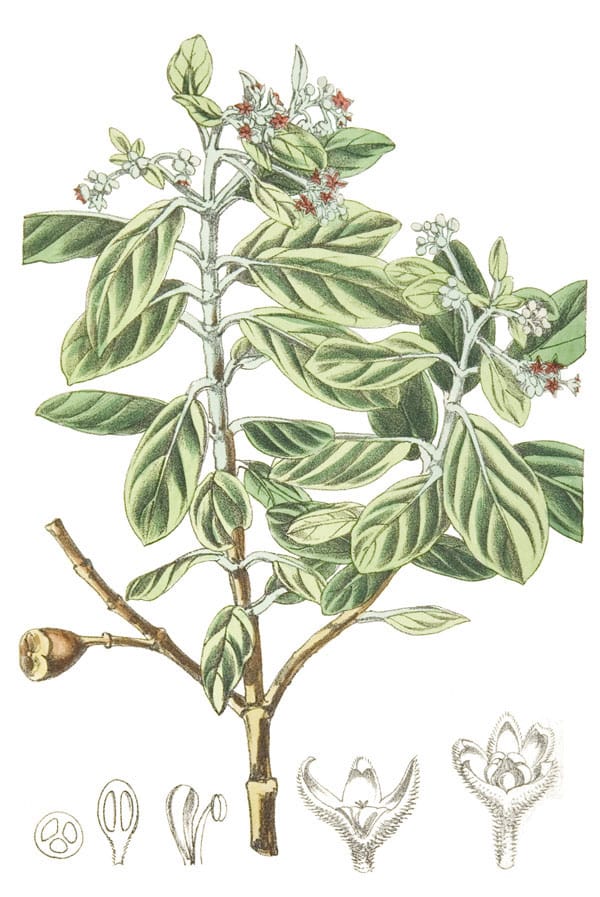
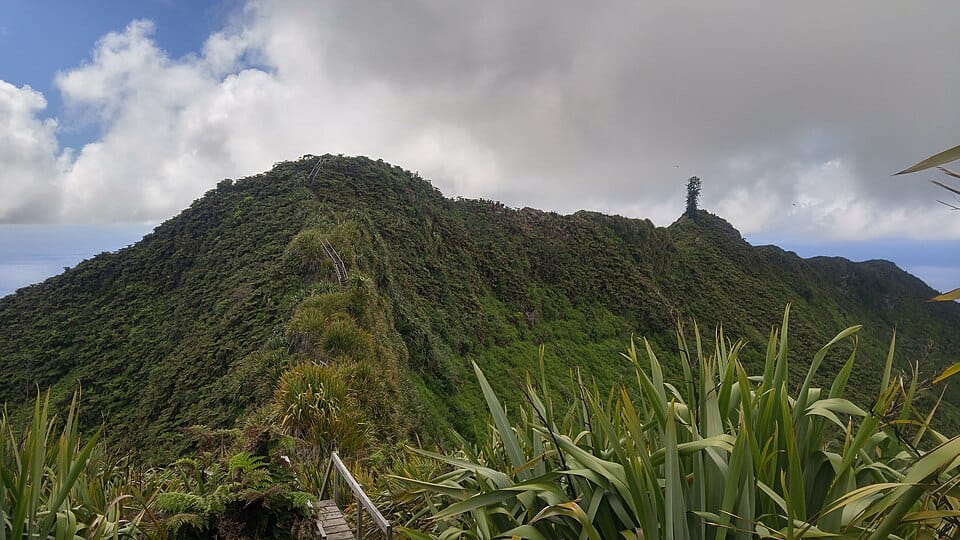
Historical records show that the Saint Helena olive used to grow well around Diana's Peak, the island highest point. The species's documented attributes describe a small, low growing, many branched tree with dark green leaves having hair along the bottom. Blossoms were tightly packed pink flowers on branched inflorescences that took a year to reach fruit maturity. The species required cross-pollinating, which complicated conservation efforts because it would not breed with itself or closely related individuals.
In fact, the species was thought to be extinct in the mid-1900s, only to be rediscovered in 1977. From this re-discovered plant, conservationists were able to cultivate a single cutting and produce a handful of seedlings. However, the original plant died in the wild in 1994, leaving the species entirely dependent on its cultivated descendants, which succumbed in 2003. Now, the species lives on only as a DNA sample in the Kew Gardens DNA bank.
For all this, Saint Helena is still a biodiversity hotspot. Today, the island is part of a British Overseas Territory and hosts a third of the unique species present in the UK and its Overseas Territories as well as the last natural British cloud forest. The subtropical island is also home to 500 globally unique plants and animals as well as the world's oldest living land animal – Jonathan the Tortoise, who is currently about 193 years old.
And Saint Helena plans to remain a hotspot long into the future with ongoing conservation projects to protect the cloud forest and all its native flora and fauna.
Cover picture Saint Helena Island. This image was originally posted to Flickr by Peter Neaum at https://flickr.com/photos/26307188@N00/35379860650 under a Creative Commons Attribution 2.0 Generic license.

.svg?ref=botany.one)
