
It's a diverse selection of papers this week. As usual, papers behind a paywall are marked 💰. Otherwise, they're free to access at time of checking.
How this works
We scan posts by people on the Botany Auto list and pull out the entries with links to papers. Every time a paper gets a post written about it it gets 4 points. It gets 3 points for a repost and 1 point for a like.
We try to add people to the Botany Auto post, if they post about Botany (doesn't have to be links to papers) around 20% of the time or more. The belief is that because the list as a whole shares an interest in plants, it's this material that tends to rise to the top.
If you think you should be on the Botany Auto list, but aren't, please drop a message to @botany.one on Bluesky.
1. Shoot to root transport of the HY5 transcription factor drives root developmental plasticity under neighbour shade.
van der Velde, K. et al. · bioRxiv · 2 posts · 75 likes · 34 reposts on Bluesky
This work showcases in detail how a small general transcription factor functions as a long-distance signal between shoot and root and integrates environmental signalling over long distances in the plant.
Kasper van Gelderen @kaspervangelderen.bsky.social · on Bluesky
And now the second preprint of the lab! doi.org/10.64898/202...
HY5 shoot-root movement is real and it is necessary and sufficient for the root developmental response to neighbour shading.
This is a story in collaboration with the lab of @ronaldpierik.bsky.social + @kyravandervelde.bsky.social
2. Functional diversification of ERF transcription factors in land plants
Bonter, I. et al. · bioRxiv · 1 post · 45 likes · 26 reposts on Bluesky
These findings provide an evolutionary framework for understanding the functional evolution of ERF transcription factors and how conserved transcriptional regulators are co-opted into novel developmental programs during the radiation of land plants.
Facundo Romani @fromani.bsky.social · on Bluesky
New research. Conveniently, Marchantia has relatively few transcription factors. Yet, we need to leverage on that at the family scale to have a more comprehensive picture. In this paper, we focused on ERFs, the second largest TF family. #PlantScience www.biorxiv.org/content/10.6...
View on Bluesky →3. Virus‐Induced Genome Editing in the Parasitic Plant Phtheirospermum japonicum
Ruwe, H. et al. · Plant, Cell & Environment · 1 post · 34 likes · 12 reposts on Bluesky
Here, we combined Agrobacterium rhizogenes‐mediated transformation with virus‐assisted delivery of the ultracompact TnpB nuclease to achieve stable, transgene‐free, heritable genome editing in Phtheirospermum japonicum.
Thomas Spallek @thomas-spallek.bsky.social · on Bluesky
Happy to share that our manuscript on virus-induced genome editing in a #ParasiticPlant has been published in Plant, Cell & Environment: doi.org/10.1111/pce....
The method also works well beyond the genes edited in the paper—so, more to come! The plasmids will soon be available from Addgene.
4. Multiscale drivers of accidental epiphytism in temperate Europe
Hoensbroech, M., de Rivera, O. R., Zotz, G. · Frontiers of Biogeography · 2 posts · 23 likes · 10 reposts on Bluesky
We combined field surveys along a coastal western European transect, from the Netherlands to northern Spain, with curated community-science records and used Bayesian models to test whether accidental epiphyte occurrence, abundance and richness are associated with habitat setting, host size and macroclimatic positioning within each species’ climatic envelope.
Markus Eichhorn @markuseichhorn.bsky.social · on Bluesky
Why do plants that don't belong in trees sometimes end up growing in trees? New paper on the biogeography of accidental epiphytes by Hoensbroech et al. in @biogeography.bsky.social biogeography.pensoft.net/article/2073... 🌲🌳🧪🌐🌍
5. Estimating self-fertilization rates from the diploid genotype spectrum
McKenzie, P. F., Wu, F. L., Hopkins, R. · bioRxiv · 1 post · 23 likes · 11 reposts on Bluesky
Here we present the diploid genotype spectrum (DGS) as a useful genomic data summary for characterizing populations undergoing partial self-fertilization (selfing). This statistic provides a straightforward baseline for estimating selfing rates from population genomic data.
Patrick McKenzie @patrickmckenzie.bsky.social · on Bluesky
excited to share a new preprint! We can describe the expected spectrum of genotype configuration counts under a given population selfing rate from Nordborg and Donnelly's partial-selfing model. Think SFS.... but including information about pairing within diploids: www.biorxiv.org/content/10.6...
View on Bluesky →6. Supergene control of chiral development in mirror-image flowers
Xue, H. et al. · Science · 1 post · 60 likes · 14 reposts on Bluesky 💰
Here, we identified that in butterfly lilies, female and male organs deflect by a combination of genetically controlled chirality and gravitropism, orienting left and right with respect to an external rather than internal reference axis.
闵娅(Min Ya; Minya) PhD @minyaaa.bsky.social · on Bluesky
Super interesting paper exploring the molecular basis of left-right asymmetry in of enantiostyly in butterfly lilies! The style bend and rotate before flowering to avoid the anther (and prevent self-pollination). Controlled by a hemizygous locus supergene! 🤩 www.science.org/doi/10.1126/...
View on Bluesky →7. The class VIII myosin ATM2 stabilizes actin–plasma membrane contacts in tobacco pollen tubes by locally promoting PtdIns(4,5)P2 formation
Wagner, V. et al · Nature Plants · 1 post · 23 likes · 8 reposts on Bluesky
Using pollen tube cells as a model, we describe how ATM2 enables actin–PM contacts by modulating membrane lipid nano-organization.
8. Comparative genomics of dark septate endophytes: shedding light on the enigmatic lifestyle and biology of DSEs
Csíkos, S. et al. · New Phytologist · 1 post · 9 likes · 8 reposts on Bluesky
Dark septate endophytes (DSE) are widespread root‐colonising fungi with poorly understood lifestyle and ecological functions. We investigated their genomic traits, sexual reproduction signatures, carbohydrate‐active enzyme (CAZyme) and secondary metabolites profiles, and tested whether genomic features distinguish DSEs and other endophytes from fungi with other lifestyles. We also reconstructed ancestral states to clarify the evolutionary origins of DSEs.
Francis M. Martin @fmartin54.bsky.social · on Bluesky
Glad to see this paper in print: Comparative genomics of dark septate endophytes: shedding light on the enigmatic lifestyle and biology of DSEs - Csíkos et al.
A #JGI #1KFG project
nph.onlinelibrary.wiley.com/doi/10.1111/...
9. Crossing thermal limits: functional collapse of the surfgrass Phyllospadix scouleri under simulated extreme marine heatwave
Vivanco-Bercovich, M. et al · Journal of Experimental Botany · 1 post · 8 likes · 8 reposts on Bluesky 💰
Our findings indicate that intensifying marine heatwaves may rapidly erode the thermal safety margin of temperate seagrasses, pushing foundational coastal ecosystems toward metabolic instability under continued ocean warming.
Journal of Experimental Botany @jxbotany.bsky.social · on Bluesky
10. Breeding on Time: Plant Chronobiology in the Face of Climate Change
Anton-Sales, C. et al. · Plant and Cell Physiology · 1 post · 9 likes · 7 reposts on Bluesky
In this review, we compile current knowledge at the intersection of circadian clocks and environmental responses, namely light and temperature sensing and signalling mechanisms in model and non-model species.
Maria E. Eriksson @treesandgrowth.bsky.social · on Bluesky
#Chronoculture #PlantSci 🍃Breeding on Time: Plant Chronobiology in the Face of Climate Change academic.oup.com/pcp/article/...
View on Bluesky →11. Species with U‐shaped geographic ranges as an opportunity to study early stages of divergence: The case of Ipomoea microsepala
Piña‐de la Rosa, I. A., Cacho, N. I. · American Journal of Botany · 1 post · 14 likes · 5 reposts on Bluesky
We selected Ipomoea microsepala, a species of morning‐glory with a markedly U‐shaped distribution, as a candidate to evaluate potential incipient evolutionary divergence.
12. Anticipate, acclimate, recuperate and remember: How spatiotemporal signal integration controls flooding stress resilience in plants
Rodriguez-Cisneros, C. et al. · Journal of Experimental Botany · 1 post · 11 likes · 6 reposts on Bluesky 💰
Here, we discuss how such integrative ethylene- and hypoxia-dependent signalling enables plants to anticipate and prepare for potential flooding-induced hypoxia stress, fine-tune acclimation according to the environmental and internal metabolic context, and effectively orchestrate re-oxygenation responses.
13. The homologous GRAS transcription factors RAM1 and RAD1 coordinate shared and separate gene networks to regulate arbuscular mycorrhiza symbiosis
Zeng, T. et al. · New Phytologist · 1 post · 11 likes · 6 reposts on Bluesky
We revisited the role of Lotus japonicus RAM1 and RAD1 and asked whether they act together in mediating arbuscule development and gene expression, or whether they act additively.
14. Structural basis for size-selective perception of chitin in plants
Gysel, K. et al. · Science · 1 post · 27 likes · 11 reposts on Bluesky 💰
We identified the CHITIN ELICITOR RECEPTOR KINASE (CERK) class as low-affinity, yet essential, co-receptors and propose a mechanistic model for a ligand-induced core signaling heterocomplex.
15. Engineering root development with high precision
Bilas, R. D., Guiziou, S. · New Phytologist · 1 post · 8 likes · 6 reposts on Bluesky
Here, we discuss how lineage tracing, genetic recording of developmental history, cell‐type‐specific engineering and programmable genetic circuits can be integrated to understand and control root architecture.
New Phytologist @newphyt.bsky.social · on Bluesky
Engineering root development with high precision
#TansleyInsight by Roza D. Bilas and Sarah Guiziou
16. From seawater to pyrenoid – The molecular architecture of the diatom CO2-concentrating mechanism
Shimakawa, G. et al. · Plant Physiology · 1 post · 8 likes · 6 reposts on Bluesky 💰
In this review, we focus on recent progress in understanding the molecular details of the diatom CCM [CO2-concentrating mechanism] to provide an updated model.
17. Brassinosteroid receptors reveal conserved features of exon-embedded gene regulation
Denia-Mondéjar, R. et al. · bioRxiv · 1 post · 11 likes · 5 reposts on Bluesky
Here we used BRASSINOSTEROID INSENSITIVE 1 (BRI1) as a model locus and found that it contains an exonic enhancer (EE), which is essential to establish the spatial BRI1 expression pattern.
18. Using high-throughput 13CO2 labeling to determine if photorespiration can be engineered to increase flux to one-carbon metabolism
Gashu, K., Walker, B. J. · Journal of Experimental Botany · 1 post · 8 likes · 5 reposts on Bluesky
To determine if flux to C1 metabolism via formate can be increased through metabolic engineering, we developed a high-throughput 13CO2 labeling system and used it to investigate wild-type (WT), catalase (cat) knockout, formate dehydrogenase (fdh) knockout, and fdh×cat double knockout Arabidopsis thaliana leaves.
19. Floral morphology tracks divergence time despite radical ecological shifts in southern South American mistletoes
Muñoz-Domínguez, F. et al. · Annals of Botany · 2 posts · 7 likes · 4 reposts on Bluesky
We studied floral divergence in four southern South American Loranthaceae mistletoes: Tristerix aphyllus, T. corymbosus, T. verticillatus and Desmaria mutabilis, spanning three nested divergence times (Eocene–Pleistocene): an Eocene intergeneric split, a Miocene intrageneric divergence and a Pleistocene sister-species speciation event.
Annals of Botany @annbot.bsky.social · on Bluesky
🎉Good news! The paper ‘Floral morphology tracks divergence time despite radical ecological shifts in southern South American mistletoes’ in @annbot.bsky.social by Fiorella Muñoz-Domínguez and co-authors is now #free for 2 weeks 🧵(1/7)
20. Climate-driven decoupling of a coevolved mutualism between Joshua trees (Yucca brevifolia and Y. jaegeriana, Asparagaceae) and pollinating yucca moths (Tegeticula synthetica and T. antithetica, Prodoxidae)
Millikin, P. W., Yoder, J. B. · bioRxiv · 1 post · 11 likes · 4 reposts on Bluesky
Here, we use TARDIS (Temporal Analysis of Reproduction Distributed in Space) to examine how annual weather variation drives flowering in Joshua trees (Yucca brevifolia and Y. jaegeriana; Asparagaceae), and subsequent fruit production that relies on obligate yucca moth pollinators (Tegeticula antithetica and T. synthetica; Prodoxidae).
Jeremy Yoder says no war @jbyoder.org · on Bluesky
NEW PREPRINT: Climate trends over the last century increased the frequency of Joshua tree's mass-flowering years—but not how often they produce fruit. That may mean their pollinators aren't keeping up with the trees' climate-changed behavior. Thesis research by @pwmilli.bsky.social
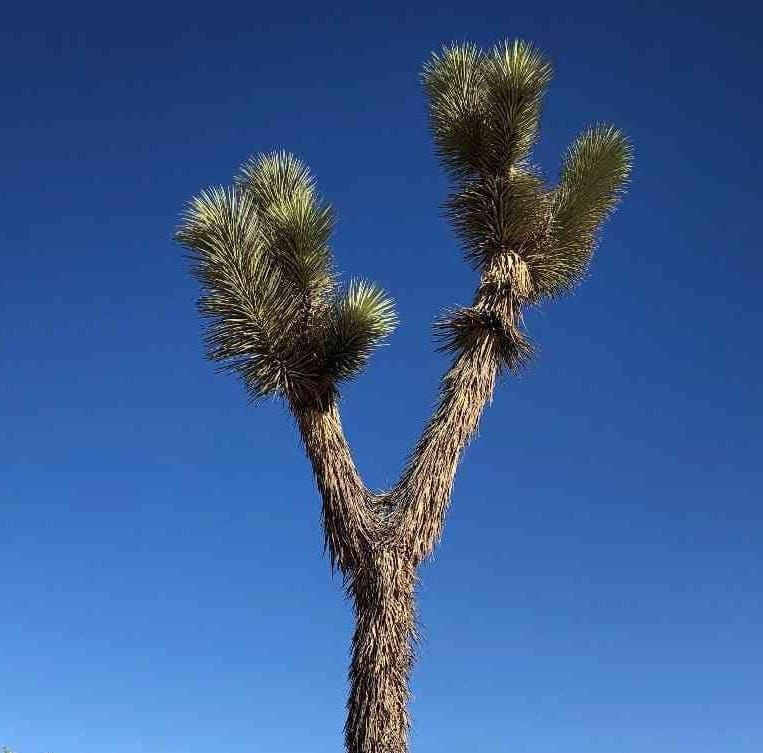
Cover image: Joshua Tree by Sarah Covshoff. All rights reserved.
Edited by
The week's plant science, in your inbox on Monday.
One email a week. Unsubscribe any time.
Read next
Science Shared
Science Shared: October 17
This week: Genetics dominates the most shared papers of the week
Science Shared
Science Shared: October 10
This week: It's been a busy week for *Arabidopsis thaliana*.

Science Shared
Science Shared: October 3
This week: Viruses, floral traits and Arabidopsis thaliana.

The non-profit plant magazine
Lab science. Citizen science. Your source for plant science.