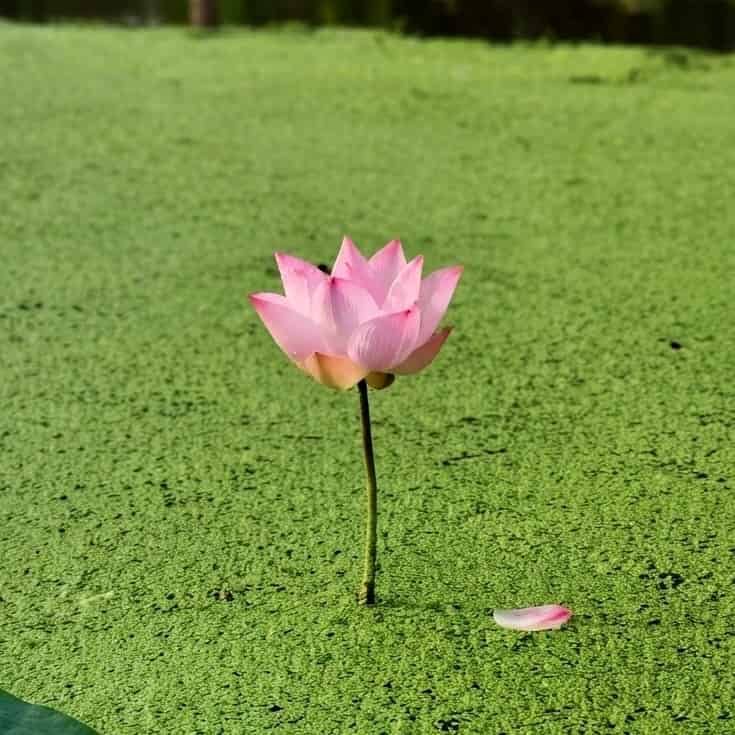

The Plant of the Week, this week, is the Sacred Lotus which I’ll admit, from a distance, looks like a tropical water lily. It’s not a water lily, nor is it tropical.
This might surprise a lot of readers, particularly if you live in Sri Lanka, Indonesia or northern Australia. However, Plants of the World Online lists Nelumbo nucifera as native in Ukraine and Khabarovsk in Russia to the north east of China. Cultivation has taken it much further, and it’s now established as in distant countries around the world. What it wants is slow moving water, so it’s often found in ponds and lakes. A mass of rhizomes sit in the mud in the pond bed, and from here stalks reach up to two metres to break the surface.

The leaves might have the round look of lily pads, but hey don’t lie flat, floating on the water. Instead a stalk, or petiole, hold them well above it. Also, unlike water lilies, there’s no notch where the stalk connects to the pad. The leaves look almost supernaturally clean, because the surface is hydrophobic. Water beads and rolls off, taking muck with it. But it’s not just the leaves that are odd. There’s the flowers too.
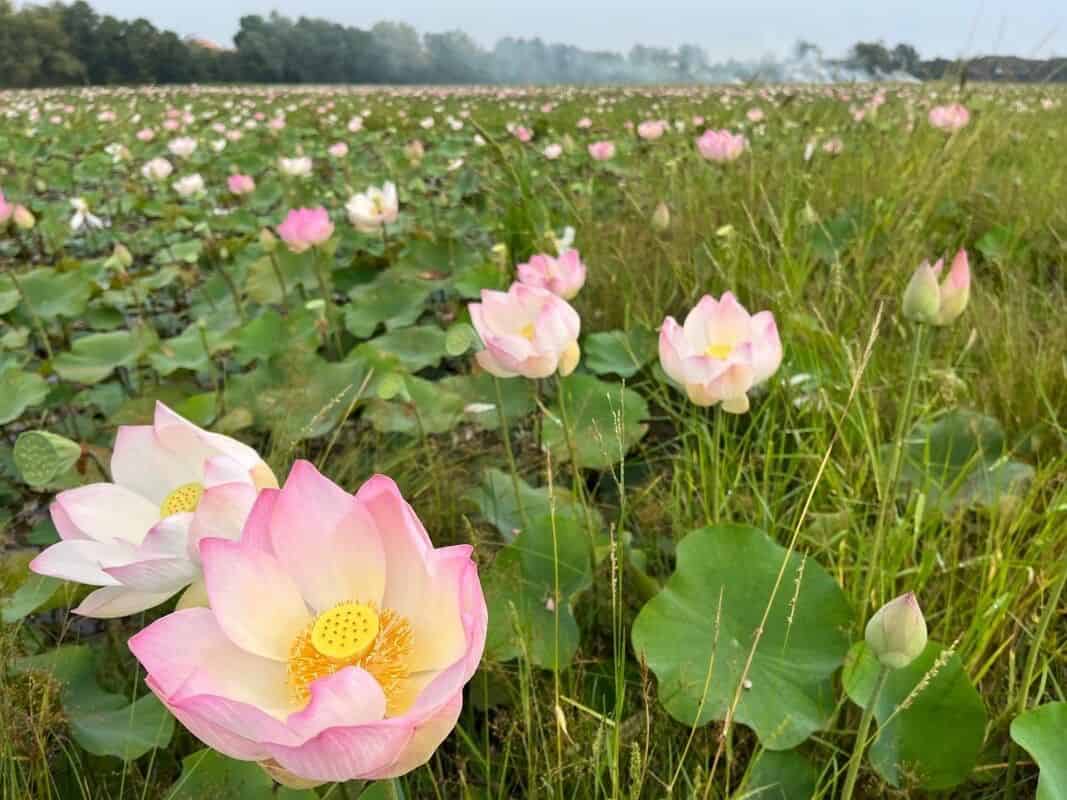
The flowers have a trick of opening gradually to make sure they’re crossing their pollen with other plants. The pink to cream flowers open slightly at first, so pollinators can enter at the top, bringing in pollen from other plants. But they can’t access the flower’s own stamens on the first day it opens. Overnight visitors are trapped within the flower. It’s not till the second day when the flower opens wider that the stamens are released, allowing the plant to release pollen and pollinators to travel elsewhere.
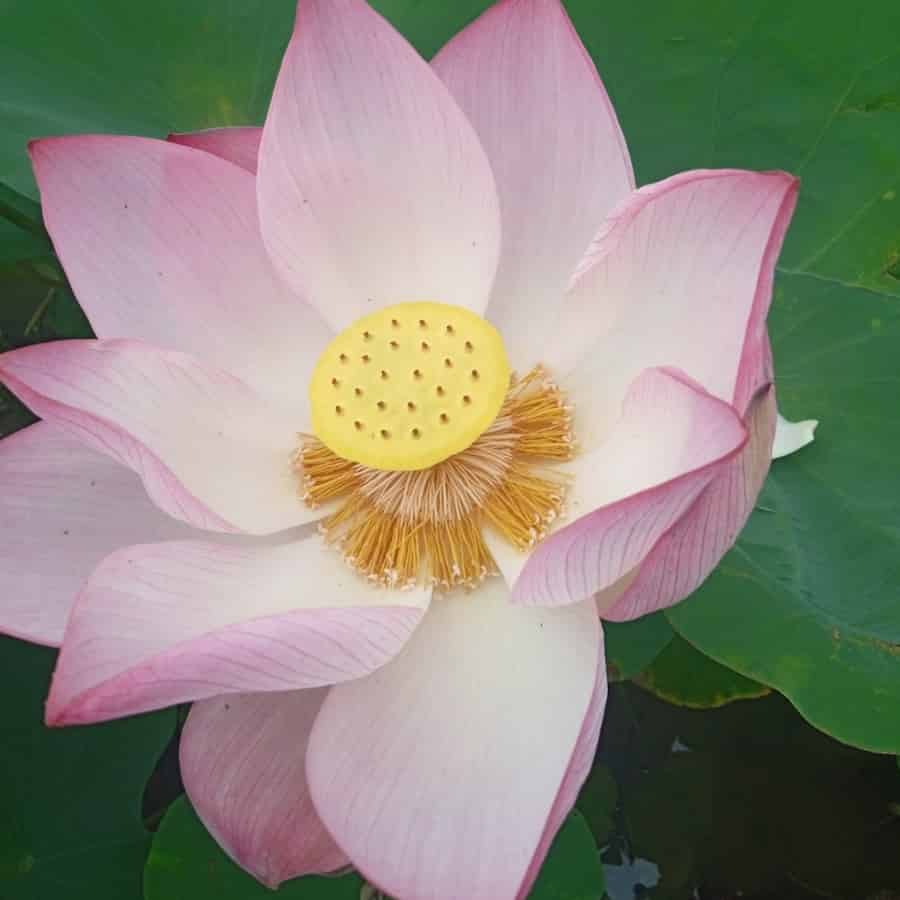
The pollinators that the flowers evolved for were probably beetles, though bees and flies visit the plants in some places. One of the ways the flower attracts beetles and others is that it can regulate its heat. Even on a cold 10 degree day, the flower can raise its temperature to between 30 and 35 degrees centigrade. Exactly why it does this is unclear. The heat could help spread its perfume, boosting its appeal to pollinators. Or it could be that the heat itself is a reward, providing energy to beetles as they shelter in the flower overnight.
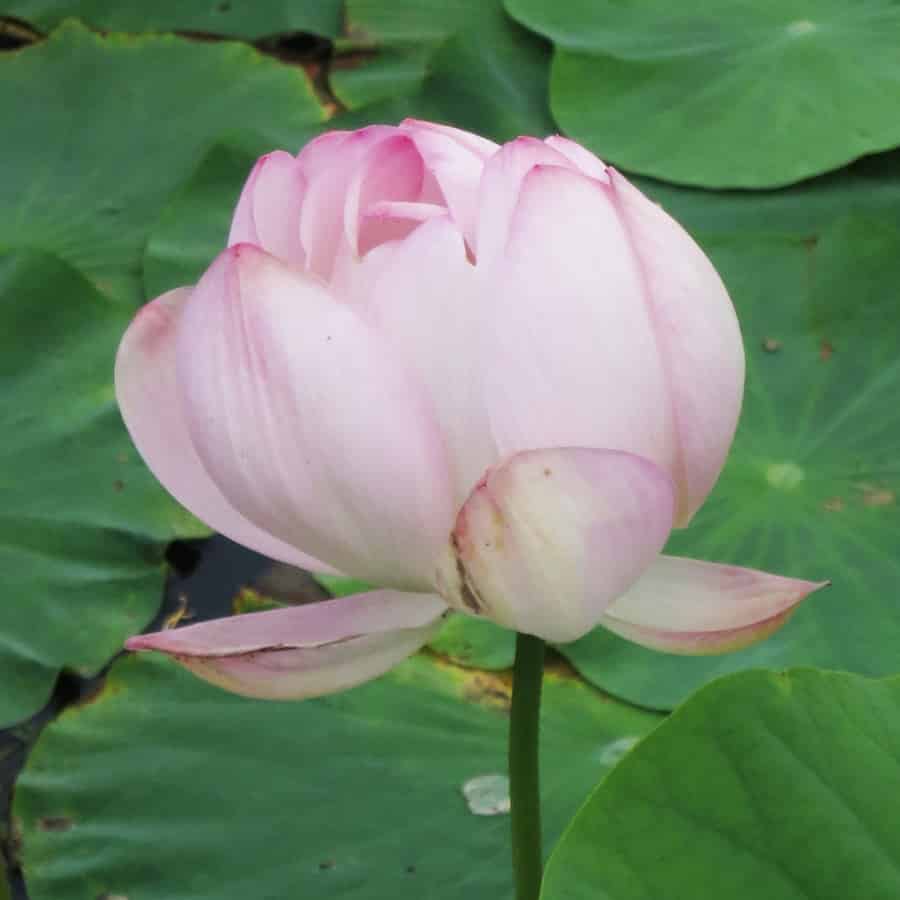
The puzzling thing is that the plant doesn’t just heat the flowers. It regulates the heat. Seymour and Schultze–Motel report that when daytime temperatures get to 45 degrees, the flower is still in the 30 - 35 range.
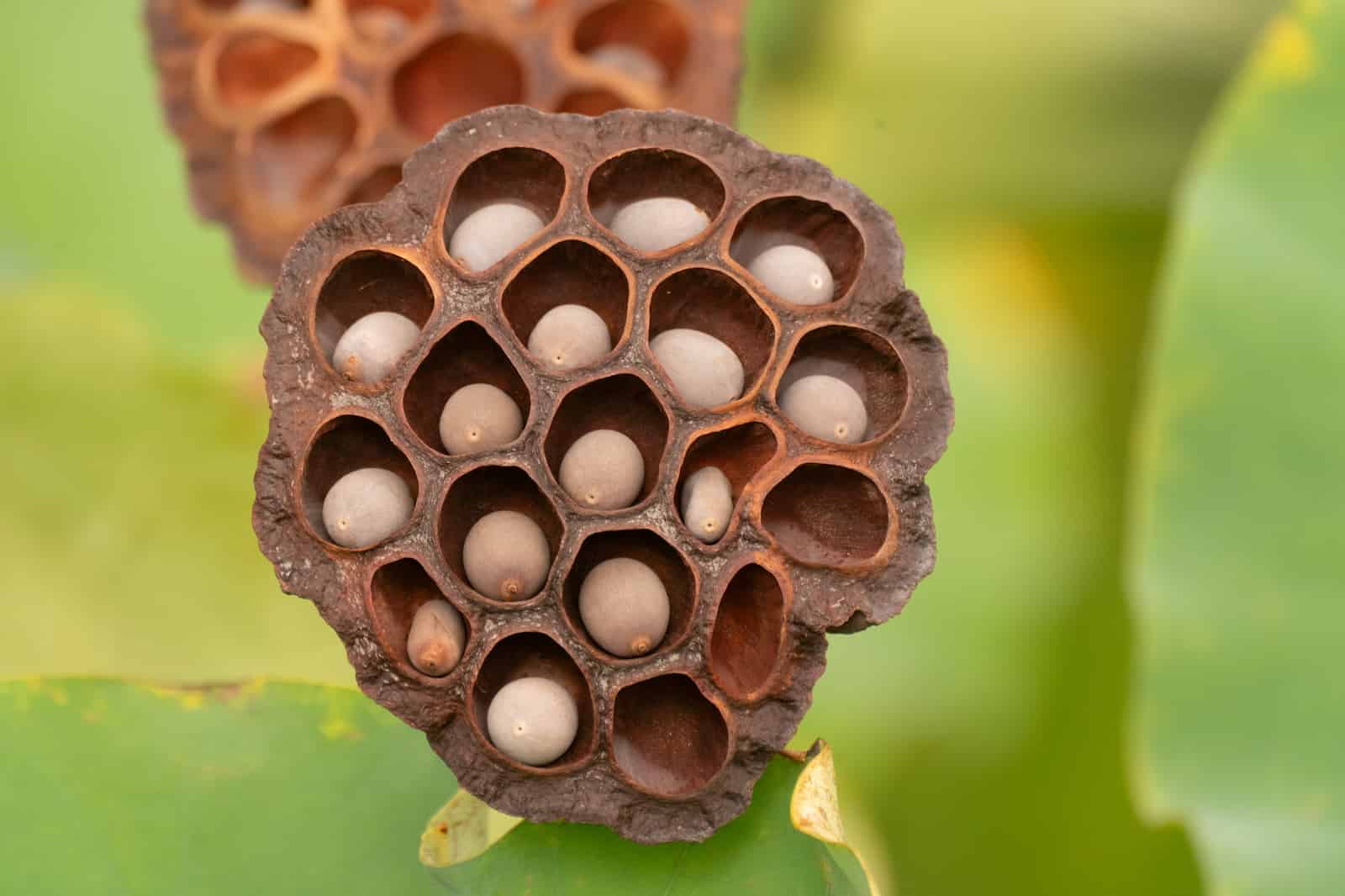
Once pollinated the plant produces seeds, known as lotus nuts, and these are something special too. The seeds turn the plant into a time-traveller. A study of the seeds shows that they could be 1,300 years old, and still germinate into a new plant. That means a seed dropped around the time of Charlemagne could still sprout tomorrow.
Nelumbo nucifera — observations by month
Worldwide · n = 7,038
Data: iNaturalist verifiable observations.
iNaturalist is going through a peak of observations at the moment, which suggests it’s flowering time for many observers. Keep an eye out for the nuts. If you can collect a few, you have something to pass on to your great(×50) grandchildren.
Cover image: Nelumbo nucifera in India by Noopur🍀 / iNaturalist CC BY-NC