
Plants are incredibly diverse, and so are botanists! In its mission to spread fascinating stories about the plant world, Botany One also introduces you to the scientists behind these great stories.
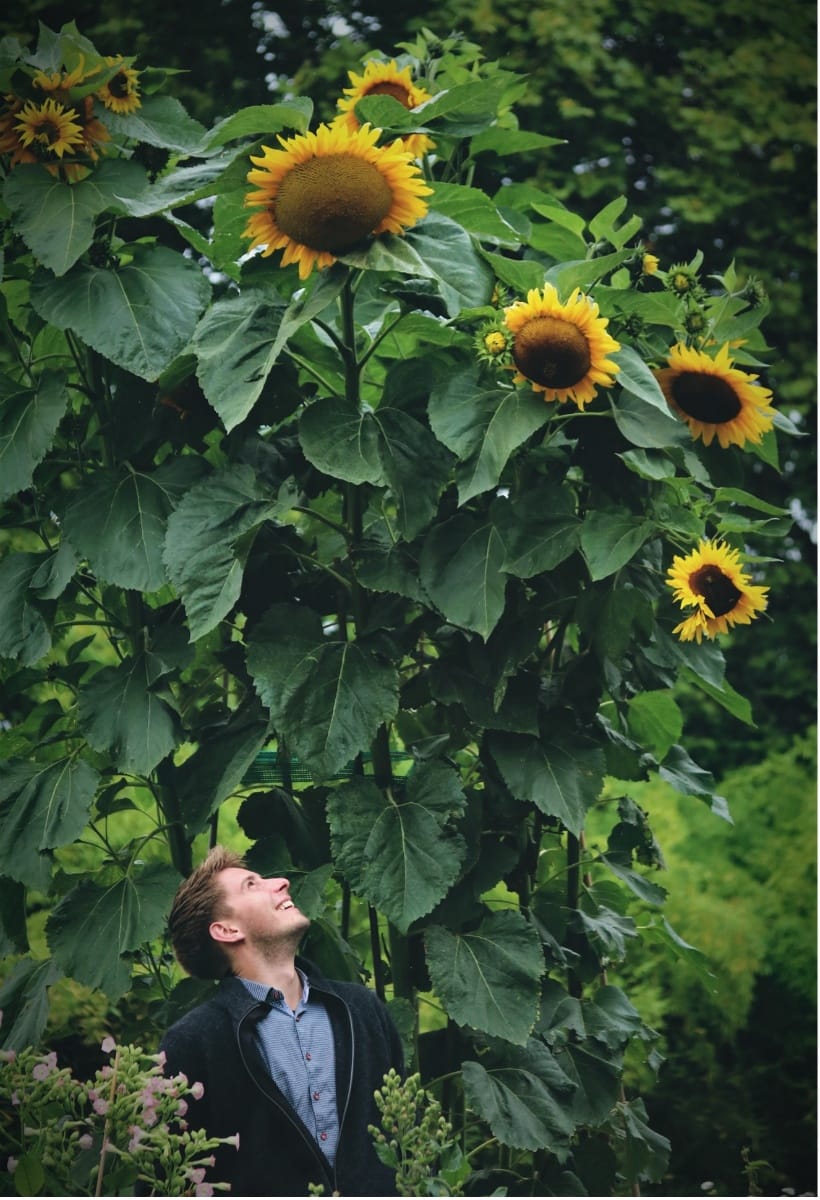
Today, we have Julien L. Bota, a PhD student working as a plant and landscape ecologist at the WSL-Institute for Snow and Avalanche Research SLF in Switzerland, where he studies the diverse relationships between plants and animals. Bota is particularly interested in how insects, molluscs and fungal pathogens shape the beautiful and diverse mountain meadows he can see from his office window. Although these organisms can strongly influence plant diversity and community composition through herbivory and disease, their role has long been underestimated and may be comparable to that of larger plant consumers.
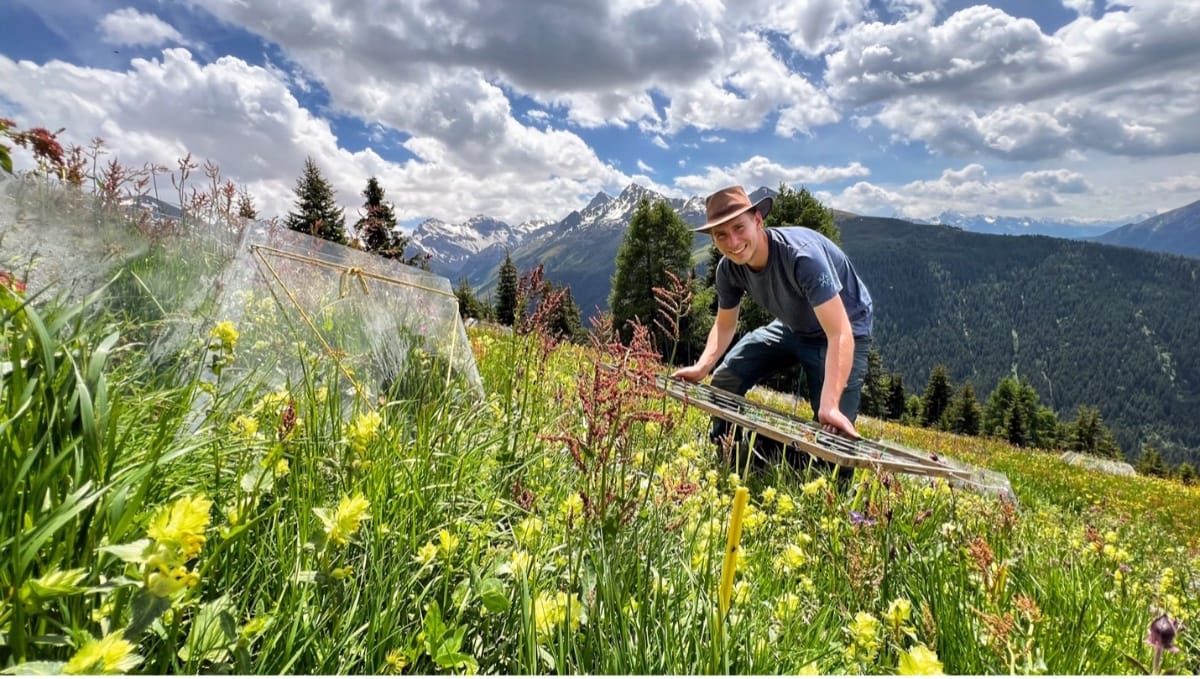
To better understand their individual and combined effects, Bota and his colleagues from the Bug-Network are conducting a large field experiment in the Swiss Alps and at sites around the world. By reducing the abundance of different groups of plant consumers in various combinations, they investigate how each group affects plant communities. At their sites in Davos, they also explore how climate change is reshaping these interactions.
Before moving to the Alps, Bota worked in the rainforests of Borneo, where he studied very different relationships between plants and animals—this time focusing on mutualisms in which both partners benefit. In one case, he investigated a climbing rattan palm that provides specialised chambers for ants, which in return protect the plant from its enemies. Because the ants live inside these enclosed chambers, they cannot communicate through pheromones in the usual way when the plant is attacked. Instead, they use substrate-borne vibrations, producing a distinctive rustling sound that is even audible to humans.
During his time in Borneo, Bota also became fascinated by the ecology of carnivorous pitcher plants. These remarkable plants have evolved specialised mechanisms for capturing additional nutrients and, much like humans, rely on diverse communities of microorganisms to help digest their food. You can follow his work on Bluesky
What made you become interested in plants?
When I was a kid, I had an aquarium where I kept tropical fish and aquatic plants. I was particularly fascinated by the plants and started to experiment with CO2, light and nutrients – basically my very first (and badly replicated) microcosm experiment. Later on during my studies, it was mostly the botany lectures that fascinated me and opened my eyes to all the stunning solutions plants have found to cope with challenging environments, but also the stories they can tell us about their surroundings – e.g. what happened in a place in the past, or what conditions prevail there today. At that time, I also fell in love with botanic gardens and spent quite a bit of time there marvelling at the diversity of forms, colours and fragrances that can be found in the plant kingdom. And of course, it is very hard for me not to take some breaks while hiking or walking out in nature and have a closer look at the species growing next to the path.
What motivated you to pursue your current area of research?
I always wanted to study large carnivores, but during my studies I had truly amazing lecturers in botany and plant ecology who ignited my passion for the plant world. And just at the right time, I got the opportunity to join an expedition to Borneo with a group of researchers who were all investigating plant-animal interactions and who were very open to new ideas and approaches. That was probably when I became intrigued by how organisms that are so different in their organisation and lifestyle interact with each other – be it with a mutually beneficial outcome or at the expense of the other. Ever since, I have wanted to understand better how these relationships shape our environment, but also how global warming, eutrophication and species decline are changing them.
What is your favourite part of your work related to plants?
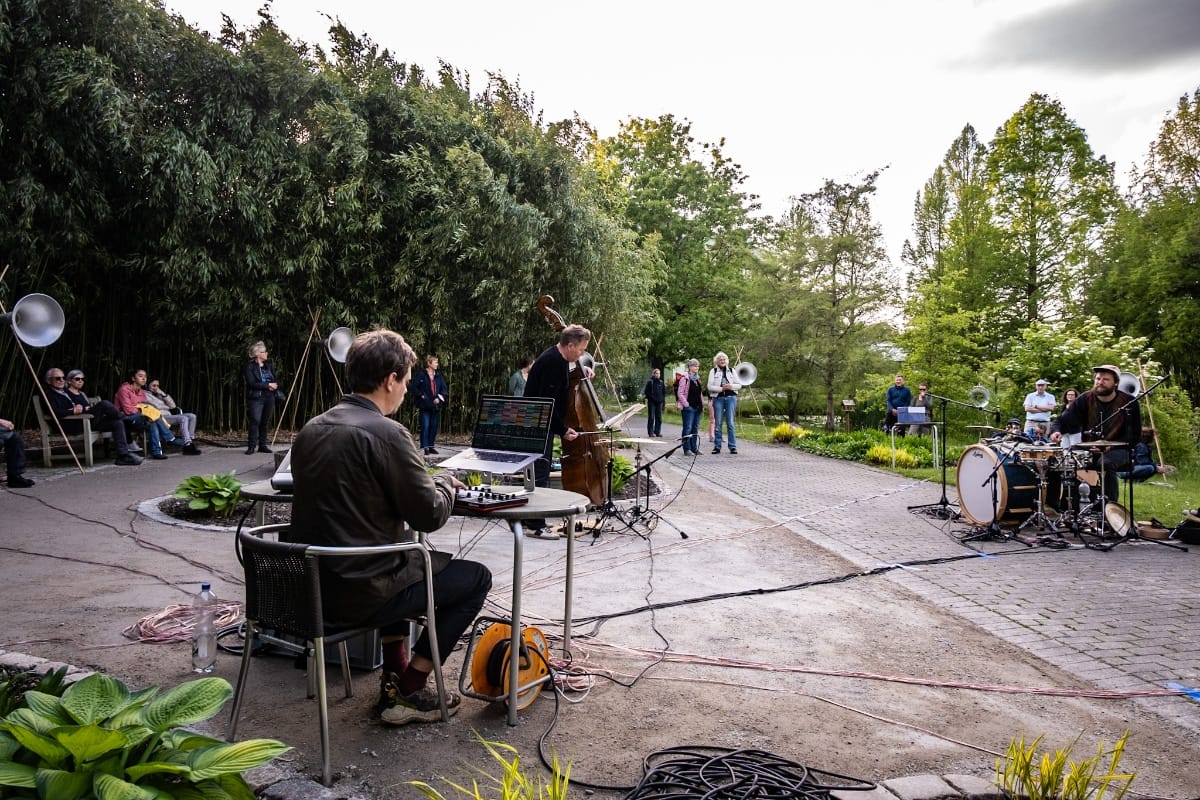
My research often brings me to very beautiful places where I do experiments or collect data. What I really love about this is that after a while you get to know these places very well and start to see them with different eyes once you realise what fascinating stories the plants are telling. The more I see and learn there, the more I am in awe of the solutions nature finds. And it never gets boring: once you have answered one question, many more come to mind and you realise that you are only at the beginning of understanding and that everything is more or less connected. This complexity and beauty of life on Earth that arose during the last 3.5 billion years inspires me again and again. Beyond the research itself, communicating my work to the broader public is also quite fulfilling. Working together with artists is a great way to make my work tangible and accessible to the senses, which makes people curious to learn more about it. The sound artist Ludwig Berger and the Chuchchepati Orchestra, for example, created a fascinating installation using my recordings from the rustling ants. Together we toured several German cities, giving public lectures, after which audiences could immerse themselves in the world of vibrational communication through the installation.
Are any specific plants or species that have intrigued or inspired your research? If so, what are they and why?
I am particularly fascinated by pitcher plants (of the genus Nepenthes) that grow in very nutrient-poor habitats and have evolved every possible strategy that you can think of in the hunt for additional nutrients. Most of them attract, capture and digest insects with very sophisticated systems. But a couple of species have gone even further and outsourced the prey capture to small mammals. One pitcher plant species on Borneo, for example, attracts bats that can hide and roost during the day inside the pitcher (which is perfectly adapted to their body shape) and the pitcher benefits from their nitrogen-rich faeces and urine. And once you look into the digestive fluids of these pitchers, it becomes even more fascinating, since they harbour many different microbes, algae, insect larvae and even tadpoles. Some of them compete with the plants for the captured nutrients, others support their breakdown. Once you realise this, you understand that you have to consider the relationships of the plant and all its associated partners to understand what is really going on.
Could you share an experience or anecdote from your work that has marked your career and reaffirmed your fascination with plants?
Most of the time it’s the day-to-day experiences out in nature that inspire me and foster my passion for plants: coming across a spectacular orchid, an old and beautiful tree, a colourful meadow, or a walk through a botanical garden. But of course, it’s also the moments when you find something new and unexpected, e.g. that the pitcher plants actually benefit from the microbes in their digestive fluids, or that the ants inhabiting the rattan palms not only react to physical disturbances, but also to specific frequencies from a call or whistle that set the plant into motion and let the ants, which are deaf to airborne sound, eavesdrop on their surroundings.
What advice would you give young scientists considering a career in plant biology?
As sessile organisms whose size can range from tiny to several hectares and that can reach several thousands of years in age, plants have to find solutions in a very different way to what we are used to from our world. Very often, the mechanisms that evolve in response to these challenges are very cryptic and can be easily overlooked, e.g. structures that evolved on the pitcher plant I mentioned earlier create conspicuous echoes for the bats' ultrasonic calls, helping them locate those pitchers in the dense vegetation. So I think bringing a lot of creativity, passion and love for plants is absolutely essential in trying to understand them.
What do people usually get wrong about plants?
Many people greatly underestimate them and consider them to be rather passive and boring, while in fact very much the opposite is true. They manage to find absolutely ingenious solutions that allow them to survive under even the most extreme conditions. Our fate as humans is also directly linked to that of the plant world, since in almost every aspect of our lives we rely on services they provide to us, be it food, medicine, fibres or protection against natural hazards. And last but not least, they can become very good companions that we care deeply about, be it a plant in a pot in our living rooms or the big old tree in front of our house.
Cover picture by Theo Fiedler.