
You have probably heard of the Maya, the fascinating pre-Columbian culture that stretched from southeastern Mexico to Guatemala, Belize, Honduras and El Salvador. Their legacy goes far beyond epic stone cities like Chichén Itzá or Tikal. They were true geniuses of their time, making incredible contributions to architecture, astronomy and even botanical knowledge.
To protect that ancestral botanical knowledge, GermoLab opened in 2013 in Mérida, Yucatán. Located at the Centro de Investigación Científica de Yucatán (CICY), GermoLab is the only traditional germplasm bank in the Yucatán Peninsula. Its mission is to safeguard today the plants that could disappear tomorrow, in a region where biodiversity is at risk due to tourism and real estate development.
Botany One interviewed Aleida Rocío Díaz Castellanos, GermoLab’s operations coordinator, to learn how this treasure is kept, protected and shared with the public.
What does the coordinator of a seed bank actually do?
“A little bit of everything,” Díaz says.
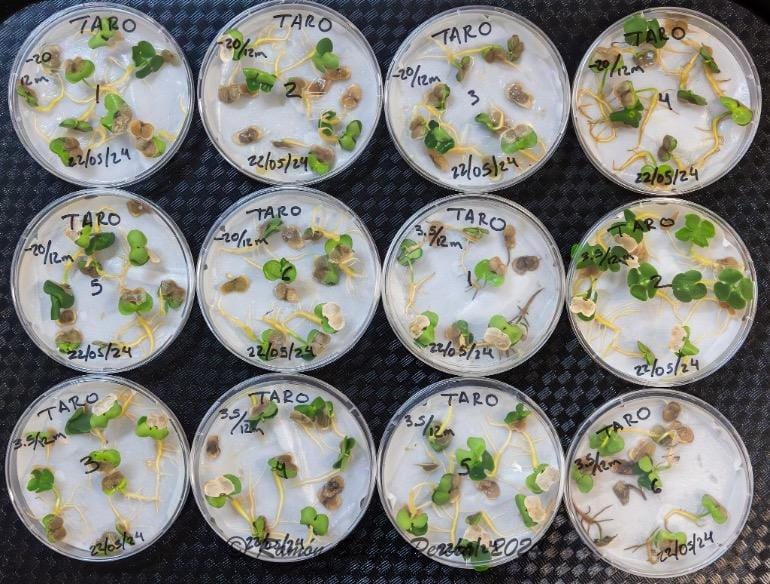
Her work covers the daily activities of a laboratory, such as monitoring the temperature of the cold rooms, because the life of the seeds depends on it. On top of that come requests to receive or donate germplasm from collaborators and farmers, support for graduate and community-service students, follow-up on projects with other institutions, and preparing school visits, where she shows how a seed is cared for so it can last for years.
Every year, GermoLab also organizes a course on seed ecophysiology and conservation.
“Our vision is to become leaders at the regional, national and international levels in the conservation, reproduction and availability of germplasm of plant species from the Yucatán Peninsula, with an emphasis on Mesoamerican species and those related to Maya culture.”
Why is it crucial to preserve species tied to Maya culture?
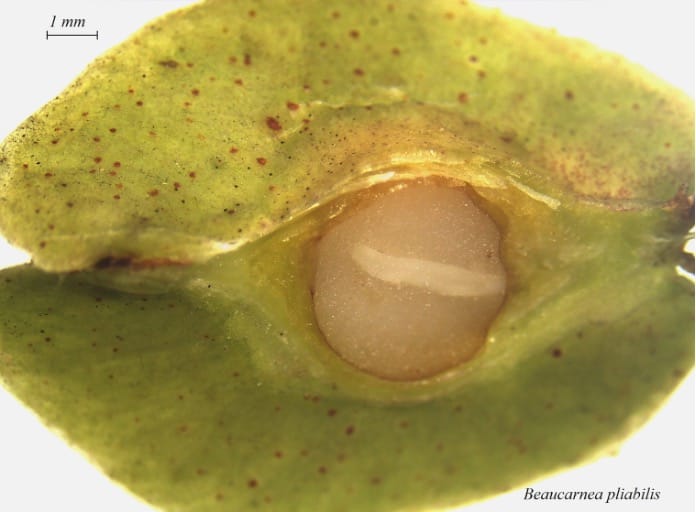
“It is important because the region has a thousand-year history linked to the use of its natural resources. The plants that grow here have accompanied the Maya people since the rise of this civilization and up to today, so knowledge about their use is very broad. Many plants are used as food and medicine, as forest and ornamental species, and they are part of religious celebrations and rituals. They are immersed in the culture,” Díaz explains.
As an example of this, Dr. Marina Vera, a researcher in the GermoLab team, studies medicinal plants from a biocultural perspective and works closely with Maya communities to document how they use them to treat different illnesses, traditional knowledge that is at risk of being lost.
“In this way we don’t only focus on conserving biological material through seeds, but also the knowledge associated with its use, which is the laboratory’s primary goal,” the coordinator Díaz highlighted.
The bank is also in contact with farmers interested in conserving their agricultural seeds, especially native varieties of maize, which can be kept for a long time without affecting its quality.
How does the bank prevent the loss of these vulnerable species, and what are the challenges?
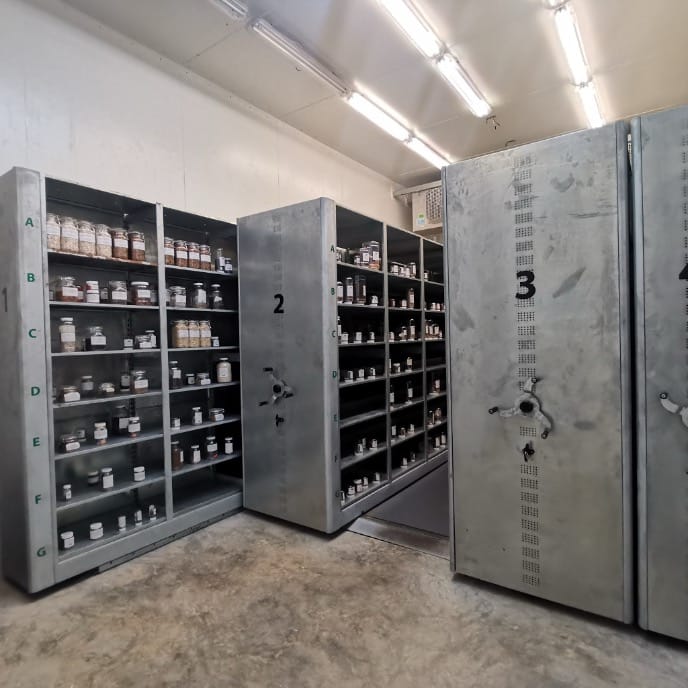
GermoLab, the only traditional germoplasm bank in the Yucatán region, conserves around 550 seed accessions (samples of seeds from a single origin) of wild and cultivated species, corresponding to about 220 plant species. These are orthodox seeds, meaning they can tolerate drying, that allows them to be stored with very little moisture (15% equilibrium relative humidity) at 5 °C, as if they were put on pause.
“One of the big challenges is precisely keeping seeds in those conditions, keeping the cold chambers running properly, considering that in the Yucatán Peninsula the ambient temperature and humidity can be very high,” the coordinator Díaz explains.
There is a second, more scientific challenge. For many wild plants, nobody knows whether their seeds are orthodox or recalcitrant, meaning the seeds cannot be kept in traditional seed banks because they may be sensitive to desiccation. To find out, Dr. Ricardo Álvarez, curator of the wild seed collections at the GermoLab, develops morphological and physiological characterization protocols to identify the best way to conserve each species.
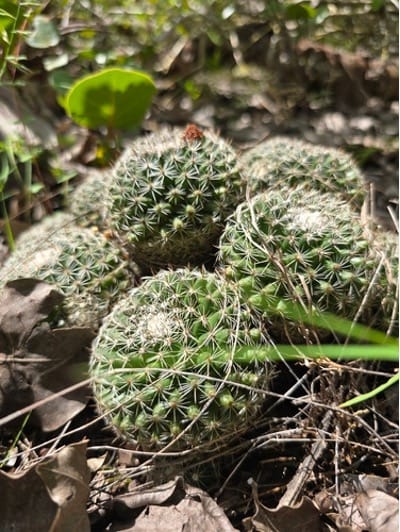
One example of this is Mammillaria gaumeri, a small cactus from the Yucatecan coast that grows only in this area and whose distribution is under threat. Álvarez is already collaborating with in vitro culture specialists to develop a conservation protocol for it.
“We have moved toward consolidating the research done here, and at the same time we hope to improve the environmental conditions of our seed collections and develop conservation protocols for recalcitrant or highly threatened species, through ex-situ techniques such as in vitro culture and cryopreservation,” Díaz adds.
What advice do you have for the future generation of seed bank workers?
Díaz explains that, for starters, it is essential to learn about the plant species around you and ask some questions such as how is a specific species conserved, in situ (in its natural habitat) or ex situ (in facilities like seed banks)? Does it have established conservation protocols?
"Take the time to learn which species are essential for food, agriculture, medicine, or the health of your local ecosystems. Understanding their value is key to later showing the world why protecting this biodiversity is critical for our future," Díaz adds.
Next, she recommends thinking about where you want to make your mark within the conservation pipeline. You might choose to specialize in overall seed bank management, scientific research, or fieldwork and seed production.
Finally, she encourages exploring the websites of major seed banks around the globe, to discover the incredible botanical treasures they safeguard. Better yet, find the seed bank closest to your city or region and schedule a visit to see the work in action.
A seed may look like a tiny, ordinary thing, but inside it is not only a source of life: it holds an endless source of centuries of history, culture and traditions which are important for our future. In a corner of Mérida, a team of scientists looks after them so that the plants of the Yucatán Peninsula can keep telling that story, preserving not only Mexico’s biological heritage but also its cultural heritage.
References and more information:
- Official site of GERMOLAB-CICY. Available at: https://www.cicy.mx/sitios/laboratorio-regional-para-el-estudio-y-conservacion-de-germoplasma
- Ferrer-Lino, L., Pérez-Povedano, M. A., Ortiz-Vázquez, E. de la L., & Vera-Ku, B. M. (2026). Maya medicinal plant knowledge for respiratory diseases in Yucatán, Mexico: toward an adaptive biocultural framework of pharmacopoeia organization. Ethnobiology and Conservation, 15. https://doi.org/10.15451/ec2026-07-15-17-1-19
- Oliveira, D.N., Ordóñez-Parra, C.A., Chen et al. (2026), Tropical Seed Trait Database: advancing seed functional ecology in the world's most biodiverse region. New Phytol, 251: 945-958. https://doi.org/10.1111/nph.71268
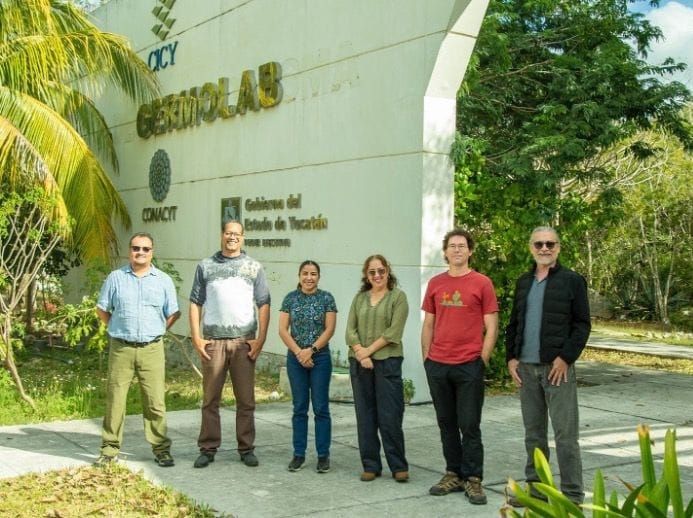
Cover photo: Part of the team at the Regional Laboratory for the Study and Conservation of Germplasm (GermoLab) in Mérida, Yucatán, México. From left to right: Dr. Ricardo Álvarez, seed ecophysiology researcher; Dr. Hernán Morffi, postdoctoral researcher; M.Sc. Aleida Díaz, operations coordinator and our interviewee; Dr. Marina Vera, researcher in ethnopharmacology of medicinal plants related to Maya culture; Dr. Duniel Barrios, research intern in seed physiology and dormancy; Dr. Jorge Carlos Trejo, head of the botanical garden. Photo provided by Aleida Díaz.