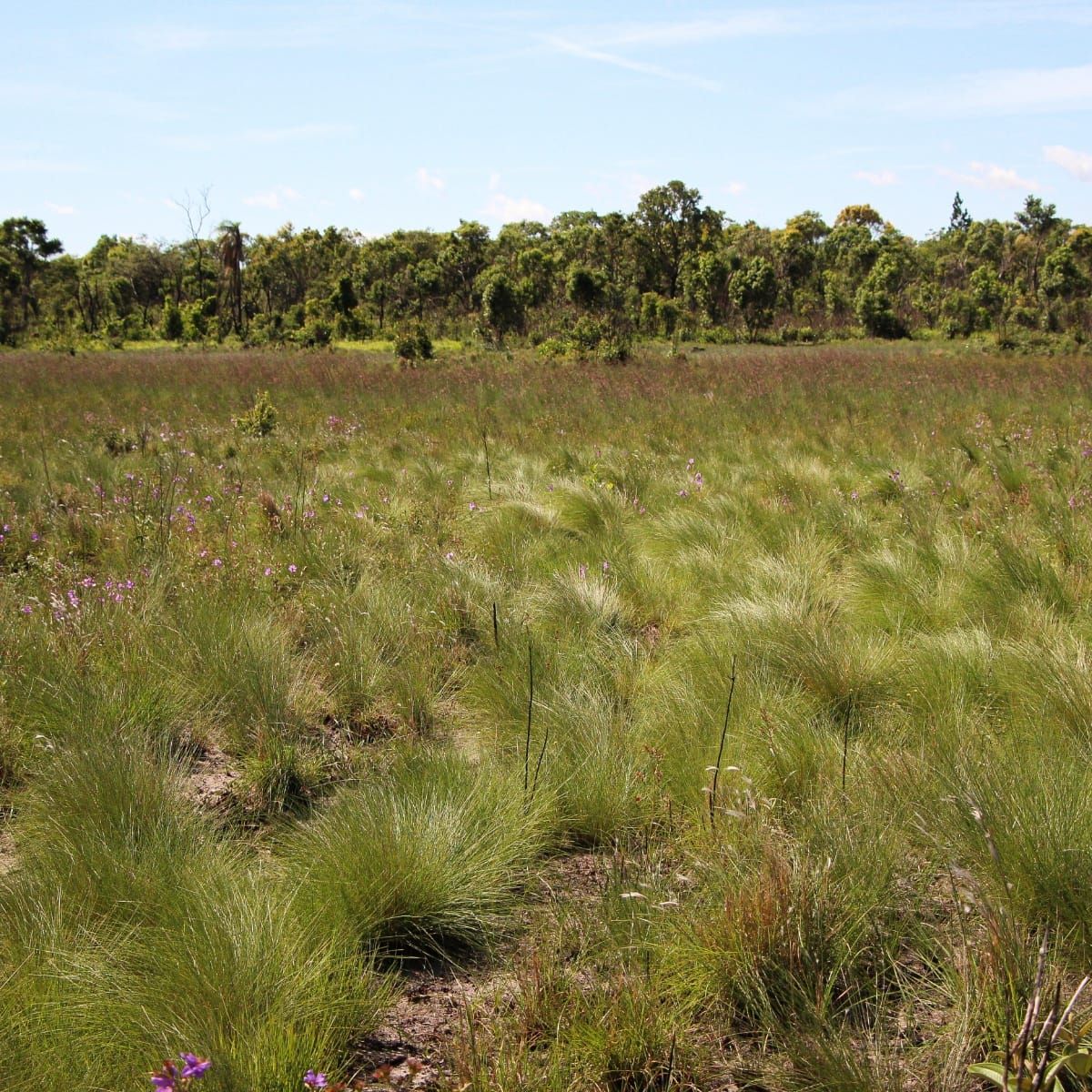

At the heart of Brazil lies the Cerrado, the largest savanna in South America and the most species-rich savanna in the world. But why does a vast savanna exist in a country famous for its lush forests? The answer comes down to two powerful ecological forces: drought and fire.
The Cerrado has a strongly seasonal climate, with little to no rainfall for months at a time. During these dry periods, dead plant material builds up, creating ideal conditions for fires that regularly sweep through the landscape. These fires prevent the spread of dense forests like those of the Amazon or the Atlantic Forest. For decades, researchers have been trying to understand how drought and fire together shape this unique ecosystem—and how plants have adapted to survive them.
In a study published in Annals of Botany, Pedro Firme da Cruz Júnior and collaborators explore a less understood piece of this puzzle: how seeds synchronise germination in response to both drought and fire. Germination begins when seeds absorb water, restarting their metabolism. Fire, meanwhile, leaves behind chemical signals, especially in smoke, that can influence when seeds germinate. Until now, most studies have examined these factors separately. Cruz Júnior brings them together, asking a simple question: what happens when seeds face drought and fire cues at the same time?
When interviewed by Botany One, Cruz-Júnior explained that the idea emerged from discussions with graduate students and collaborators working independently on smoke treatments and water-deficit experiments. At some point, these conversations converged on a study showing that smoke could promote germination in horticultural species under stress. From this “informal idea” came a series of lab meetings and a collective effort to define the treatments, concentrations and species to be tested.
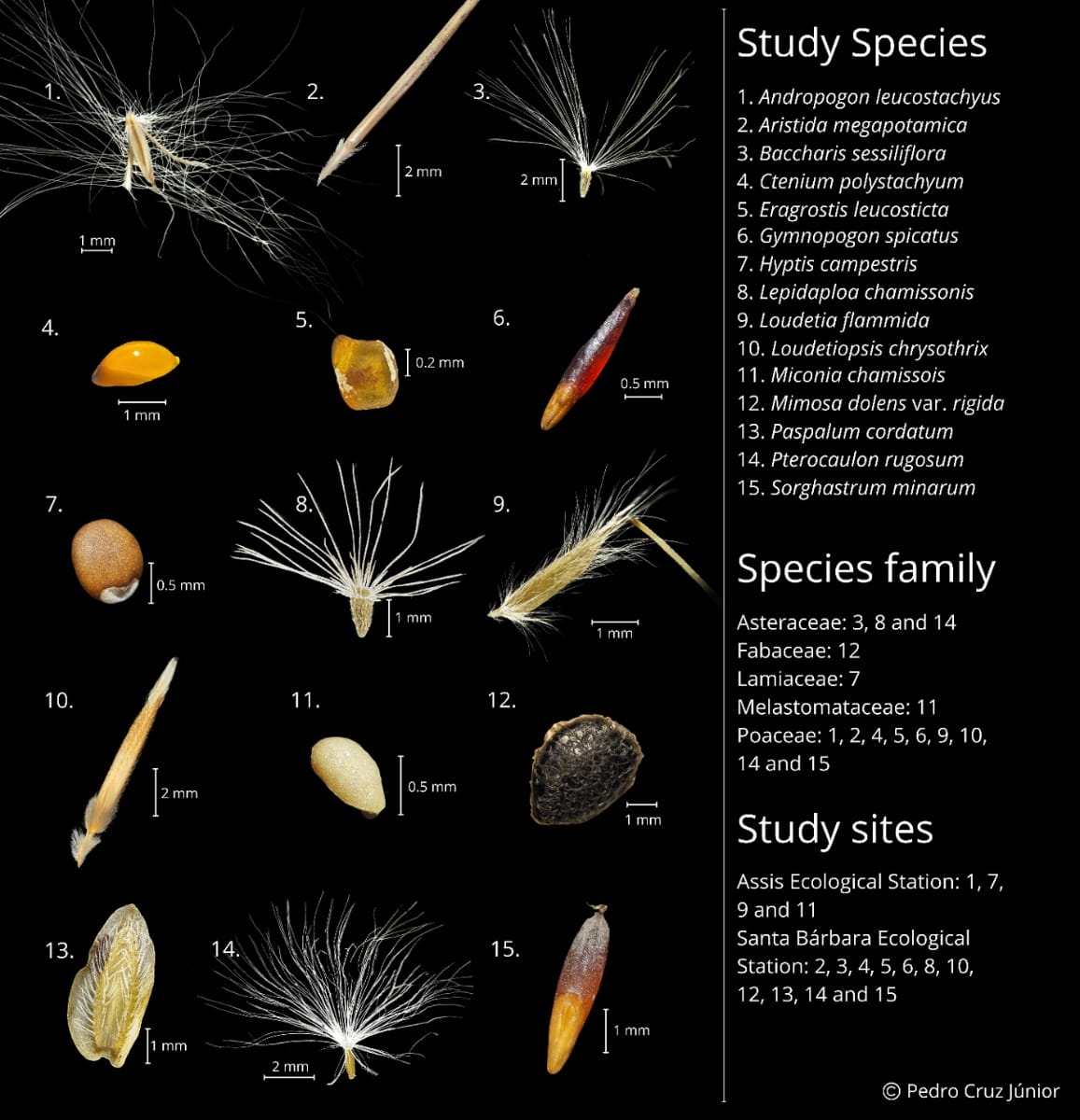
In the end, the researchers carried out a germination experiment using 15 ground-layer Cerrado species collected in two wet grasslands in protected areas of São Paulo state, Brazil. The species included grasses, herbs and small shrubs, allowing the team to compare how different plant types responded. In the laboratory, seeds were exposed to solutions that mimicked a gradient of water availability, from well-watered conditions to severe drought. To simulate the effect of smoke, they used “smoke water”—water infused with compounds released when plant material burns. The seeds experienced these treatments either separately or in combination. They tracked several stages of early development: how many seeds germinated, how quickly they did so, how many went on to form seedlings, and how long this process took.
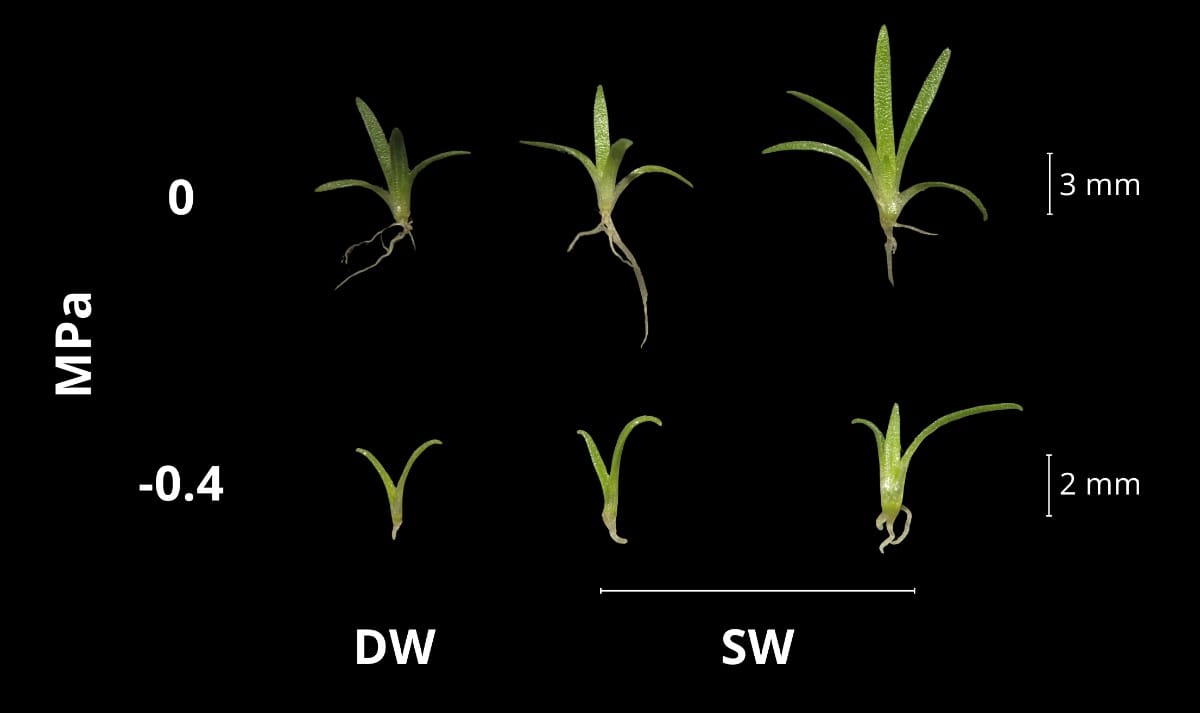
Crucially, the experiment did not stop when the stress ended. Seeds that had failed to germinate under drought or smoke treatments were rinsed and given plain water, mimicking the return of rain after a dry spell or fire. Together, these experiments provide a detailed picture of how Cerrado seeds respond to drought, smoke and the return of favourable conditions, offering insights into how plants survive in this challenging environment.
The experiments confirmed that drought strongly limits seed germination in the Cerrado. As conditions became drier, fewer seeds germinated, and those that did often failed to develop into seedlings. Under the driest conditions tested, most species barely germinated at all, showing how drought can filter which plants successfully establish in this savanna.
Smoke, however, sometimes changed the picture. Smoke water occasionally helped seeds cope with moderate drought. In several herbaceous species, it improved both germination and early seedling growth under water stress. In some cases, it also increased the chances that seedlings would successfully form, suggesting that chemicals released during fires may help seeds endure dry conditions. Cruz-Júnior commented:
“All of us, including myself, were genuinely surprised when I presented the analyses. Previous studies had already demonstrated the role of smoke in horticultural species and had provided clear support for our initial hypotheses. Nevertheless, it was still striking to observe these responses in Cerrado species for the first time.”
Clear differences also emerged between plant types. Shrubby species tended to tolerate drought better, maintaining higher germination under dry conditions. In contrast, herbaceous plants were more responsive to smoke. When smoke was present, these herbaceous species often performed more similarly to shrubs, reducing the gap between the two growth forms.
Another encouraging result came from the recovery experiments. When drought conditions ended and seeds were given water again, many germinated rapidly. In other words, drought did not necessarily kill the seeds. Instead, they appeared to pause their development until conditions improved, retaining their ability to germinate later.
Together, these findings suggest that Cerrado seeds are finely tuned to a landscape shaped by both drought and fire. These species-specific responses may help explain the remarkable diversity of the savanna’s ground layer. As climate change alters rainfall patterns and fire regimes across the region, understanding how seeds respond to these combined pressures will become increasingly important for conserving and restoring one of the world’s most extraordinary ecosystems. Reflecting on the broader impact of the work, Cruz-Júnior added: “I hope our findings serve as a starting point for future studies exploring these interactions, including those involving other environmental factors.” Fortunately, this research takes an important step towards revealing how these forces act together.
READ THE ARTICLE:
Cruz Júnior PF, Ruy DV, Ramos DM, et al. 2026. Interactive effects of water deficit and smoke on seed regeneration in ground-layer Cerrado species. Annals of Botany. https://doi.org/10.1093/aob/mcag042
Cover picture by Pedro Firme da Crúz-Júnior.