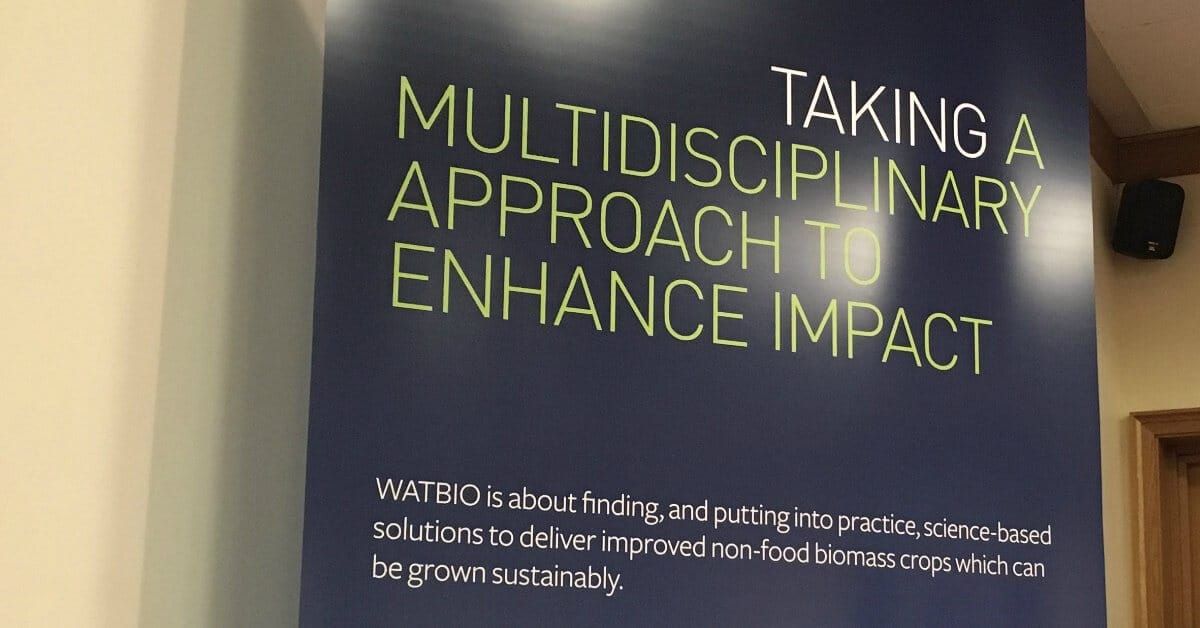
Search Read in ZH DE EN ES FR JA PT Home Home About Us Archive Hot Botany Species Dashboard Trading Card Generator Search Manage email subscription Uncategorized Climate change, land availability and biomass potential. Alun Salt · 24 September 2017 · 2 min read https://www.botany.one/climate-change-land-availability-biomass-potential/ Know someone who'd like this? Share it Share it Bluesky Mastodon LinkedIn Threads Facebook WhatsApp Copy Link Email it Print it We’re at Bioenergy Genomics 2017, streaming talks when we can. We got two yesterday.How policy makers learned to start worrying and fell out of love with bioenergy Why hasn’t bioenergy been as successful as hoped. Raphael Slade of Imperial College, London and Maglue covers some of the policy issues regarding the promotion of bioenergy and the challenges that are ahead. Future biomass supply for low carbon European energy provision in a changing world Astley Hastings (speaker), Pete Smith, G, Taylor, John Clifton-Brown European nations have committed to reduce greenhouse gas (GHG) emissions to 20% of the 1990 emissions by 2050. Most have foresworn nuclear energy in favour of energy generated by renewable sources such as tidal, wave, wind, solar, hydro and bioenergy to achieve this goal. Most renewable energy sources are intermittent or cyclic and must be complemented by dispatchable power sources to balance the intermittency of supply to the base load and to supply peak demand. Historically this dispatchable power has been provided by fossil or nuclear power which can, by varying degrees, be increased and decreased to match demand. Pumped hydro storage is also used in this way. Of the renewable technologies bioenergy and to a lesser extend natural flow hydro have the potential provide dispatchable energy as the energy source can be stored and used as required. Bioenergy in all its forms requires biomass feedstock, whose provision requires land and suitable soil and climatic conditions for it to grow. This biomass feedstock is also required to supply other bio-economy chains which will also assist in reducing GHG emissions. The quantity of biomass feedstock is limited by land area and the net primary productivity of this land due to the environmental conditions, which will favour the growth of different types of feedstock species, each of which have their optimum bioclimatic envelope for maximum growth and hence biomass yield. As the climate changes the geographic range of each bioenergy feedstock species will move due to changes in temperature and rainfall. Productive land is the factor limiting the amount of biomass that can be provided as land is also required to provide food for an increasing global population and their dietary aspirations as well as providing forestry for wood products, habitats for wildlife and terrestrial carbon storage.
The Week in Botany The Week in Botany September 21, 2026 This week: Pollinators in the City, Seeds in the Bank, and Speed Dating in the Soil. Alun Salt · 21 Sep 2026
Science Shared Science Shared: September 19 This week: Photobiology, clonal reproduction and fossilised fruits. Alun Salt · 19 Sep 2026

Puzzles Sudoku Garden Plants tracked the final hours of an enigmatic man's life. Alun Salt · 19 Sep 2026