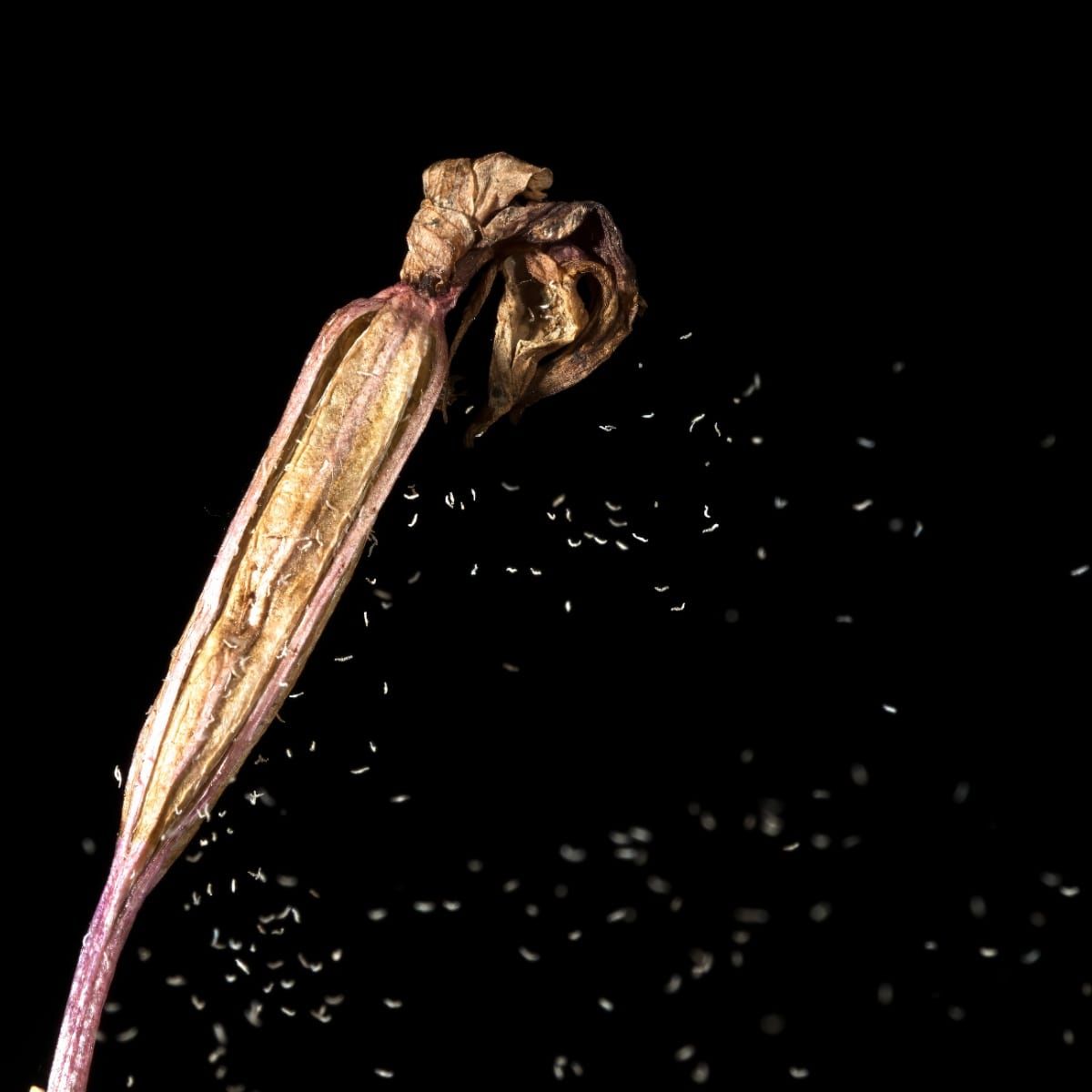

Orchids are one of the most diverse families of flowering plants, and their seeds are among the smallest in the plant kingdom. A typical orchid seed can be as small as 0.05 mm, around 140 times smaller than an average rice grain. But do not let their dust-like appearance deceive you. Look closely enough, and there is remarkable variation hidden within them.
Most orchid species are found in the tropics, and Central Africa alone has around 600 species. Cameroon holds the highest number in the region, with about 450 species. Yet despite this richness, African orchids remain far less studied than many of their relatives elsewhere. Even now, scientists are still discovering species and piecing together how these orchids live and evolve.
One way to start answering those questions is to look closely at form. That is where morphometrics, the measurement of shape and size, becomes useful. Orchid seeds vary strikingly in length, width and air space. These differences could influence how seeds are dispersed, when they germinate, and how well young plants survive.
In a recent paper published in Seed Science Research, Paul Didier Atangana and colleagues compared the seeds of 45 orchid species from Cameroon to ask a simple but important question: do their size and shape reflect where they grow, or do they mainly preserve clues about their evolutionary history?
To test that idea, the researchers turned to a seed bank in Yaoundé, Cameroon, where orchid seeds have been carefully dried and stored in a freezer since 2014. From this collection, they selected 45 species from a wide range of lifeforms, habitats and distribution patterns. Some species came from mountain habitats, while others grew in lowlands. Some were widespread, while others were known from only a few locations. Some grew in the ground, while others were epiphytes, meaning they lived on tree trunks and branches without parasitising them.
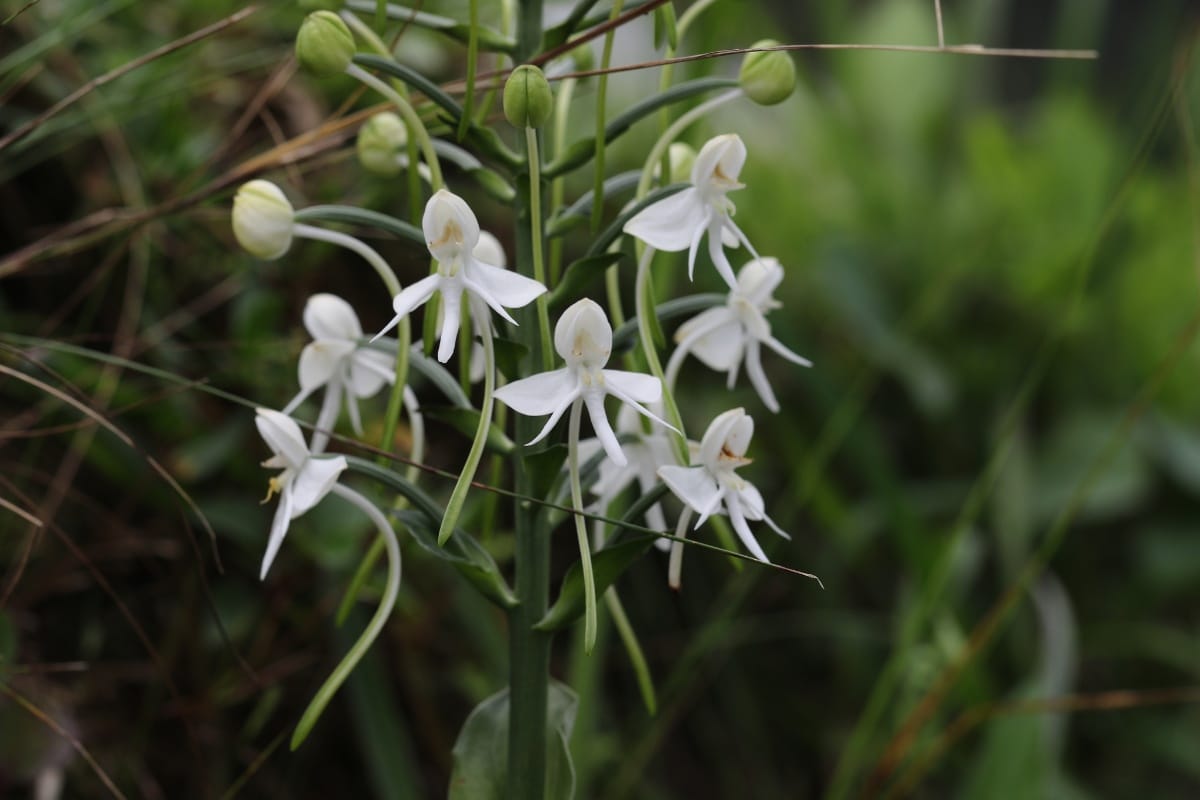
The team photographed the seeds under a microscope, turning dust-like specks into structures that could be measured and compared. For each species, they measured seed length, width and surface area, as well as the size of the embryo inside. They then calculated the proportion of each seed occupied by air space, another feature that may affect how orchid seeds disperse and survive.
What they found was a striking range of seed forms. Seed size varied dramatically, with some species producing seeds more than 12 times longer than others. Yet not all of this diversity was random. Two traits in particular, seed length and seed air space, showed a strong link to evolutionary history, meaning that closely related species tended to resemble one another.
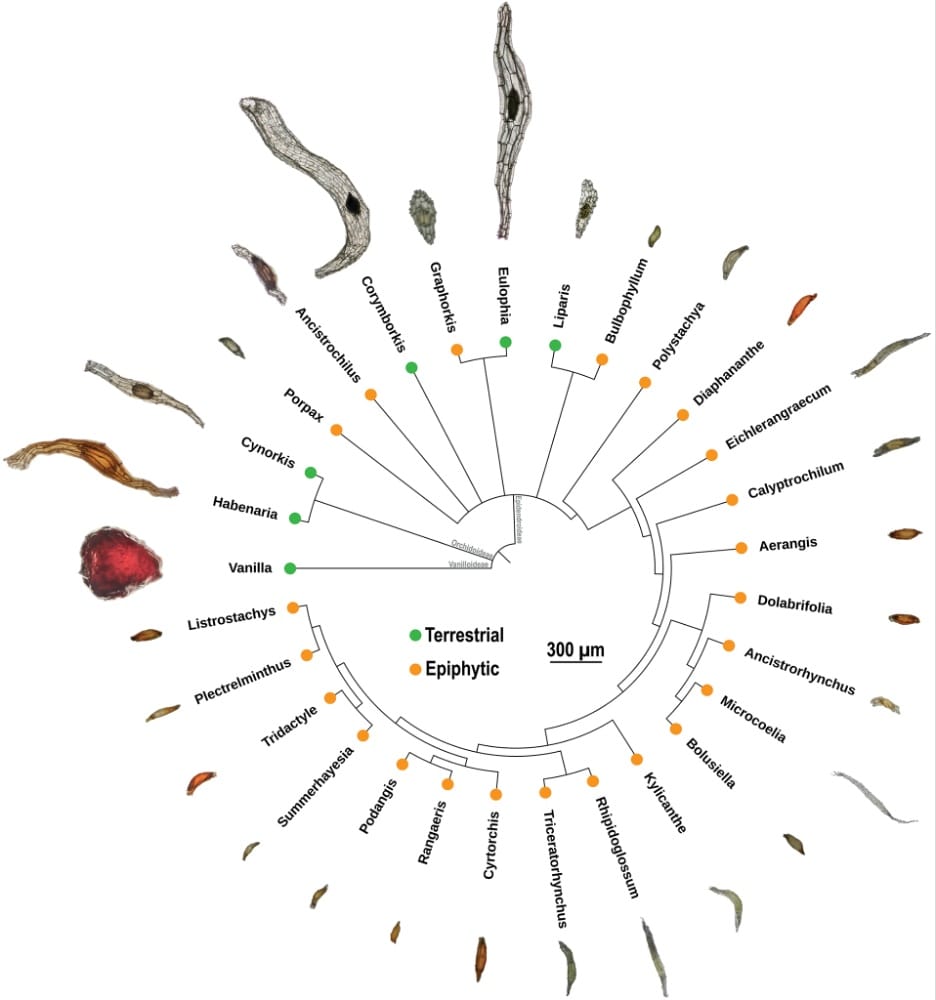
Still, evolutionary history was not acting alone. Ecology mattered as well. Terrestrial orchids generally had much larger seeds than epiphytes, often with more internal air space as well. In fact, the average seed surface of terrestrial species was about nine times greater than that of epiphytic ones. Interestingly, a few genera containing both terrestrial and epiphytic species fell between the two groups, hinting at possible evolutionary transitions from one lifeform to another.
One expectation did not hold up, however. Seed morphology did not differ between rare and widespread orchids, nor between mountain and lowland species. Instead, factors such as habitat, pollinators, fungi and local growing conditions may play a bigger role in determining where orchids can live. So while seed morphology revealed important clues, it did not tell the whole story.
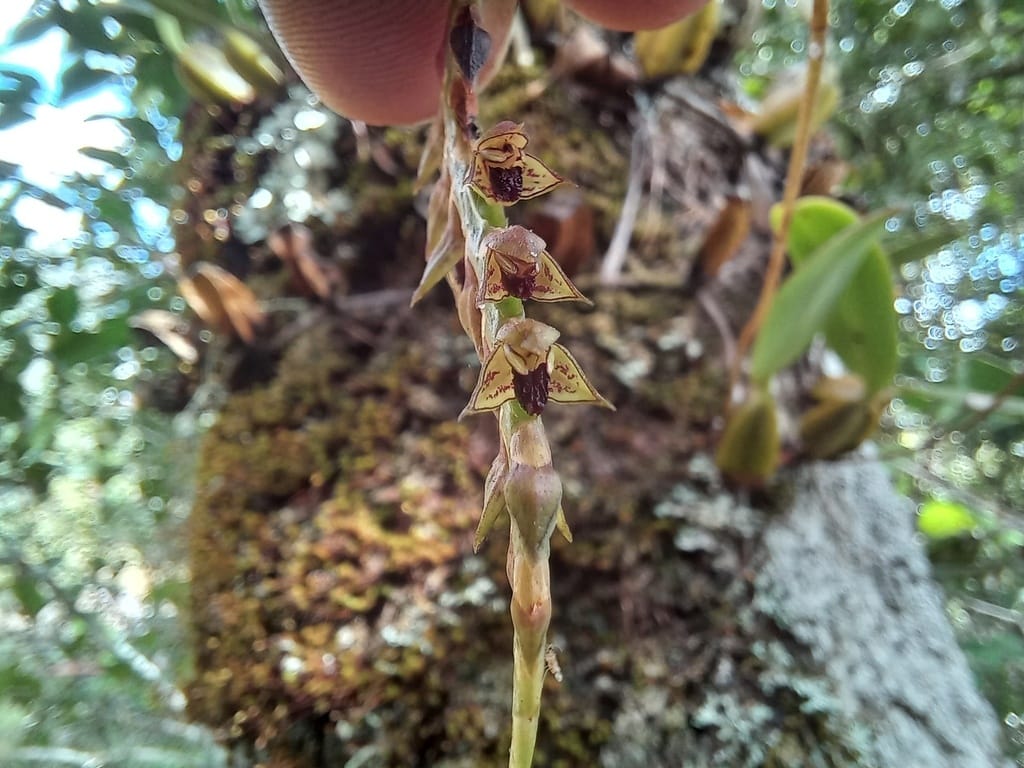
For all their dust-like smallness, orchid seeds can carry surprisingly large stories. Atangana’s study shows that their size and shape may help scientists trace orchid evolution, refine species relationships and ask better questions about how these plants spread and survive. In one of Africa’s richest and least studied botanical regions, those clues could become important not only for taxonomy, but for conservation too.
READ THE ARTICLE:
Atangana PD, Simo-Droissart M, Sonké B, Droissart V. 2026. Seed morphology and its relationships with phylogeny, lifeform and distribution of African orchid species. Seed Science Research: 1-12. https://doi.org/10.1017/s0960258526100117
Cover picture: Clayhill1 (Wikimedia Commons).