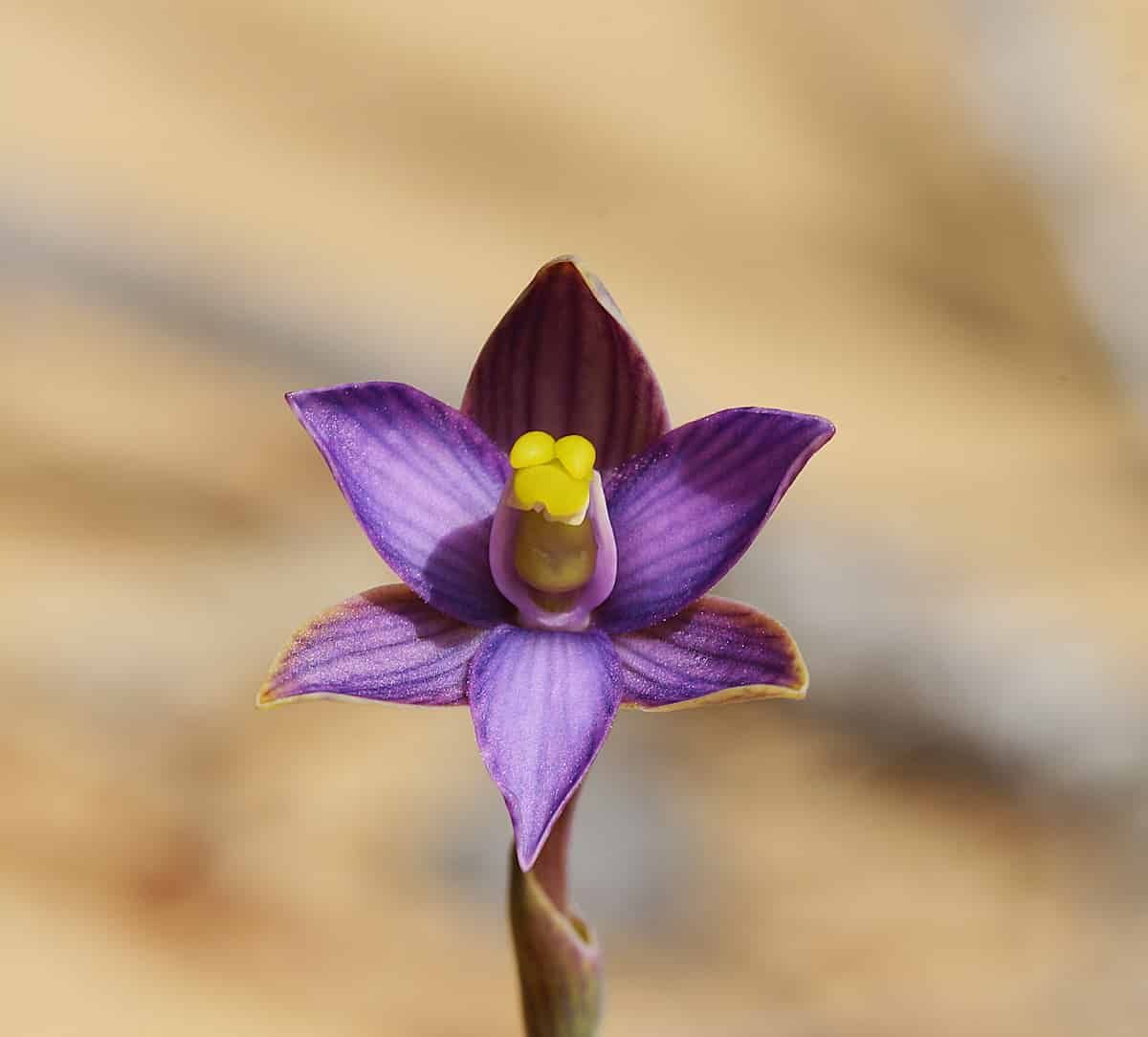

Bill Campbell’s observation of Thelymitra matthewsii, Matthew’s Spiral Sun Orchid, introduced me a species I hadn’t heard of before. There are around 25,000 plus species of orchid, roughly five times the number of species of mammal, so it’s not surprising there are plenty of orchids I don’t know about, but this one is a beauty.
This isn’t a plant that I’m likely to stumble across. It’s found in South Australia, Victoria and North Island, Aotearoa New Zealand, where it was first described. Its description in the Transactions and Proceedings of the New Zealand Institute list it as A charming little plant... and it’s hard to disagree.
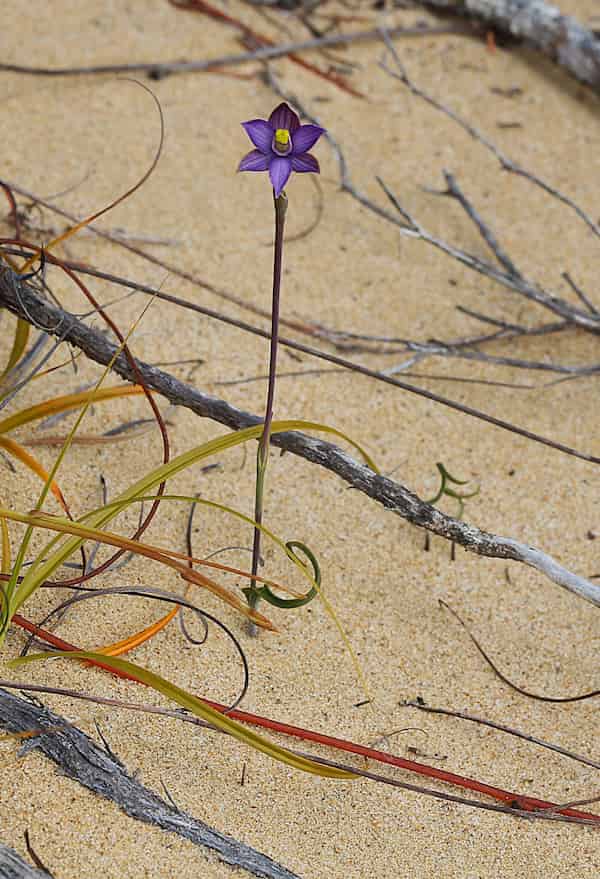
New Zealand Native Orchids says it’s “Found on north facing bare compacted sands or clays...” which in the Southern Hemisphere is the sunny side. It looks like it’s a pioneer, moving into land that’s been cleared by fire or human disturbance. It has a short tenure in these sites, as it cannot compete when taller plants move in.
It’s the genus Thelymitra, that gives it the Sun Orchid part of its name. The flowers open with the sun, though in this case, the flowers are also self-pollinating. The Matthews part of Matthew’s Spiral Sun Orchid comes from the collector who send the specimen in to be described, but it’s the spiral part I find interesting. If you’re looking at the flowers and wondering how that’s a spiral, you’re looking in the wrong place.
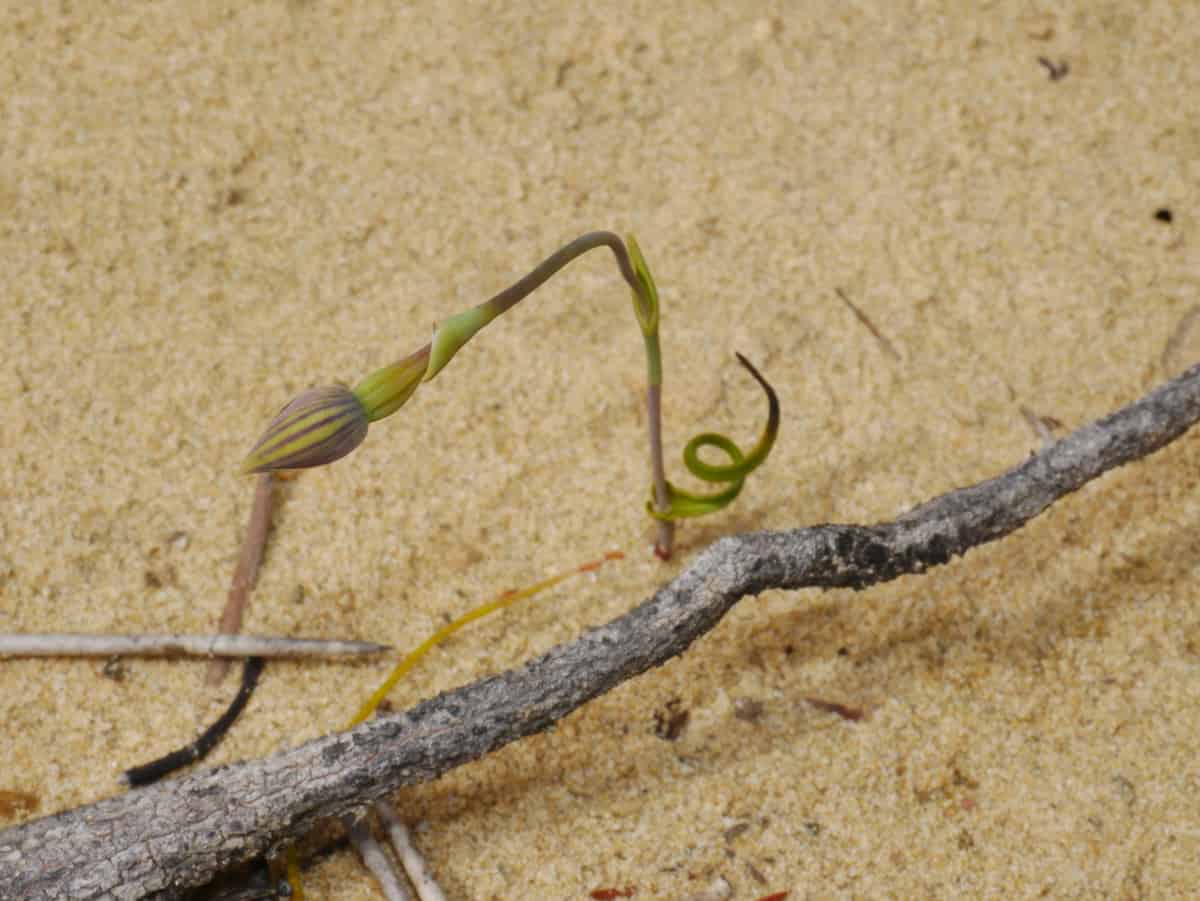
The spiral is in the leaf, which looks like a little spring coil initially, and can spiral around the stem. It’s not the only orchid that has this. Thelymitra spiralis does too, as you could guess from the name.
The time to see the plant is passing. It flowers in early spring, August to September, though you might see it in October if you’re lucky. Though given how gorgeous it looks, and how rare it is, you’re pretty lucky if you see it any time of year.
Cover image: Thelymitra matthewsii by Bill Campbell CC BY-NC