


As the wine harvest reaches its peak in the Northern Hemisphere, what are the top three grapes? Interestingly, despite the volume of wine produced globally, and the long-lived plantations / vineyards, there have been changes this millennium, with red grapes overtaking the white varieties. According to Adelaide University, the top grapes are the reds Cabernet Sauvignon (6.3 percent of the market) and Merlot (5.81%) with Tempranillo (4th) and Syrah (6th), split by the whites Airén (5.48 percent of the market) and Chardonnay (at 5th with 4.32%).
[fullclear/]
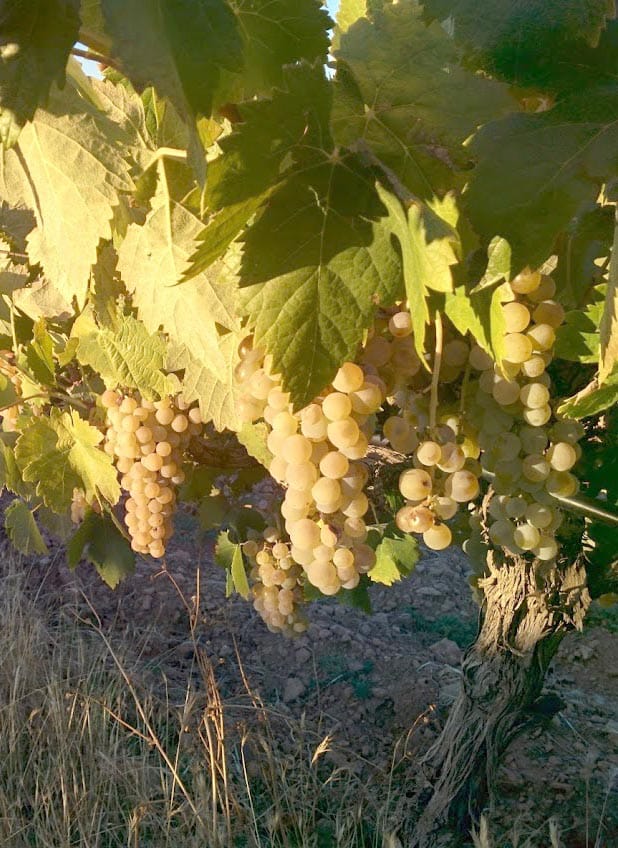
Airén as one of three most common grape varieties? It is almost unknown as a variety outside central Spain. Unlike the much-pictured vineyards of France and Germany, it is grow in the drier, and less visited parts of Spain, normally with the vines as bushes rather than along wires. The vines are planted at a very low density, and are resistant to drought. So there are good agronomic reasons for growing this productive and sweet variety, although it does not keep fresh for more than a few hours off the vine, as well as having many seeds. The Airen juice is mostly fermented and distilled for brandy or fortifying drinks such as sherry and port. The seeds themselves are crushed to give a reasonably valuable co-product of grapeseed oil. Some of the wine is blended, but a small but increasing proportion is used as a varietal wine. With careful control of fermentation, sugar and particularly avoidance of acidity, the Airén grape can give a dry and crisp, but not particularly fruity, white-wine that is drunk young and cool but not cold.
The video here shows the processes of hauling the grapes to the Cooperative Nuestra Señora de las Nieves, Sociedad Cooperativa de Castilla La Mancha where they are weighed, sampled for sugar content and then crushed.
The crushing process must be carefully carried out, since the seeds/pips must be left intact to avoid extracting very bitter compounds which can reduce the value of large batches of juice: hence the traditional crushing by feet where the pressure can never break a seed. It is notable how dry the press leaves the stalks from the grapes. A label of the premium wine from this cooperative, Gran Fucares Airen, gives more information about the wine and their pride in its creation in Almagro, Ciudad Real, Castilla-La Mancha, Spain.
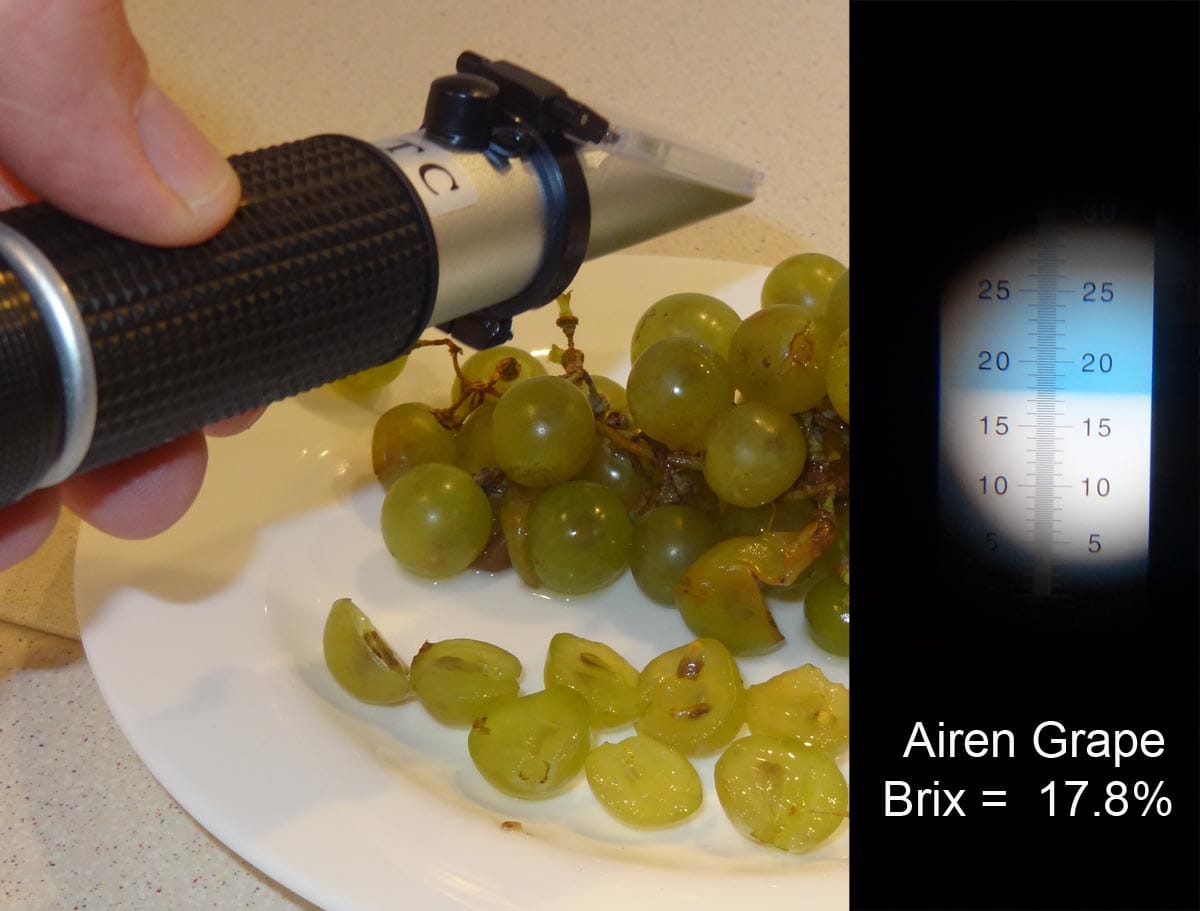
Sadly I had only carry on luggage so no chance to bring any of the wine back, although the Brix refractometer readings and cutting of the grapes to show the seeds was done at home in England with a bunch I picked up from the road and took back. I will certainly be looking out for carefully made Airén varietal wines in the future.
Thanks to the staff and farmers for the opportunity to film the operation. Also to European Science Foundation COST action FA1101 Saffronomics who organized the meeting in Almagro, Spain, about 100 miles south of Madrid.