
There's a slight delay to the email this week, as one of papers the system picked up as popular didn't match the post on Bluesky it was connected to, so I had to see which paper was the one that was supposed to be on the list. That's now fixed. As usual, papers behind a paywall are marked 💰otherwise they're free to access at time of checking.
How this works
We scan posts by people on the Botany Auto list and pull out the entries with links to papers. Every time a paper gets a post written about it it gets 4 points. It gets 3 points for a repost and 1 point for a like.
We try to add people to the Botany Auto post, if they post about Botany (doesn't have to be links to papers) around 20% of the time or more. The belief is that because the list as a whole shares an interest in plants, it's this material that tends to rise to the top.
If you think you should be on the Botany Auto list, but aren't, please drop a message to @botany.one on Bluesky.
1. phyB photobodies display molecular memory, regulating light signaling transcriptional states through phase separation
Igiebor, F. et al. · bioRxiv · 1 post · 73 likes · 29 reposts on Bluesky
Here, we hypothesize that the formation of phyB photobodies and the associated sequestration of signaling molecules allows for the formation of cell-type specific memory about light conditions.
Kasper van Gelderen @kaspervangelderen.bsky.social · on Bluesky
The first preprint of my lab has just come out doi.org/10.64898/202...
This paper came out at the same day on the sudden passing of Prof. Meng Chen. Without his work, this paper would not have existed. He was an extremely supportive member of the plant photobiology community..
2. Sex without crossovers mimics clonal reproduction in Rhynchospora tenuis
Zhang, M. et al. · Nature · 1 post · 139 likes · 59 reposts on Bluesky
Meiotic recombination ensures accurate chromosome segregation and promotes genetic diversity by generating crossovers between homologous chromosomes. We propose that recombination loss, a low chromosome number, inverted meiosis and selection for compatible gamete combinations together enable faithful segregation and clonal-like inheritance despite sexual reproduction. These findings blur the boundary between sex and clonality, linking genome architecture, recombination loss and transmission bias.
3. Soft Tissue Preservation of Silicified Melastomataceae Fruits Buried by Intraplate Volcanism in the Early Oligocene Capella Flora, Eastern Australia 💰
Koontz et al. · International Journal of Plant Sciences· 10 posts · 26 likes · 12 reposts on Bluesky
Permineralized, pentalocular fruits with soft tissue preservation from a silcrete flora in central Queensland, Australia, are referred to the Melastomataceae Juss. (Myrtales)—a very large tropical and subtropical family with no prior fossil record in eastern Gondwana.
International Journal of Plant Sciences @ijpsjournal.bsky.social · on Bluesky
In the September 2026 @ijpsjournal.bsky.social
🚨Undergraduate research🚨
Soft Tissue Preservation of Silicified Melastomataceae Fruits Buried by Intraplate Volcanism in the Early Oligocene Capella Flora, Australia
AC Rozefelds et al
www.journals.uchicago.edu/doi/full/10....
#PlantScience
 View on Bluesky →
4. TurboID‐based proteomic profiling reveals proxitome of the IRT1 metal transporter and new insight into IRT1 endocytosis 💰
Pellegrin, L. et al. · New Phytologist · 2 posts · 32 likes · 17 reposts on Bluesky
Here, we established TurboID for proximity labeling of IRT1 and identified 494 IRT1‐specific proximal proteins, including the previously reported FYVE1 IRT1‐interacting protein. To showcase the biological relevance of identified IRT1 proximal proteins, we further characterized the NHX5 Na + (K + )/H + antiporter and the RGLG2 E3 ubiquitin ligase.
Greg Vert @plantubiquitin.bsky.social · on Bluesky
Latest paper from my lab !! New insight into transporter endocytosis in plants using TurboID. Proud of liza-pellegrin.bsky.social for the great work and @julnev.bsky.social for driving this.
doi.org/10.1111/nph....
@lrsv-toulouse.bsky.social @cnrsbiologie.bsky.social
5. Live confocal imagining of cellular touch responses upon local quantifiable mechanical stimulation in plant cells
Bellandi, A. et al. · bioRxiv · 1 post · 26 likes · 17 reposts on Bluesky
Here we establish a system enabling application of quantifiable localized mechanical stress while simultaneously capturing cellular responses with high spatio-temporal resolution using confocal imaging. We show that this system enables estimation of locally applied pressure and provides access to the temporal and spatial details of subcellular events in intact living tissues upon touch.
bioRxiv Plant Bio @biorxiv-plants.bsky.social · on Bluesky
Live confocal imagining of cellular touch responses upon local quantifiable mechanical stimulation in plant cells https://www.biorxiv.org/content/10.64898/2026.09.10.750548v1
View on Bluesky →6. A Pmk1-Regulated Mst12-Bip1 Network Coordinates Appressorium Function, Effector Deployment, and Invasive Growth by Magnaporthe oryzae
Molinari, C. et al. · bioRxiv · 1 post · 20 likes · 11 reposts on Bluesky
Here, we show that the Pmk1 MAP kinase orchestrates plant infection by regulating a transcriptional network controlled by the Mst12 and Bip1 transcription factors. Bip1 is regulated both by Pmk1-dependent phosphorylation and at the transcriptional level, while Mst12 binds to a cis -acting element upstream of BIP1 essential for pathogenesis. Bip1 and Mst12 are both necessary for regulating a set of Pmk1-dependent appressorium-specific genes, including transcriptional regulators, cell wall-degrading enzymes, and effector proteins.
Nick Talbot @talbotlabtsl.bsky.social · on Bluesky
Latest preprint from our group. We found the Bip1 transcription factor is phosphorylated in a Pmk1-dependent manner & with Mst12 co-regulates appressorium-specific functions, as well as acting on genes associated with invasive growth. @camilla-moli.bsky.social
www.biorxiv.org/content/10.6...
7. Transcriptional control of gemma dormancy via dual pathways in Marchantia polymorpha
Yoshimura, N. et al. · Plant and Cell Physiology · 2 posts · 16 likes · 11 reposts on Bluesky
Here, we identify a basic helix–loop–helix protein, MpHYPNOS (MpHYP), as a central regulator of gemma dormancy. MpHYP expression induces germination arrest in gemmae. Transcriptome analysis revealed that MpHYP represses a D-type cyclin gene MpCYCD;1 and induces genes involved in ABA biosynthesis.
Plant & Cell Physiology @plantcellphysiol.bsky.social · on Bluesky
➡️Read the accompanying commentary paper by
PCP's budding editor 🤩 Hatsune Morinaka 🤩
'Arrest and tolerance: two modules of MpHYPNOS-dependent gemma dormancy in Marchantia'
📖 doi.org/10.1093/pcp/...
#dormancy
#abscisicacid
#PlantScience
#Marchantia
 View on Bluesky →
8. A Framework for Quantifying DNA Methylation Heterogeneity and Detecting Co-methylated loci from Native Nanopore Sequencing
Kim, Y. J., Zabet, N. R. · bioRxiv · 1 post · 26 likes · 9 reposts on Bluesky
Here, we present a scalable framework for genome-wide methylation analysis using ONT sequencing at single-molecule resolution, focused on two features that site-level summaries cannot recover. First, it quantifies molecule-to-molecule heterogeneity in DNA methylation by detecting Variable Methylated Domains (VMDs) and Variable Methylated Regions (VMRs). Second, it identifies coordinated methylation, as co-methylated positions (CMPs) and regions (CMRs), from the states observed on the same individual DNA molecules.
Dr Radu Zabet @raduzabet.bsky.social · on Bluesky
🎉Excited to share the latest paper from my lab, where we developed a new framework to investigate DNA methylation at single-molecule resolution using @oxfordnanopore.bsky.social (ONT) long read sequencing. Work spearheaded by a very talented student Young Jun Kim. www.biorxiv.org/content/10.6... 1/n
View on Bluesky →9. Decoding plants cell by cell: opportunities and challenges in single-cell and spatial biology 💰
De Veylder, L. et al. · The Plant Cell · 1 post · 14 likes · 11 reposts on Bluesky
In this review, we summarize the emerging opportunities and key bottlenecks in plant single-cell and spatial biology. We discuss how embedding single-cell data within evolutionary developmental frameworks can accelerate the discovery of functionally relevant genes, and how spatial transcriptomics may enable comparative study designs, the study of cell-to-cell communication, and multi-organism spatial analyses. We also explore how integrating multiple datatypes and gene regulatory network inference can move the field from descriptive atlases toward mechanistic insights. Finally, we highlight the importance of visualization strategies across spatial, temporal, environmental, and evolutionary scales.
The Plant Cell @theplantcell.bsky.social · on Bluesky
Decoding plants cell by cell: opportunities and challenges in single-cell and spatial biology (Lieven De Veylder , Maite Saura-Sanchez , Bert De Rybel , Tatsuya Nobori , Klaas Vandepoele , Lorenzo Caputi , Sarah E O’Connor , Jian Xu) doi.org/10.1093/plce... #PlantScience @aspbofficial
 View on Bluesky →
10. A redox-regulated RCC1-like protein controls catalase activity in Arabidopsis
Hu, Z. et al. · Nature Communications · 1 post · 25 likes · 7 reposts on Bluesky
Reactive oxygen species (ROS) regulate plant growth and stress responses. Catalases play a central role in detoxifying hydrogen peroxide, predominantly within peroxisomes, yet key aspects of catalase regulation remain incompletely understood. Using affinity purification of the UV-B photoreceptor UVR8 coupled with mass spectrometry, we identified CATALASE-INTERACTING RCC1-LIKE 1 (CAIR1), which interacts with all three Arabidopsis catalases and their chaperone NO CATALASE ACTIVITY 1.
Roman Ulm @romanulm.bsky.social · on Bluesky
A redox-regulated RCC1-like protein controls catalase activity in Arabidopsis 🌱 by Zhoubo Hu et al. @zhoubo1234.bsky.social, @biology-unige.bsky.social - published final version now available, open access @natcomms.nature.com
www.nature.com/articles/s41...
rdcu.be/fQjnjegEfrua
11. Standing genetic variation drives polygenic adaptation to different environmental shifts
Zhang, Y., Stetter, M. G. · bioRxiv · 1 post · 16 likes · 8 reposts on Bluesky
We use forward-in-time simulations to investigate the evolutionary dynamics of phenotypic and genetic adaptation in populations facing different environmental shifts. Specifically, we simulated sudden, gradual, and fluctuating environmental shifts for multiple trait architectures. Our results show distinct evolutionary paths across different types of environmental shifts and a higher extinction risk during sudden and fluctuating environmental shifts than during gradual shifts.
12. Evolutionary diversification of the SymRK receptor family in land plants
Fougner-Økland, T. et al. · bioRxiv · 1 post · 17 likes · 7 reposts on Bluesky
In this study, we examined the inventory, phylogeny and clade-specific evolutionary and transcriptional characteristics of this receptor group. SymRK and its closest homologs are present in most land plant lineages and group into four major clades and six additional species-specific clades.
13. Intra- and interspecific variations of tree allometry in rural and urban settings
Davenport, I. et al. · Urban Forestry & Urban Greening · 1 post · 14 likes · 8 reposts on Bluesky
This study examines allometric relationships and biomass distribution for two common urban tree genera (Quercus spp., Acer spp.). Single tree terrestrial laser scans collected from 40 trees in urban park settings in Manchester, UK are compared to TLS data collected from both rural hedgerow (n = 39) and closed canopy woodland (n = 580).
14. Plant viruses tap into lipid droplet biology
May, J. P., Nagy, P. D. · New Phytologist · 1 post · 12 likes · 8 reposts on Bluesky
This article is a Commentary on Jambou et al . (2026), 252 : 797–816.
15. Rhizosphere microbes are partners in plant stress adaptation
Araujo, A. S. F. et al. · Journal of Experimental Botany · 1 post · 8 likes · 9 reposts on Bluesky
Rhizosphere microbes actively shape plant stress perception and signaling, integrating abiotic and biotic responses and enabling microbiome-assisted resilience, offering a new framework for engineering and breeding stress-adapted crops.
16. Fagus sylvatica detects below-ground stress signals from conspecific and heterospecific (Picea abies) neighbors, triggering increased volatile organic compound emissions from shoots 💰
Meischner, M. et al. · Journal of Experimental Botany · 1 post · 15 likes · 6 reposts on Bluesky
Volatile organic compounds (VOCs) facilitate above-ground plant communication, but below-ground signaling remains less understood. This study explored root–root interactions between Picea abies and Fagus sylvatica saplings in monospecific (Fagus–Fagus) and heterospecific (Picea–Fagus) pairs (n=6), excluding shoot-level VOC communication.
17. Advancing the helox compensation method to estimate intercellular humidity in leaves of diverse species 💰
Jolly, A. R., Buckley, T. N. · New Phytologist · 2 posts · 14 likes · 5 reposts on Bluesky
The relative humidity in the intercellular airspaces of leaves ( h ) has long been thought to be saturating, but several recent studies have questioned this assumption. We present and develop a method to estimate h , describe practical considerations for its application, and demonstrate it on eight species ( Gossypium hirsutum, Helianthus annuus, Heteromeles arbutifolia, Laurus nobilis, Liriodendron tulipifera, Magnolia grandiflora, Oryza sativa, and Pyrrosia hastata ).
18. A symbiotic MLO gene regulates root development via RALF34-triggered Ca2+ signalling in Lotus japonicus
Binci, F. et al. · Plant Physiology · 1 post · 10 likes · 7 reposts on Bluesky
In this study, we investigate the symbiotic clade IV member LjMLO4 in the model legume Lotus japonicus, focusing on its role in root development and responsiveness to LjRALF34 peptides. We show that LjMLO4 expression is strongly induced in root cells colonized by arbuscular mycorrhizal (AM) fungi, yet loss-of-function mutants exhibit only subtle AM-associated phenotypes. Instead, we uncover a previously uncharacterized function of LjMLO4 as a regulator of primary root growth and lateral root formation, acting even in the absence of AM fungal colonization and in a Ca2+-dependent manner.
19. Planting diversity and density shape native plant survival and community assembly in tropical forest restoration
Phillips, M. L. et al. · Restoration Ecology · 1 post · 9 likes · 6 reposts on Bluesky
Forest restoration in Hawaii is underway due to past large‐scale conversion of forests to pastures dominated by invasive grasses. Secondary succession is limited by grass dominance and a lack of native seed rain, making outplanting a viable restoration strategy. We conducted a multi‐year field experiment at Hakalau Forest National Wildlife Refuge to test how species richness and planting density influence outplant survival, cover, and growth.
20. Plant Acupuncture: a low-cost and open-source device for local mechanical stimulation
Daamen, A. et al. · bioRxiv · 1 post · 9 likes · 6 reposts on Bluesky
Mechanical signals are important regulators of cellular responses in plants. They guide plant development and can activate defense and repair mechanisms. Yet, the molecular mechanisms by which plants perceive, transduce, and interpret mechanical signals are still poorly understood. We designed an open-source and affordable modular indentation device, consisting of 3D printed elements, 3 commercially available piezo motors, and a variety of indentation needles. We show that the setup can be used to explore both rapid and slower touch responses, exemplified by visualizing calcium waves and actin patches induced by touch.
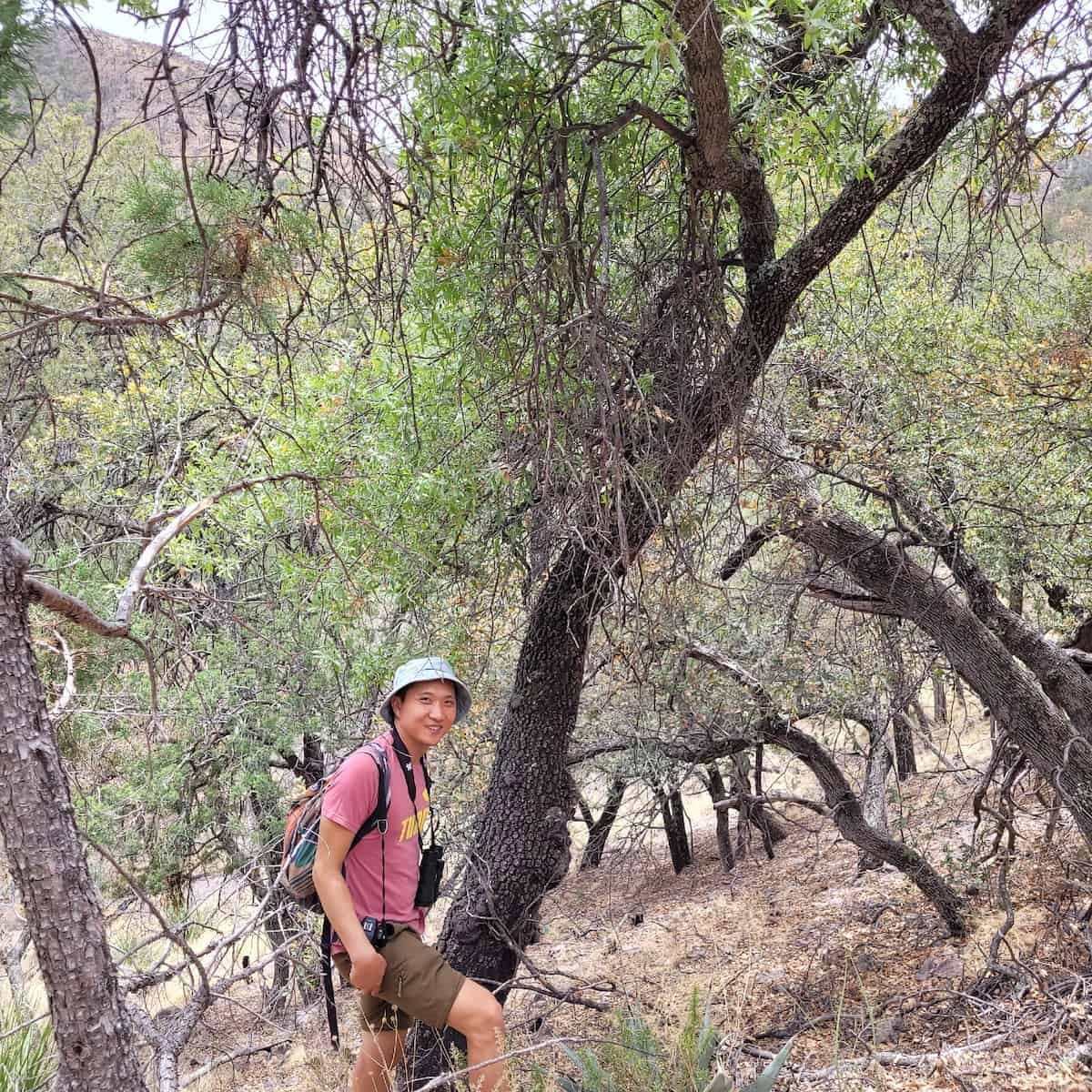
Cover image: Quercus tardifolia by Konshau Duman CC BY