
The top paper this week is an old one, from 2021, but it's also a weird one. Someone asked for a fun fact and Susannah Lydon responded with a doozy. We also have a paper showing how fake figs can get pollinators. It seems the phrase "cheats never prosper" doesn't apply to plants. As usual, papers behind a paywall are marked 💰otherwise they're free to access at time of checking.
How this works
We scan posts by people on the Botany Auto list and pull out the entries with links to papers. Every time a paper gets a post written about it it gets 4 points. It gets 3 points for a repost and 1 point for a like.
We try to add people to the Botany Auto post, if they post about Botany (doesn't have to be links to papers) around 20% of the time or more. The belief is that because the list as a whole shares an interest in plants, it's this material that tends to rise to the top.
If you think you should be on the Botany Auto list, but aren't, please drop a message to @botany.one on Bluesky.
1. Boquila trifoliolata mimics leaves of an artificial plastic host plant
Jacob White, Felipe Yamashita · Plant Signaling & Behavior · 1 post · 166 likes · 66 reposts on Bluesky
Upon discovery that the Boquila trifoliolata is capable of flexible leaf mimicry, the question of the mechanism behind this ability has been unanswered. Here, we demonstrate that plant vision possibly via plant-specific ocelli is a plausible hypothesis. A simple experiment by placing an artificial vine model above the living plants has shown that these will attempt to mimic the artificial leaves. The experiment has been carried out with multiple plants, and each plant has shown attempts at mimicry.
Dr Susannah Lydon @susieoftraken.bsky.social · on Bluesky
There is a plant which can mimic the leaves of other plants - including plastic ones - and the best explanation for this ability is that it has some form of vision.
www.tandfonline.com/doi/full/10....
2. Fake figs, fooled fig wasps and rewarded phorid flies: brood‐site mimicry and mutualism in Heterostemma ficoides (Apocynaceae)
Kidyoo, A. et al. · New Phytologist · 3 posts · 38 likes · 18 reposts on Bluesky
About 900 specific fig–fig wasp interactions are distributed throughout tropical ecosystems. Despite this ubiquity, floral mimicry of figs (inflorescences of Ficus spp.; Moraceae) has never been observed. Recently, we found a bizarre Apocynaceae, Heterostemma ficoides , bearing globose closed flowers that look similar to figs and are visited by a Kradibia wasp, the pollinator of Ficus heterophylla . Does the flower of H. ficoides mimic the fig to achieve its pollination success?
New Phytologist @newphyt.bsky.social · on Bluesky
A milkweed flower makes fake figs: brood-site mimicry and mutualism in Heterostemma ficoides
Kidyoo et al.
nph.onlinelibrary.wiley.com/share/HNYYIN...
 View on Bluesky →
3. Evolution in arid environments: the role of betalains, succulence, and medullary bundles
Carruthers, T. et al. · New Phytologist · 2 posts · 25 likes · 13 reposts on Bluesky
The flowering plant clade Caryophyllales includes many succulent species that grow in drought conditions. Many Caryophyllales species also have betalain pigmentation and medullary bundles, both of which have been linked to stress tolerance, albeit with less precise functional characterisation. We investigated the relationship between the evolution of these traits and drought tolerance in Caryophyllales.
New Phytologist @newphyt.bsky.social · on Bluesky
#Evolution in arid environments: the role of #betalains, succulence, and medullary bundles
Tom Carruthers, et al.
nph.onlinelibrary.wiley.com/doi/10.1111/...
#PlantScience
 View on Bluesky →
4. Contrasting influences of ectomycorrhizal fungi on decomposition depending on soil fertility
Lindahl, B. D. et al. · New Phytologist · 2 posts · 21 likes · 12 reposts on Bluesky
Despite their dominance in many terrestrial ecosystems, the impact of ectomycorrhizal fungi on organic matter decomposition is notably variable across different ecological settings. Here we outline how the influence of ectomycorrhizal fungi on decomposition of belowground organic matter pools depends, not only on the traits of the ectomycorrhizal fungi, but also on the relative dominance of other interacting fungal guilds, in a manner that is predictable across wide gradients in soil fertility.
New Phytologist @newphyt.bsky.social · on Bluesky
Effects of ectomycorrhizal fungi on decomposition
#TansleyInsight by Lindahl et al.
nph.onlinelibrary.wiley.com/doi/10.1111/...
#plantscience
 View on Bluesky →
5. Anthocyanin biosynthesis gene activation in nitrogen deprived Utricularia gibba L. under light or darkness
Meckoni, S. N., de Oliveira, J. A. V., Pucker, B. · bioRxiv · 1 post · 24 likes · 11 reposts on Bluesky
Utricularia gibba L. is an aquatic carnivorous plant with a diverse set of capabilities. Reddening of traps frequently occurs in old in vitro cultures. While anthocyanins are often responsible for red coloration in plants, not every plant turns red. Stress factors like high light or excess sucrose have previously been shown to induce the formation of anthocyanins. Here, we hypothesized the red trap formation to be dependent on nutrient deprivation and tested nitrogen deprivation.
Boas Pucker @bpucker.bsky.social · on Bluesky
Activation of anthocyanin biosynthesis in Utricularia gibba depends on nitrogen starvation and light exposure #FlavonoidFriday
doi.org/10.64898/202... & shorturl.at/Be9T2
 View on Bluesky →
6. Inoculation with old‐growth microbes improves restoration quality and reduces non‐native encroachment after seven years
Cheeke, T. E. et al. · Ecological Applications · 1 post · 23 likes · 10 reposts on Bluesky
Understanding the mechanisms that promote native seedling establishment in disturbed ecosystems is key to improving the biodiversity and function of landscape restorations. Over seven growing seasons, we examined the effects of site preparation technique, soil microbial inoculations, and their interactions on native plant establishment in the restoration of an invaded grassland.
Tanya Cheeke @tanyacheeke.bsky.social · on Bluesky
New paper showing that it took 7 years post-inoculation to see effects on plant communities, highlighting the importance of longterm studies in restoration research esajournals.onlinelibrary.wiley.com/doi/10.1002/...
View on Bluesky →7. Navigating shoot apical meristem plasticity for plant adaptation
Zhu, Y., Han, H., Yang, W. · New Phytologist · 2 posts · 17 likes · 10 reposts on Bluesky
Plants exhibit striking developmental plasticity, driven by stem cell populations within meristematic tissues such as the shoot apical meristem (SAM). While the genetic networks governing stem cell homeostasis are well‐characterized, recent studies reveal that the SAM also functions as an active environmental sensor to modulate growth plasticity. This Tansley review synthesizes advances in how the SAM perceives and integrates key environmental signals – including light, temperature, oxygen, and humidity – to direct adaptive growth.
New Phytologist @newphyt.bsky.social · on Bluesky
Navigating shoot apical meristem plasticity for plant adaptation
#TansleyReview by Zhu et al.
nph.onlinelibrary.wiley.com/doi/10.1111/...
#plantscience
 View on Bluesky →
8. Heart‐rot is not a disease: reframing wood decay in living trees
Wainhouse, M., Boddy, L. · New Phytologist · 1 post · 19 likes · 10 reposts on Bluesky
When fungi are seen fruiting on tree trunks, branches and twigs, they are often automatically thought to be causing disease. Likewise, the hollowing of dead woody tissue in the centre of trunks is often instantly thought of as harmful. Yet there is a wide diversity of tree–fungus interactions, and the majority of those involving wood decay fungi do not have negative consequences for the tree. This biologically inaccurate framing of wood decay fungi in general, and heart‐rot in particular, has major consequences for research priorities, forest management, and public perceptions of fungi–tree interactions.
New Phytologist @newphyt.bsky.social · on Bluesky
Heart-rot is not a disease: reframing wood decay in living #trees
@funganaught.bsky.social and Lynne Boddy
nph.onlinelibrary.wiley.com/doi/10.1111/...
#PlantScience
 View on Bluesky →
9. Rising plant extinction rates on European mountain summits 💰
Wessely, J. et al. · Science · 1 post · 36 likes · 21 reposts on Bluesky
Climate change increases plant species richness in alpine ecosystems. However, to what extent this diversity enrichment masks extinction dynamics of resident species remains elusive. In this study, we used floristic resurvey data from 896 permanent vegetation plots across 62 European mountain summits to show that local extinctions have increased over the past 21 years.
Discussed on Bluesky by @bjenquist.bsky.social.
10. Advances in root phenotyping: high-throughput imaging, computational tools, and integrative approaches for crop improvement
Im, G. et al. · Journal of Experimental Botany · 1 post · 17 likes · 8 reposts on Bluesky
Climate change increasingly threatens global agriculture by intensifying abiotic stresses and destabilizing crop productivity, necessitating a deeper understanding of root-mediated traits governing resource acquisition and stress resilience. Here, we synthesize recent advances in root-centred plant phenomics, emphasizing how high-throughput phenotyping enables high-resolution, scalable characterization of complex root traits and robust comparative analysis across diverse genotypes and environments.
Journal of Experimental Botany @jxbotany.bsky.social · on Bluesky
🌱📷 REVIEW 📷🌱
This review outlines available imaging platforms and analytical tools for root phenotyping and proposes crop-specific strategies for integrating root traits into breeding programmes for sustainable agriculture - Im et al.
🔗 doi.org/10.1093/jxb/...
#PlantScience 🧪
 View on Bluesky →
11. How science gets by with a little help from the Beatles: Detecting cultural wordplay in scientific literature using large language models
Budel, G., Kooij, R. E., Tjepkema, M. · PLOS One · 3 posts · 13 likes · 5 reposts on Bluesky
The Beatles’ cultural influence reaches well beyond music into television, fashion, and global media. As we show, it reaches into scientific publishing too. This study documents how often Beatles song titles and lyrics appear in academic article titles, identifying 2,237 exact references and 963 instances of creative wordplay in data from Scopus.
12. Volatiles released by undamaged plants mediate the adaptive growth strategies in neighbors
Åbonde, A. et al. · Journal of Experimental Botany · 1 post · 15 likes · 6 reposts on Bluesky
Plants continuously emit volatile organic compounds (VOCs), which can influence the physiology and behavior of neighboring plants. While the ecological role of stress-induced VOCs is well established, the function of constitutive VOCs released by undamaged plants in mediating plant–plant interactions remains less understood. Here, we demonstrate that barley plants can detect the growth rate of undamaged conspecific neighbors through constitutive VOCs and respond by modulating their growth–defense trade-off accordingly.
13. Integrative analysis of CAM photosynthesis reveals its impact on primary metabolism in Yucca
Wickell, D. et al. · Journal of Experimental Botany · 1 post · 13 likes · 6 reposts on Bluesky
In this study, we integrate transcriptomic, proteomic, and metabolomic data to compare primary metabolism between the CAM species Yucca aloifolia and closely related C3 species, Y. filamentosa. We observe minimal correlation between protein abundance and mRNA expression, suggesting significant post-transcriptional regulation in CAM species.
14. Almost 200 years of anthocyanin research: What we know, what we assume and what remains unknown
Choudhary, N., Khatun, N., Pucker, B. · Plant Biology · 1 post · 12 likes · 6 reposts on Bluesky
Flavonoids are frequently presented as health‐beneficial plant metabolites, and their subclass anthocyanins is best known for striking flower colours. The biosynthesis of flavonoids has been studied for decades and has developed into a model system in plant biology. Despite thousands of publications about this pathway, there are still open questions about fundamental aspects of anthocyanin biosynthesis. Here, we review the evolution of anthocyanin biosynthesis and highlight key open questions–some of which are sitting in plain sight.
15. Plant Phenotypes as Distributions: Johannsen’s Beans Revisited 💰
Herrera, C. M. · The American Naturalist · 1 post · 13 likes · 4 reposts on Bluesky
In the early twentieth century, Wilhelm Johannsen’s breeding experiments on pure lines of beans provided empirical support for his groundbreaking distinction between phenotype and genotype, the foundation stone of classical genetics. In contrast with the controversial history of the genotype concept, the notion of phenotype has remained essentially unrevised since then. The application of the Johannsenian concept of phenotype to modularly built, nonunitary plants, however, needs reexamination.
16. Forest under stress: responses and recovery of water relations across scales during the compound drought in summer 2022
Shekhar, A. et al. · New Phytologist · 1 post · 9 likes · 5 reposts on Bluesky
The summer of 2022 was characterized by compound soil and atmospheric drought (CSAD; low soil water content, SWC, and high vapor pressure deficit, VPD) in Central Europe, threatening forest carbon sequestration and water balance, yet linked ecosystem‐ and tree‐level hydraulic responses remain poorly resolved. We assessed the response and recovery of water relations of a beech‐dominated montane mixed deciduous forest in Switzerland (CH‐Lae) to the 2022 CSAD through a series of ecosystem‐scale (evapotranspiration, ET; canopy conductance, Gs) as well as tree‐scale measurements, including leaf‐level (leaf water potential, LWP; stomatal conductance, gs), stem‐level (nighttime stem rehydration, NSR) and root‐level (root water uptake depth, RWU depth) variables.
17. Diversity–productivity relationships in ericaceous plants are influenced by interactions with ericoid mycorrhizal fungi
Delavaux, C. S. et al. · Ecology · 2 posts · 11 likes · 3 reposts on Bluesky
Here, we use a mesocosm experimental system to manipulate ericoid mycorrhizal richness (ranging from one to seven fungal isolates) and plant richness (ranging from one to eight plant species) to assess how plant and fungal diversity interact to influence plant productivity. We find clear support for the positive effect of plant diversity on productivity, but this effect only emerged at higher levels of fungal diversity.
18. Deoxyribonucleotide dephosphorylation by VENOSA4 supports organellar genome replication in plants
Fischer, L. et al. · bioRxiv · 3 posts · 6 likes · 3 reposts on Bluesky
Here, we show that VENOSA4 (VEN4), a dNTP triphosphohydrolase, is critical for this process in Arabidopsis thaliana. Using isotope feeding combined with mass spectrometry analysis, we demonstrate that VEN4 converts most de novo-synthesized dNTPs to deoxynucleosides (dNs). Preventing this conversion by VEN4 mutation strongly diminishes both cpDNA and mtDNA amounts, but these can be partially rescued by the application of exogenous dNs. Hence, the dNTP catabolic activity of VEN4 ensures that sufficient DNA precursors in form of dNs reach the chloroplasts and the mitochondria to be salvaged there to dNTPs for DNA synthesis.
19. Response diversity increases functional but decreases compositional stability of grassland communities
Pitzer, M. et al. · New Phytologist · 1 post · 8 likes · 5 reposts on Bluesky
By subjecting transplanted grassland plant communities to different land‐use intensities, we quantified response diversity (defined as the variability of responses among species to the same environmental factor), species composition, and functionality from spectral data before and after experimental changes. Our results show that land‐use intensification reduced response diversity of plant communities in the field and the common garden.
20. Tailoring the light: multi-omic insights into how light quality and quantity shape kale cultivars
Kinoshita, S. N., Finkemeier, I. · Journal of Experimental Botany · 1 post · 8 likes · 5 reposts on Bluesky
This article comments on: Scandola S, Grubb LE, Castillo B, Iliscupidez L, Kennedy C, Boyce N, Talasila M, Uhrig RG. 2026. Shaping kale morphology and physiology using precision LED light recipes. Journal of Experimental Botany 77, 5206–5224. https://doi.org/10.1093/jxb/erag163
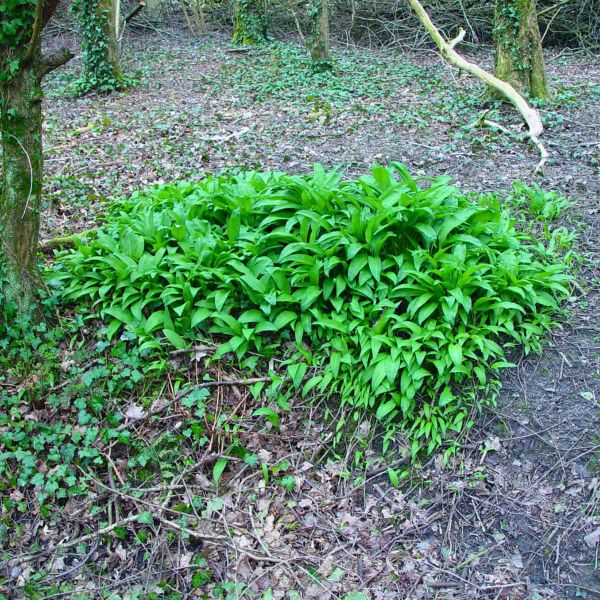
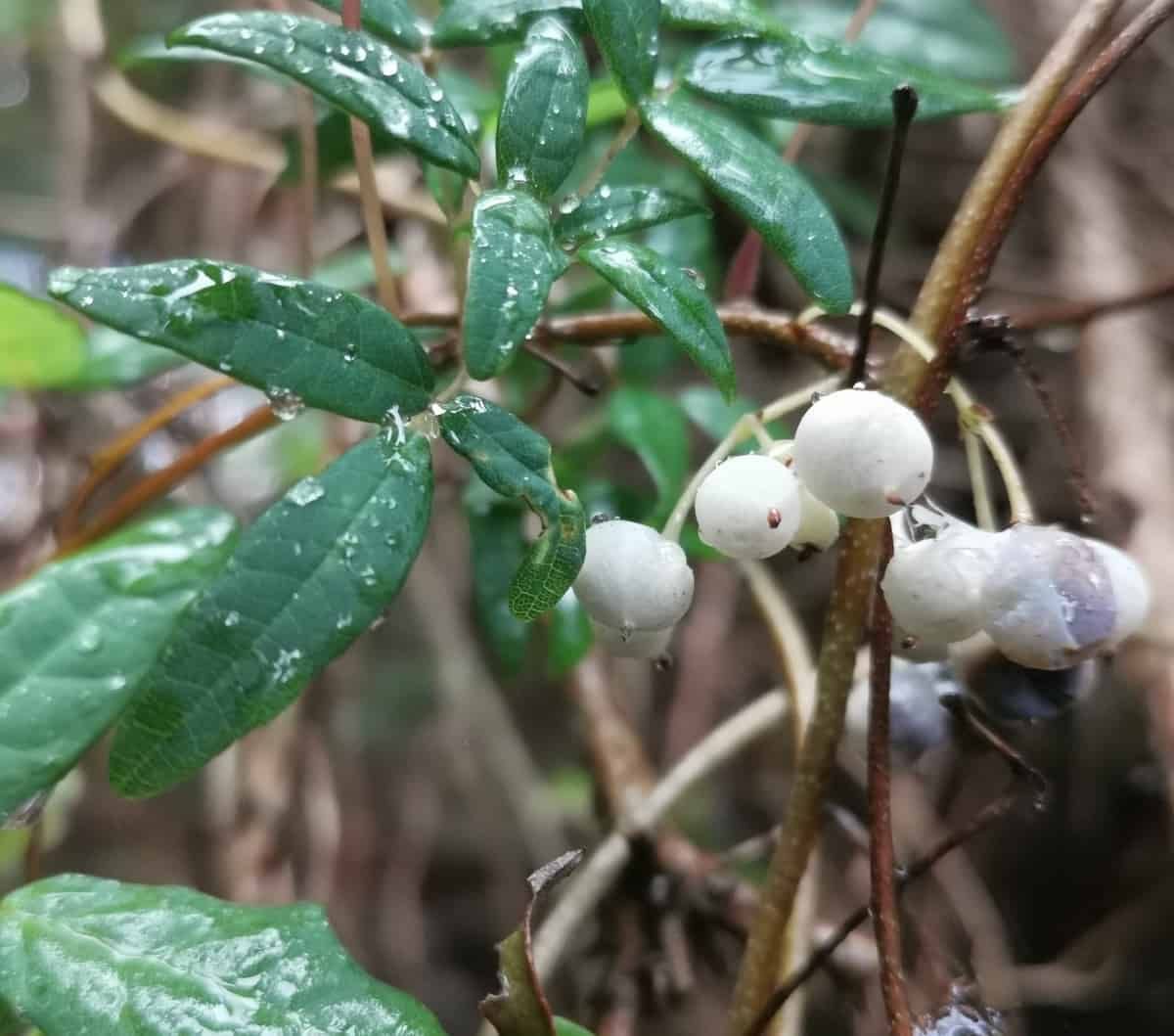
Cover image: Boquila trifoliolata by Inao Vasquez CC BY