Science Shared will look a little different this week.

Here's a round up of the top 10 papers you've been sharing this week on Bluesky. Papers behind a paywall are marked 💰otherwise they're free to access at time of checking.

How this works

We scan posts by people on the Botany Auto list and pull out the entries with links to papers. Every time a paper gets a post written about it it gets 4 points. It gets 3 points for a repost and 1 point for a like.

We try to add people to the Botany Auto post, if they post about Botany (doesn't have to be links to papers) around 20% of the time or more. The belief is that because the list as a whole shares an interest in plants, it's this material that tends to rise to the top.

If you think you should be on the Botany Auto list, but aren't, please drop a message to @botany.one on Bluesky.

In this paper, we discuss an extension to two popular approaches to modeling complex structures in ecological data: the generalized additive model (GAM) and the hierarchical model (HGLM). We also discuss computational and statistical issues with fitting these models, and demonstrate how to fit HGAMs on example data. All code and data used to generate this paper are available at: github.com/eric-pedersen/mixed-effect-gams .
PeerJ (May 2019)
Here we provide updates to the C4 photosynthesis model by improving the parameterisation of cyclic electron flow in C4 photosynthesis using experimentally derived values from Setaria viridis. We additionally describe two fitting routines for assessing C4 photosynthesis based on the updated model.
Journal of Experimental Botany (May 2026)
We focus on notable, reciprocal signals between plant and parasite that gate key life cycle transitions in the parasite, while acknowledging that these processes are embedded within, and inseparable from, a plethora of other signals – and indeed communication with other organisms. The frequency, reciprocity, and gravity of the exchange leads us to argue that it is best described as a nuanced communication, in which parasitism succeeds or fails based on interpretation and response.
New Phytologist (May 2026)
Maximilian Hanusch, Thomas Dussarrat, Xue Xiao, Dominik Ziaja, Kruthika Sen Aragam, James D. Blande et al.
We outline key questions that will help to guide research on how higher-level chemodiversity contributes to ecological processes and functioning across scales.
Nature Ecology & Evolution (May 2026)
Marcel Dickmanns, Matthias Pöge, Peng Xu, Sven Gombos, Zoe K. Barr, Manuel Miras et al.
Here we used cryo-electron tomography to resolve the in situ architecture of plasmodesmata in Physcomitrium patens across tissues and physiological states. We show how callose-related cell wall remodelling shapes pore architecture to modulate permeability, including a previously undescribed fully sealed state, and resolve helical protein assemblies scaffolding the central, endoplasmic-reticulum-derived desmotubule.
Nature Plants (May 2026)
Nobuaki Ishihama, Yohta Fukuda, Yumiko Shirano, Kazuhiro J. Fujimoto, Kaori Takizawa, Ryoko Hiroyama et al.
Our work reports a unique copper-dependent redox perception in plants and provides insight into interactions between receptors and non-peptide stimuli during perception.
Nature Communications (May 2026)
This study provides new insights into the early evolutionary history of Cupressaceae and their adaptations to Jurassic environments through exceptionally preserved fossils from Patagonia.
American Journal of Botany (May 2026)
Gabriele Bolletta, Georgios Nikou, Rina H. P. Puspitasari, Felix J. J. A. Bianchi, Erik H. Poelman
Here we assessed how increasing crop diversity and an ‘attract‐and‐reward’ (A&R) strategy influence the effectiveness and temporal stability of biological control. Our results highlight that strip cropping can enhance and stabilize biological control.
Journal of Applied Ecology (May 2026)
Floral handling can be energetically costly for bees, yet these costs are rarely measured. We provide the first direct quantification of the metabolic cost of floral buzzing in bumblebees and evaluate its ecological significance.
Proceedings of the Royal Society B: Biological Sciences (May 2026)
Jan-Ole Niemeier, Pedro Barreto, Bruce Morgan, Markus Schwarzländer
This review explores advancements in our understanding of plant energy metabolism driven by fluorescent protein biosensing, highlights emerging concepts and open questions, and discusses how available tools, and much-needed future innovations, can unlock the potential of biosensing toward understanding in vivo plant energy metabolism and its effective modification.
Annual Review of Plant Biology (May 2026)
This Editorial introduces the Virtual Issue ‘Linked plant–fungal invasions’. Access the Virtual Issue at www.newphytologist.com/virtualissues.
New Phytologist (June 2026)

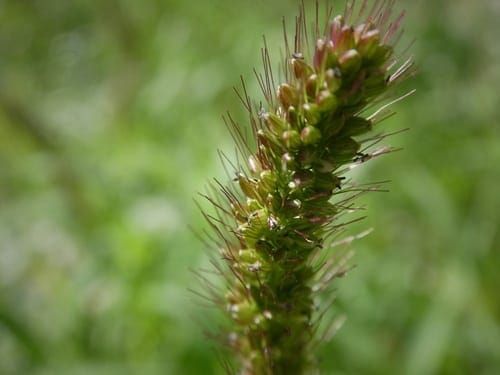
Cover image: Setaria viridis, which performs C4 photosynthesis, by Stephan Pflume (misumeta) / iNaturalist CC BY-NC 4.0