
Here's a round up of the top 20 papers you've been sharing this week on Bluesky. Papers behind a paywall are marked 💰otherwise they're free to access at time of checking.
How this works
We scan posts by people on the Botany Auto list and pull out the entries with links to papers. Every time a paper gets a post written about it it gets 4 points. It gets 3 points for a repost and 1 point for a like.
We try to add people to the Botany Auto post, if they post about Botany (doesn't have to be links to papers) around 20% of the time or more. The belief is that because the list as a whole shares an interest in plants, it's this material that tends to rise to the top.
If you think you should be on the Botany Auto list, but aren't, please drop a message to @botany.one on Bluesky.
- An oxygen-sensing Polycomb-group protein encodes flooding stress memory in plants
Maric, A. et al. · bioRxiv · Score: 460
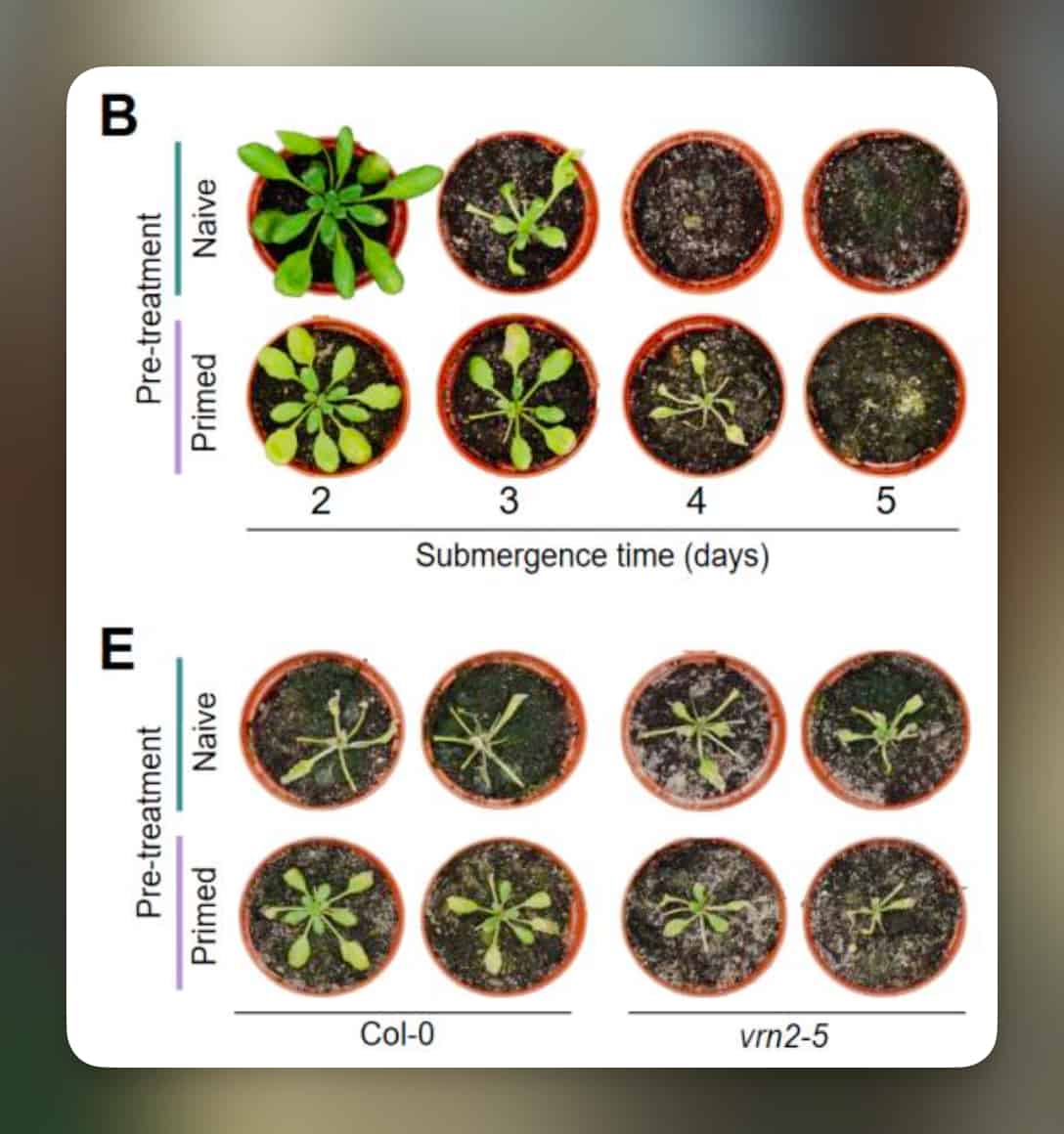
Most organisms, including plants, can encode stress memories that improve resilience to repeated environmental challenges. Flooding events expose plants to recurrent hypoxia, yet whether plants establish an adaptive memory of flooding is unclear. Here we show that somatic flooding stress memory is a conserved feature across multiple angiosperm species. In Arabidopsis, this memory depends on the oxygen-sensitive Polycomb Repressive Complex 2 (PRC2) subunit VERNALIZATION2 (VRN2). Loss of VRN2 impairs epigenetic memory formation and disrupts transcriptional memory at key genes that promote anthocyanin accumulation and repress leaf senescence, adaptive responses that enhance flooding tolerance. Collectively, we reveal a molecular mechanism where VRN2-PRC2 acts as both an oxygen sensor and chromatin effector to establish adaptive flooding stress memory in plants.
So happy and proud to share our lab’s first #plantscience research article, revealing that angiosperms have the capacity to encode memory of flooding stress. A heroic effort by @aidamaric.bsky.social in collaboration with @djgibbs.bsky.social and others. A brief 🧵 www.biorxiv.org/content/10.6...
— Sjon Hartman (@hartman-plantlab.com) May 5, 2026 at 10:35
[image or embed]
- Repurposing a chromosome segregation ParB-CTPase fold into an ATPase toxin for contact-dependent growth inhibition in plant and animal pathogens
Kaljevic, J. et al. · bioRxiv · Score: 226
Bacterial competition drives the evolution of antibacterial mechanisms, yet how new activities arise remains poorly understood. A major route to innovation is the reuse of pre-existing genetic systems, whereby conserved protein modules are repurposed in new biological contexts to generate new capabilities. Here, we show that the ParB-CTPase fold, a conserved nucleotide-binding module best known for its role in chromosome segregation, can be functionally repurposed as an antibacterial toxin. We identify ToxB, a ParB-like domain embedded within the polymorphic toxin region of contact-dependent inhibition systems and show that it functions as a potent antibacterial effector.
@biorxiv-microbiol.bsky.social Who knew ParB-CTPase fold can kill!!! A protein fold best known for segregating chromosomes…can be transformed into a potent antibacterial toxin in some plant and animal pathogens. www.biorxiv.org/content/10.6...
— Tung Le (@tunglejic.bsky.social) May 7, 2026 at 8:31
[image or embed]
3. GWAS reveal SUBER GENE1-mediated suberization via type one phosphatases 💰
Han, J. et al. · Nature Plants · Score: 178
Suberin deposition in the root endodermis is critical for plant nutrient acquisition and environmental adaptation. Here we used an unbiased forward genetic approach based on natural variation across 284 Arabidopsis thaliana accessions to identify novel regulators of endodermal suberization. This screen revealed striking diversity in suberin levels and patterns, uncovering broader roles for suberin beyond those observed in the reference accession Col-0. A genome-wide association study pinpointed SUBER GENE1 (SBG1), a previously uncharacterized gene encoding a 129-amino-acid protein, as a key regulator of suberin deposition.
It’s FINALLY out! We investigated the natural variations for endodermal suberin and identified SUBER GENE1 (SBG1)- Type One Protein Phosphatases (TOPPs) as a novel module that regulates endodermal suberization. @mariebarberon.bsky.social rdcu.be/fgU6g #PlantScience
— Jian-Pu 韩 (@jian-pu.bsky.social) May 5, 2026 at 8:58
[image or embed]
4. A cytological framework of female meiosis in Arabidopsis 💰
Hu, B. et al. · The Plant Cell · Score: 176
Female and male meiosis often differ in many aspects, such as their duration and the frequency as well as the positioning of crossovers. However, studying female meiosis is often very challenging and thus, much less is known about female versus male meiosis in many species including plants, where meiosis occurs deep within the ovules. To approach this gap, we developed a live-cell imaging system for female meiocytes in Arabidopsis (Arabidopsis thaliana) in this study. This allowed us to obtain a temporally resolved cytological framework of female meiosis in the wild type that serves as a guiding system for future studies. Subsequently, we have applied this imaging system here to study mutants in cyclin-dependent kinase inhibitors, in which a designated female meiocyte undergoes several mitotic divisions before entering meiosis. This mutant context enabled us to address when a meiocyte is committed to meiosis, a key question during reproductive development and in particular for the analysis of apomictic species in which meiosis is skipped.
Finally, here it is: after 12 years, and driven by the incredible hard work and innovation of two Ph.D. students, Bingyan Hu and Maria Prusicki, with biomathematical support from Katarina Stahlmann (UKE) — "A cytological framework of female meiosis in Arabidopsis". academic.oup.com/plcell/artic...
— Schnittger Lab (@schnittger-lab.bsky.social) May 6, 2026 at 8:39
[image or embed]
- Morphological and Anatomical Changes during the Flower-to-Fruit Transition in Andean Species of the Parasitic Family Loranthaceae 💰
Botero-Castaño, V., González, F., and Pabón-Mora, N. · International Journal of Plant Sciences · Score: 172
We examined the complete flower-to-fruit transition through serial sections of three Neotropical Loranthaceae: the early-diverging Gaiadendron punctatum and two more recent species, Aetanthus colombianus and Tristerix secundus. The common vascular bundles of petals and stamens and the vascular traces of the gynoecium were used as positional landmarks to distinguish extracarpellary tissues from carpellary tissues and to identify their derivatives (epicarp vs. pericarp) during fruit development.
In the May 2026 @ijpsjournal.bsky.social Low reproductive output suggests hermaphrodites are unlikely to spread in a dioecious hybrid willow population Ashmita Khanal, Nan Hu, Minghao Guo, Diksha Gambhir, Matthew S. Olson www.journals.uchicago.edu/doi/10.1086/... #PlantScience
— International Journal of Plant Sciences (@ijpsjournal.bsky.social) May 6, 2026 at 20:27
[image or embed]
6. SAGA1 and SAGA2 localize the starch sheath to the pyrenoid in
Chlamydomonas reinhardtii
Crans, V. L. et al. · Proceedings of the National Academy of Sciences · Score: 110
Most algae enhance their CO 2 assimilation by concentrating CO 2 within the pyrenoid, a biomolecular condensate of the CO 2 -fixing enzyme Rubisco. Many pyrenoids are surrounded by a starch sheath thought to slow the escape of CO 2 from the pyrenoid, but how the starch sheath is localized to the pyrenoid remains poorly understood. Here, in the model alga Chlamydomonas reinhardtii , we find that the protein SAGA2 is necessary for early pyrenoid starch sheath biogenesis and works redundantly with its homolog, SAGA1, to localize the starch sheath to the pyrenoid.
Now published @PNASNews! SAGA1 and SAGA2 localize the starch sheath to the pyrenoid in Chlamydomonas reinhardtii www.pnas.org/doi/10.1073/...
— Martin Jonikas (@mjonikas.bsky.social) May 7, 2026 at 2:00
[image or embed]
7. Timing and origins of Mexican and Central American oak diversity 💰
Althaus, K. N. et al. · Proceedings of the National Academy of Sciences · Score: 108
The origins and assembly of temperate biodiversity hotspots remain poorly understood. This knowledge gap is particularly evident in low-latitude montane regions of the Americas, where northern lineages have repeatedly colonized and diversified. Here we investigate the evolutionary history of oaks ( Quercus ) in the Americas, with a focus on their parallel radiation into Mexican and Central American montane forests. Using a time-calibrated phylogeny, we show that white oaks ( Q. section Quercus ) and red oaks ( Q. sect. Lobatae ) independently colonized Mexico c. 25 Mya.
An exciting new chapter in oak evolutionary history just out in @pnas.org by our student Kieran Althaus w/ colleagues at @mortonarboretum.bsky.social, @bluedevilherbarium.bsky.social, @harvard.edu, UNAM (Morelia & Mexico City), BUAP (Puebla), and CIIDIR (Durango): www.pnas.org/doi/10.1073/...
— Andrew Hipp (@andrewlhipp.bsky.social) May 6, 2026 at 8:25
[image or embed]
8. Dual recognition of structurally unrelated mildew effectors underlies the broad-spectrum resistance of Pm3e in wheat
Kunz, L. et al. · Nature Communications · Score: 106
Broad-spectrum resistance genes are highly valuable for sustainable crop protection, yet the molecular basis of their activity is often unknown. The Pm3 allelic series in wheat encodes NLR receptors that recognize avirulence (AVR) effectors of wheat powdery mildew. Here, we show that near-identical Pm3 alleles vary greatly in resistance efficacy and broadness against a global mildew isolate collection and subsequently use this model system to study the mechanisms underlying broad-spectrum resistance. We demonstrate that two alleles, Pm3dand Pm3e, provide resistance against most isolates worldwide, by each recognizing two AVRgenes, thereby lowering the risk of resistance breakdown.
Super excited to see our work on the Pm3e NLR that recognises two structurally diverse AVR effectors from powdery mildew out in @natcomms.nature.com Congratulations to @lukas-kunz.bsky.social, Beat Keller, and everyone involved! Check it out ➡️https://www.nature.com/articles/s41467-026-72199-w
— Marion C. Müller (@marioncmueller.bsky.social) May 5, 2026 at 9:51
[image or embed]
9. Laminar patterning transcription factors orchestrate spatial metabolite partitioning in Capsicum fruit 💰
Han, J. · Nature Plants · Score: 102
Chili pepper (Capsicum annuum L.) produces specialized metabolites, notably the pungent capsaicin and the red capsanthin. Although their biosynthetic pathways are well characterized, the cellular architecture that underpins spatial regulation remains unclear. Here we present a spatiotemporal single-nucleus atlas of pepper development, integrating single-nucleus RNA sequencing and spatial transcriptomics, profiling 332,468 high-quality cells from 57 samples spanning seedlings to mature fruits.
New Article: "Laminar patterning transcription factors orchestrate spatial metabolite partitioning in Capsicum fruit" rdcu.be/fg4ZY Single-cell + spatial atlas of chili pepper reveal layered tissues & transcription factor patterns for capsaicin / capsanthin synthesis. #PlantScience
— Nature Plants (@natplants.nature.com) May 5, 2026 at 19:57
[image or embed]
10. A transparent universal credit system to incentivize peer review 💰
Moles, A. et al. · Proceedings of the National Academy of Sciences · Score: 96
Science relies on peer review, but it’s getting harder to find people willing to do it. Between 2013 and 2017, the average number of invitations for each review increased by 26%, and the number of review invitations grew twice as fast as the number of articles published. Three-quarters of journal editors say the hardest part of their job is finding willing reviewers. Submission rates to individual journals are also increasing, placing further strain on the peer-review system.
'The danger for the research enterprise is that if participation in the review process declines, the remaining contributors may realize they are being exploited by free-riders and will then withdraw their contributions, exacerbating the problem.'
— Thiago Carvalho (@cyrilpedia.bsky.social) May 7, 2026 at 7:33
[image or embed]
11. First Architectural Analysis of a Nonarborescent Cladoxlopsid Identifies Two Possible Growth Habits for the Carboniferous Species
Cladoxylon taeniatum 💰
Durieux, T., Decombeix, A. L., Harper, C. J. · International Journal of Plant Sciences · Score: 90
The last paper from @thibault-durieux.bsky.social's PhD, discussing the architecture of Cladoxylon based on specimens from the early Carboniferous of France, is now published in @ijpsjournal.bsky.social 🌿⛏️ #paleobotany 📃 doi.org/10.1086/739852
— Anne-Laure D 🌿 (@aldpaleo.bsky.social) May 5, 2026 at 12:57
[image or embed]
12. Initiation of asexual reproduction by the AP2/ERF gene GEMMIFER in Marchantia polymorpha
Takahashi, G. et al. · Current Biology· Score: 90
MpERF14/GEMMIFER paper now published in Current Biology. Congratulations Go and Yuki for leading such a nice piece of research. #PlantSciences www.sciencedirect.com/science/arti...
— Facundo Romani (@fromani.bsky.social) May 4, 2026 at 17:11
[image or embed]
13. Despite rapid warming, seed production is not leading poleward migration in North American and European forests 💰
Clark, J. S. et al. · New Phytologist · Score: 84
Despite rapid warming, seed production is not leading poleward migration in North American and European forests Clark et al. @frodsan.bsky.social @andrewhacket-pain.bsky.social @rolandkays.com @valentinjourne.bsky.social nph.onlinelibrary.wiley.com/share/NRGUJA...
— New Phytologist (@newphyt.bsky.social) May 6, 2026 at 13:02
[image or embed]
14. Tree community resource economics control soil food web multifunctionality
Henneron, L. et al · Nature · Score: 80
Excited to share our new paper on how tree community resource economics shape soil food web multifunctionality across European forests! 🌲🌍 We quantified how energy flows through microbes, fungi, detritivores, herbivores and predators beneath the forest floor. rdcu.be/fhmF2
— Paul Kardol (@paulkardol.bsky.social) May 7, 2026 at 15:28
[image or embed]
15. From wild to tamed: Reimagining novel crops through omics and local plant diversity
Sanfeliu Meliá, A., Cárdenas, P. D. · PLANTS, PEOPLE, PLANET · Score: 68
What if the next climate-resilient crop isn’t bred from corn, but from a wild halophyte? New tools mean we can domesticate plants like Salicornia fast. The future of food might be growing wild right now #plantscience @plantspeopleplanet.bsky.social nph.onlinelibrary.wiley.com/doi/10.1002/...
— Global Plant Science Spotlight (@plant-sci.bsky.social) May 3, 2026 at 10:50
[image or embed]
16. Interpreting inter- and intra-annual environmental signals in tree-ring δ18O using isotope-enabled modeling
Leppä, K. et al. · Tree Physiology · Score: 66
Check this new paper out! by Kersti Leppä et al ! Interpreting inter- and intra-annual environmental signals in tree-ring δ18O using isotope-enabled modeling academic.oup.com/treephys/art...
— Paul Szejner (@pszejner.bsky.social) May 6, 2026 at 11:14
[image or embed]
17. Cell-type-specific autophagy in root-hair-forming cells is essential for salt stress tolerance in Arabidopsis thaliana
Zhao, J. et al. · Nature Plants · Score: 66
New OA Article: "Cell-type-specific autophagy in root-hair-forming cells is essential for salt stress tolerance in Arabidopsis thaliana" rdcu.be/fhdNJ Enhanced autophagy helps Arabidopsis store excess sodium, control oxidative stress and tolerate salt stress. #PlantScience
— Nature Plants (@natplants.nature.com) May 6, 2026 at 13:47
[image or embed]
18. Karrikin and strigolactone signalling affect pattern-triggered immunity and resistance to specific pathogens
Schade, S. D. et al. · bioRxiv · Score: 66
Karrikin and strigolactone signalling affect pattern-triggered immunity and resistance to specific pathogens https://www.biorxiv.org/content/10.64898/2026.05.05.722863v1
— bioRxiv Plant Bio (@biorxiv-plants.bsky.social) May 7, 2026 at 14:02
19. Antagonism between blue- and red-light signaling controls thallus flatness in Marchantia polymorpha
Roetzer, J. et al. · Current Biology · Score: 62
New paper! A study from the Dolan lab at the GMI of the @oeaw.bsky.social has just been published in Current Biology. Read the publication titled "Antagonism between blue- and red-light signaling controls thallus flatness in Marchantia polymorpha" here: www.cell.com/current-biol...
— Gregor Mendel Institute of Molecular Plant Biology (@gmivienna.bsky.social) May 4, 2026 at 12:18
[image or embed]
20. The SnRK1–RAP2.4h–PIP2 module contributes to the trade-off between growth and hypoxia tolerance in plants
Liao, K. et al. · Nature Communications · Score: 58
Great work by Liao et al. (2026) on how the #SnRK1 –RAP2.4h–PIP2 module regulates the energy-signaling-mediated trade-off between vegetative growth and #hypoxia tolerance in plants ( #Arabidopsis and rice), offering a potential target to improve crop flood tolerance. 🔗 www.nature.com/articles/s41...
— Takehiro A. Ozawa (@tkozawa.bsky.social) May 5, 2026 at 19:33
[image or embed]
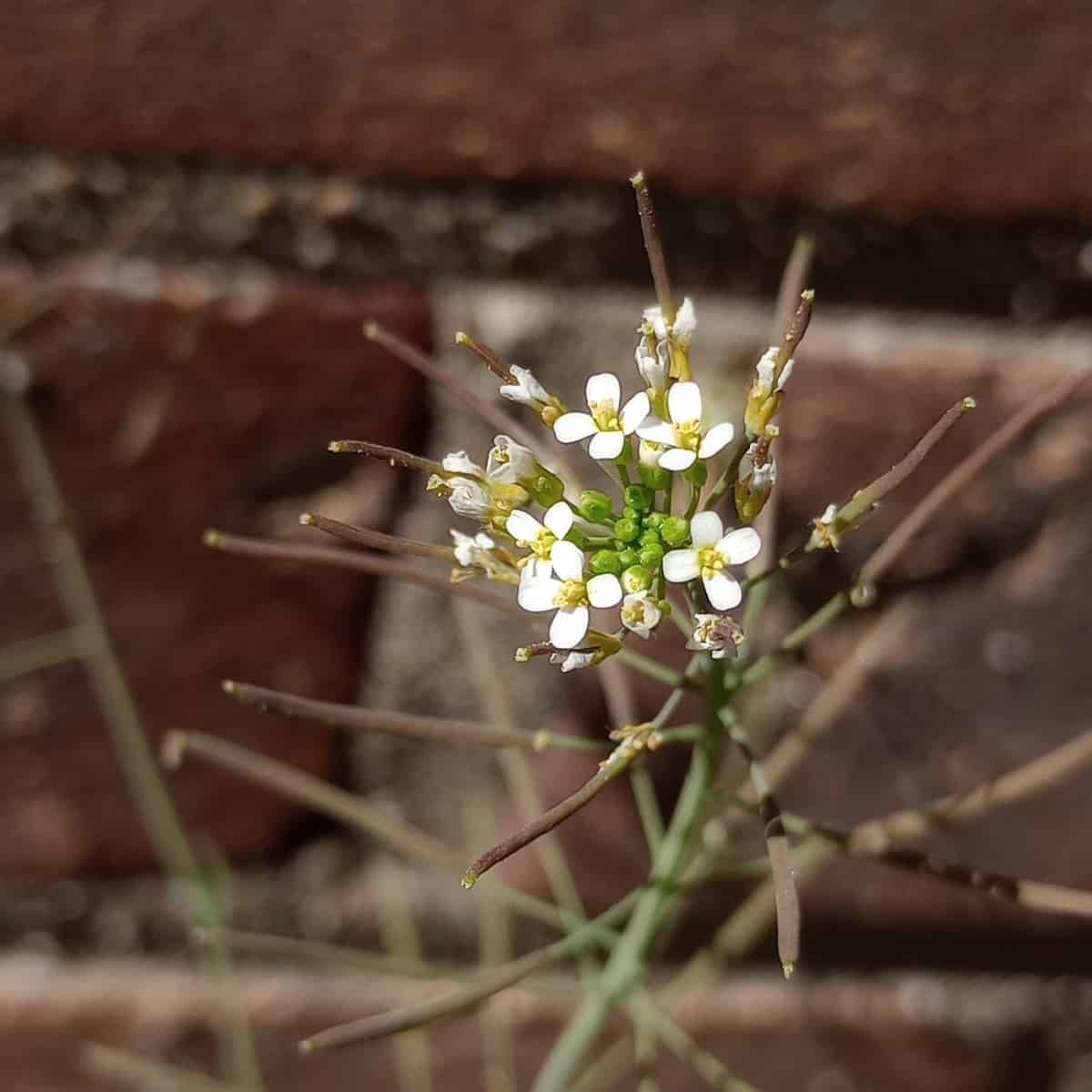
Cover image: Arabidopsis thaliana by Zack K. Persson / iNaturalist CC BY-NC