
Here's a round up of the top 20 papers you've been sharing this week on Bluesky. Papers behind a paywall are marked 💰otherwise they're free to access at time of checking.
How this works
We scan posts by people on the Botany Auto list and pull out the entries with links to papers. Every time a paper gets a post written about it it gets 4 points. It gets 3 points for a repost and 1 point for a like.
We try to add people to the Botany Auto post, if they post about Botany (doesn't have to be links to papers) around 20% of the time or more. The belief is that because the list as a whole shares an interest in plants, it's this material that tends to rise to the top.
If you think you should be on the Botany Auto list, but aren't, please drop a message to @botany.one on Bluesky.
1. A molecular perspective on the taxonomy and journey of Citrus domestication 💰
Kalita, B. et al. · Perspectives in Plant Ecology, Evolution and Systematics · Score: 694
Although advanced genomic studies to clarify the phylogenetic relationships of citrus are in progress, a detailed overview of citrus taxonomy, diversity, origin and domestication would enhance our knowledge not only to get an evolutionary framework of citrus phylogeny but also to unravel the history of citrus domestication. Therefore, the review has been presented comprehensively with recent studies emphasizing the identification of specific reproductive, sensory and morphological markers selected as traits during the course of domestication.
See @scottzona.bsky.social's post on Bluesky.
2. Genome degradation in plant tissue culture
Davis, M. W. et al. · Proceedings of the National Academy of Sciences · Score: 164
Leveraging a natural experiment of walnut clones spanning five decades and multiple cloning methods, we found a complex history of somatic mutation revealing developmental cell dynamics. A haplotype-phased reference genome exposed extreme genomic instability, a distinct mutation spectrum, and a >3,500% increase in mutation rate within clonal somatic embryos. Pairing these mutations with the haplotype-phased assembly revealed the canonical flowering plant meristematic layers from bulk tissue sequencing and uncovered frequent fixation events throughout development.
Fantastic paper led by Matthew Davis from @grey-monroe.bsky.social, on genome degradation in long-term walnut tissue culture: Somatic embryogenesis increases mutation rates >30x, with aneuploidy, large deletions, somatic recombination, and elevated #TE activity. www.pnas.org/doi/10.1073/...
— PlantEvolution 🌱🌾 (@plantevolution.bsky.social) Apr 28, 2026 at 18:42
[image or embed]
3. The FERONIA receptor kinase is required for high humidity responses in Arabidopsis
Opachaloemphan, C. et al. · bioRxiv · Score: 146
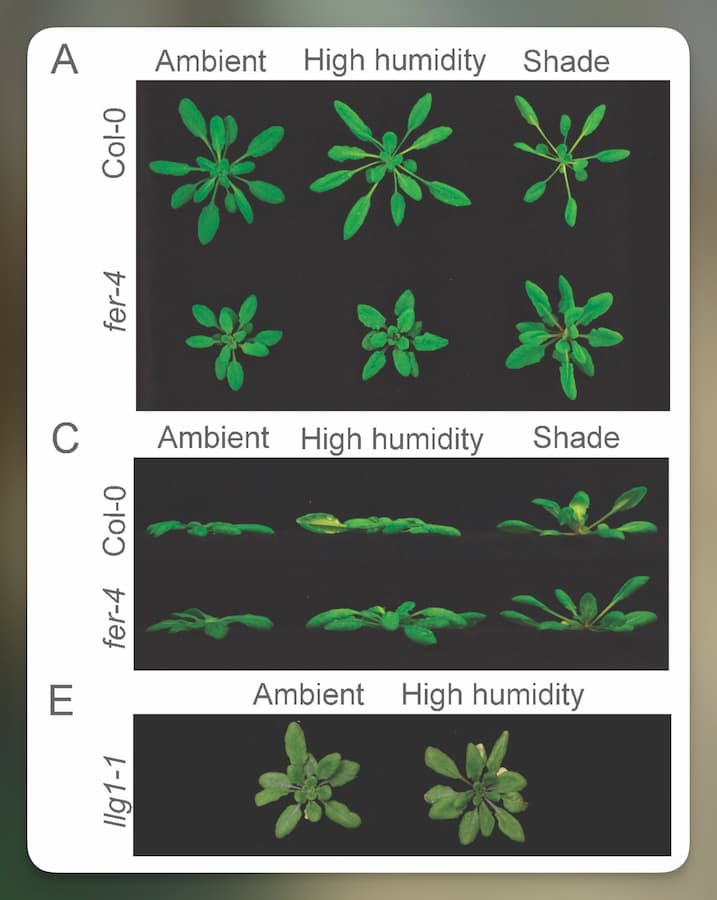
High humidity greatly influences plant growth and development and triggers adaptive physiological responses such as leaf hyponasty (elongation of leaf petiole and upward leaf movement). A recent study identified Cyclic Nucleotide-Gated Ion Channels 2 and 4 (CNGC2/4)-mediated Ca2+ influx and Calmodulin Binding Transcription Activators 2 and 3 (CAMTA2/3)-mediated transcription as essential for high humidity response in Arabidopsis, but the upstream regulators that control these pathways remain unknown. Here, we show that the receptor-like kinase FERONIA and its co-receptor LORELEI-LIKE GPI-ANCHORED PROTEIN1 (LLG1) are required for a large portion of high humidity-associated Arabidopsis transcriptomic changes, including CNGC2, CAMTA-regulated genes, and cell wall remodeling genes, and for high humidity-induced leaf hyponasty. High humidity triggers a previously uncharacterized petiole-localized C.
New preprint from the He lab: FERONIA is required for high humidity-induced Ca²⁺ waves and adaptive leaf hyponasty in Arabidopsis. Whole-plant calcium imaging across three species. www.biorxiv.org/content/10.6... #plantbiology #calciumsignaling
— Richard Hilleary (@drdickhilleary.bsky.social) Apr 29, 2026 at 13:30
[image or embed]
4. Three closely linked X‐chromosomal genes potentially control sex determination in Cannabis sativa
Toscani, M. et al. · New Phytologist · Score: 126
Sex determination mechanisms in dioecious plants remain poorly understood yet offer an excellent model system to study genetic changes underlying morphological evolution. We investigated the genetic basis of sex determination in Cannabis sativa, combining quantitative trait locus mapping in a segregating population, comparative transcriptomics between monoecious and dioecious cultivars, and a genomic analysis of X–Y chromosome divergence.
Excited to see this published in @newphyt.bsky.social doi.org/10.1111/nph.... Our model may explain why Cannabis develops male, female and monoecious plants. The summary is available in 7 languages: Irish, Urdu, Spanish, French, Italian, English and German! Awesome support by @researchireland.ie!
— Rainer Melzer (@ucdflowerpower.bsky.social) Apr 27, 2026 at 16:51
[image or embed]
5. An Account of the Ecology of the Parasitic Plant Cistanche phelypaea (L.) Cout. (Orobanchaceae) in the Canary Islands and Implications for Its Conservation
Hernández-González, M., Cerbone, H., and Thorogood, C. · MDPI ecologies · Score: 124
Parasitic plants are ecologically important because they can exert a profound influence on the surrounding ecosystem. Yet the ecology and host specificity of most parasitic plant species remain poorly known or undocumented. Cistanche phelypaea is a local and elusive parasitic plant in the Canary Islands. We carried out the first qualitative assessment of this plant’s ecology on the islands by examining 10 subpopulations over a 7-year period.
Our research, just published in Ecologies, examines the ecology of this extraordinary, moth-pollinated parasitic plant (Cistanche phelypaea) in the Canary Islands. Thanks to my talented co-authors Matías Hernández-González and Henry Cerbone! www.mdpi.com/2673-4133/7/...
— Chris Thorogood (@christhorogood.bsky.social) Apr 27, 2026 at 14:20
[image or embed]
6. Rhizosphere microbiome influences fruit quality in citrus 💰
Wu, S. et al. · New Phytologist · Score: 120
Fruit quality is shaped by both crop genetics and cultivation environments, with soil conditions driving rhizosphere microbiome assembly. While rhizosphere microbes are known to enhance nutrient utilization and plant metabolism, their direct contribution to fruit quality regulation remains poorly understood. In this study, we demonstrate that the Satsuma mandarin ( Citrus unshiu Marc.) and Navel orange ( Citrus sinensis L. Osbeck) rhizosphere microbiome influence fruit sugar concentration, a key determinant of fruit quality.
Rhizosphere microbiome influences fruit quality in citrus Wu et al. nph.onlinelibrary.wiley.com/share/9W2EUQ...
— New Phytologist (@newphyt.bsky.social) Apr 28, 2026 at 0:11
[image or embed]
7. Lichen bleaching as a response to long-term experimental warming in the High Arctic
Šubrt, J. et al. · Functional Ecology · Score: 118
Lichens are an important component of Arctic ecosystems. Studies have indicated a decline in the abundance of Arctic lichens during recent decades, which is often attributed to competitive pressure from vascular plants. However, the direct effects of warming on the lichen symbiosis have rarely been explored, particularly in the High Arctic, where shrubification is less pronounced than in the Low Arctic, and where warming might hence have more direct effects on the growth and survival of lichens. Here, we investigated the physiological responses of Cetrariella delisei, a widespread circumpolar lichen species, to almost a decade of experimental warming with open-top chambers.
🍄 Lichen bleaching as a response to Arctic warming 🍄 Our new paper @funecology.bsky.social led by Jiří Šubrt shows striking lichen bleaching & symbiosis breakdown due to experimental warming in Svalbard. I'm an incredibly proud supervisor of Jiří's MSc/PhD work! doi.org/10.1111/1365... 🌐🧪🌱🌍
— Dr. Mariana García Criado (@nanitundra.bsky.social) Apr 29, 2026 at 8:46
[image or embed]
8. Insecticide‐level pest control provided by in‐field flower strips
Glock, I. et al. · Journal of Applied Ecology · Score: 114
Biodiversity in agricultural landscapes has declined significantly due to intensified farming practices, underscoring the need for sustainable pest management. Here, we tested whether in‐field flowering strips can be an alternative to conventional insecticide use in farming systems. We experimentally manipulated flowering strip mixtures on 10 sites across Germany and measured aphid infestation, biocontrol and yield in sugar beet, a key European sugar source. All flower mixtures reduced aphid populations more effectively than controls without flower strips, with some mixtures performing as well as insecticides.
New exciting study from our lab @leibniz_lib showing flower strips can reduce #pesticides in #agriculture besjournals.onlinelibrary.wiley.com/doi/10.1111/...
— Christoph Scherber (@cscherber.bsky.social) Apr 27, 2026 at 15:20
[image or embed]
9. Trait plasticity enables trees and shrubs to live as epiphytes throughout the coast redwood canopy
Gotsch, S. G., Dawson, T. E., Williams, C. B. · Ecosphere · Score: 98
The radiation of plants into epiphytic niches has largely been studied by comparing closely related taxa that contain both epiphytic and terrestrial species. While these studies have led to important insights, they leave unanswered an important question—what traits allow for the initial colonization of the epiphytic niche? Our study addressed this knowledge gap in an old‐growth coast redwood ( Sequoia sempervirens ) forest, which has few obligate epiphytes but an abundance of accidental epiphytes.
Trees in trees! New paper by Gotsch et al. (2026) shows how woody plants adapt when they become accidental epiphytes. 🌲🌳🌏🧪 esajournals.onlinelibrary.wiley.com/doi/full/10....
— Markus Eichhorn (@markuseichhorn.bsky.social) Apr 28, 2026 at 15:09
[image or embed]
10. NUTCRACKER orchestrates cortical cell divisions and sustains stem cell niche integrity in the rice root meristem
Kirschner, G. K. et al. · Journal of Experimental Botany · Score: 98
In Arabidopsis thaliana, BIRD nuclear factors, also known as the INDETERMINATE DOMAIN (IDD) protein family, regulate asymmetric cell division and tissue patterning in the root meristem. The BIRD protein JACKDAW (JKD) forms a regulatory complex with the GRAS transcription factors SHORT-ROOT (SHR) and SCARECROW (SCR) to maintain the stem cell niche and stabilize tissue boundaries. While BIRD protein functions are well characterized in Arabidopsis, their role in other plant species remains unclear. Here, we show that in rice, the JKD ortholog NUTCRACKER (NUC) restricts cell division in the root meristem.
🌱🧩 RESEARCH 🧩🌱 The BIRD protein NUTCRACKER is a component of the core regulatory network that controls the stem cell niche and cell division the rice root meristem - Kirschner et al. 🔗 doi.org/10.1093/jxb/... #PlantScience 🧪
— Journal of Experimental Botany (@jxbotany.bsky.social) Apr 25, 2026 at 13:00
[image or embed]
11. Citation self-awareness for a fairer academic publishing landscape
Beck, M. et al. · BioScience · Score: 84
Want to measure your publishing fairness? Here is fairpub, an R pkg companion to our recent work on citation self-awareness (doi.org/10.1093/bios...). Analyze your publication profile and/or reference list in your upcoming manuscripts and see your fairness ratio 👉 github.com/FRBCesab/fai... 🧪🌍🦤🦑🪴
— Nicolas Mouquet (@nmouquet.bsky.social) Apr 27, 2026 at 12:33
[image or embed]
12. Improved mesophyll–bundle sheath connectivity is achieved via different mechanisms in C2 vs C4 Alternanthera
Roberts, H. R. et al. · New Phytologist · Score: 78
Improved mesophyll–bundle sheath connectivity is achieved via different mechanisms in C2 vs C4Alternanthera 📖 nph.onlinelibrary.wiley.com/doi/10.1111/... by Roberts et al. @ WileyPlantSci #PlantScience
— New Phytologist (@newphyt.bsky.social) Apr 29, 2026 at 2:45
[image or embed]
13. Delivering artificial intelligence–ready genomics with the Maize Genetics and Genomics Database 💰
Haley, O. et al. · Genetics · Score: 74
The maize community is so privileged to have the amazing support of @maizegdb.bsky.social. I don’t think we could do most of what we do without them. Check out their most recent work including large dna model prediction of effects here academic.oup.com/genetics/art...
— Jeffrey Ross-Ibarra (@jrossibarra.bsky.social) Apr 30, 2026 at 15:40
[image or embed]
14. A bacterial lipid triggers membrane mechanosensing immunity in Arabidopsis
Jolivet, M. D. et al. · bioRxiv · Score: 74
A bacterial lipid triggers membrane mechanosensing immunity in Arabidopsis https://www.biorxiv.org/content/10.64898/2026.04.23.720373v1
— bioRxiv Plant Bio (@biorxiv-plants.bsky.social) Apr 27, 2026 at 23:02
15. Molecular evolution of stem cell regulators driving powerful regenerative abilities in plants 💰
Cai, G. et al. · Journal of Systematics and Evolution · Score: 72
🌳🌵🪴🌿Plants are amazing!🌴🌲🌱🌾 In this Commentary, Cai et al. explore the #molecular #evolution of #StemCell regulators that drive regenerative strategies like somatic embryogenesis and de novo organ regeneration in #plants. doi.org/10.1111/jse.... @wileyecology.bsky.social #PlantScience
— Journal of Systematics and Evolution (@journalsysevo.bsky.social) Apr 29, 2026 at 13:08
[image or embed]
16. Ten simple rules for postdoctoral mums to stay competitive in academia
Fadrique, B., Báez, S. · PLOS Computational Biology · Score: 70
🚨New paper coming out of our hearts! With @selenebaez.bsky.social Ten simple rules for postdoctoral mums to stay competitive in academia. It is not a simple issue! It requires changes across academia, but hopefully these pointers help a bit. journals.plos.org/ploscompbiol...
— Belen Fadrique (@belenfadrique.bsky.social) Apr 29, 2026 at 10:34
[image or embed]
17. Dissecting the genetic basis of drought escape across multiple traits in colonizing Arabidopsis thaliana lineages
Elfarargi, A. F. et al. · New Phytologist · Score: 58
The genetic basis of multi-trait drought escape in colonizing A. thaliana lineages Elfarargi et al. @ahmedelfarargi.bsky.social @ahancock.bsky.social @apmweber.bsky.social @mpipz.bsky.social @trr341.bsky.social @ceplas.bsky.social nph.onlinelibrary.wiley.com/doi/10.1111/...
— New Phytologist (@newphyt.bsky.social) Apr 28, 2026 at 23:17
[image or embed]
18. Recombination suppression in plant adaptation and speciation
Zhang, X. et al. · New Phytologist · Score: 54
#TansleyReview: Recombination suppression in plant adaptation and speciation Zhang et al. 👇 📖 nph.onlinelibrary.wiley.com/doi/10.1111/... #LatestIssue #PlantScience
— New Phytologist (@newphyt.bsky.social) Apr 26, 2026 at 12:30
[image or embed]
19. When neighbors control metabolite fate: consequences for plant pathogen virulence and biocontrol outcomes
Lozano-Andrade, C. N., Pires Queiroz, J. I., Jelsbak, L. · Applied and Environmental Microbiology · Score: 50
When neighbors control metabolite fate: consequences for plant pathogen virulence and biocontrol outcomes Applied Environmental Microbiology Commentary by @neftalyl.bsky.social and colleagues on De Rop et al AEM paper from Monica Höfte group at Gent University journals.asm.org/doi/10.1128/...
— Ákos T Kovács (@evolvedbiofilm.bsky.social) Apr 25, 2026 at 18:49
[image or embed]
20. Root growth in Arabidopsis depends on the amount of glutathione and not the glutathione redox potential 💰
Safi, M. T. et al. · Journal of Experimental Botany · Score: 50
🌱🧪 RESEARCH 🧪🌱 Crosses of GSH-deficient Arabidopsis mutants with mutants affected in glutathione reduction or GSH consumption pinpoint the amount of GSH rather than the glutathione redox potential as causative for changes in root growth - Safi et al. 🔗 doi.org/10.1093/jxb/... #PlantScience 🧪
— Journal of Experimental Botany (@jxbotany.bsky.social) Apr 28, 2026 at 8:00
[image or embed]
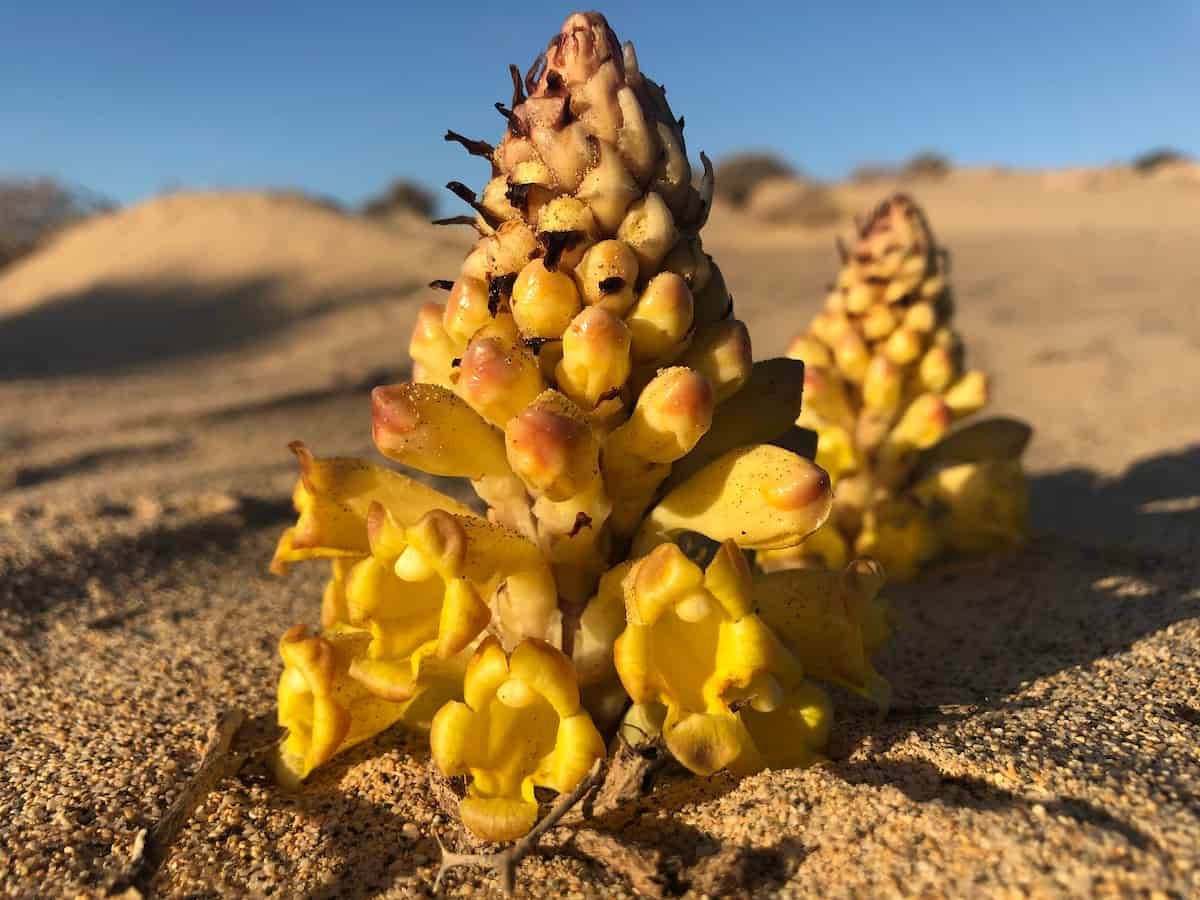
Cover image: Cistanche phelypaea by James Hardcastle / iNaturalist CC BY