
Here's a round up of the top 20 papers you've been sharing this week on Bluesky. Papers behind a paywall are marked 💰otherwise they're free to access at time of checking.
How this works
We scan posts by people on the Botany Auto list and pull out the entries with links to papers. Every time a paper gets a post written about it it gets 4 points. It gets 3 points for a repost and 1 point for a like.
We try to add people to the Botany Auto post, if they post about Botany (doesn't have to be links to papers) around 20% of the time or more. The belief is that because the list as a whole shares an interest in plants, it's this material that tends to rise to the top.
If you think you should be on the Botany Auto list, but aren't, please drop a message to @botany.one on Bluesky.
1. Hybridization and speciation
Abbot, R. et al. · Journal of Evolutionary Biology · Score: 450
Hybridization has many and varied impacts on the process of speciation. Hybridization may slow or reverse differentiation by allowing gene flow and recombination. It may accelerate speciation via adaptive introgression or cause near‐instantaneous speciation by allopolyploidization. It may have multiple effects at different stages and in different spatial contexts within a single speciation event. We offer a perspective on the context and evolutionary significance of hybridization during speciation, highlighting issues of current interest and debate.
Love this quote: "We used to make fun of Edgar Anderson by saying that he was finding hybrids under every bush. Then we realized that even the bushes were hybrids." academic.oup.com/jeb/article/...
— Jeffrey Ross-Ibarra (@jrossibarra.bsky.social) 19:09 · May 12, 2026
[image or embed]
2. In situ architecture of plasmodesmata in Physcomitrium patens resolved by cryo-electron tomography
Dickmanns, M. et al. · Nature Plants · Score: 440
Here we used cryo-electron tomography to resolve the in situ architecture of plasmodesmata in Physcomitrium patens across tissues and physiological states. We show how callose-related cell wall remodelling shapes pore architecture to modulate permeability, including a previously undescribed fully sealed state, and resolve helical protein assemblies scaffolding the central, endoplasmic-reticulum-derived desmotubule.
See @madic.bsky.social's post on Bluesky.
3. Plasmodesmal closure elicits stress responses
Tee, E. E. et al. · EMBO Reports · Score: 288
Plant cells are connected to their neighbors via plasmodesmata facilitating the exchange of nutrients and signaling molecules. During immune responses, plasmodesmata close, but how this contributes towards a full immune response is unknown. To investigate this, we develop two transgenic lines which allow to induce plasmodesmal closure independently of immune elicitors, using the over-active CALLOSE SYNTHASE3 allele icals3m and the C-terminus of PDLP1 to drive callose deposition at plasmodesmata.
Plasmodesmal closure triggers stress responses! Turns out cells are generally better off with connections to their neighbours. This manuscript represents a decade-long team collaboration, with heroic effort from Estee Tee to lead it over the line! #PlantScience link.springer.com/article/10.1...
— Christine Faulkner (@pdchristine.bsky.social) 10:23 · May 13, 2026
[image or embed]
4. From deep time to genomes: The critical role of fossils in plant evolution 💰
Gandolfo, M. · Review of Palaeobotany and Palynology · Score: 256
Here, I argue that the fossil record provides essential and irreplaceable insights into plant evolution by documenting extinct lineages, transitional morphologies, developmental stages, and past ecosystems that cannot be inferred from extant taxa alone. Fossils capture key evolutionary innovations and reveal the timing and ecological context of major extinctions and radiations. Moreover, fossil evidence plays a critical role in phylogenetic reconstruction by contributing primary morphological data, improving tree topology, and anchoring divergence-time estimates through well-justified calibration points.
Great review paper by Maria Gandolfo: "the fossil record provides essential and irreplaceable insights into plant evolution by documenting extinct lineages, transitional morphologies, developmental stages, and past ecosystems that cannot be inferred from extant taxa alone." #paleobotany 🌏⚒🌱🌿🔬
— Dr Susannah Lydon (@susieoftraken.bsky.social) 12:10 · May 13, 2026
[image or embed]
5. Drivers of complexity in ecosystem restoration
Waddell, E. H. et al. · Journal of Applied Ecology · Score: 256
IMAGE
Here, we examine complexity in the context of restoration within two contrasting ecosystems, 54 calcareous grasslands and 60 broadleaved woodlands. We derive ‘ecological complexity’ indices for multiple ecosystem attributes, including soil bacteria, soil fungi, habitat structure, plants, invertebrates and species networks. Using Structural Equation Models, we quantify the effect of key drivers (including site age and size, amount of grassland/woodland in surrounding landscape, former land‐use, establishment method and ongoing management) on complexity and the strength of associations among different aspects of complexity.
Many talk about ecological complexity, but is the concept useful in practice? Our new paper shows complexity is measurable in the field & can be restored But it isn’t reducible to simple indicators - we must measure multiple ecosystem properties besjournals.onlinelibrary.wiley.com/doi/10.1111/...
— James Bullock (@jmbecologist.bsky.social) 13:00 · May 11, 2026
[image or embed]
6. MarpolBase: genome database for Marchantia polymorpha featuring high quality reference genome sequences
Tanizawa, Y. et al. · Plant and Cell Physiology · Score: 186
The liverwort Marchantia polymorpha is a key model organism for understanding land plant evolution, development, and gene regulation. To support the growing demand for high-quality genomic resources, we present MarpolBase, a comprehensive and integrated genome database that hosts newly assembled, high-accuracy reference genomes for both the male Tak-1 and female Tak-2 accessions, designated as ver. 7.1 reference genomes. The genomic resources of MarpolBase are freely available at https://marchantia.info.
A comprehensive database for #Marchantia research Tanizawa et al. present the new improved MarpolBase #database - a central resource for M. polymorpha #genomics with near-telomere-to-telomere reference male Tak-1 and female Tak-2 genomes (ver. 7.1) 🆓 doi.org/10.1093/pcp/... #PlantScience
— Plant & Cell Physiology (@plantcellphysiol.bsky.social) 9:29 · May 12, 2026
[image or embed]
7. Processing and release of endogenous immunogenic peptide signals
Koenig, M. et al. · The Plant Journal · Score: 170
In both animals and plants, small secreted peptides known as cytokines and phytocytokines mediate local and systemic communication during immune and stress responses. These signaling molecules are typically synthesized as inactive precursors that require proteolytic processing to become active. They are subsequently perceived by membrane‐localized receptors that coordinate defense and developmental signaling pathways. While the maturation and function of cytokines are well understood in animals, the mechanistic understanding of phytocytokine processing and release in plants is limited. Predicting cleavage sites or identifying the responsible proteases remains challenging, and how phytocytokines move as long‐distance or systemic signals is a relatively new area of exploration. In here, we discuss the parallels between cytokines and phytocytokines, including their properties as small, secreted peptides activated by proteolysis and perceived by specific receptors to modulate immunity.
Plants use immunogenic peptides to coordinate immunity. Pathogens can mimic them to hijack defense. 🌱 We compare phytocytokines with animal cytokines and ask how these signals are made, released, mimicked, and controlled in space and time. doi.org/10.1111/tpj....
— Maurice König (@maukoe.bsky.social) 8:50 · May 11, 2026
[image or embed]
8. Evolutionary diversification of the SymRK receptor family in land plants
Fougner-Økland, T. et al. · bioRxiv · Score: 168
Plant receptor-like kinases (RLKs) are involved in diverse processes, ranging from growth and reproduction to interactions with microbes. Variation in the extracellular domains delineates several RLKs subfamilies, including the malectin-like domain leucine-rich repeat receptor-like kinases (MLD-LRR-RLKs). Symbiosis Receptor-like Kinase (SymRK) is the prototypical member of MLD-LRR-RLKs and is required for microbial accommodation in host roots during root endosymbiosis. Yet, comparative phylogenetic analysis of SymRK orthologs in the broader context of MLD-LRR-RLK subfamily evolution remains limited. In this study, we examined the inventory, phylogeny and clade-specific evolutionary and transcriptional characteristics of this receptor group.
Preprint alert! I am happy to share the first manuscript from my thesis project! We initially wanted an overview of how SymRK evolution compares to other receptors with a similar domain structure, and when we saw how dynamically a particular group of them behaves, we decided to dig deeper...
— Tora Økland 🌱 (@receptora.bsky.social) 17:36 · May 11, 2026
[image or embed]
9. Timing and origins of Mexican and Central American oak diversity 💰
Althaus, K. N. et al. · Proceedings of the National Academy of Sciences · Score: 168
The origins and assembly of temperate biodiversity hotspots remain poorly understood. This knowledge gap is particularly evident in low-latitude montane regions of the Americas, where northern lineages have repeatedly colonized and diversified. Here we investigate the evolutionary history of oaks ( Quercus ) in the Americas, with a focus on their parallel radiation into Mexican and Central American montane forests.
Just dropped: our Mexico oak diversification paper made the cover of @pnas.org! Beautiful photo of Quercus rugosa, netleaf oak, by friend & colleague M. Socorro González-Elizondo, to accompany PhD candidate Kieran Althaus's excellent, deeply collaborative study. Enjoy! www.pnas.org/doi/10.1073/...
— Andrew Hipp (@andrewlhipp.bsky.social) 16:16 · May 12, 2026
[image or embed]
10. A transparent universal credit system to incentivize peer review
Moles, A. et al. · Proceedings of the National Academy of Sciences · Score: 142
Science relies on peer review, but it’s getting harder to find people willing to do it. Between 2013 and 2017, the average number of invitations for each review increased by 26%, and the number of review invitations grew twice as fast as the number of articles published. Three-quarters of journal editors say the hardest part of their job is finding willing reviewers. Submission rates to individual journals are also increasing, placing further strain on the peer-review system.
Another proposal to fix the peer review crisis, trying to avoid free riding. I don't know if this would work, but the struggle to find reviewers is real... doi.org/10.1073/pnas...
— Francisco Rodriguez-Sanchez (@frodsan.bsky.social) 7:03 · May 11, 2026
[image or embed]
11. Stigmaria: A Review of the Anatomy, Development, and Functional Morphology of the Rootstock of the Arboreous Lycopsids 💰
DiMichele, W. A. et al. · International Journal of Plant Sciences · Score: 122
Part of the rooting system of the lycopsid trees, from the latest Carboniferous of France 🌿⛏️. The rooting structures ("Stigmaria", rhizomorphs not truly roots*) bear rootlets, visible here on the sides & as scars on the Stigmaria axis. *more: doi.org/10.1086/720641 #paleobotany #FossilFriday
— Anne-Laure D 🌿 (@aldpaleo.bsky.social) 13:17 · May 15, 2026
[image or embed]
12. The Interactions Between Shading and Organic Fertilizer Application on Dry-farmed Tomato Grown Between Photovoltaic Panels
Davis, M. et al. · HortScience · Score: 96
Researchers evaluated the potential for dry-farmed tomatoes to be produced between solar panels in an energy-centric solar installation. https://doi.org/10.21273/HORTSCI19321-26 #plantscience #HortScience
— American Society for Horticultural Science (@ashs-hort.bsky.social) 12:30 · May 9, 2026
[image or embed]
13. Observing the invisible: X‐ray CT for plant–microbe interactions
Pereira, E. C., Bell, C. A. · New Phytologist · Score: 92
Observing the invisible: X-ray CT for plant-microbe interactions 📖 nph.onlinelibrary.wiley.com/doi/10.1111/... by Pereira and Bell @WileyPlantSci #PlantScience #PlantMicrobeInteractions
— New Phytologist (@newphyt.bsky.social) 5:19 · May 12, 2026
[image or embed]
14. Layer-specific genetic variation unlocks secondary metabolite diversity in long-lived clonal peppermint
Kippes, N. et al. · Proceedings of the National Academy of Sciences · Score: 86
🌿🧬Peppermint plants can carry different DNA in different cell layers. Scientists used gamma radiation to create 261 mutants and found that layer‑specific mutations change essential oil chemistry. One mutation in the epidermal layer crashed menthol levels. @pnas.org www.pnas.org/doi/10.1073/...
— Global Plant Science Spotlight (@plant-sci.bsky.social) 9:40 · May 15, 2026
[image or embed]
15. Rubus armeniacus genome sequence reveals the secrets of blackberry anthocyanin biosynthesis
Wolff, K. et al. · bioRxiv · Score: 84
Curious about the dark side of plant biology? Check out our latest preprint on the secrets of black pigmentation in Rubus: doi.org/10.64898/202... #Anthocyanins #Transcriptomics #PlantScience @puckerlab.bsky.social
— Boas Pucker (@bpucker.bsky.social) 5:43 · May 12, 2026
[image or embed]
16. Balancing mutualism: choice and sanctions in root–microbe symbioses
Sethu Madhavan, A., Müller, L. M. · New Phytologist · Score: 82
#TansleyReview: Balancing mutualism: choice and sanctions in root–microbe symbioses Athira Sethu Madhavan & @lmueller.bsky.social 👇 📖 nph.onlinelibrary.wiley.com/doi/10.1111/... #LatestIssue #PlantScience
— New Phytologist (@newphyt.bsky.social) 12:30 · May 10, 2026
[image or embed]
17. Decreasing water availability reduces productivity in Swiss forests along an altitudinal gradient
Etzold, S. et al. · Functional Ecology · Score: 82
New analysis of #forest monitoring results highlights that future forest management must shift from optimising for maximum productivity towards fostering structural and functional #resilience. @funecology.bsky.social @swissforestlab.bsky.social besjournals.onlinelibrary.wiley.com/doi/10.1111/...
— Arthur Gessler (@arthurobuntspecht.bsky.social) 8:44 · May 11, 2026
[image or embed]
18. Optimizing wheat development to a range of winter climates
Hirsz, D., Dixon, L. E. · Journal of Experimental Botany · Score: 74
🌾❄️ SPECIAL ISSUE REVIEW ❄️🌾 Through characterizing and understanding genetic pathways that regulate floral development, we can move away from classing winter wheat as vernalizing or not and towards a tailored winter growth habit - Hirsz & Dixon 🔗 doi.org/10.1093/jxb/... #PlantScience 🧪
— Journal of Experimental Botany (@jxbotany.bsky.social) 9:00 · May 13, 2026
[image or embed]
19. Drought-induced delays in stem hydraulic development shape gas exchange and growth recovery in Douglas fir
Alongi, F. et al. · Plant Physiology · Score: 72
Drought-induced delays in stem hydraulic development shape gas exchange and growth recovery in Douglas fir (Franklin Alongi , Timo Knüver , Scott A M McAdam , Yanick Ziegler , Andreas Gast , Nadine K Ruehr) doi.org/10.1093/plph... #PlantScience @aspbofficial
— Plant Physiology (@plantphys.bsky.social) 23:40 · May 12, 2026
[image or embed]
20. The common symbiosis pathway controls plant root microbiomes in a host-specific manner
Martyn, A. et al. · bioRxiv · Score: 70
Crop nutrition depends on plant-microbe interactions, yet it remains unclear whether conserved genetic pathways impose universal rules on root microbiome assembly across plant hosts. Here, we show that the Common Symbiosis Signalling Pathway (CSSP), a conserved genetic module controlling endosymbiosis with arbuscular mycorrhizal fungi and nitrogen-fixing bacteria, regulates root microbiome assembly in a host-specific manner across contrasting fertilisation regimes.
The common symbiosis pathway controls plant root microbiomes in a host-specific manner https://www.biorxiv.org/content/10.64898/2026.05.08.723321v1
— bioRxiv Plant Bio (@biorxiv-plants.bsky.social) 16:02 · May 9, 2026
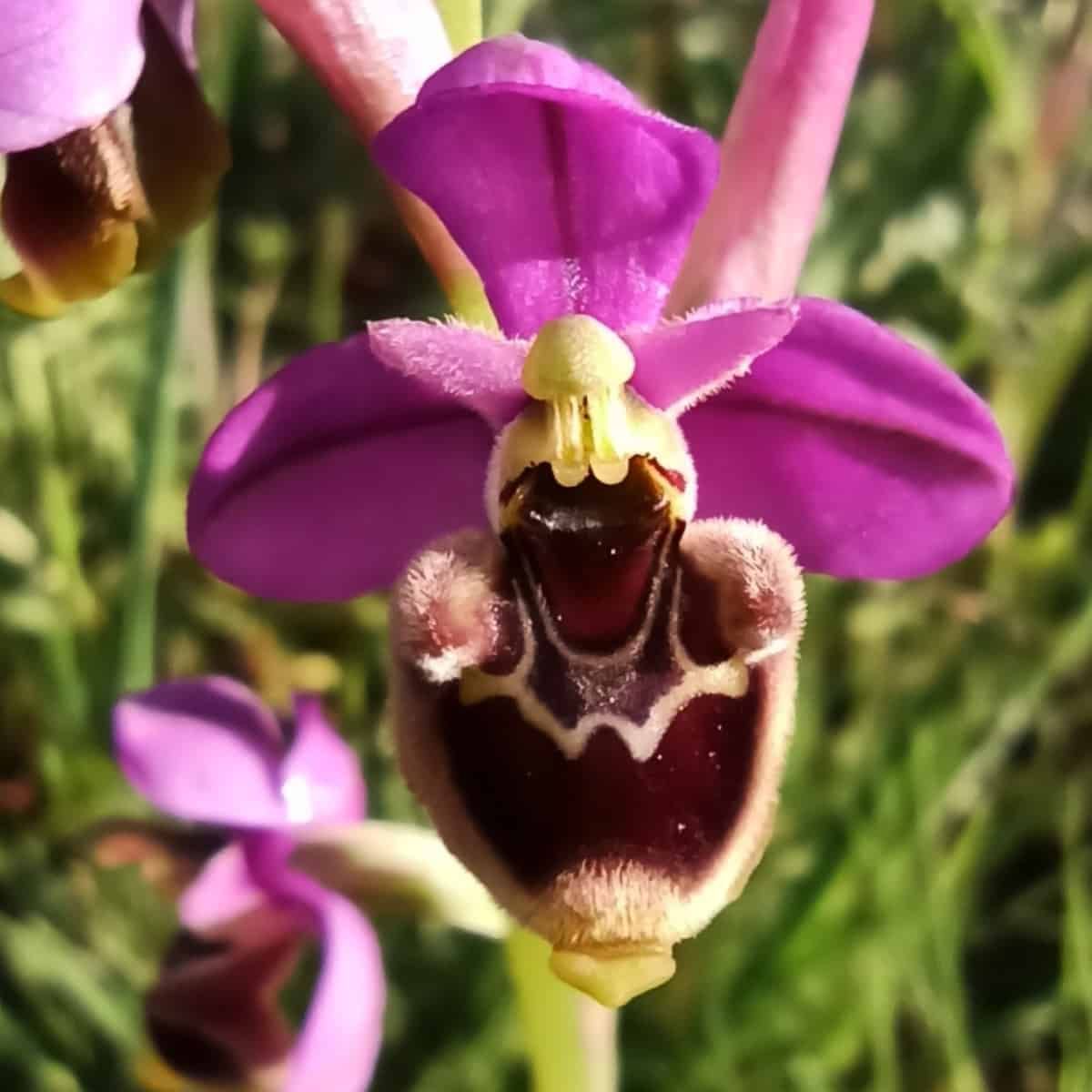
Cover image: Ophrys × peltieri by Marcos Perille Seoane / iNaturalist CC BY-NC