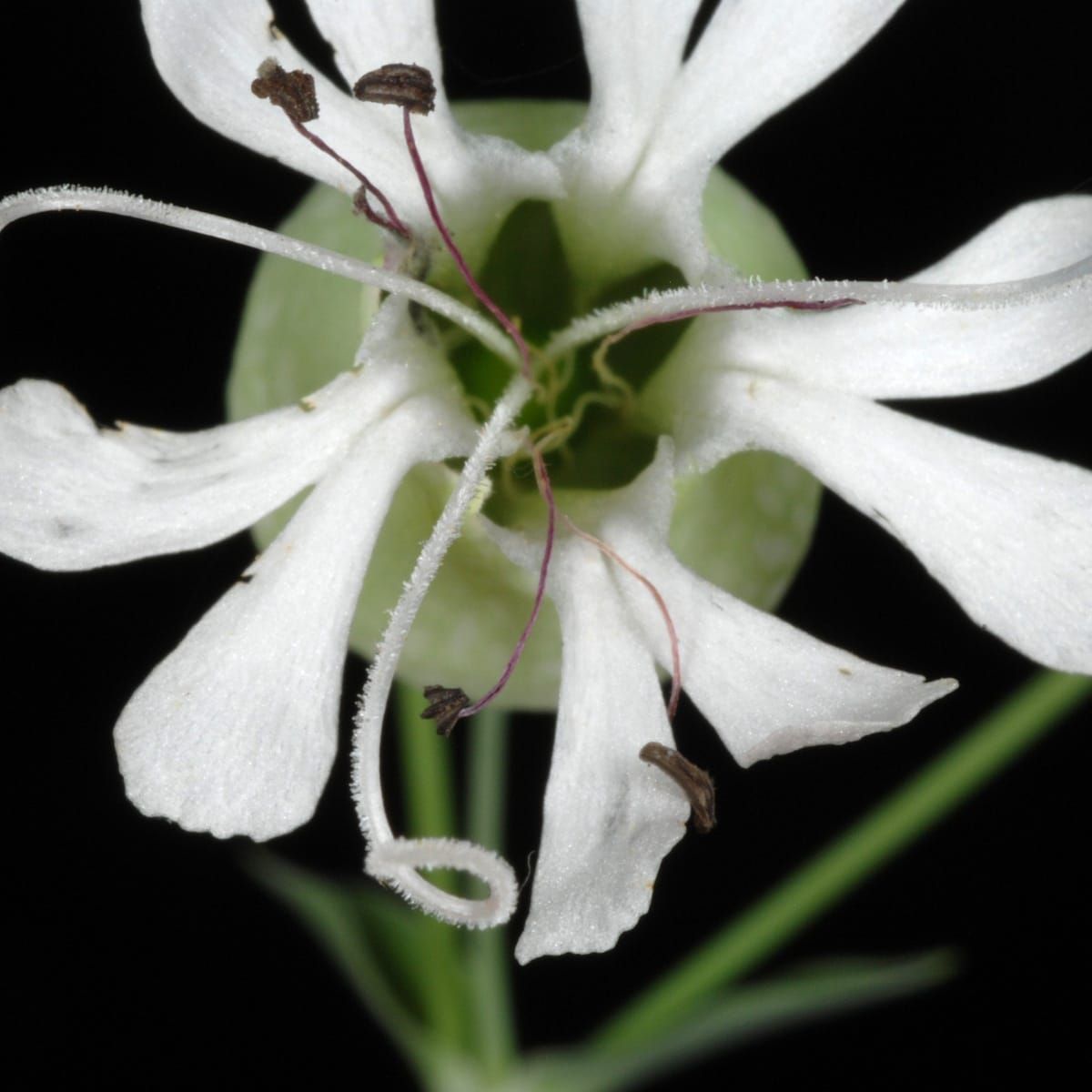


Here's a round up of the top 20 papers you've been sharing this week on Bluesky. Papers behind a paywall are marked 💰otherwise they're free to access at time of checking.
How this works
We scan posts by people on the Botany Auto list and pull out the entries with links to papers. Every time a paper gets a post written about it it gets 4 points. It gets 3 points for a repost and 1 point for a like.
We try to add people to the Botany Auto post, if they post about Botany (doesn't have to be links to papers) around 20% of the time or more. The belief is that because the list as a whole shares an interest in plants, it's this material that tends to rise to the top.
If you think you should be on the Botany Auto list, but aren't, please drop a message to @botany.one on Bluesky.
1. The controls that got out of control
Schneider, A. · EMBO Reports · Score: 388
How would you define science to a lay person, considering that ‘science’ includes highly diverse disciplines? My answer would be that all these disciplines share a common foundation, called the ‘scientific method’. It provides a universally valid framework, enabling anyone, regardless of scientific or cultural background, to arrive at the same conclusions when analyzing the same data. Unlike faith, which is highly subjective, the scientific method offers an objective, systematic approach to uncover facts about the natural world.
'If a control experiment fails, does that mean that the entire experiment is poorly designed and you must restart from scratch? Often, yes— but not always. I present five examples where failed control experiments triggered entirely new fields of research.' link.springer.com/article/10.1...
— Thiago Carvalho (@cyrilpedia.bsky.social) 12:41 · May 31, 2026
[image or embed]
2. Melatonin seed priming: A climate‐smart, green strategy to enhance abiotic stress tolerance in plants
Raza, A. et al. · Journal of Integrative Plant Biology · Score: 326
Enhancing crop tolerance to multiple abiotic stresses is critical for achieving sustainable agriculture. Targeted seed‐stage interventions using natural signaling compounds (e.g., melatonin) provide a unique opportunity to establish early stress tolerance that can persist through the critical seed‐to‐seedling transition. Melatonin seed priming (MSP) is rapidly emerging as a green and climate‐smart strategy for enhancing plant stress tolerance. MSP triggers defensive molecular, biochemical, and physiological reprogramming during germination, thereby improving plant performance under subsequent stress conditions. This review synthesizes recent mechanistic insights into how MSP confers stress tolerance across diverse species by modulating redox signaling, hormonal homeostasis, and stress‐related gene networks.
Happy to share our 🆕 #OpenAccess article " #Melatonin seed #priming🌱: A climate-smart, green strategy to enhance #abiotic stress🌡️❄️🧂🌊🫧 tolerance in plants🌾" is out in @jipb.bsky.social @wileylifesci.bsky.social🎉😍 Congrats to all authors👏 🔗 onlinelibrary.wiley.com/doi/10.1111/... #PlantScience
— Ali Raza (@aliraza6.bsky.social) 11:35 · May 30, 2026
[image or embed]
3. Anticipate, acclimate, recuperate and remember: How spatiotemporal signal integration controls flooding stress resilience in plants 💰
Rodriguez-Cisneros, C. et al. · Journal of Experimental Botany · Score: 286
Flooding is a major abiotic stress that restricts terrestrial plant growth and survival. A plant tissue’s ability to avoid or sustain critical oxygen deprivation (hypoxia) and subsequent re-oxygenation damage is vital for its survival. Submergence triggers rapid ethylene and hypoxia signalling that in turn control acclimation responses, promoting plant resilience. Interestingly, an extensive range of additional environmental and internal factors were shown to influence these canonical signalling pathways associated with flooding acclimation and tolerance. Here, we discuss how such integrative ethylene- and hypoxia-dependent signalling enables plants to anticipate and prepare for potential flooding-induced hypoxia stress, fine-tune acclimation according to the environmental and internal metabolic context, and effectively orchestrate re-oxygenation responses.
Excited to see our #plantscience review published in @jxbotany.bsky.social! It really captures our lab’s perspective on how plants use spatiotemporal signaling under environmental contexts when floods occur, to coordinate acclimation responses and achieve stress tolerance. doi.org/10.1093/jxb/...
— Sjon Hartman (@hartman-plantlab.com) 15:21 · Jun 2, 2026
[image or embed]
4. Harmala alkaloids regulate cell division planes in plants
Diehl, K. A. et al. · bioRxiv · Score: 238
Here, we investigated the effects of the harmala alkaloids on plant growth and cell division using Arabidopsis thaliana as a model system. Of the harmala alkaloids, harmaline was identified as the most potent compound for root growth inhibition. Quantitative live cell imaging demonstrated that harmaline exposure causes progressive defects in cell division orientation and root cell morphology in a temporal manner.
(1/11) Excited to share the brand-new cell division preprint from the lab! In this manuscript, chemical biology (in a collaboration with @rnett42.bsky.social Ryan’s lab) meets the cell biology (our lab). Harmala alkaloids regulate cell division planes in plants www.biorxiv.org/content/10.6...
— Arif Ashraf (@aribidopsis.bsky.social) 19:15 · Jun 3, 2026
[image or embed]
5. Molecular mimicry of a pathogen virulence target by a plant immune receptor 💰
Gómez De La Cruz, D. et al. · Science · Score: 200
Plants and animals respond to pathogen attack by mounting innate immune responses that require intracellular nucleotide-binding leucine-rich repeat (NLR) proteins. These immune receptors detect pathogen infection by sensing virulence effector proteins. However, how receptors evolve new recognition specificities remains poorly understood. We found that the plant NLR MLA3 (Mildew locus a 3) has evolved to recognize a pathogen effector by acting as a molecular mimic of an effector virulence target, thereby triggering an immune response.
So proud to see this story finally out!🎉 We added new data since our previous preprint—transgenic barley plants with an engineered immune receptor that fights off two fungal pathogens at once. Short 🧵 and link to the original preprint thread on X👇 www.science.org/doi/10.1126/...
— Diana Gómez De La Cruz (@dianagdlc.bsky.social) 10:07 · Jun 5, 2026
[image or embed]
6. A membrane-anchored inhibitor of papain-like cysteine proteases promotes Pseudomonas root colonization
Moser, D. et al. · bioRxiv · Score: 192
Pseudomonas species, spanning both beneficial and pathogenic lifestyles, possess conserved mechanisms to modulate plant immunity. Nevertheless, the mechanisms by which commensal bacteria establish and maintain host colonization remain poorly understood. Here, we report the characterization of a Pseudomonas chagasin-like protease inhibitor (Cpi1), conserved across pseudomonads representing a novel class of membrane-anchored PLCP inhibitor. Unlike previously described secreted protease inhibitors, P. putida Cpi1 is a lipoprotein localized to the bacterial surface and outer membrane vesicles (OMVs), positioning it to selectively inhibit immune-related papain-like cysteine proteases (PLCPs) during host interactions.
📢 new preprint! How do commensal bacteria establish themselves on plant roots despite plant immunity? We identify Cpi1, a conserved membrane-anchored protease inhibitor in Pseudomonas that promotes early root colonization and modulates microbial community assembly. www.biorxiv.org/cgi/content/...
— Johana Misas Villamil (@jomivi.bsky.social) 10:38 · Jun 3, 2026
[image or embed]
7. The demonstration of a single origin for nodule evolution, with nodule engineering in a non-nodulating species
Kundu, A. et al. · Score: 176
The nitrogen-fixing root-nodule symbiosis provides a sustainable source of nitrogen for plants within the Nitrogen (N)-fixing clade (NFC). A debate has raged over whether nodulation evolved once, with many losses or multiple times following a predisposition event. Here we demonstrate that nodule-organogenesis is fully conserved between an actinorhizal nodulator Datisca glomerata and the legume Medicago truncatula, showing entirely conserved programmes for Nodule INception (NIN)-controlled development leading to nodule emergence.
The demonstration of a single origin for nodule evolution, with nodule engineering in a non-nodulating species https://www.biorxiv.org/content/10.64898/2026.05.31.728964v1
— bioRxiv Plant Bio (@biorxiv-plants.bsky.social) 21:02 · Jun 3, 2026
8. An active Helitron transposon family in wheat
Peng, H. et al. · Nature Plants · Score: 176
Transposable elements play a pivotal role in genome evolution and phenotypic variation in numerous eukaryotic species. Helitrons, a recently identified category of transposons, remain poorly understood in terms of epigenetic regulation and real-time mobilization in plants. Here our study reveals that reduced DNA methylation combined with heat stress promotes the mobilization of the Xuan–Feng Helitron family in wheat.
We just published our new paper about an active Helitron transposon in wheat 🌾🧬 We found that it can be mobilised by heat stress when DNA methylation is reduced. We document its full lifecycle: RNA -> circular DNA -> integration www.nature.com/articles/s41... #TEsky
— Etienne Bucher 🌾🧬🇪🇺 (@plantepigenetics.ch) 10:47 · Jun 5, 2026
[image or embed]
8. Synchronous spatiotemporal control of autophagy and organelle trafficking is necessary for infection by Magnaporthe oryzae
Eseola. A.B. et al. · Cell Reports · Score: 174
The blast fungus Magnaporthe oryzae infects plants using an appressorium that generates force to breach the leaf cuticle. Appressorium development follows a cell-cycle-regulated morphogenetic program requiring autophagy-associated death of the spore. How proliferative growth is coordinated with cell death remains unclear. Here, we show that each conidial cell follows a distinct developmental program essential for infection.
Peer-reviewed version of our study led by @aliceeseola.bsky.social first seen on @biorxiv-cellbio.bsky.social showing the exquisite level of control of organelle trafficking & autophagy exerted during plant infection by the blast fungus. Thanks to all co-authors. www.cell.com/cell-reports...
— Nick Talbot (@talbotlabtsl.bsky.social) 11:42 · Jun 4, 2026
[image or embed]
10. TALEs, TALENs, and TALE Base Editors: From Plant Pathology to Biotechnology 💰
Grau, J., Boch, J. · Annual Review of Phytopathology · Score: 138
TALEs (transcription activator-like effectors) are an excellent example of how studying pathogen–host interactions can lead to significant biotechnology inventions. TALEs are bacterial effectors that are translocated into plant cells via a bacterial type III secretion system. We review recent advances in Xanthomonas genomics, synthesize current knowledge about naturally occurring TALEs, and highlight current roles of TALEs in genome editing and synthetic biology.
It's be an honour to write this TALE-review with my long-time friend and colleague Jan Grau 👨🔬📗🧑💻. It's about both worlds: virulence, genomics 🌾🧫🧪 & genome editing, SynBio 🧬✂️. All figures done by ourselves! Hope you like it. Please spread the news! 📰🥳 doi.org/10.1146/annu...
— Jens Boch (@mikrobenjaeger.bsky.social) 12:28 · Jun 1, 2026
[image or embed]
11. Reversal to osmotrophy in eukaryotes 💰
López-García, P. & Moreira, D. · Nature Ecology & Evolution · Score: 136
New #ISEPpapers by @deemteam.bsky.social! Reversal to osmotrophy in eukaryotes www.nature.com/articles/s41... "Distant eukaryotic lineages convergently reverted from predation to osmotrophy through co-option of bacterial genes and their mobilization via eukaryote-to-eukaryote HGT" #Protists
— ISEP (@isepprotists.bsky.social) 11:47 · Jun 4, 2026
[image or embed]
12. Antagonistic interactions between CLAVATA receptors shape maize ear development 💰
Lindsay, P. L. et al. · New Phytologist · Score: 132
On the cover: Maximum projection confocal micrograph of a developing maize ear primordium expressing PIP2-CFP membrane marker (cyan) and developmental receptor BAM1D-YFP (yellow). Image is courtesy of Penelope Lindsay. 📖 See Jackson et al. nph.onlinelibrary.wiley.com/doi/10.1111/... #LatestIssue
— New Phytologist (@newphyt.bsky.social) 13:03 · Jun 4, 2026
[image or embed]
13. Assimilation dynamics of xylem-transported CO2 by woody tissue photosynthesis revealed with 11C- and 13C-labelling 💰
Mincke, J. et al. · Journal of Experimental Botany · Score: 116
🍬🌳 RESEARCH 🌳🍬 In Populus tremula branches, xylem-transported CO2 is reassimilated by woody tissue photosynthesis and locally contributes to stem sugar production for growth and energy. 📝 Mincke et al. 🔗 doi.org/10.1093/jxb/... #PlantScience 🧪
— Journal of Experimental Botany (@jxbotany.bsky.social) 17:35 · Jun 1, 2026
[image or embed]
14. Adaxial–abaxial leaf surface asymmetry is a key ecological driver of the phyllosphere microbiome
Sugimoto, H. et al. · Journal of Experimental Botany · Score: 96
🌿🍃 Upper and lower leaf surfaces host different microbes. Upper leaf degradation pathways. Lower leaf biosynthesis and energy. Leaf asymmetry drives phyllosphere ecology. #plantscience @jxbotany.bsky.social @academic.oup.com academic.oup.com/jxb/advance-...
— Global Plant Science Spotlight (@plant-sci.bsky.social) 3:34 · May 31, 2026
[image or embed]
15. WOX5
expression stimulated by the transcription factor NF-YAc reprograms cortical cells for nodule primordium initiation in soybean
Li, L. et al. · Journal of Experimental Botany · Score: 88
🧬 Editor's Choice 🧬 Soybean nodule primordia are initiated when transcription factor NF-YAc activates WOX5 at a 442 bp legume-specific promoter fragment to reprogram differentiated root cortical cells into a de novo stem-cell niche. 📝 Li et al. 🔗 doi.org/10.1093/jxb/... #PlantScience 🧪
— Journal of Experimental Botany (@jxbotany.bsky.social) 13:24 · May 30, 2026
[image or embed]
16. Teosinte alleles enhance nitrogen assimilation and seed protein in maize 💰
Huang, Y. et al. · Nature · Score: 80
Teosinte alleles enhance nitrogen assimilation and seed protein in maize From: www.nature.com/articles/s41... #PlantScience Preserving, sequencing, and studying wild relatives of crops still very informative and powerful today.
— Chenxin Li, PhD (@chenxinli2.bsky.social) 13:11 · Jun 4, 2026
[image or embed]
17. Stem nitrogen accumulation through vegetative storage proteins and mobilization to seeds supports high-yielding soybean
Sazon, L. A. R. et al. · Journal of Experimental Botany · Score: 78
🧬 RESEARCH 🧬 Nitrogen accumulation in stems plays a key role in meeting the seasonal N demand of growing seeds in soybean. Selection of traits, and agronomic practices that increase N accumulation in stems can help support higher yields- Sazon et al. 🔗 doi.org/10.1093/jxb/... #PlantScience 🧪
— Journal of Experimental Botany (@jxbotany.bsky.social) 17:42 · May 30, 2026
[image or embed]
18. GWAS reveal SUBER GENE1-mediated suberization via type one phosphatases 💰
Han, J-P. · Nature Plants · Score: 74
Very happy to see that SUBER GENE1 (SBG1; At1g52565) is now annotated in TAIR and Aramemnon! We identified this gene through a GWAS on natural variation in endodermal suberin and had the privilege of naming it. For those interested, the study can be found here: www.nature.com/articles/s41...
— mariebarberon.bsky.social (@mariebarberon.bsky.social) 14:35 · Jun 4, 2026
[image or embed]
19. tanggle: An R package for the visualization of phylogenetic networks
Schliep, K. et al. · Applications in Plant Sciences · Score: 74
From the upcoming #AppsPlantSci Phylogenetic Networks issue tanggle: An R package for the visualization of #phylogenetic networks (by Schliep, Vidal-Garcia, Solis-Lemus, et al) bsapubs.onlinelibrary.wiley.com/doi/full/10.... @uwdsi.bsky.social #Rpackage #ggtree #macroevolution #evolution
— Botanical Society of America (@botsocamerica.bsky.social) 16:34 · Jun 4, 2026
[image or embed]
20. Let’s twist again? Resupination failure in an orchid
Cardoso, J. C. F., Oliveira, P. E. · Frontiers in Ecology and the Environment · Score: 72
Thanks to @sylvatica2024.bsky.social I have learnt something new. Resupination is the process by which flowers rotate in the bud. Occurs in 14 different families and aids the landing of pollinators on the labellum. Well I never…. esajournals.onlinelibrary.wiley.com/doi/10.1002/...
— Big Meadow Search (@bigmeadowsearch.bsky.social) 7:28 · Jun 1, 2026
[image or embed]
Cover image: Arabidopsis thaliana by Josué Amoroso / iNaturalist CC BY-NC