
Here's a round up of the top papers you've been sharing this week on Bluesky. Papers behind a paywall are marked 💰otherwise they're free to access at time of checking.
I've changed how the harvester works for the system this week. The aim is to reduce the file weight of the email, as it's got a bit heavy. I've also added in more details about how papers are scored, so you can see how many likes or reposts something got.
How this works
We scan posts by people on the Botany Auto list and pull out the entries with links to papers. Every time a paper gets a post written about it it gets 4 points. It gets 3 points for a repost and 1 point for a like.
We try to add people to the Botany Auto post, if they post about Botany (doesn't have to be links to papers) around 20% of the time or more. The belief is that because the list as a whole shares an interest in plants, it's this material that tends to rise to the top.
If you think you should be on the Botany Auto list, but aren't, please drop a message to @botany.one on Bluesky.
1. OpenEvo: An Open-Source Platform for Automated Evolution and Analysis
Cocioba, S. S. et al. · bioRxiv · 1 post · 105 likes · 33 reposts on Bluesky
Here we introduce OpenEvo, a fully open-source, low-cost turbidostat platform for automated continuous culture and directed evolution experiments. Existing tools are expensive, complex, or lack open-source hardware; OpenEvo addresses this gap with a complete, fully automated evolution platform with detailed, illustrated construction instructions for beginners, open-source software and firmware, priced around $300.
Sebastian S. Cocioba @atinygreencell.bsky.social · on Bluesky
@breakliquid.bsky.social and I are delighted to say our OpenEVO preprint is finally live! An open source hand-made turbidostat that's modular, affordable, and made to be customized. Designed with love for the research community. Enjoy!!!💚
www.biorxiv.org/content/10.6...
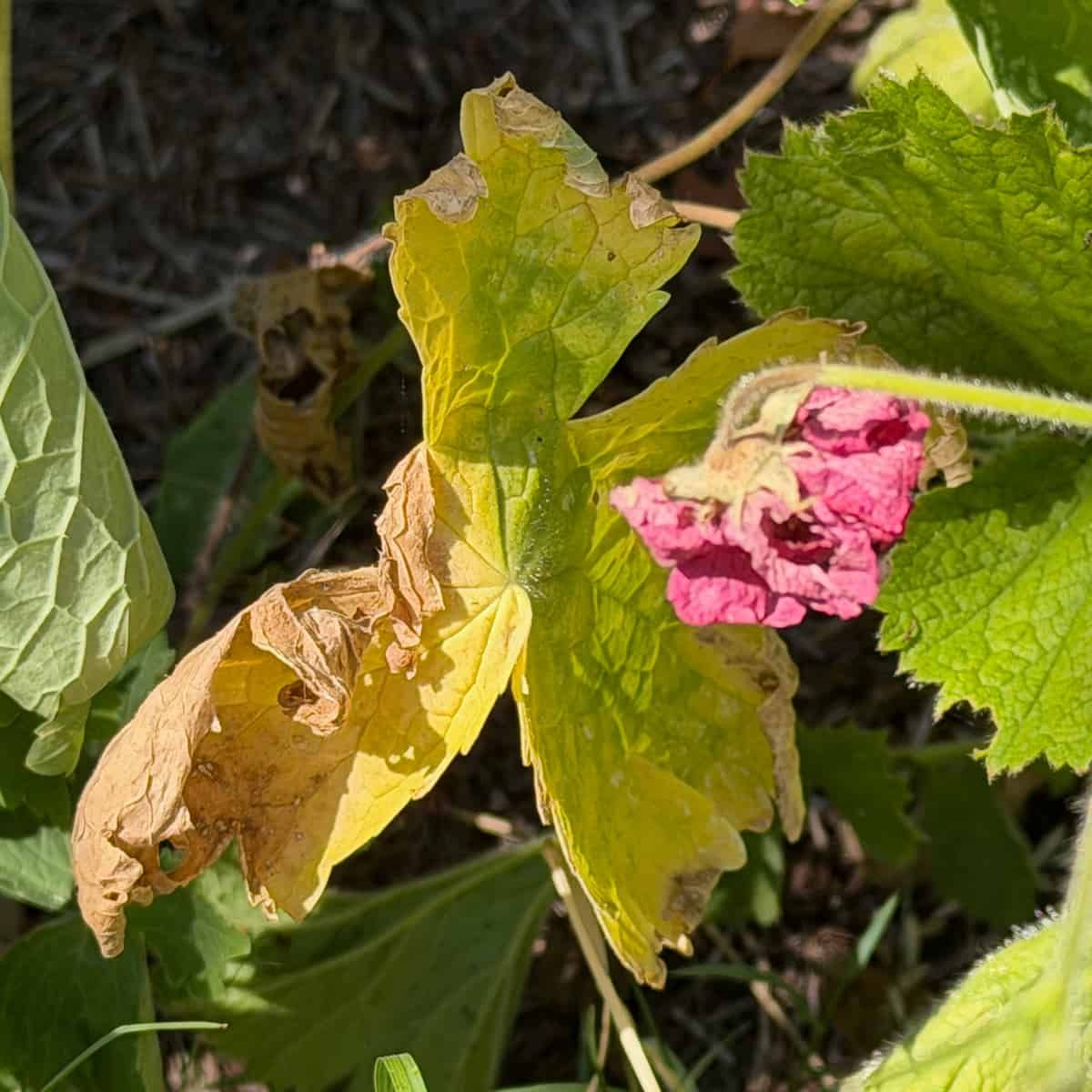
2. Distinguishing leaf scorching from senescence under climate extremes 💰
Bergström, M. et al. · Nature Climate Change · 1 post · 53 likes · 25 reposts on Bluesky
Global temperatures have risen rapidly in recent decades, leading to more frequent extreme events such as droughts, heatwaves and their co-occurrence — so-called hot droughts. These events have caused widespread and abrupt leaf discolouration in temperate forests, as observed during the 2021 Pacific Northwest heat dome and the 2018 and 2022 European widespread hot droughts. Because leaf colour change is commonly associated with autumn senescence, such discolouration is often interpreted as premature or stress-induced senescence. However, not all early discolouration reflects an activated senescence program: thermal damage and hydraulic failure under hot droughts can cause passive leaf scorching.
Charlotte Grossiord @charlottegrossiord.bsky.social · on Bluesky
Excited to share our new paper on leaf scorching. 🔥Early leaf browning during heat and drought is often interpreted as premature leaf senescence - but it may reflect rapid heat damage. Separating these processes is essential. www.nature.com/articles/s41...
@wslresearch.bsky.social
 View on Bluesky →
3. Siderophore production by the lichen fungus Xanthoria parietina supports its algal symbiont
Happacher, I. et al. · Nature Communications · 1 post · 45 likes · 20 reposts on Bluesky
Here, we characterize the iron acquisition system of Xanthoria parietina, a globally distributed lichen-forming fungus associated with the microalgal photobiont Trebouxia decolorans.
Nick Talbot @talbotlabtsl.bsky.social · on Bluesky
The mycobiont of the lichen Xanthoria parietina produces the siderophore ferrichrome which enables iron acquisition and nutrient exchange with its algal photobiont. Great collaboration with my group & @metalichen.bsky.social led by Hubertus Haas 👇
www.nature.com/articles/s41...
4. A resurrection experiment reveals reduced adaptive potential in a common agricultural weed
Bishop, S. G. D., Stinchcombe, J. R., Baucom, R. S. · Evolution Letters · 1 post · 32 likes · 11 reposts on Bluesky
Adaptive evolution is critical to population responses under accelerating anthropogenic global change. Although theory and some empirical work suggest that contemporary rates of environmental change can be met by equally rapid evolutionary shifts, mismatches between expected and realized evolution remain common in natural systems. Using a resurrection approach, we demonstrate that the structure of genetic covariances among pollination and mating-system traits in the common morning glory (Ipomoea purpurea) is increasingly constraining evolutionary trajectories.
Discussed on Bluesky by @gbaucom.bsky.social.
5. RBMP2 shapes specialized membranes for CO₂ delivery in the pyrenoid condensate
Wu, H. et al. · bioRxiv · 1 post · 29 likes · 8 reposts on Bluesky
Approximately one-third of global CO₂ fixation occurs in the algal pyrenoid, a condensate of the CO2-fixing enzyme Rubisco traversed by membranes that supply it with CO₂. In the model alga Chlamydomonas reinhardtii, CO2 is delivered by a specialized central reticulated region of these membranes. Here we define how this region is built and identify RBMP2 as the first factor required for its biogenesis.
Martin Jonikas @mjonikas.bsky.social · on Bluesky
The algal pyrenoid turbocharges global CO2 fixation. Central to its function are specialized membranes that deliver CO2. We discovered that the protein RBMP2 makes these membranes—and found that the mysterious minitubules appear to enhance CO₂ delivery!
www.biorxiv.org/content/10.6...
6. The origins and diversification of hummingbird pollination in Bromeliaceae
Forward, E. A., Thompson, J. B. · Botanical Journal of the Linnean Society · 1 post · 23 likes · 9 reposts on Bluesky
Here we assemble a novel database of published pollinators for 403 bromeliad species spanning 70% of genera across all subfamilies, and analyse these data in a phylogenetic framework. We estimate ancestral states, which indicate widespread lability, including many previously unknown transitions. Many of these occur in recent evolutionary time, indicating ongoing turnover in pollinators. Despite pronounced background diversification rate-heterogeneity, hummingbird pollination is confirmed to be a strong driver of diversification, a result that we show is unlikely to change even under unrealistic assumptions of its prevalence in unsampled species.
Jamie Thompson @jamiet-42.bsky.social · on Bluesky
New paper now out in the Botanical Journal of the Linnean Society @botjlinnsoc.bsky.social 🌼
Student-led, by Elizabeth Forward!
Hummingbirds nearly double the diversification rate of bromeliads, the pineapple family
@leverhulme.ac.uk @uor-research.bsky.social
doi.org/10.1093/botl...
7. Computational design of de novo integrated domains enables rational control of pathogen effector recognition in plant NLR immune receptors.
Xi, Y. et al. · bioRxiv · 1 post · 13 likes · 11 reposts on Bluesky
Here, we describe a programmable framework that leverages generative AI protein design tools, RFdiffusion and ProteinMPNN, to design de novo integrated domains (IDs) against diverse pathogen effectors.
bioRxiv Plant Bio @biorxiv-plants.bsky.social · on Bluesky
Computational design of de novo integrated domains enables rational control of pathogen effector recognition in plant NLR immune receptors. https://www.biorxiv.org/content/10.64898/2026.07.10.737686v1
View on Bluesky →8. Tropical forests are facing increasing risks of exposure to critical temperature thresholds 💰
van Tiel, N. et al. · Proceedings of the National Academy of Sciences · 1 post · 21 likes · 8 reposts on Bluesky
Understanding how close tropical tree species are to critical temperature thresholds that might impede photosynthetic activity is vital in a world where heat waves have become more severe and frequent. Using remotely sensed surface temperature and species distribution maps, we studied the spatiotemporal variation in the thermal safety margins (TSM, i.e., the difference between T crit , the critical photosynthetic temperature, and the maximum canopy temperature) of 208 tropical tree species in South America, Southeast Asia, and Central Africa during the period 2001–2020.
Charlotte Grossiord @charlottegrossiord.bsky.social · on Bluesky
🌳How close are tropical forests to their photosynthetic limit? Our new paper highlights the vulnerability of these ecosystems to further warming and the importance of accurately representing canopy temperature. www.pnas.org/doi/10.1073/... @wslresearch.bsky.social
 View on Bluesky →
9. Enhancing structural heterogeneity in managed forest landscapes promotes gamma but not beta diversity in understorey plant communities
Bradler, P. M. et al. · Journal of Applied Ecology · 1 post · 18 likes · 8 reposts on Bluesky
Although habitat heterogeneity is known to enhance local species diversity, the effects of management‐driven structural heterogeneity on understorey plant communities across spatial scales remain poorly understood, despite their crucial role for forest biodiversity and ecosystem functioning. To analyse how forest understorey plant communities respond to an enhancement of structural heterogeneity in managed forests, we established 11 experimental sites consisting of two paired forest landscapes, an untreated homogenous control and a treatment district (ESBC, Enhancement of Structural Beta‐Complexity). In treatment districts, structural heterogeneity was enhanced through different combinations of local patch‐scale manipulations of light and deadwood features, leading to greater between‐patch heterogeneity at the landscape scale.
Pia Bradler @piambr.bsky.social · on Bluesky
Our paper on how understorey vegetation responds to enhanced forest structure was just published @jappliedecology.bsky.social!
We found an increase in alpha- and gamma-diversity driven by heterogeneity in light conditions at the landscape-scale 🌱🌳🥬
besjournals.onlinelibrary.wiley.com/doi/10.1111/...
10. EPOS1 is required for normal pyrenoid starch sheath formation and efficiency of the CO2‐concentrating mechanism in Chlamydomonas reinhardtii 💰
Adler, L. et al. · New Phytologist · 2 posts · 7 likes · 8 reposts on Bluesky
Pyrenoid‐based CO 2 ‐concentrating mechanisms (pCCMs) boost photosynthesis by delivering elevated levels of CO 2 to Ribulose‐1,5‐bisphosphate carboxylase/oxygenase. Pyrenoids are often surrounded by a starch sheath thought to enhance pCCM efficiency, but little is known about how the sheath is formed. Here, we have assessed the role of the pyrenoid‐associated protein EPOS1 in starch sheath formation in Chlamydomonas reinhardtii.
New Phytologist @newphyt.bsky.social · on Bluesky
EPOS1 is required for normal pyrenoid starch sheath assembly and CO2-fixation in Chlamydomonas
Liat Adler, et al.
nph.onlinelibrary.wiley.com/share/UGKQVT...
#PlantScience
 View on Bluesky →
11. Shedding light on cuticle formation: phytochrome B and downstream signaling events controlling cuticle deposition in tomato fruits 💰
Fernandes, L. L. G. et al. · Journal of Experimental Botany · 1 post · 11 likes · 8 reposts on Bluesky
The cuticle is a hydrophobic barrier limiting water loss and pathogen entry. Although light influences cuticle formation, the underlying mechanisms remain poorly understood, particularly in fruits. Here, we show that fruits from tomato plants grown under far-red-enriched light conditions displayed increased cuticle load and up-regulation of cutin and wax biosynthetic genes.
12. Keeping up with the heat: long‐term dynamics and plasticity of heat tolerance in a tropical plant community 💰
Hernández, G. G. et al. · New Phytologist · 2 posts · 8 likes · 7 reposts on Bluesky
Increases in global temperatures pose immense challenges for plants, especially for tropical species adapted to thermally stable conditions. We therefore investigated the long‐term dynamics of photosynthetic heat tolerance in a tropical Zingiberales community of 35 species in a tropical wet forest in the Caribbean lowlands of Costa Rica, using censuses spanning 7 yr.
13. Neighbours rewire plant–soil feedback patterns via reshaping root microbiomes 💰
Kuerban, M., Gomes, S. I. F., Bezemer, T. M. · Nature Plants · 1 post · 15 likes · 6 reposts on Bluesky
Soil microbiomes and neighbouring plants both greatly influence plant growth, thereby shaping community dynamics. Although these processes have been studied extensively, they are rarely integrated in a mechanistic framework. Consequently, how they interact mechanistically remains poorly understood. Here we address these questions using a plant–soil feedback approach with six grassland species grown alone or with five different neighbours in sterile soil and in soils with legacies of conspecific and heterospecific plants.
14. Plant regeneration: Breaking the silence of totipotency by reprogramming a stomatal precursor cell 💰
Torii, K.U. · Current Biology · 1 post · 10 likes · 7 reposts on Bluesky
Plants have a remarkable ability to reprogram their somatic cells into stem cells. A new study reveals that a transcription factor, LEC2, together with SPEECHLESS, directly reprograms a stomatal precursor to a totipotent, somatic embryo founder cell.
15. Patterning and Evolution of the Land Plant Gametangia
Sorojsrisom et al. · International Journal of Plant Sciences · 1 post · 16 likes · 5 reposts on Bluesky
The gametangia are critical organs of the land plant gametophyte that form, house, and disperse the gametes. Because of their biological importance, gametangium structure tends to be highly conserved within lineages, yet they still exhibit marked morphological differences between the major lineages. The morphology and development of land plant gametangia have been studied for over 150 years, yet significant questions remain about their evolutionary origin, homologies between them, and how they are patterned by the genome.
16. Cryptochrome‐mediated signaling in root development
Pérez Torres, M., Pedmale, U. V. · New Phytologist · 1 post · 12 likes · 5 reposts on Bluesky
Through both long‐distance signaling and local activity in root tissues, Cryptochromes (CRYs) influence auxin‐mediated root growth, long‐distance sucrose signaling, and cell division under distinct environmental conditions. Here, we review systemic and root‐autonomous CRY‐mediated pathways, environmental modulation, cross‐species conservation, and discuss outstanding questions in CRY‐regulated root growth. We asked: (1) Does heat tolerance of the Zingiberales community vary across years? And if it does, is this interannual variation associated with changes in environmental temperatures? (2) Do species differ in their interannual plasticity, and does this difference alter their relative heat tolerance rankings over the years?
17. Genome editing precisely boosts salt‐tolerant japonica rice yield
Zhou, M. et al. · Journal of Integrative Plant Biology · 1 post · 12 likes · 5 reposts on Bluesky
Gene editing of three key genes, G PROTEIN GAMMA SUBUNIT, CYTOKININ OXIDASE, AND IDEAL PLANT ARCHITECTURE 1, improved the salt-tolerant japonica rice variety Lansheng increased yield while maintaining its original salt tolerance and quality.
18. Redefining ecosystem integrity for an Anthropocene biosphere: a process‐ and lineage‐based framework for restoration
Svenning, J. · Restoration Ecology · 1 post · 17 likes · 3 reposts on Bluesky
Restoration increasingly operates in rapidly transforming landscapes shaped by human‐driven global change, where historical reference states no longer represent achievable or even desirable targets. Yet, ecological restoration and conservation management still rely on composition‐based definitions of ecosystem integrity that assume stable reference states. Such definitions are increasingly unfit for guiding restoration in a changing, human‐dominated biosphere. Here, I propose a redefinition of ecosystem integrity that prioritizes the persistence of key ecological processes and evolutionary heritage rather than compositional fidelity.
19. Systemic acquired resistance: an emerging role for jasmonates in local signal biogenesis, translocation and distal signal decoding
Bennett, F. et al. · New Phytologist · 1 post · 11 likes · 5 reposts on Bluesky
Recent studies using whole plant and confocal reporter imaging, electrical signalling, and single‐cell transcriptomics have revealed how specific cell types and the temporal–spatial organisation of phytohormone networks contribute to immune signalling. We summarise these findings alongside previous knowledge to highlight the collective importance of jasmonates, calcium, reactive oxygen species, and electrical signals as early initiators, coordinators, and most likely propagators of long‐distance signalling during ETI‐induced SAR.
20. Heterosis in wheat: mechanisms, benefits, and challenges in hybrid development
Revell, I. et al. · Journal of Experimental Botany · 1 post · 8 likes · 6 reposts on Bluesky
Focussing on wheat, this review details current understanding of the genetic control of heterosis and explores the efficacy of different methods for producing F1 hybrids. We posit that the mechanisms underlying heterosis are probably a combination of multiple or all current theories, and that the conversion of inbred crops such as wheat into hybrid breeding systems can be further enhanced using a complete genic system, lessening the need for current, more complex hybrid production systems.
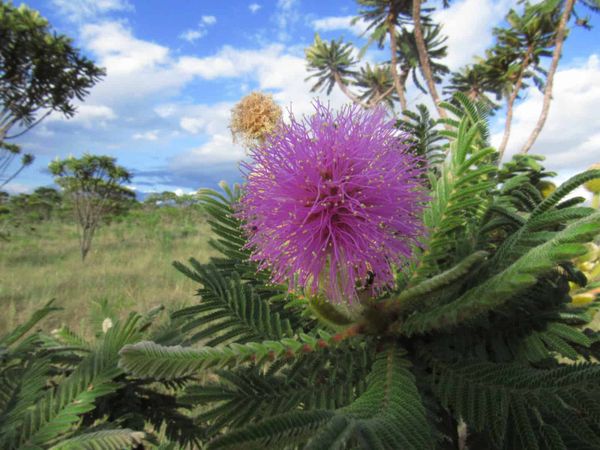
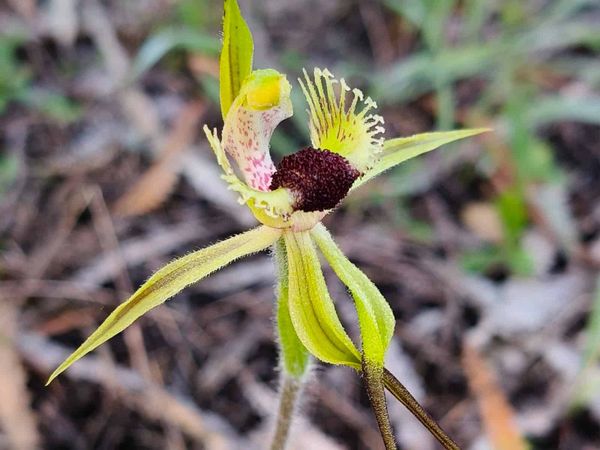
Cover image: