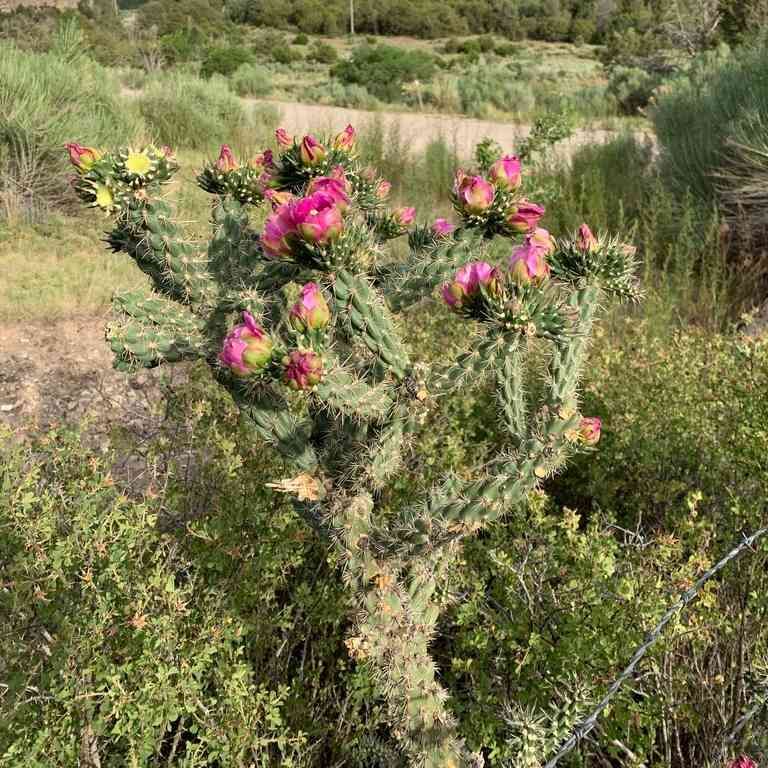

This week, I've selected one of my favourite cactuses for Plant of the Week.
Cylindropuntia imbricata, which is commonly known as the cane cholla or tree cholla cactus, is native to arid grasslands of the Chihuahuan Desert in northern Mexico and the southwest United States. It is also a noxious invasive species in Australia, where it is known by more diabolical names such as the Devil's rope cactus or Devil's rope pear.
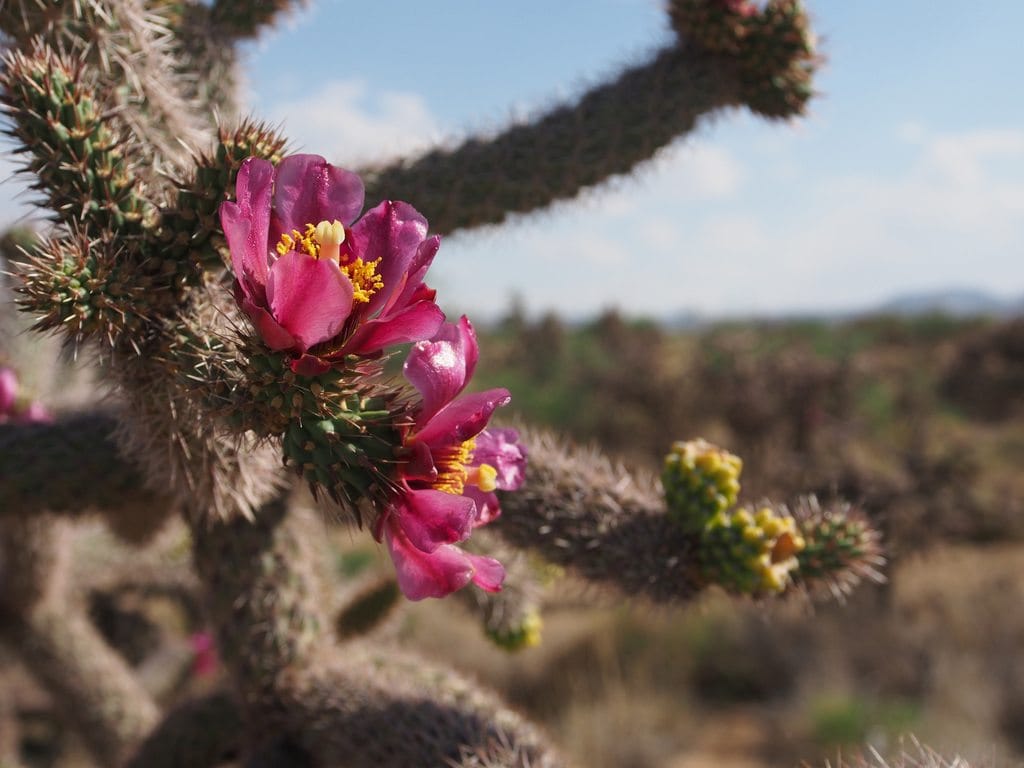
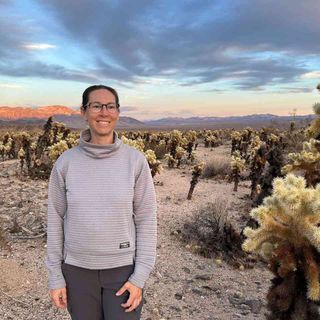
The average tree cholla cactus grows about 1 m in height in dense thickets or more evenly spaced "gardens". These gardens are the reason I enjoy this cactus so much. Standing in a cholla garden has a very Alice in Wonderland type feel. Their desert surroundings amplify the other worldliness and create a truly unique and special environment to visit.
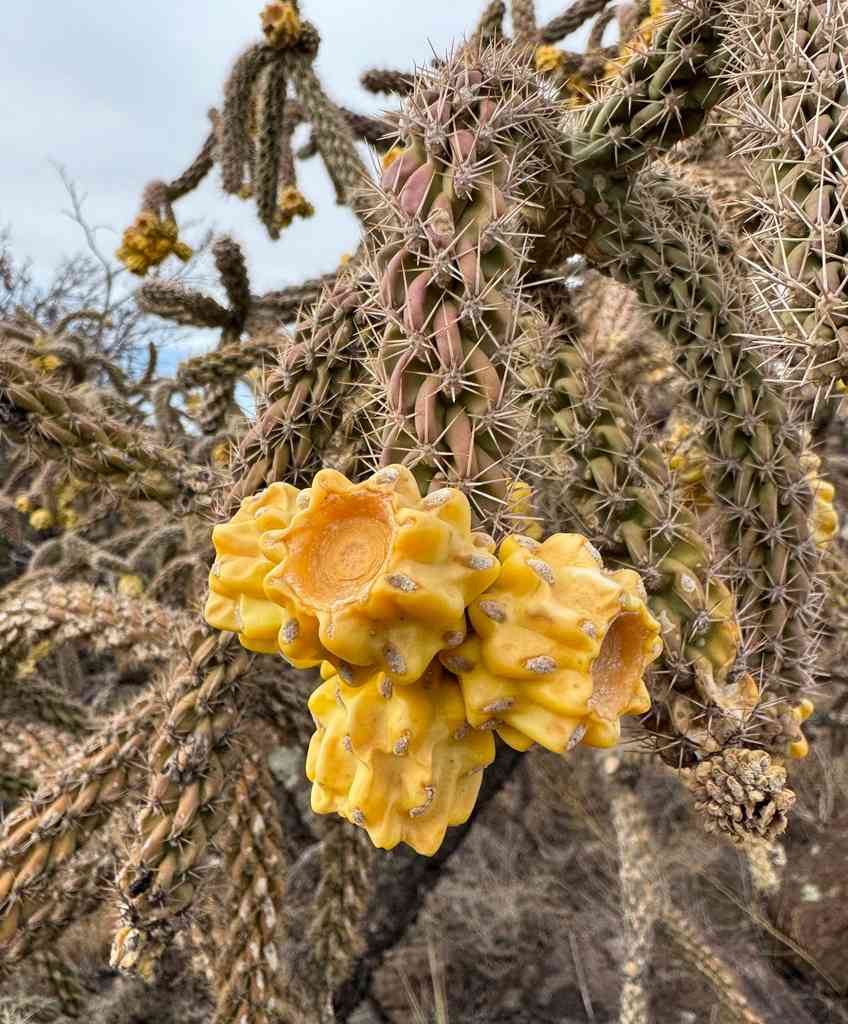
The tree cholla bears two kinds of stems: support stems and flowering stems. Their stems are armed with long, barbed spines (3 cm) that are so sharp they can pierce your shoes. So walking carefully around dropped stems is a must. Flowers bloom in late spring or early summer, and produce yellowish, tubercular fruits with 1 mm spines. The fruits are often mistaken for flowers themselves because of their colouring and hollow cone-like shape, an effect that results from the flower falling off during fruit development. Asexual reproduction also occurs via stems that fall off and take root.
The tree cholla cactus lives in a mutualistic relationship with ants. During the growing season, tree chollas secrete an extrafloral nectar from specialized glands that are present on both reproductive and vegetative organs. Their dominant ant partner is Liometopum apiculatum, and their association has been shown to improve cholla plant density.
The tree cholla cactus is also interesting because it performs CAM photosynthesis. This specialized version of photosynthesis makes the plant more water efficient in its arid environment, giving it the growing advantage it needs to sustain itself in the desert – even in the face of global warming.
So if you encounter a cholla garden, then enjoy the view, but be careful where you step and touching is not advised.
In this video, David Attenborough experiences the spines of the closely related teddy bear cholla (Cylindropuntia bigelovii) -- which is much more vicious than its name suggests.
Cover Image: A tree cholla cactus. CK2AZ / iNaturalist / CC BY 4.0