
Last year, we spoke with Gláucia Silva following the publication of her widely discussed paper exploring new ways to engage students with plants through pop culture. Her work, linking botany with cultural references, sparked conversations far beyond the plant science community, reaching educators, students, and curious readers around the world.
Now, one year on, we caught up with her again to see what happened next. In this follow-up interview, she reflects on the impact of the “Taylor Method”, the role of emotion in plant awareness, and why creativity might be one of the most powerful tools we have to connect people with the plant world.
Responses have been lightly edited for clarity.
It’s been a year since your paper came out—what’s surprised you most about how people have responded to it?
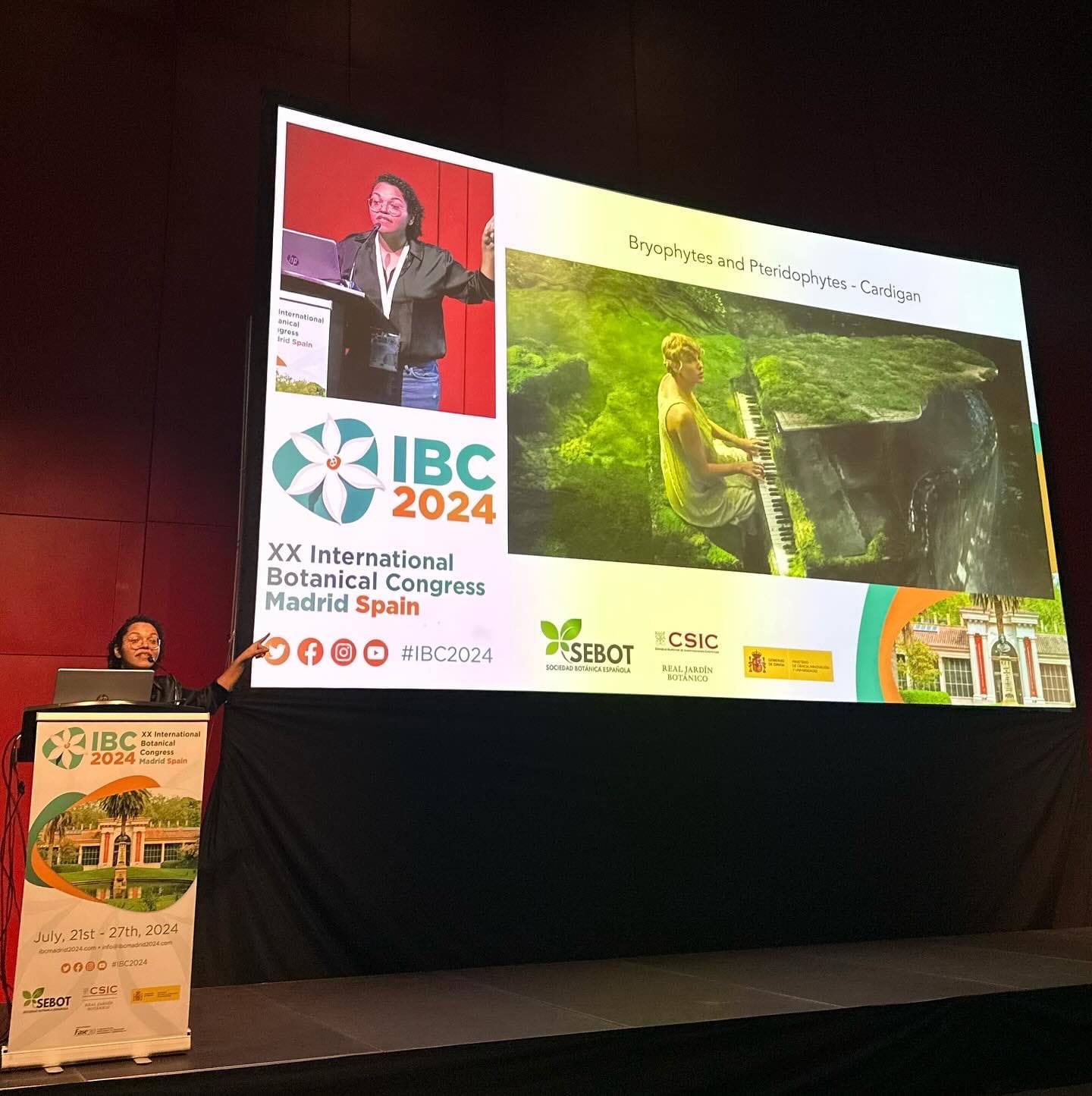
It is definitely the interest in connecting to an education paper about plants. I am surprised by how well the academic community received our paper on Taylor Swift and botany, how many people read, downloaded and shared it. It’s fantastic to see people who are not involved with botany, reading it and engaging with it – noticing plants after their experience reading about the Taylor Method. For example, I received an email from a marine biology scientist, based in New Zealand, who read the paper and stated every part she enjoyed on the article, shared her insights on how she noticed that the plants are always in the background at expositions and museums. Can you believe? This is amazing. The Taylor Method is a project that touches everyone, everywhere, independent of the work area.
Your work tackles plant awareness disparity. Do you feel it has contributed, even in a small way, to changing how people engage with plants?
Well, we still have a long path towards overcoming plant awareness disparity, but after seeing the feedback from peers worldwide, teenagers, students and even society itself, I allow myself to think that a little bit, yes. I am receiving positive feedback from people who never noticed plants in Taylor’s music videos before, who started noticing the plants in video games, other bands and singers' music videos, in movies, in their surroundings. That’s the idea – to give people a chance to start seeing the plants all around and connect with them, to a point that plants will be a conscious part of their optical perception of the world, and those people will perpetuate this experience.
Have you had feedback from educators who applied your method in their classrooms?
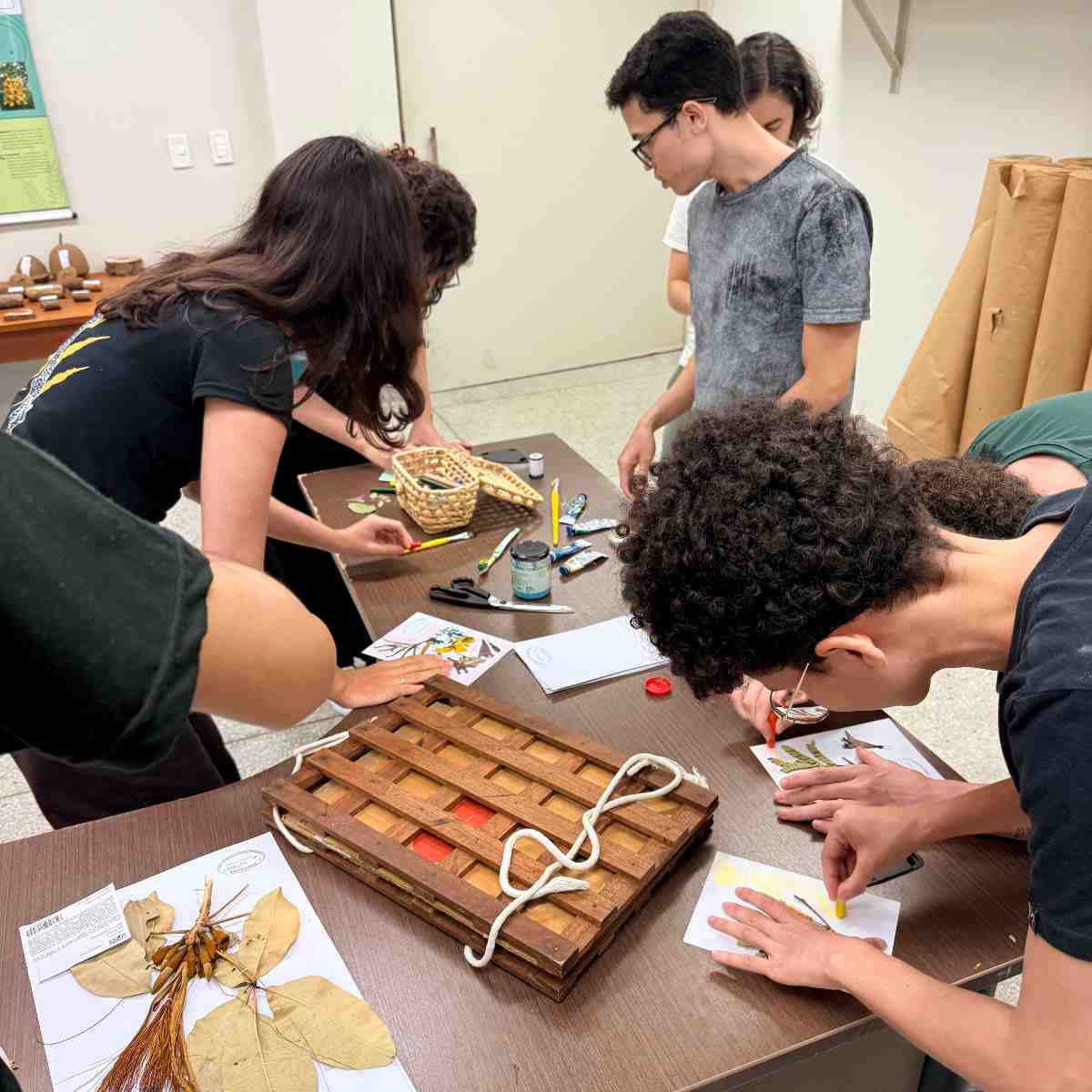
Yes! It’s fantastic. I love it when educators share with me their perceptions and experiences – they even send me pictures and videos. I recently had feedback from an educator who does not like Taylor, plus 80% of his students don’t like her either, but he is teaching the botany course right now, aided by the Taylor method, adapted with other artists. He said something that is still on my mind: “When education enters the scene, there is no more hating”.
Something in common with all feedback I receive is that the teacher and students not only felt more connected to plants, but had a lot of fun together. I am this kind of teacher, even with dense, complex subjects such as plant morphology, evolution, adaptation, genetics, phylogeny, I always try to bring something that can make it more… accessible. Touchable.
Since publishing the paper, how has your research developed?
I have more work now *laughs*. Well, I still keep working with passionflowers systematics, but I feel encouraged to develop more approaches to make botany more accessible and interactive for people, students and teachers. Also, I hope to provide new options, or improve previous experiences, during our courses in Teacher Training for Biology, Plants and Society or Angiosperms’ Systematics – to aid biology students in developing not only different pedagogical skills, but also how to develop their creativity about what can resonate with themselves, and their own public. Besides our Systematic Botany laboratory, we were given a new space at the UFRN, which is exclusively dedicated to our projects involving education and scientific communication. The Taylor Method is the fuel to work on more unexplored approaches for botany. My brand-new project is a method that involves something totally different from audio-visual, but it is new as well, so I am curious about how the students will receive it. At the moment, I am focused on its didactical design. What I can say is… it is going to be fun like the Taylor Method.
Do you see new opportunities, or challenges, in integrating art and pop culture into science education that weren’t as clear before your 'big hit'?
I see both opportunities and challenges – for me, they came together. It is a bright and fantastic opportunity to integrate any kind of art in education. It feels like fresh air considering that most of our methodologies are traditional; the students and us, we love interacting with art and to integrate things that are different in class. The challenges are that art is not really considered as a powerful source for scientific observations; some educators – and people too - believe that art is just a silly distraction, not useful. In my opinion, at the moment we live in contemporary education, more educators are finally realizing that art should be treated as a strong, powerful ally, not an enemy.
What do you think is the next step in getting people more engaged with plants?
Honestly? Emotion. Working on understanding and feeling people’s emotions towards plants and their previous experiences, and working after that. Plus, I believe we need to keep exploring and exploring, testing, seeing what works and what does not work. Trying.
For teachers just discovering your work, what’s one simple way they could start trying this approach?
Talking and listening to themselves and to their students about how they feel about botany, being honest. Do I like it? What makes me enjoy botany? What makes me not enjoy botany? I believe it is a good start to work on their own feelings towards botany, before starting a method that will raise and provoke some feelings and perceptions on botany that they have never thought about.
READ THE ARTICLE: Silva, G., Versieux, L., Mezzonato-Pires, A., and Mattos, A. (2025) Dance with plants: Taylor Swift’s music videos as advance organizers for meaningful learning in botany. Annals of Botany, 136(7), pp. 1407-1422. Available at: https://doi.org/10.1093/aob/mcaf183.
READ MORE ON BOTANY ONE:
Breaking Plant Blindness, One Taylor Swift Song at a Time Published 28 Aug 2025 by Renata Cantoro
Teaching Botany: the Taylor Swift method applied to plants Published 07 Sep 2024 by Michela Osnato
Cover image: Canva