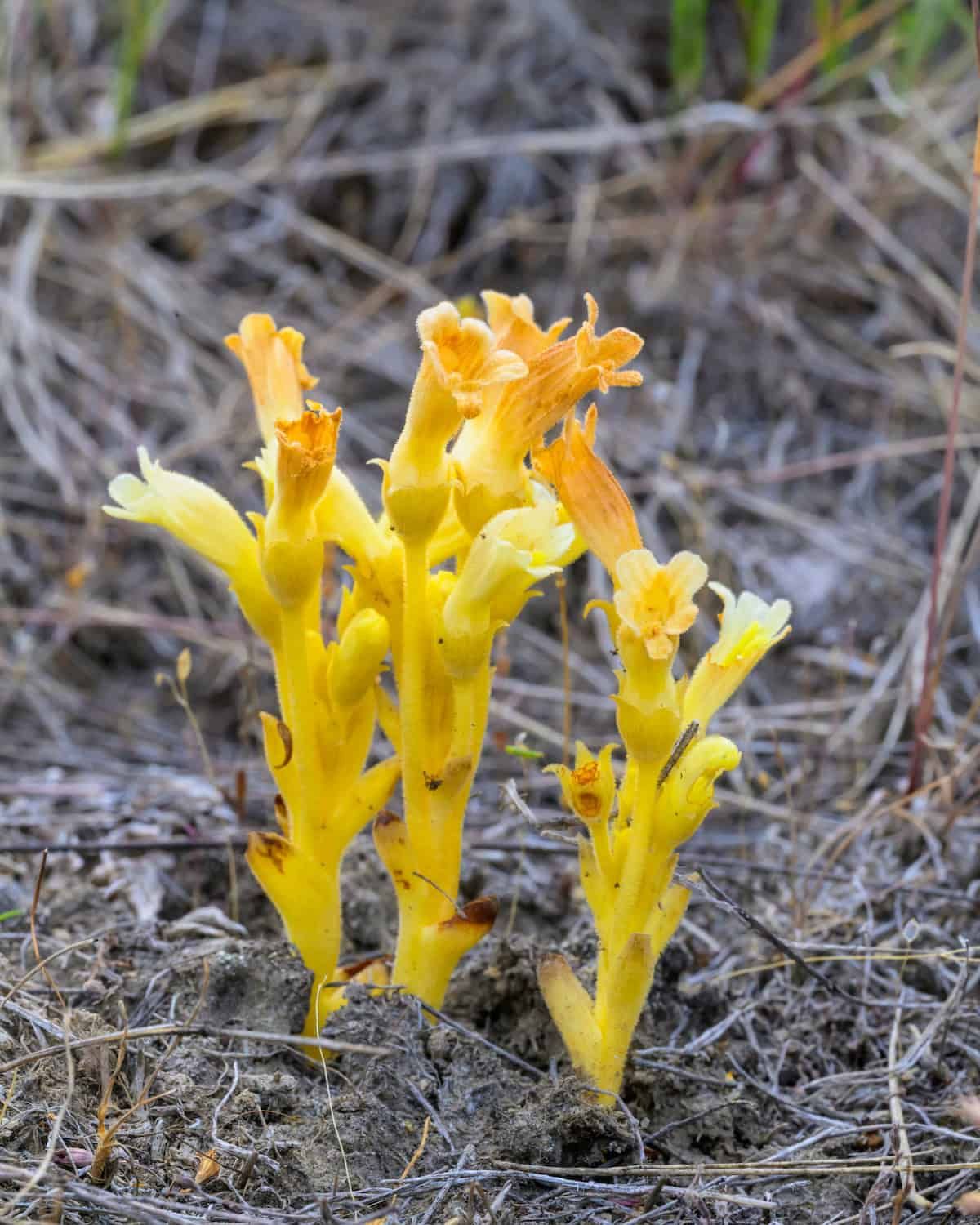

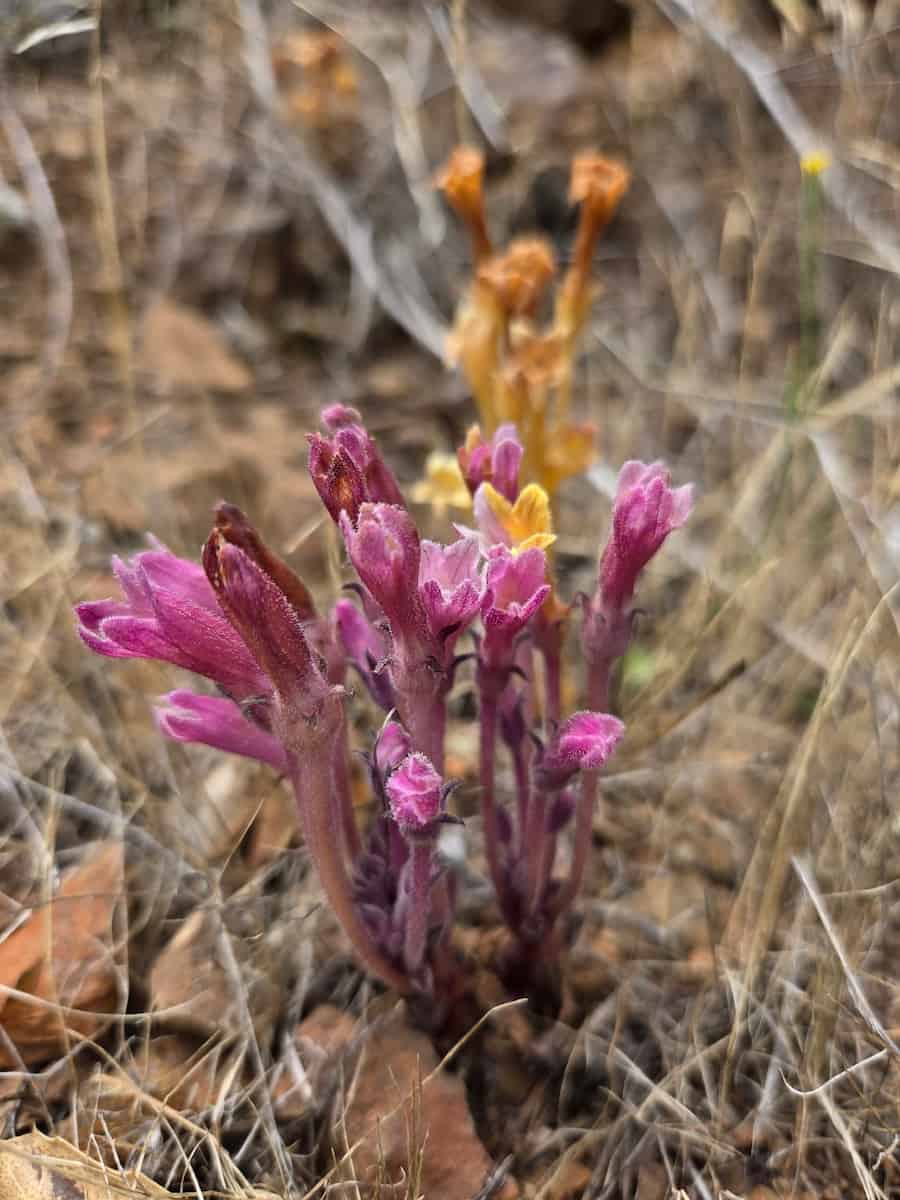
Jonathan Curley found an oddity near San Francisco earlier this month. It looks like Aphyllon franciscanum, Yellow Clustered Broomrape. However, there’s something peculiar about this particular yellow plant.
If you want to see Aphyllon franciscanum, then western North America is the best place to be, particularly around the coast. The native range runs from southwestern British Columbia down the coast to Baja California. It runs east to beyond the Rocky Mountains, but populations are much sparser to the east. It’s particularly common around San Francisco, which explains the epithet. The first part, Aphyllon, means leafless. It’s found in serpentine soils and coastal sage scrub.
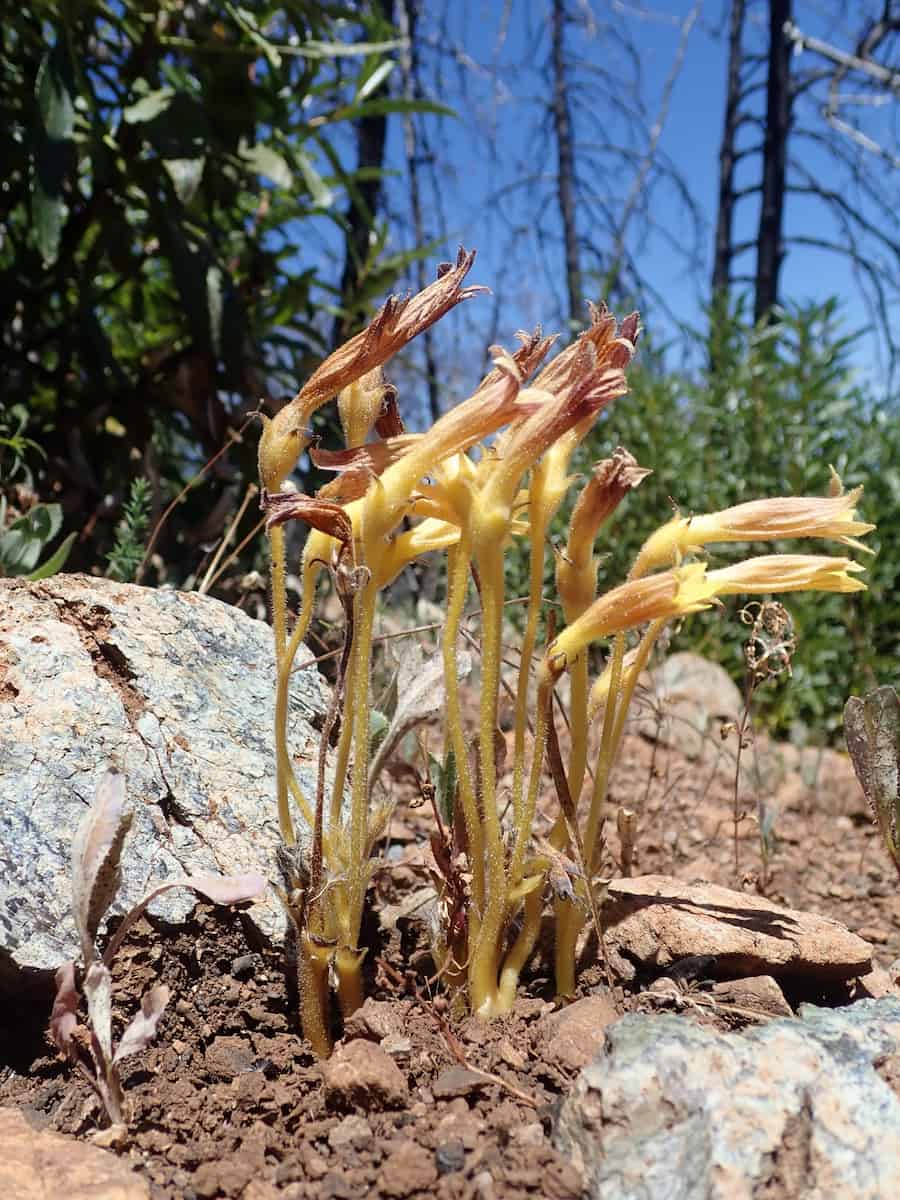
Another thing you’ll want to look for, if you’re searching for Aphyllon franciscanum, is a host plant. Broomrapes are parasitic plants and have no chlorophyll, meaning they’re dependent on other plants for food. The plants wait in the soil to sense root exudates from hosts. When they sense the chemicals they strike, attaching themselves to the roots to steal water and food from their host. These are usually Eriodictyon and Eriogonum, but also Eriophyllum and Phacelia. It’s this ability to parasitise other hosts, and avoid Artemisia, that helped botanists identify it as a separate species from its close relative Aphyllon fasciculatum in 2021.
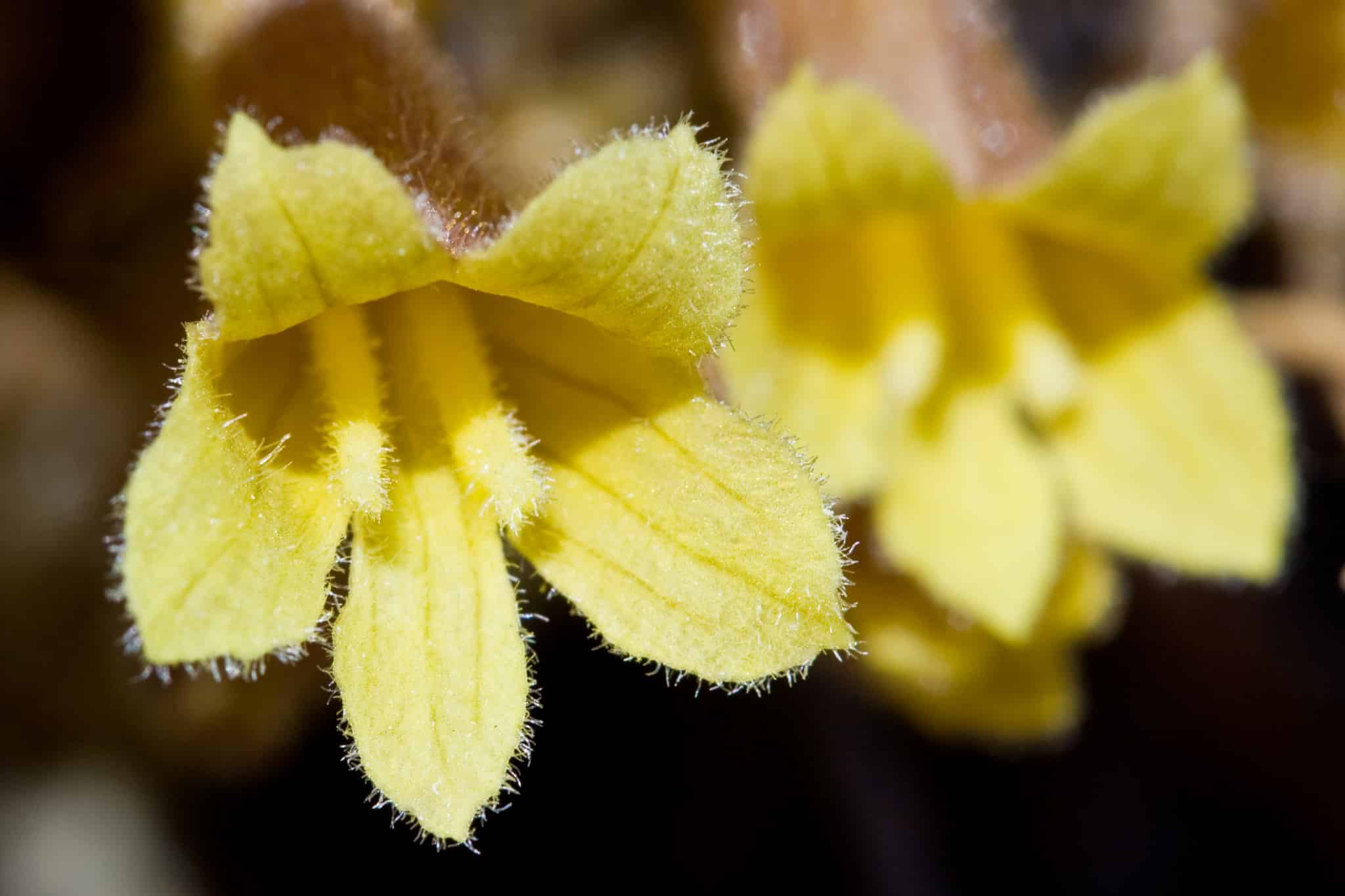
If you’re looking up information about it, it’s not just Aphyllon fasciculatum you’ll need to bear in mind. The genus Aphyllon has only fairly recently been accepted. Until 2016, you’d see Aphyllon species listed as Orobanche, so you’d originally see it described as Orobanche fasciculata var. franciscana.
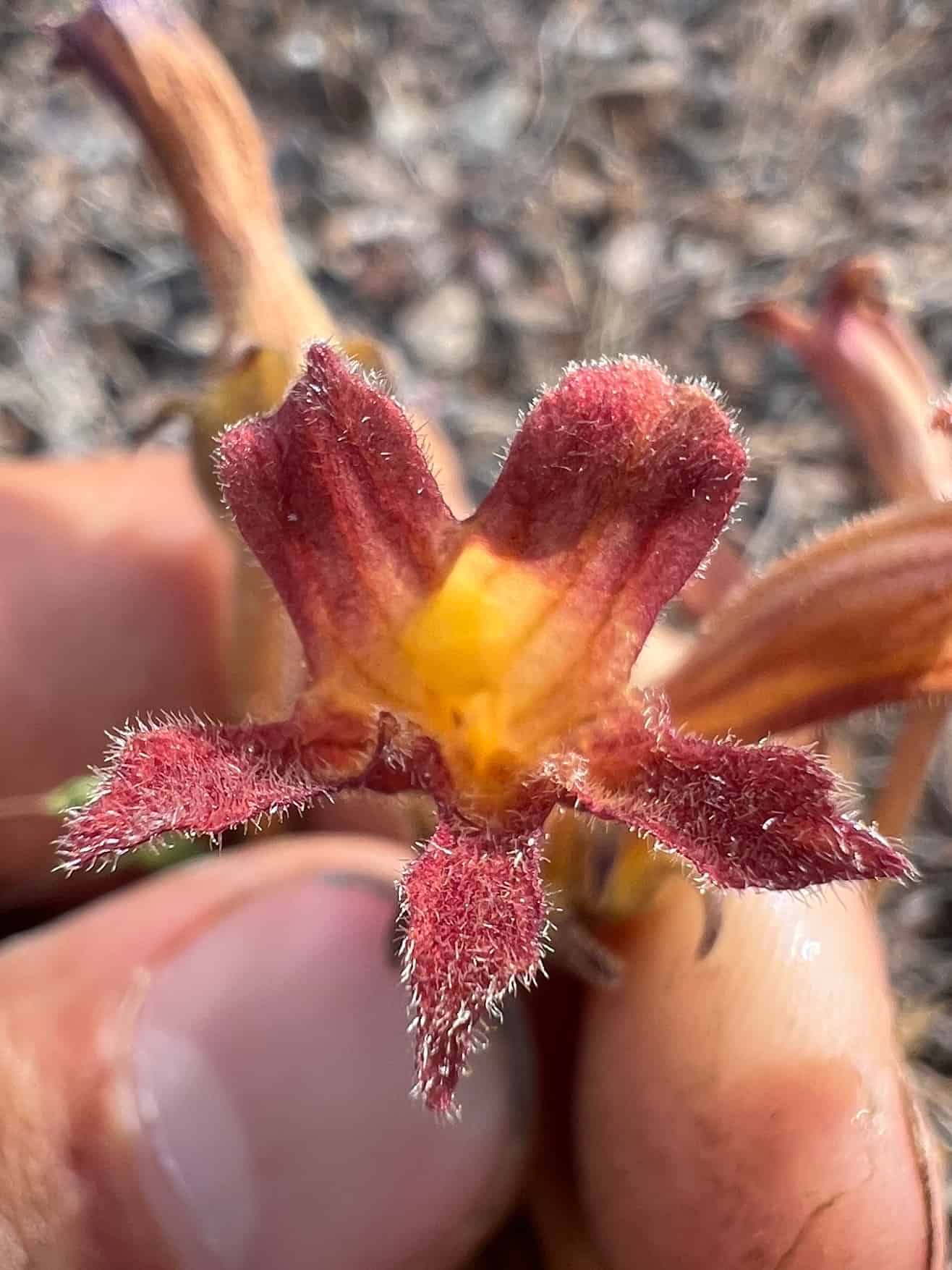
This is a plant where observations on iNaturalist have played a big role in getting the species recognised. In their article dividing Aphyllon franciscanum from A. fasciculatum, Schneider and Benton mention using 87 iNaturalist observations made between 2009 and 2020. Those observations keep coming in. The photo by Jonathan Curley is one of a few showing that the flowers of this plant don't have to be yellow, showing that the species has more to reveal than the name suggests.
Cover image: Aphyllon franciscanum by Radd Icenoggle / iNaturalist CC BY-NC